
BuddhistCatholicContemplativeEvangelicalGeneral ChristianHinduJewishLatter-day SaintMuslimNew VisionsProgressive Christian
Beliefs
- Buddhist
- Catholic
- Contemplative
- Evangelical
- General Christian
- Hindu
- Jewish
- Latter-day Saint
- More Voices
- Muslim
- New Visions
- Pagan
- Progressive Christian
Topics
- Religion News
- Food and Religion
- Sports and Religion
- Religious Art
- Religious Music and Entertainment
- Religious Events
- History and Religion
- Style and Religion
- Politics and Religion
- Women in Religion
- Recreation Outdoors and Religion
- Business Finance and Religion
- Careers Workplace and Religion
- Education and Religion
- Family Parenting and Religion
- Health Fitness and Religion
- Home and Religion
- Relationships and Religion
- Technology and Religion
- Travel and Religion
Columnists
- Buddhist Columnists
- Business Finance and Religion Columnists
- Careers Workplace and Religion Columnists
- Catholic Columnists
- Contemplative Columnists
- Education and Religion Columnists
- Evangelists Columnists
- Family Parenting and Religion Columnists
- General Christian Columnists
- Health Fitness and Religion Columnists
- Hindu Columnists
- History and Religion Columnists
- Home and Religion Columnists
- Jewish Columnists
- More Voices Columnists
- Latter Day Columnists
- Muslim Columnists
- New Visions Columnists
- Nonreligious Columnists
- Pagan Columnists
- Politics and Religion Columnists
- Progressive Columnists
- Recreation Outdoors and Religion Columnists
- Relationships and Religion Columnists
- Religion News Columnists
- Religious Art Columnists
- Religious Events Columnists
- Religious Music and Entertainment Columnists
- Sports and Religion Columnists
- Style and Religion Columnists
- Technology and Religion Columnists
- Travel and Religion Columnists
- Women in Religion Columnists
Resource Library
- 2026 Calendar
- Library of World Religions
- The 100 Most Holy Places on Earth
- Patheos Answers
- Podcasts
- Videos
- Faith Leaders Database
- Anglican Episcopalian
- Bahai
- Baptist
- Buddhism
- Christianity
- Confucianism
- Eastern Orthodoxy
- Hinduism
- Holiness and Pentecostal
- ISKCON
- Islam
- Judaism
- Lutheran
- Methodist
- The Church of Jesus Christ of Latter-day Saints
- New Age
- Paganism
- Presbytarian and Reformed
- Protestantism
- Religion Behind the Scenes
- Roman Catholic
- Scientology
- Shia Islam
- Sikhism
- Sufism
- Sunni Islam
- Taoism
- Zen
- See all religions
Research Tools
 Ad-Free & Subscriber Log-In Subscription Support
Ad-Free & Subscriber Log-In Subscription Support
Follow Patheos 

- Trending:
- Forgiveness
- |
- Marriage
- |
- Consciousness
- |
- Death Penalty
- |
- Election
- |
- Halloween
 Science On Religion
- Home
- Religion News
- Cognitive biases don’t explain religion, after all
Cognitive biases don’t explain religion, after all
Last updated on: May 11, 2017 at 1:49 pm by Connor Wood
Cognitive biases don’t explain religion, after all 2017-05-11T13:49:53-04:00 Connor Wood
Patheos Explore the world's faith through different perspectives on religion and spirituality! Patheos has the views of the prevalent religions and spiritualities of the world.
 If you’re familiar with the cognitive science of religion, then you’ve probably heard the term “hyperactive agency detection device,” or HADD. The HADD is one of today’s most popular explanations for why people believe in God or gods. It proposes that the human brain is equipped with a hair-trigger mechanism that perceives personhood – that is, intentions and purposes – everywhere in the world. This mechanism is why you see faces in campfire flames or jump when you hear a twig crack in the woods. According to the HADD hypothesis, these perceptions are the reason for human beliefs in gods and spirits – and, hence, the cognitive foundation for religiosity itself. But religiosity is a often lot more than seeing faces in clouds or campfires. It’s also rituals, texts, moral codes, community, and funny hats. So, really, how much of religion boils down to cognitive biases for detecting agency? According to new research from the Czech Republic and Slovakia, the answer might be “not much.”



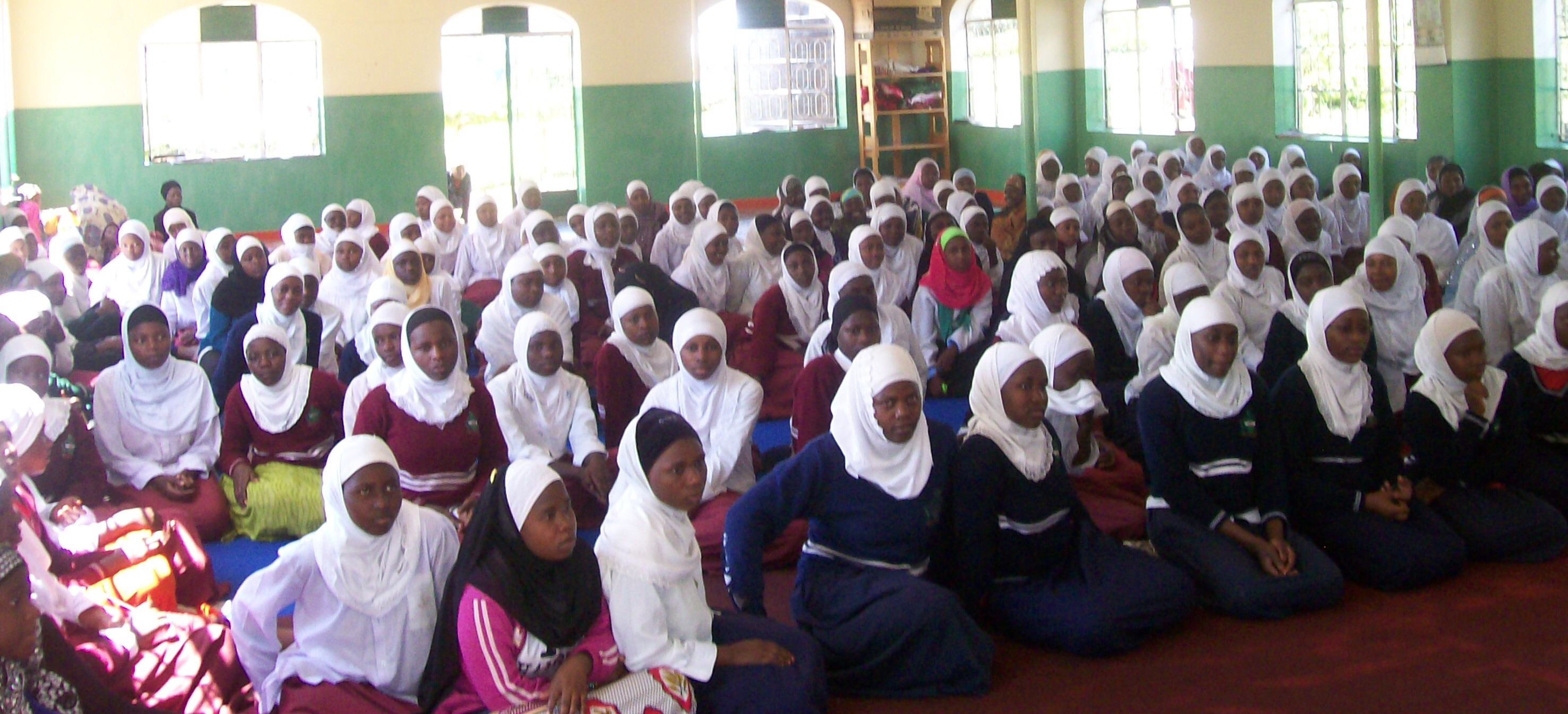

These two countries are uniquely excellent case studies for why some people become religious and others don’t. For decades after World War I, the Czech Republic and Slovakia were united as one country, called – truly, an inspired leap of human imagination – Czechoslovakia. Today, the two countries are close neighbors and E.U. members with a great deal of shared history, but with one crucial difference: the Slovakian population is highly religious and churchgoing, while the Czech Republic is one of the world’s most atheistic countries. This unique situation offers a stellar opportunity to test hypotheses in the cognitive science of religion about why people become religious, since so many other important demographic variables are naturally controlled for.
If, you know, someone wanted to do that.
Fortunately, somebody did. Scooping everybody else in the cognitive science of religion, psychologist Aiyana Willard and economist Lubomír Cingl recently decided to take advantage of the cultural and historical similarity of the Czech Republic and Slovakia to test which theories best explained why the former was so much more secular than the latter. They gathered data through an online marketing platform, eventually surveying more than 1,000 residents in each of the two countries, or more than 2,000 total. (That’s a lot of people, especially considering that many psychology studies use only around 60 participants, or 30 each in a two-condition design.)*
In their survey packets, Willard and Cingl asked subjects about their beliefs in God, their paranormal beliefs (such as psychic phenomena or the existence of ghosts), and how much they participated in organized religion such as Sunday church services. The researchers also included questions to test three major hypotheses. First, there was the secularization hypothesis. This is the well-known claim that, as economic and social conditions improve in any given society, its people will simply drift away from religion. According to the secularization hypothesis, people in the Czech Republic might be less religious than those in Slovakia because the Czech Republic is slightly wealthier, more stable, and better-educated. Willard and Cingl tested this prediction by asking subjects how secure and stable they felt in life, and by looking at objective demographic data.
The second hypothesis was the cognitive bias hypothesis. This is what lies behind the HADD theory: we human beings come pre-packaged with hypersensitive tendencies to perceive minds and purpose in our surroundings. These perceptions, in turn, lead us to assume that there are spirits, fairies, and gods lurking in every nook and cranny of the world. It could be that people with weaker cognitive biases would be less religious. To determine the strength of people’s cognitive biases, Willard and Cingl asked questions about how prone the participants were to anthropomorphizing (projecting human qualities onto the inanimate world), believing in mind-body dualism, and thinking that natural processes have purposes (teleology). They also tested for analytical thinking skills and empathizing skills. Willard and Cingl predicted that cognitive biases alone probably wouldn’t explain the difference in religiosity between the two countries, since biases are presumably innate and equally distributed across populations. But you never know, right?
The third hypothesis was that differences in religiosity would be explained by credibility-enhancing displays. These displays, abbreviated CREDs, are actions that people perform when they sincerely believe in the tenets of their religion. A committed Christian probably goes to church each Sunday, prays before meals, and celebrates Easter. A sincere Muslim prays five times a day, pays the zakat tithe, and saves up for pilgrimage to Mecca. But if you don’t truly believe, you probably won’t go to the trouble of doing all those things. To test for CREDs, the researchers asked subjects how often their parents had participated conspicuously in religious activities when they were growing up. Their prediction? People who hadn’t seen grown-ups acting religiously when they were children would themselves be less religious – and believe less in God – as adults.
Examining their results, Willard and Cingl found that Slovakians were much more religious and theistic than Czechs, but both nationalities believed in the paranormal equally. Looking at the secularization hypothesis, education decreased beliefs in the paranormal but had no effect on religious practices or belief in God, while social and institutional insecurity were correlated with stronger beliefs in the paranormal and mildly correlated with increased religious practice. (For example, in areas with higher unemployment, people went to church more.) However, these effects were really small, leading the researchers to conclude that the secularization hypothesis couldn’t explain why Slovakia is so much more religious than the Czech Republic – particularly because both countries have similarly high levels of human services and fairly strong economies.
What about the cognitive bias hypothesis? As the researchers expected, there were no differences between Slovakians and Czechs when it came to innate predispositions for analytical thinking, teleological reasoning, mind-body dualism, or empathic ability. Interestingly, Slovakians scored slightly – but significantly – lower on anthropomorphic tendencies than the less-religious Czechs, which is the opposite of what the HADD hypothesis would predict. Overall, cognitive biases accounted for a very small percentage of the difference in belief in God, but for more than one-fifth of the difference in paranormal beliefs.
In other words, people with strong cognitive biases such as teleological reasoning, mind-body dualism, and holistic or intuitive thinking were much more likely to believe in astral travel or psychic abilities, but only very slightly more likely to believe in God. Cognitive biases had almost no effect on religious attendance. And biases didn’t explain any of the difference in religiosity between the two countries at all.
But while the secularization and cognitive bias hypotheses mostly fizzled, CREDs had a remarkably strong effect on religious practice and belief. In all, Slovakian respondents reported that, as children, they went to church much more often, and saw more adults practicing religion, than Czechs. In turn, childhood exposure to CREDs predicted significantly higher levels of adult religious belief in God and church service attendance. This relationship mediated (explained) a good deal of the relationship between nationality and religiosity: 70% in the case of belief in God, and fully 80% in the case of religious practice. In other words, young Slovakians saw more adults praying and going to church – and went to church services more often themselves – than their Czech counterparts, and these divergent childhood experiences were the lion’s share of the reason why Slovakians were more religious as adults. The authors concluded that
The exposure to religious rituals and parental displays of religious commitment in childhood accounts for more variance than any other set of variables in our sample.…Religiously raised participants in Slovakia were exposed to higher levels of CREDs than their Czech counterparts…CREDs variables accounted for a substantial amount of the country level difference in both belief in God and practice, even when the sample was restricted to only religiously raised participants.
So exposure to CREDs seems to influence adult religiosity a lot more than cognitive biases. Does this falsify the HADD hypothesis? Not necessarily. Willard and Cingl point out that cognitive biases could give rise to generalized supernatural beliefs – like spirits or an afterlife – which in turn provide the foundations for institutional religion. So evolved cognitive biases might be part of the origin story of religion, but a lack of cognitive biases isn’t a good explanation for why some countries – or people – become more secular.
Of course, while CREDs explained much more of the difference between the two countries’ religious tendencies, there still must be a reason why Czech parents took their kids to church less often than Slovakian parents in the first place. But looking for this reason brings us up against the limits of scientific methods. Specifically, one key difference between Slovakia and the Czech Republic is historical, not scientific: during the Cold War, the Catholic Church was a potent symbol of resistance against the oppressive USSR for Slovakians, whereas for most Czechs it wasn’t. The fact that the Catholic Church played a critical role in Slovak public life and patriotism may have ensured that Slovakians retained their allegiance to the faith, kept going to church, and raised religious children. On the other hand,
In the case of the Czech Republic, a history of skepticism of the Catholic Church as an institution paired with the communist ban on public religiosity may have been the spark that precipitated the decline in religiosity.
This led the authors to warn that
When evaluating individual cases, like this one, it is worth investigating if a single idiosyncratic cause can explain the decline of a specific religion separately from supernatural belief more generally.…What broad theories like this do not always reflect is the inherent cultural nature of people. In the quest to find singular theories that can explain these complex processes, the psychological and evolutionary sciences can often miss the important role of culture and how much we, as humans, learn from others. Further research across more diverse religious groups is needed.
In other words, scientific theories can’t explain everything about religion, and we need to pay more attention to specific events and cultural histories. (It’s almost as if religion is…complicated.**) But what we can conclude from this study is that hyperactive agency detection or anthropomorphic tendencies aren’t the main reason why some people become religious and others don’t. It has a lot more to do with the rituals people participate in and the culture that surrounds them. As usual, God doesn’t easily boil down to a flipped switch in the brain.
_________
* Full disclosure: I am one of the people who does studies like that
** As one of the few people working in the evolutionary study of religion whose PhD is in religious studies rather than psychology or cognitive science, this is what I think about that.
credibility-enhancing displays
Previous Post

April 26, 2017
In New Zealand, religion reduces prejudice – but media inflames it
Next Post
May 22, 2017 Science and religion really are in conflict, people
Browse Our Archives
Select a Category Atheism Cognitive Science of Religion Costly investment theory Cultural psychology Editorial Evolution Evolution of Religion Evolution of religion series Evolutionary psychology Ideology and religion Modeling Religion Project Modern culture and religion Most Popular Practice of science Religion and education Religion and ethics Religion and health Religion and perception Religion and prejudice Religious violence Religious ways of thinking Science and religion Scientific study of religion Secularization Spirituality Uncategorized
Select a Month July 2022 February 2022 December 2021 October 2021 August 2021 July 2021 June 2021 May 2021 April 2021 March 2021 February 2021 January 2021 December 2020 November 2020 October 2020 September 2020 August 2020 July 2020 June 2020 May 2020 April 2020 March 2020 February 2020 January 2020 November 2019 October 2019 September 2019 August 2019 July 2019 June 2019 May 2019 April 2019 March 2019 February 2019 January 2019 December 2018 November 2018 October 2018 September 2018 August 2018 July 2018 June 2018 May 2018 April 2018 March 2018 February 2018 January 2018 December 2017 November 2017 October 2017 September 2017 August 2017 July 2017 June 2017 May 2017 April 2017 March 2017 February 2017 January 2017 December 2016 November 2016 September 2016 August 2016 June 2016 April 2016 March 2016 February 2016 January 2016 November 2015 October 2015 September 2015 August 2015 July 2015 June 2015 May 2015 April 2015 March 2015 February 2015 January 2015 December 2014 November 2014 October 2014 September 2014 August 2014 July 2014 June 2014 May 2014 April 2014 March 2014 February 2014 January 2014 December 2013 November 2013 October 2013 September 2013 August 2013 July 2013 June 2013 May 2013 April 2013 March 2013 February 2013 January 2013 December 2012 November 2012 October 2012 September 2012 August 2012 July 2012 June 2012 May 2012 April 2012 March 2012 February 2012
Follow Us!
TAKE THE
Religious Wisdom Quiz
What symbol is most commonly associated with Christianity worldwide?
Select your answer to see how you score.
The cross The dove The fish The lamb
Related posts from Science On Religion

Why Rites of Passage Are Painful


The Catholic Latin Mass is a Strong Credibility-Enhancing...
The Myth of the Egalitarian Noble Savage
TRENDING AT PATHEOS Religion News

Catholic Integralists believe that religious values – specifically Christian ones – should...

Electing A Virtuous President Would Make Immunity Irrelevant
Presidential immunity can bring with it many risks. So how can we...

Why The Olympic Games Are A ‘Civil Religious’...
Sporting events form a vital space where Americans display their 'civil religious...

After more than a decade of news, research updates, and insights on...

Q: Why do Southern Baptists and like-minded Protestants...
THE RELIGION GUY’S ANSWER: Why? Simple. Because they believe that’s what the...

THE QUESTION: Is gambling evil? THE RELIGION GUY’S ANSWER: Analysts anticipate a...
view all Religion News blogs
Ad-Free & Subscriber Log-In Subscription Support
- About Us
- 2026 Calendar
- Videos
- Podcasts
- Library of World Religions
- Faith In Media Tracker
- Advertise With Us
- Write for Us
- Privacy Policy
- Terms of Service
- Do Not Sell My Data
- Contact Us
- Radiant Digital
- Manage Newsletter Subscriptions
- Unsubscribe From Notifications
- Sitemap
Copyright 2008-2026, Patheos. All rights reserved.
Subscription Support Ad-Free & Subscriber Log-In
Follow Patheos