
BuddhistCatholicContemplativeEvangelicalGeneral ChristianHinduJewishLatter-day SaintMuslimNew VisionsProgressive Christian
Beliefs
- Buddhist
- Catholic
- Contemplative
- Evangelical
- General Christian
- Hindu
- Jewish
- Latter-day Saint
- More Voices
- Muslim
- New Visions
- Pagan
- Progressive Christian
Topics
- Religion News
- Food and Religion
- Sports and Religion
- Religious Art
- Religious Music and Entertainment
- Religious Events
- History and Religion
- Style and Religion
- Politics and Religion
- Women in Religion
- Recreation Outdoors and Religion
- Business Finance and Religion
- Careers Workplace and Religion
- Education and Religion
- Family Parenting and Religion
- Health Fitness and Religion
- Home and Religion
- Relationships and Religion
- Technology and Religion
- Travel and Religion
Columnists
- Buddhist Columnists
- Business Finance and Religion Columnists
- Careers Workplace and Religion Columnists
- Catholic Columnists
- Contemplative Columnists
- Education and Religion Columnists
- Evangelists Columnists
- Family Parenting and Religion Columnists
- General Christian Columnists
- Health Fitness and Religion Columnists
- Hindu Columnists
- History and Religion Columnists
- Home and Religion Columnists
- Jewish Columnists
- More Voices Columnists
- Latter Day Columnists
- Muslim Columnists
- New Visions Columnists
- Nonreligious Columnists
- Pagan Columnists
- Politics and Religion Columnists
- Progressive Columnists
- Recreation Outdoors and Religion Columnists
- Relationships and Religion Columnists
- Religion News Columnists
- Religious Art Columnists
- Religious Events Columnists
- Religious Music and Entertainment Columnists
- Sports and Religion Columnists
- Style and Religion Columnists
- Technology and Religion Columnists
- Travel and Religion Columnists
- Women in Religion Columnists
Resource Library
- 2026 Calendar
- Library of World Religions
- The 100 Most Holy Places on Earth
- Patheos Answers
- Podcasts
- Videos
- Faith Leaders Database
- Anglican Episcopalian
- Bahai
- Baptist
- Buddhism
- Christianity
- Confucianism
- Eastern Orthodoxy
- Hinduism
- Holiness and Pentecostal
- ISKCON
- Islam
- Judaism
- Lutheran
- Methodist
- The Church of Jesus Christ of Latter-day Saints
- New Age
- Paganism
- Presbytarian and Reformed
- Protestantism
- Religion Behind the Scenes
- Roman Catholic
- Scientology
- Shia Islam
- Sikhism
- Sufism
- Sunni Islam
- Taoism
- Zen
- See all religions
Research Tools
 Ad-Free & Subscriber Log-In Subscription Support
Ad-Free & Subscriber Log-In Subscription Support
Follow Patheos 

- Trending:
- Forgiveness
- |
- Marriage
- |
- Consciousness
- |
- Death Penalty
- |
- Election
- |
- Halloween
 Science On Religion
- Home
- Religion News
- Awesome theories of religion, Part 2
Awesome theories of religion, Part 2
Last updated on: June 3, 2014 at 1:44 pm by Connor Wood
Awesome theories of religion, Part 2 2014-06-03T13:44:14-04:00 Connor Wood
Patheos Explore the world's faith through different perspectives on religion and spirituality! Patheos has the views of the prevalent religions and spiritualities of the world.
Connor Wood

Religion is confusing, right? Why do people do these weird things, like lighting candles next to statues of gods, praying to deities with names like “Krishna” and “Jesus” and “Buddha Amitabha,” and pursuing master’s degrees in theology? Everyone has an opinion. Some people think that religion arose to explain the frightening natural world, and now that we have science to explain things, religion is obsolete. Others think that religion is a cynical tool for elites to keep the masses down. Fortunately, we don’t have to just rely on speculations. There’s a massive, growing body of literature on religion, and learning about it can help us understand what religion is and where it came from.
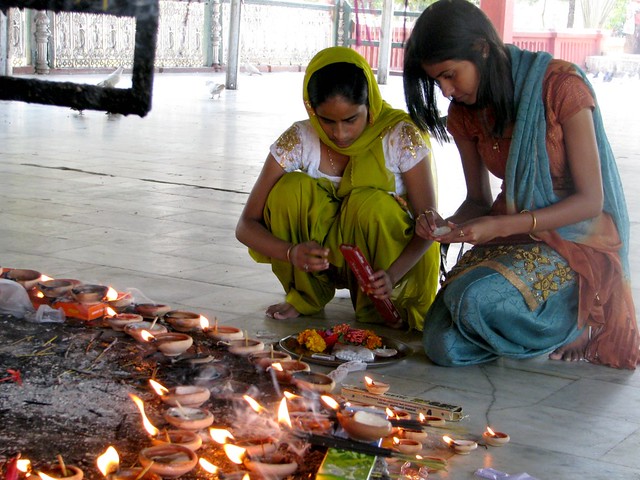
Last week, I focused on functionalist theories of religion – that is, theories that assume that religion plays a functional role in human societies and individual lives. This week, I’m continuing roughly in that line, but the theorists I’m featuring are more focused on how ritual shapes beliefs. Here in the post-Protestant West, we tend to assume that what really matters about religion is faith, or beliefs, particularly in spirits and gods (or God). But while faith is clearly important in religion, the modern focus on the contents of religious beliefs often misses the fact that these beliefs don’t come from nowhere. Our beliefs and our worldviews are shaped not only by what we’re told or what we read, but also by what we do. This is why ritual matters so much – it doesn’t compete with our beliefs. It gives rise to them.
The four thinkers below have massively advanced our understanding of how ritual and beliefs intertwine, and particularly how religion both creates and destroys metaphorical boundaries or “walls” – between tribes, between life stages, even between good and bad. As Durkheim from last week’s post argued, the boundary between what’s “sacred” and what’s “profane” is the anchor of any religion. Drawing on this distinction, our first thinker sheds light on how religion generates ideas like “clean” and “not clean,” or “pure” and “impure” – which are fundamental religious distinctions found in all cultures.
Mary Douglas
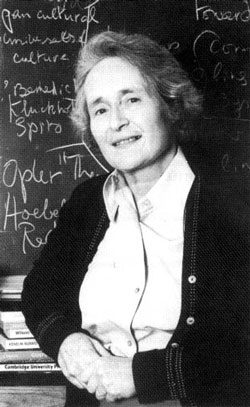
Mary Douglas, in front of a chalkboard. Source: Wikimedia Commons.
In last week’s theory-of-religion primer, I sketched sociologist Émile Durkheim’s influential argument that what a society considers “sacred” or “set apart” – its gods, certain myths, the Black Hills, whatever – is the linchpin that holds the culture together. For Durkheim, the sacred is opposed to the profane, or the everyday or commonplace. Anthropologist Mary Douglas (1921-2007) took Durkheim’s ideas more than a few steps further, generating a new theory of ritual and culture that has changed the entire course of religious studies. Criticizing Durkheim for assuming that his sacred/profane distinction only applied to “primitive” cultures, Douglas forcefully argued that all cultures – including supposedly rationalistic, Western societies – depended on such distinctions. In her influential book Purity and Danger, Douglas’s penetrating analysis of purity – as against dirtiness or impurity – showed how rituals help to identify certain things as “clean” and others as “not clean.” All cultures have such pure/impure distinctions, and they’re nearly always a central concern for religion. (Think Muslims washing scrupulously before prayers, or Christians donning white clothing before baptism.) In particular, Douglas’s studies among the Lele people of the Congo convinced her that what people believe about purity is a direct reflection of what they believe, ultimately, about the universe:
Among the Lele I found that rules of hygiene and etiquette, rules of sex and edibility fed into or were derived from submerged assumptions about how the universe works.
Douglas famously defined “dirt” as “matter out of place,” or stuff that isn’t where it’s supposed to be. So, for Douglas, religious ideas about purity and dirt play an all-important role in maintaining boundaries between things. Contamination is dangerous because boundaries are what make the entire universe possible – you can’t have good without bad, winter without summer, men without women.* Interestingly, Douglas’s ideas presaged recent studies showing that religious belief might actually prevent the passage of germs across cultural lines: by making people more conservative and less open to outsiders (that is, more concerned with cultural boundaries), traditional religion might be part of a “behavioral immune system” that keeps contaminants – both literal and figurative – at a comfortable distance from a community and the people who inhabit it.
Victor and Edith Turner
Victor Turner, with his penetrating gaze. Don’t look too long. Source: Fotosimagenes.org.
Victor Turner (1920-1983) was a British anthropologist whose interactions with the Ndembu people of subsaharan Africa allowed him to craft one of the 20th century’s most influential theories of ritual and religion. Informed by his studies of Western theater, Turner’s work hinged on a view of society that emphasized social processes, or “dramas.” Undoubtedly his most famous contribution to religious studies is the idea that two complementary social modes underlie all social processes: structure and communitas. “Structure” is the everyday network of roles and statuses that we all take part in at work, school, or the market – it’s when we call our instructors “Professor” and cops “Officer.” “Communitas” is when people step away from their everyday roles and titles, interacting with one another as pure equals. This is when our professor becomes “Bill” and the cop is just “Sandy.” Turner argued that communitas is what ritual is all about – by creating spaces and times that are “set apart” from everyday social structure (Mary Douglas and Durkheim, anybody?), ritual allows people to experience sheer, undifferentiated social unity and spontaneity. Importantly, it also allows people to transition between structural roles; in Turner’s model, communitas is necessary for “liminality” (a word that comes from the Latin limen – “threshold”), or a time when a person is in between social roles, neither one type of person nor the other. The archetypal example is puberty: not yet an adult, no longer a child. Ritual, Turner argued, intentionally creates liminal experiences in order to shepherd people from one social role to another. For instance, many African societies have puberty initiation rites, where young people are taken away from the tribe for days or weeks. During this time, they are in “liminal” space, and in “communitas” with each other – neither children nor adults, lacking economic responsibilities, occupying no social roles, and complete equals.
Interestingly, Turner pointed out that there was a cross-cultural connection between poverty, liminality, low social status, and communitas, arguing that people who were seeking communitas – that is, social equality and spiritual renewal – “often begin by minimizing or even eliminating the outward marks of rank…(and) approximate in dress and behavior the condition of the poor.” Which explains some things about the American counterculture.


Source: UPenn
Turner’s wife, Edith (b. 1921) is an influential anthropologist in her own right. Her most famous work, Experiencing Ritual, is an important study of how religious healing rituals work among the Ndembu – by creating communitas through drumming, mildly psychoactive drinks, and song, the Ndembu enjoin spiritual influences to heal sick patients. But that’s not what’s really interesting. What’s really interesting is that these spirit-drumfests actually allow for the opening of boundaries between different levels of society. A person whose role is low-status might, through the ritual communitas experience, be enabled to express her grievances against higher-status folks in a way that otherwise would be impossible. In the Turners’ work, ritual and communitas make social boundaries – between high-status and low-status people, between men and women, and between older and younger – permeable. So is religion about creating and maintaining symbolic boundaries, or smashing them?
Adam Seligman
Both Mary Douglas and the Turners came to their understandings of religion through painstaking fieldwork with small-scale African societies. Now let’s zoom out. Adam Seligman (b. 1954) is a sociologist of religion whose work focuses on ritual and modernity. Similarly to Victor Turner, Seligman emphasizes a key distinction between two different major social modes: the ritual mode and the mode of sincerity. The ritual mode is formal, action-based, non-rational, collectivistic, and imaginative. The sincere mode is individualistic, “authentic,” word-based, rational, and private. Through ritual, humans generate “shared subjunctive worlds,” which are the communal, imaginative universes that focus on “as-if” ideas about how the world could be. For instance, the ritual action of saying “please” to a waiter creates a shared illusion that the waiter has a choice in whether to bring you more coffee (which, of course, he actually doesn’t). This is why the word “please” is polite – it lets the person on the receiving end feel pleasantly autonomous, even if actually he or she has no choice in whether to obey your request. So, for Seligman, social conventions like saying “please” and “thank you” are the ritual building blocks of everyday life – creating little flurries of illusions here and there, allowing the world to work smoothly.
Religion is this ritual process writ large. If saying “please” creates a momentary “as-if” illusion, then religion creates lifelong, even millennia-long, shared imaginative worlds, where “as if” dominates over “as is.” Seligman argues that this is how it has to be – a society that insists on relating to the world only as it is – that is, sincerely – will suffer from an inability to act adaptively, since correct action depends on imaginatively projecting plans and ideals into the future. Seligman accuses both liberal modernity and religious fundamentalism of relying too much on sincerity or “realism.” Ideally, sincerity keeps ritual from formalizing and rigidifying too much. All religious renewals and countercultural movements are thus rooted in sincerity, or the ability of the individual to clearly see the real truth, unfettered by the dogmas and empty rituals. But when taken to extremes, this sincere orientation leads both to empty materialism and blind religious fundamentalism – both of which overemphasize the individual and his or her “pure truth,” and downplay the vitality of living, imaginative ritual.
This was Part Two in a series of, I don’t know, five or six posts on theories of religion. In these posts, I’m sharing knowledge about respected theories and research on religion, as a way of showing that we don’t just have to speculate fruitlessly about religion – we can actually learn real things about it. Check back next week for more!
______
* Unless you are Hemingway
Previous Post

May 27, 2014
4 neat theories of religion
Next Post
June 10, 2014 Why do religions tell impossible tales? A testable hypothesis
Browse Our Archives
Select a Category Atheism Cognitive Science of Religion Costly investment theory Cultural psychology Editorial Evolution Evolution of Religion Evolution of religion series Evolutionary psychology Ideology and religion Modeling Religion Project Modern culture and religion Most Popular Practice of science Religion and education Religion and ethics Religion and health Religion and perception Religion and prejudice Religious violence Religious ways of thinking Science and religion Scientific study of religion Secularization Spirituality Uncategorized
Select a Month July 2022 February 2022 December 2021 October 2021 August 2021 July 2021 June 2021 May 2021 April 2021 March 2021 February 2021 January 2021 December 2020 November 2020 October 2020 September 2020 August 2020 July 2020 June 2020 May 2020 April 2020 March 2020 February 2020 January 2020 November 2019 October 2019 September 2019 August 2019 July 2019 June 2019 May 2019 April 2019 March 2019 February 2019 January 2019 December 2018 November 2018 October 2018 September 2018 August 2018 July 2018 June 2018 May 2018 April 2018 March 2018 February 2018 January 2018 December 2017 November 2017 October 2017 September 2017 August 2017 July 2017 June 2017 May 2017 April 2017 March 2017 February 2017 January 2017 December 2016 November 2016 September 2016 August 2016 June 2016 April 2016 March 2016 February 2016 January 2016 November 2015 October 2015 September 2015 August 2015 July 2015 June 2015 May 2015 April 2015 March 2015 February 2015 January 2015 December 2014 November 2014 October 2014 September 2014 August 2014 July 2014 June 2014 May 2014 April 2014 March 2014 February 2014 January 2014 December 2013 November 2013 October 2013 September 2013 August 2013 July 2013 June 2013 May 2013 April 2013 March 2013 February 2013 January 2013 December 2012 November 2012 October 2012 September 2012 August 2012 July 2012 June 2012 May 2012 April 2012 March 2012 February 2012
Follow Us!
TAKE THE
Religious Wisdom Quiz
What animals attacked and killed Job's servants, according to the messengers?
Select your answer to see how you score.
Philistines and Moabites Ammonites and Edomites Syrians and Egyptians Sabeans and Chaldeans
Related posts from Science On Religion

Why Rites of Passage Are Painful



TRENDING AT PATHEOS Religion News

Catholic Integralists believe that religious values – specifically Christian ones – should...

Electing A Virtuous President Would Make Immunity Irrelevant
Presidential immunity can bring with it many risks. So how can we...

Why The Olympic Games Are A ‘Civil Religious’...
Sporting events form a vital space where Americans display their 'civil religious...

After more than a decade of news, research updates, and insights on...

Q: Why do Southern Baptists and like-minded Protestants...
THE RELIGION GUY’S ANSWER: Why? Simple. Because they believe that’s what the...

THE QUESTION: Is gambling evil? THE RELIGION GUY’S ANSWER: Analysts anticipate a...
view all Religion News blogs
Ad-Free & Subscriber Log-In Subscription Support
- About Us
- 2026 Calendar
- Videos
- Podcasts
- Library of World Religions
- Faith In Media Tracker
- Advertise With Us
- Write for Us
- Privacy Policy
- Terms of Service
- Do Not Sell My Data
- Contact Us
- Radiant Digital
- Manage Newsletter Subscriptions
- Unsubscribe From Notifications
- Sitemap
Copyright 2008-2026, Patheos. All rights reserved.
Subscription Support Ad-Free & Subscriber Log-In
Follow Patheos