
BuddhistCatholicContemplativeEvangelicalGeneral ChristianHinduJewishLatter-day SaintMuslimNew VisionsProgressive Christian
Beliefs
- Buddhist
- Catholic
- Contemplative
- Evangelical
- General Christian
- Hindu
- Jewish
- Latter-day Saint
- More Voices
- Muslim
- New Visions
- Pagan
- Progressive Christian
Topics
- Religion News
- Food and Religion
- Sports and Religion
- Religious Art
- Religious Music and Entertainment
- Religious Events
- History and Religion
- Style and Religion
- Politics and Religion
- Women in Religion
- Recreation Outdoors and Religion
- Business Finance and Religion
- Careers Workplace and Religion
- Education and Religion
- Family Parenting and Religion
- Health Fitness and Religion
- Home and Religion
- Relationships and Religion
- Technology and Religion
- Travel and Religion
Columnists
- Buddhist Columnists
- Business Finance and Religion Columnists
- Careers Workplace and Religion Columnists
- Catholic Columnists
- Contemplative Columnists
- Education and Religion Columnists
- Evangelists Columnists
- Family Parenting and Religion Columnists
- General Christian Columnists
- Health Fitness and Religion Columnists
- Hindu Columnists
- History and Religion Columnists
- Home and Religion Columnists
- Jewish Columnists
- More Voices Columnists
- Latter Day Columnists
- Muslim Columnists
- New Visions Columnists
- Nonreligious Columnists
- Pagan Columnists
- Politics and Religion Columnists
- Progressive Columnists
- Recreation Outdoors and Religion Columnists
- Relationships and Religion Columnists
- Religion News Columnists
- Religious Art Columnists
- Religious Events Columnists
- Religious Music and Entertainment Columnists
- Sports and Religion Columnists
- Style and Religion Columnists
- Technology and Religion Columnists
- Travel and Religion Columnists
- Women in Religion Columnists
Resource Library
- 2026 Calendar
- Library of World Religions
- The 100 Most Holy Places on Earth
- Patheos Answers
- Podcasts
- Videos
- Faith Leaders Database
- Anglican Episcopalian
- Bahai
- Baptist
- Buddhism
- Christianity
- Confucianism
- Eastern Orthodoxy
- Hinduism
- Holiness and Pentecostal
- ISKCON
- Islam
- Judaism
- Lutheran
- Methodist
- The Church of Jesus Christ of Latter-day Saints
- New Age
- Paganism
- Presbytarian and Reformed
- Protestantism
- Religion Behind the Scenes
- Roman Catholic
- Scientology
- Shia Islam
- Sikhism
- Sufism
- Sunni Islam
- Taoism
- Zen
- See all religions
Research Tools
 Ad-Free & Subscriber Log-In Subscription Support
Ad-Free & Subscriber Log-In Subscription Support
Follow Patheos 

- Trending:
- Forgiveness
- |
- Marriage
- |
- Consciousness
- |
- Death Penalty
- |
- Election
- |
- Halloween
 Science On Religion
- Home
- Religion News
- Rewriting the script: We change our religious memories
Rewriting the script: We change our religious memories
Last updated on: April 16, 2013 at 9:36 pm by Nicholas Didonato
Rewriting the script: We change our religious memories 2013-04-16T21:36:50-04:00 Nicholas Didonato
Patheos Explore the world's faith through different perspectives on religion and spirituality! Patheos has the views of the prevalent religions and spiritualities of the world.
Nicholas C. DiDonato
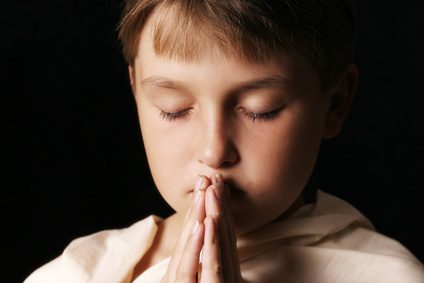
Everyone knows that memories can fade with time. But not everyone realizes that in “refreshing” memories by remembering them, they risk distortion. This has implications for how people construct their identity. Focusing on religious identity, psychologists R. David Hayward (University of Michigan), Joanna Maselko (Duke University Medical Center), and Keith G. Meador (Vanderbilt University Medical Center) found that people would accurately remember their childhood religious behavior but would alter their childhood religious identity so that it matched their present religious identity.
Most people seek to maintain a consistent self-identity over time. More specifically, according to self-appraisal theory, people see their “present self” as part of a coherent and consistent series of selves that extends forwards and backwards in time. When faced with a past self that does not fit with the present picture, people will rework it so that it will.
With self-appraisal theory in mind, the researchers note that religious identity tends to follow a distinct pattern: religiosity starts off relatively high until adolescence, where it drops sharply, but then it increases again in middle adulthood and continues until death. This topsy-turvy pattern of the typical person’s religiosity obviously does not lend itself to stable self-identity.
Further complicating matters, in certain instances people will desire to detach their “former” self from their current self. In religious terms, this could be a conversion experience where the convert sees himself or herself as living a radically different life (and is proud of this contrast). In more secular terms, a study has shown that college students tend to evaluate themselves more positively in comparison with earlier in the semester, even though the metrics detected no evidence of actual improvement.
Recognizing all of these nuances, the psychologists hypothesize that self-reported subjective measures of religious identity will change over time more so than self-reported objective measures. They believe that the construction of a personal identity can more easily assimilate subjective data than objective data.
To test their hypothesis, they used data from the Providence, Rhode Island, birth-cohort of the National Collaborative Perinatal Project (NCPP), and its three follow-up studies. From 1959 to 1961, the NCPP received 4,140 positive responses from mothers who would volunteer their then-infant children to participate in this survey. The first followup study took place between 1987 and 1991, the second in 1996, and the third in 2001. The relevant measures of religious identity for the current study include: (1) “Do you regularly go to a church or other place of worship?”, (2) “Do you consider yourself a religious person?”, (3) “Growing up, did you regularly go to a church or other place of worship?”, and (4) “Growing up, did you consider yourself a religious person?” Asking about church attendance qualifies as an objective measure, while asking about being a “religious person” qualifies as a subjective measure.
As expected, reports of childhood religious behavior (going to church) changed less than reports of childhood religious identity: 11.4% altered the former while 25.9% altered the latter. These alterations in most cases tended in the direction of conformity with current adult identity. Consequently, currently religious people recollected their childhood self as also being religious, and, likewise, currently non-religious people did the opposite. The objective measure of church attendance did not enjoy complete immunity from adult reconstructions of their past, but such reconstructions did require more effort to explain away the fact of their childhood church attendance. Religious people who did not attend church frequently as a child answered by saying that their parents did not give them the opportunity to realize their true identity, and non-religious people who did attend church frequently as a child answered by saying that they conformed to their parents’ church-going behavior because of family pressure.
The researchers fully admit some of the limitations of their research. First, the NCPP asked only if the person attended church “regularly,” with the only responses being Yes or No. “Regularly” is ill-defined and subject to a wide range of interpretations. Second, the same criticism applies to the words “child” and “growing up”—these undefined terms could mean different age ranges to different people (is a teenager or someone in their early 20s still “growing up?”). Finally, the NCPP sought participants only in the heavily Protestant country of the United States (and only in one American city), so these results may not apply outside of this context.
Still, at the very least, this research does issue a warning to all studies of religion that rely solely on participants’ recollections of their childhood religious identities. Such studies risk accepting distorted or even false data. But if they do let false data slip in, they can always, after the fact, retell their story.
For more, see “Recollections of childhood religious identity and behavior as a function of adult religiousness” in the International Journal for the Psychology of Religion.
Previous Post

April 11, 2013
Religion, Ideology, and Environmentalism: A Tale of Morals
Next Post
April 22, 2013 How the brain escapes the self
Browse Our Archives
Select a Category Atheism Cognitive Science of Religion Costly investment theory Cultural psychology Editorial Evolution Evolution of Religion Evolution of religion series Evolutionary psychology Ideology and religion Modeling Religion Project Modern culture and religion Most Popular Practice of science Religion and education Religion and ethics Religion and health Religion and perception Religion and prejudice Religious violence Religious ways of thinking Science and religion Scientific study of religion Secularization Spirituality Uncategorized
Select a Month July 2022 February 2022 December 2021 October 2021 August 2021 July 2021 June 2021 May 2021 April 2021 March 2021 February 2021 January 2021 December 2020 November 2020 October 2020 September 2020 August 2020 July 2020 June 2020 May 2020 April 2020 March 2020 February 2020 January 2020 November 2019 October 2019 September 2019 August 2019 July 2019 June 2019 May 2019 April 2019 March 2019 February 2019 January 2019 December 2018 November 2018 October 2018 September 2018 August 2018 July 2018 June 2018 May 2018 April 2018 March 2018 February 2018 January 2018 December 2017 November 2017 October 2017 September 2017 August 2017 July 2017 June 2017 May 2017 April 2017 March 2017 February 2017 January 2017 December 2016 November 2016 September 2016 August 2016 June 2016 April 2016 March 2016 February 2016 January 2016 November 2015 October 2015 September 2015 August 2015 July 2015 June 2015 May 2015 April 2015 March 2015 February 2015 January 2015 December 2014 November 2014 October 2014 September 2014 August 2014 July 2014 June 2014 May 2014 April 2014 March 2014 February 2014 January 2014 December 2013 November 2013 October 2013 September 2013 August 2013 July 2013 June 2013 May 2013 April 2013 March 2013 February 2013 January 2013 December 2012 November 2012 October 2012 September 2012 August 2012 July 2012 June 2012 May 2012 April 2012 March 2012 February 2012
Follow Us!
TAKE THE
Religious Wisdom Quiz
True or False: Job lost all his children, wealth, and health in a single day.
Select your answer to see how you score.
FALSE TRUE
Related posts from Science On Religion

Why Rites of Passage Are Painful


The Joys and Challenges of Interdisciplinary Research

Religious Experience and Homo Duplex
TRENDING AT PATHEOS Religion News

Catholic Integralists believe that religious values – specifically Christian ones – should...

Electing A Virtuous President Would Make Immunity Irrelevant
Presidential immunity can bring with it many risks. So how can we...

Why The Olympic Games Are A ‘Civil Religious’...
Sporting events form a vital space where Americans display their 'civil religious...

After more than a decade of news, research updates, and insights on...

Q: Why do Southern Baptists and like-minded Protestants...
THE RELIGION GUY’S ANSWER: Why? Simple. Because they believe that’s what the...

THE QUESTION: Is gambling evil? THE RELIGION GUY’S ANSWER: Analysts anticipate a...
view all Religion News blogs
Ad-Free & Subscriber Log-In Subscription Support
- About Us
- 2026 Calendar
- Videos
- Podcasts
- Library of World Religions
- Faith In Media Tracker
- Advertise With Us
- Write for Us
- Privacy Policy
- Terms of Service
- Do Not Sell My Data
- Contact Us
- Radiant Digital
- Manage Newsletter Subscriptions
- Unsubscribe From Notifications
- Sitemap
Copyright 2008-2026, Patheos. All rights reserved.
Subscription Support Ad-Free & Subscriber Log-In
Follow Patheos