
BuddhistCatholicContemplativeEvangelicalGeneral ChristianHinduJewishLatter-day SaintMuslimNew VisionsProgressive Christian
Beliefs
- Buddhist
- Catholic
- Contemplative
- Evangelical
- General Christian
- Hindu
- Jewish
- Latter-day Saint
- More Voices
- Muslim
- New Visions
- Pagan
- Progressive Christian
Topics
- Religion News
- Food and Religion
- Sports and Religion
- Religious Art
- Religious Music and Entertainment
- Religious Events
- History and Religion
- Style and Religion
- Politics and Religion
- Women in Religion
- Recreation Outdoors and Religion
- Business Finance and Religion
- Careers Workplace and Religion
- Education and Religion
- Family Parenting and Religion
- Health Fitness and Religion
- Home and Religion
- Relationships and Religion
- Technology and Religion
- Travel and Religion
Columnists
- Buddhist Columnists
- Business Finance and Religion Columnists
- Careers Workplace and Religion Columnists
- Catholic Columnists
- Contemplative Columnists
- Education and Religion Columnists
- Evangelists Columnists
- Family Parenting and Religion Columnists
- General Christian Columnists
- Health Fitness and Religion Columnists
- Hindu Columnists
- History and Religion Columnists
- Home and Religion Columnists
- Jewish Columnists
- More Voices Columnists
- Latter Day Columnists
- Muslim Columnists
- New Visions Columnists
- Nonreligious Columnists
- Pagan Columnists
- Politics and Religion Columnists
- Progressive Columnists
- Recreation Outdoors and Religion Columnists
- Relationships and Religion Columnists
- Religion News Columnists
- Religious Art Columnists
- Religious Events Columnists
- Religious Music and Entertainment Columnists
- Sports and Religion Columnists
- Style and Religion Columnists
- Technology and Religion Columnists
- Travel and Religion Columnists
- Women in Religion Columnists
Resource Library
- 2026 Calendar
- Library of World Religions
- The 100 Most Holy Places on Earth
- Patheos Answers
- Podcasts
- Videos
- Faith Leaders Database
- Anglican Episcopalian
- Bahai
- Baptist
- Buddhism
- Christianity
- Confucianism
- Eastern Orthodoxy
- Hinduism
- Holiness and Pentecostal
- ISKCON
- Islam
- Judaism
- Lutheran
- Methodist
- The Church of Jesus Christ of Latter-day Saints
- New Age
- Paganism
- Presbytarian and Reformed
- Protestantism
- Religion Behind the Scenes
- Roman Catholic
- Scientology
- Shia Islam
- Sikhism
- Sufism
- Sunni Islam
- Taoism
- Zen
- See all religions
Research Tools
 Ad-Free & Subscriber Log-In Subscription Support
Ad-Free & Subscriber Log-In Subscription Support
Follow Patheos 

- Trending:
- Forgiveness
- |
- Marriage
- |
- Consciousness
- |
- Death Penalty
- |
- Election
- |
- Halloween
 Science On Religion
- Home
- Religion News
- Religious beliefs affect neural self-processing
Religious beliefs affect neural self-processing
Last updated on: April 30, 2012 at 6:10 pm by Connor Wood
Religious beliefs affect neural self-processing 2012-04-30T18:10:01-04:00 Connor Wood
Patheos Explore the world's faith through different perspectives on religion and spirituality! Patheos has the views of the prevalent religions and spiritualities of the world.
Connor Wood
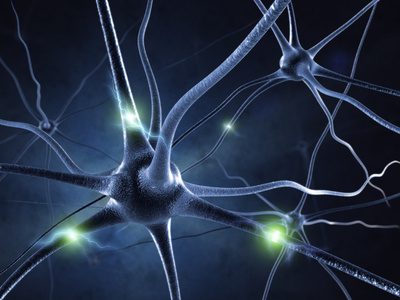 It’s one of the most basic human experiences. The world and I are different things – the world is out there, and I’m looking out at all the action. But this division might not be so strict for everyone. Researchers in China have discovered that people from different cultures show distinctive patterns of neuronal activation when asked to think about themselves. Specifically, Tibetan Buddhists do not exhibit the typical brain activity associated with concepts of a self. This suggests that religious beliefs directly affect not only our neurology, but our fundamental experience of the world.
 Self-processing, or self-reflection, a psychological term that refers to how we think about ourselves in relation to our environment, is a mainstay of neurological and psychological research. Part of the role of self-processing in the brain’s toolbox is to help monitor our interactions with the external world and correct minor behavioral flaws before those flaws turn into serious problems. We use self-processing when we wonder whether we’ve made a good impression on new acquaintances, for example – did we smile nicely and make eye contact, or did we mumble and stare at the floor? Self-processing is also often activated after we commit an error or fail at a task, such as when we get a poor grade on a test. Often, this will lead us to reexamine our performance to learn where we went wrong.
Researchers have long known that the culture one is brought up in can affect how one processes the self in the context of the world, and that these differences can be detected in brain imaging tests such as electroencephalograph, or EEG, scans. A person from a culture in which collective action and loyalties are valued over individualist aspirations, for instance, might show different patterns of self-evaluative brain activity than a person raised in the United States. The concept of the “self,” then, arises at least partially in response to cultural factors.
While this conclusion has been accepted for some time, what hadn’t been made clear prior to the recent publication of an article in Social Cognitive and Affective Neuroscience was that religious upbringing can also affect our conceptions of the self. To make this claim, neuroscience researchers Yanhong Wu, Cheng Wang, Xi He, Lihua Mao, and Li Zhang of Capital Normal University in Beijing conducted neuroimaging scans of Han Chinese and ethnic Tibetan volunteers. In the Han Chinese participants, the parts of the brain known as the ventral medial prefrontal cortex and the left anterior cingulate cortex were activated during self-processing, showing a strong distinction between self-processing and other-processing patterns. But in the Tibetan volunteers, stimuli intended to elicit self-processing failed to produce any distinctive patterns of brain activity or behavior. In other words, Tibetans’ brains looked the same when they were contemplating themselves as when they were focused on others or the external world.
Wu and the other researchers concluded that the apparent uniformity between Tibetan participants’ self- and other-processing arose from the lack of an emphasis on an individual self in Tibetan Buddhism. Like many forms of Buddhism, Tibetan religion teaches that the self is no more than a product of its ephemeral surroundings – essentially, an illusion. To the Chinese neuroscientists, the results of the imaging scans suggested that this religious teaching was powerful enough to shape Tibetan volunteers’ neurology at a primary level.
Religion is a fundamental component of most people’s lives across the world, and it’s not news to anyone that our religious beliefs affect how we think about ourselves and about the world. But the claim that our doctrines can radically affect us at the neurological level is a different, and compelling, take on the age-old relationship between religion and the mind. If the researchers in China are correct and self-evaluative processing itself, one of the most fundamental human traits, can be altered or even switched off, religion might be an even more powerful force than we suppose.
left anterior cingulate cortex
ventral medial prefrontal cortex
Previous Post

February 17, 2012
Richard Dawkins to debate the Archbishop of Canterbury
Next Post
February 27, 2012 Medicine and religion, Part I
Browse Our Archives
Select a Category Atheism Cognitive Science of Religion Costly investment theory Cultural psychology Editorial Evolution Evolution of Religion Evolution of religion series Evolutionary psychology Ideology and religion Modeling Religion Project Modern culture and religion Most Popular Practice of science Religion and education Religion and ethics Religion and health Religion and perception Religion and prejudice Religious violence Religious ways of thinking Science and religion Scientific study of religion Secularization Spirituality Uncategorized
Select a Month July 2022 February 2022 December 2021 October 2021 August 2021 July 2021 June 2021 May 2021 April 2021 March 2021 February 2021 January 2021 December 2020 November 2020 October 2020 September 2020 August 2020 July 2020 June 2020 May 2020 April 2020 March 2020 February 2020 January 2020 November 2019 October 2019 September 2019 August 2019 July 2019 June 2019 May 2019 April 2019 March 2019 February 2019 January 2019 December 2018 November 2018 October 2018 September 2018 August 2018 July 2018 June 2018 May 2018 April 2018 March 2018 February 2018 January 2018 December 2017 November 2017 October 2017 September 2017 August 2017 July 2017 June 2017 May 2017 April 2017 March 2017 February 2017 January 2017 December 2016 November 2016 September 2016 August 2016 June 2016 April 2016 March 2016 February 2016 January 2016 November 2015 October 2015 September 2015 August 2015 July 2015 June 2015 May 2015 April 2015 March 2015 February 2015 January 2015 December 2014 November 2014 October 2014 September 2014 August 2014 July 2014 June 2014 May 2014 April 2014 March 2014 February 2014 January 2014 December 2013 November 2013 October 2013 September 2013 August 2013 July 2013 June 2013 May 2013 April 2013 March 2013 February 2013 January 2013 December 2012 November 2012 October 2012 September 2012 August 2012 July 2012 June 2012 May 2012 April 2012 March 2012 February 2012
Follow Us!
TAKE THE
Religious Wisdom Quiz
What did Moses break upon seeing the people worshiping an idol?
Select your answer to see how you score.
Aaron's staff The Ark Stone tablets The altar
Related posts from Science On Religion

The Joys and Challenges of Interdisciplinary Research

Is Academia a Failed Initiation Rite?


The Coronavirus Outbreak Shows the Dangers of Social...
TRENDING AT PATHEOS Religion News

Catholic Integralists believe that religious values – specifically Christian ones – should...

Electing A Virtuous President Would Make Immunity Irrelevant
Presidential immunity can bring with it many risks. So how can we...

Why The Olympic Games Are A ‘Civil Religious’...
Sporting events form a vital space where Americans display their 'civil religious...

After more than a decade of news, research updates, and insights on...

Q: Why do Southern Baptists and like-minded Protestants...
THE RELIGION GUY’S ANSWER: Why? Simple. Because they believe that’s what the...

THE QUESTION: Is gambling evil? THE RELIGION GUY’S ANSWER: Analysts anticipate a...
view all Religion News blogs
Ad-Free & Subscriber Log-In Subscription Support
- About Us
- 2026 Calendar
- Videos
- Podcasts
- Library of World Religions
- Faith In Media Tracker
- Advertise With Us
- Write for Us
- Privacy Policy
- Terms of Service
- Do Not Sell My Data
- Contact Us
- Radiant Digital
- Manage Newsletter Subscriptions
- Unsubscribe From Notifications
- Sitemap
Copyright 2008-2026, Patheos. All rights reserved.
Subscription Support Ad-Free & Subscriber Log-In
Follow Patheos