
BuddhistCatholicContemplativeEvangelicalGeneral ChristianHinduJewishLatter-day SaintMuslimNew VisionsProgressive Christian
Beliefs
- Buddhist
- Catholic
- Contemplative
- Evangelical
- General Christian
- Hindu
- Jewish
- Latter-day Saint
- More Voices
- Muslim
- New Visions
- Pagan
- Progressive Christian
Topics
- Religion News
- Food and Religion
- Sports and Religion
- Religious Art
- Religious Music and Entertainment
- Religious Events
- History and Religion
- Style and Religion
- Politics and Religion
- Women in Religion
- Recreation Outdoors and Religion
- Business Finance and Religion
- Careers Workplace and Religion
- Education and Religion
- Family Parenting and Religion
- Health Fitness and Religion
- Home and Religion
- Relationships and Religion
- Technology and Religion
- Travel and Religion
Columnists
- Buddhist Columnists
- Business Finance and Religion Columnists
- Careers Workplace and Religion Columnists
- Catholic Columnists
- Contemplative Columnists
- Education and Religion Columnists
- Evangelists Columnists
- Family Parenting and Religion Columnists
- General Christian Columnists
- Health Fitness and Religion Columnists
- Hindu Columnists
- History and Religion Columnists
- Home and Religion Columnists
- Jewish Columnists
- More Voices Columnists
- Latter Day Columnists
- Muslim Columnists
- New Visions Columnists
- Nonreligious Columnists
- Pagan Columnists
- Politics and Religion Columnists
- Progressive Columnists
- Recreation Outdoors and Religion Columnists
- Relationships and Religion Columnists
- Religion News Columnists
- Religious Art Columnists
- Religious Events Columnists
- Religious Music and Entertainment Columnists
- Sports and Religion Columnists
- Style and Religion Columnists
- Technology and Religion Columnists
- Travel and Religion Columnists
- Women in Religion Columnists
Resource Library
- 2026 Calendar
- Library of World Religions
- The 100 Most Holy Places on Earth
- Patheos Answers
- Podcasts
- Videos
- Faith Leaders Database
- Anglican Episcopalian
- Bahai
- Baptist
- Buddhism
- Christianity
- Confucianism
- Eastern Orthodoxy
- Hinduism
- Holiness and Pentecostal
- ISKCON
- Islam
- Judaism
- Lutheran
- Methodist
- The Church of Jesus Christ of Latter-day Saints
- New Age
- Paganism
- Presbytarian and Reformed
- Protestantism
- Religion Behind the Scenes
- Roman Catholic
- Scientology
- Shia Islam
- Sikhism
- Sufism
- Sunni Islam
- Taoism
- Zen
- See all religions
Research Tools
 Ad-Free & Subscriber Log-In Subscription Support
Ad-Free & Subscriber Log-In Subscription Support
Follow Patheos 

- Trending:
- Forgiveness
- |
- Marriage
- |
- Consciousness
- |
- Death Penalty
- |
- Election
- |
- Halloween

- Home
- Religious Music & Entertainment
- A book by any other name
A book by any other name
Last updated on: July 9, 2021 at 8:00 am by Coyle Neal
A book by any other name 2021-07-03T15:38:23-06:00 Coyle Neal
Patheos Explore the world's faith through different perspectives on religion and spirituality! Patheos has the views of the prevalent religions and spiritualities of the world.
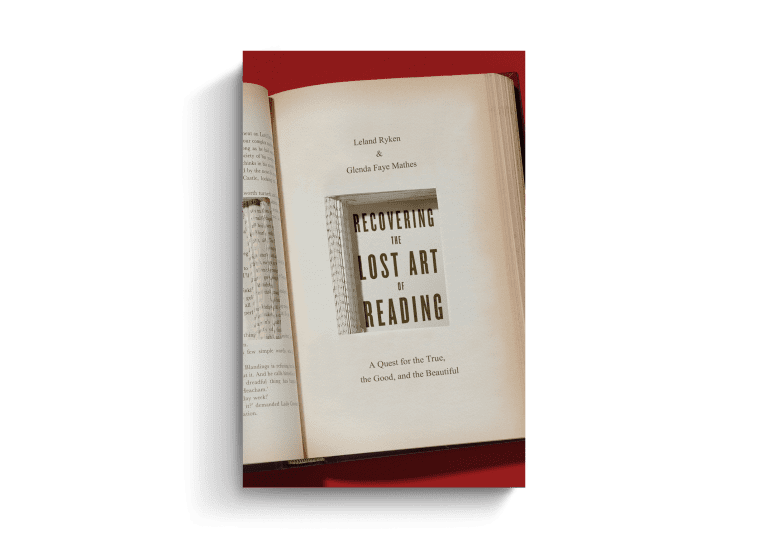
Image: Crossway

How should Christians read books? That’s not as simple a question to answer as it appears at first glance. Part of the reason this is a difficult question to answer is that there are a lot of different types of things to read: poetry, non-fiction, and fiction; and then different genres within each of those (as just a handful of examples). Different kinds of writing require different methods of reading even before we start to consider content and style as factors.
But the diversity of materials to read isn’t the only difficulty in play here. Another, and I think a bigger, difficulty is caused by the damage that has been done to us by the pervasive presence of electronic devices. I’m not denying that these devices have conveniences—what reasonable person could deny that? But their impact on our capacity to concentrate and retain information has been devastating. So learning how to read properly is a more critical skill than ever. Fortunately to help us along the way, Leland Ryken and Glenda Faye Mathes have written the new book Recovering the Lost Art of Reading.
Part one of Recovering the Lost Art of Reading makes the case that reading is an art, and that said art has been lost. Part three argues that the art of reading is worth restoring to personal and public practice (though the focus is definitely on personal; someone else needs to write a book about the social impact of the collapse of literacy; or, if they want people to actually read it, they need to record their thesis as a dance on TikTok). Part two of Recovering the Lost Art of Reading gives an overview of what ‘literature’ is, and then a brief introduction to different types of literature and how to best read them (including, but not limited to, fantasy, poetry, nonfiction, children’s literature, etc).
I’m happy to recommend this book, but I’ve also got to admit that this book is not really written for me. I’m the choir to which Ryken and Mathes are preaching, and am already sold on the claim that people need to read more and read better.
That said, I think there is an issue here that needs some attention. There is a disconnect which the authors are apparently unaware of in chapter 4, “What is literature?” Beginning with a jeremiad about the collapse of the study of literature in colleges, the authors note the transition from the study of ‘literature’ to ‘texts’
“Half a century ago… Academia rejected the idea of defining literature.
The fallout was predictable: if it is impossible to define the differentiating properties of literature as a form of writing, then all writing and even non-writing becomes fair game to be considered literature. This is precisely what happened… The generic term text opened the door to teach any written document–in fact, the term quickly expanded to encompass nonverbal artifacts. Here is a representative list of courses currently offered in literature departments at prestigious universities: “The Politics of Hip-Hop”; “Digital Game Studies”; “The Art of Insult.” (That last one was allowed as a substitute for a course in Shakespeare.) A student… reported taking a literature course that had no texts at all. Instead of scrutinizing great works of literature, the class did activities such as visiting a toy store to see what packaging was gender-biased and spending an evening in a gay bar.” (53-54)
Aside from the hand-wringing here over the state of education these days (hand-wringing with which I agree, for what it’s worth), and aside from my being triggered here as someone who teaches both a film class and a class on Country music (albeit in “Politics” rather than in the English department), the problem comes when at the end of the chapter we are given the summary definition of ‘literature’:
“What is literature? It can be briefly defined as a concrete, interpretive presentation of human experience in artistic form.” (61)
Leading up to this summary, literature is discussed as “experiential,” “concrete” (i.e. real, rather than abstract), “universal”, “interpretive,” and “artistic.” The disconnect, then, comes in this definition of literature when contrasted with their earlier objection to the replacing of ‘literature’ with ‘texts.’ If literature is “experiential”, “concrete,” etc, why wouldn’t something like the packaging on a toy, a video game narrative, or the lyrics of a rap song meet the definition of literature Ryken and Mathes provide? Are they not “concrete, interpretive presentation[s] of human experience in artistic form”? Which of the criteria do they not meet?
Perhaps the objection is that the lyrics of the song in question or the plot of the video game or the writing on the side of the toy do not rise to the level of ‘art’. Maybe so, but then again neither do most books. And even if most Hip-Hop isn’t great art, surely at least some of it is (heck, maybe all of it is–I’m no Hip-Hop expert). Whether it’s all art or none of it is, Hip-Hop certainly certainly checks the boxes of experiential, concrete, etc. Why wouldn’t it be fair game for study as literature?
It seems that the true determiner here, albeit unmentioned, is that most of the things mentioned as false replacements for literature don’t really require focused reading. At least, reading the side of a toy or listening to rap isn’t the same activity as reading a book. That much is certainly true, and it must matter–though exactly how I’m not clear.
Still, aside from this disconnect Recovering the Lost Art of Reading is a worthwhile book, and I pray that it facilities the recovery of that critical lost art.
Dr. Coyle Neal is co-host of the City of Man Podcast and an Associate Professor of Political Science at Southwest Baptist University in Bolivar, MO
Previous Post
July 6, 2021
Common Grace, 2.46
Next Post
July 13, 2021 Common Grace, 2.47-48
Browse Our Archives
Select a Category Action AFI Top 100 Animation Best Picture Winner BFI Top 250 Biography Biopic Books Childrens Christian Classics Classics Comedy Crime Documentary Drama Editor's Choice Family Fantasy Fantasy Films Foreign Historical Historical Fiction History Horror Horror IMDB Top 250 Indie Memoir Modern Novel Musical Mystery Non-Fiction Oscars Philosophy Poetry Popular Literature Reading and Writing Reality Romance Science Fiction Science Fiction Silent Sports Thriller TV Show Uncategorized Western Westerns Young Adult
Select a Month October 2026 September 2026 July 2026 June 2026 May 2026 April 2026 March 2026 February 2026 January 2026 December 2025 November 2025 October 2025 September 2025 August 2025 July 2025 June 2025 May 2025 April 2025 March 2025 February 2025 January 2025 December 2024 July 2024 June 2024 May 2024 April 2024 March 2024 February 2024 January 2024 December 2023 November 2023 October 2023 September 2023 August 2023 July 2023 June 2023 May 2023 April 2023 March 2023 February 2023 January 2023 December 2022 November 2022 October 2022 September 2022 August 2022 July 2022 June 2022 May 2022 April 2022 March 2022 February 2022 January 2022 December 2021 November 2021 October 2021 September 2021 August 2021 July 2021 June 2021 May 2021 April 2021 March 2021 February 2021 January 2021 December 2020 November 2020 October 2020 September 2020 August 2020 July 2020 June 2020 May 2020 April 2020 March 2020 February 2020 January 2020 December 2019 November 2019 October 2019 September 2019 August 2019 July 2019 June 2019 May 2019 April 2019 March 2019 February 2019 January 2019 December 2018 November 2018 October 2018 September 2018 August 2018 July 2018 June 2018 May 2018 April 2018 March 2018 February 2018 January 2018 December 2017 November 2017 October 2017 September 2017 June 2017 January 2017 December 2016 October 2016 September 2016 August 2016 July 2016 June 2016 May 2016 April 2016 March 2016 February 2016 January 2016 December 2015 November 2015 October 2015 September 2015 August 2015 July 2015 June 2015 May 2015 April 2015 March 2015 February 2015 January 2015 December 2014 November 2014 October 2014 September 2014 August 2014 July 2014 June 2014 May 2014 April 2014 March 2014 February 2014 January 2014 December 2013 November 2013 October 2013 September 2013 August 2013 July 2013 June 2013 May 2013 April 2013 March 2013 February 2013 January 2013 December 2012 November 2012 October 2012 September 2012 August 2012 July 2012
Follow Us!
TAKE THE
Religious Wisdom Quiz
How many people were saved in Noah's Ark?
Select your answer to see how you score.
10 12 8 6
Related posts from Schaeffer's Ghost




Thinking Critically about Critical Theory
TRENDING AT PATHEOS Religious Music & Entertainment

The First Eucharistic Controversy: Christ’s Real Presence
For Catholics, the Eucharist is the source and summit of the Christian...

What a Stop Sign Can Teach Us About...
How to Make a Decision When You Can't Hear God Main point:...

Archdiocese Hosts Military Marriage Retreat in Germany
RASTATT, Germany — The transient military lifestyle, with its frequent deployments and...

Nearly every morning, I make the drive to Detroit with my high-school-age...

The Real AI Story Is Adoption Without Trust
Artificial intelligence has crossed a political threshold. It is no longer a...

A new article, written by Jeff Lindsay and Gale L. Pooley,...
view all Religious Music & Entertainment blogs
Ad-Free & Subscriber Log-In Subscription Support
- About Us
- 2026 Calendar
- Videos
- Podcasts
- Library of World Religions
- Faith In Media Tracker
- Advertise With Us
- Write for Us
- Privacy Policy
- Terms of Service
- Do Not Sell My Data
- Contact Us
- Radiant Digital
- Manage Newsletter Subscriptions
- Unsubscribe From Notifications
- Sitemap
Copyright 2008-2026, Patheos. All rights reserved.
Subscription Support Ad-Free & Subscriber Log-In
Follow Patheos