
BuddhistCatholicContemplativeEvangelicalGeneral ChristianHinduJewishLatter-day SaintMuslimNew VisionsProgressive Christian
Beliefs
- Buddhist
- Catholic
- Contemplative
- Evangelical
- General Christian
- Hindu
- Jewish
- Latter-day Saint
- More Voices
- Muslim
- New Visions
- Pagan
- Progressive Christian
Topics
- Religion News
- Food and Religion
- Sports and Religion
- Religious Art
- Religious Music and Entertainment
- Religious Events
- History and Religion
- Style and Religion
- Politics and Religion
- Women in Religion
- Recreation Outdoors and Religion
- Business Finance and Religion
- Careers Workplace and Religion
- Education and Religion
- Family Parenting and Religion
- Health Fitness and Religion
- Home and Religion
- Relationships and Religion
- Technology and Religion
- Travel and Religion
Columnists
- Buddhist Columnists
- Business Finance and Religion Columnists
- Careers Workplace and Religion Columnists
- Catholic Columnists
- Contemplative Columnists
- Education and Religion Columnists
- Evangelists Columnists
- Family Parenting and Religion Columnists
- General Christian Columnists
- Health Fitness and Religion Columnists
- Hindu Columnists
- History and Religion Columnists
- Home and Religion Columnists
- Jewish Columnists
- More Voices Columnists
- Latter Day Columnists
- Muslim Columnists
- New Visions Columnists
- Nonreligious Columnists
- Pagan Columnists
- Politics and Religion Columnists
- Progressive Columnists
- Recreation Outdoors and Religion Columnists
- Relationships and Religion Columnists
- Religion News Columnists
- Religious Art Columnists
- Religious Events Columnists
- Religious Music and Entertainment Columnists
- Sports and Religion Columnists
- Style and Religion Columnists
- Technology and Religion Columnists
- Travel and Religion Columnists
- Women in Religion Columnists
Resource Library
- 2026 Calendar
- Library of World Religions
- The 100 Most Holy Places on Earth
- Patheos Answers
- Podcasts
- Videos
- Faith Leaders Database
- Anglican Episcopalian
- Bahai
- Baptist
- Buddhism
- Christianity
- Confucianism
- Eastern Orthodoxy
- Hinduism
- Holiness and Pentecostal
- ISKCON
- Islam
- Judaism
- Lutheran
- Methodist
- The Church of Jesus Christ of Latter-day Saints
- New Age
- Paganism
- Presbytarian and Reformed
- Protestantism
- Religion Behind the Scenes
- Roman Catholic
- Scientology
- Shia Islam
- Sikhism
- Sufism
- Sunni Islam
- Taoism
- Zen
- See all religions
Research Tools
 Ad-Free & Subscriber Log-In Subscription Support
Ad-Free & Subscriber Log-In Subscription Support
Follow Patheos 

- Trending:
- Forgiveness
- |
- Marriage
- |
- Consciousness
- |
- Death Penalty
- |
- Election
- |
- Halloween

- Home
- Religious Music & Entertainment
- Review of “Demanding Liberty” by Brandon O’Brien
Review of “Demanding Liberty” by Brandon O’Brien
Last updated on: August 28, 2018 at 8:00 am by Coyle Neal
Review of “Demanding Liberty” by Brandon O’Brien 2018-08-27T13:35:31-06:00 Coyle Neal
Patheos Explore the world's faith through different perspectives on religion and spirituality! Patheos has the views of the prevalent religions and spiritualities of the world.
There are lots of things I’m ignorant of, but one field where my ignorance shames me most is that of Baptist history. Which makes Brandon O’Brien’s Demanding Liberty: An Untold Story of American Religious Freedom an interesting introductory read.
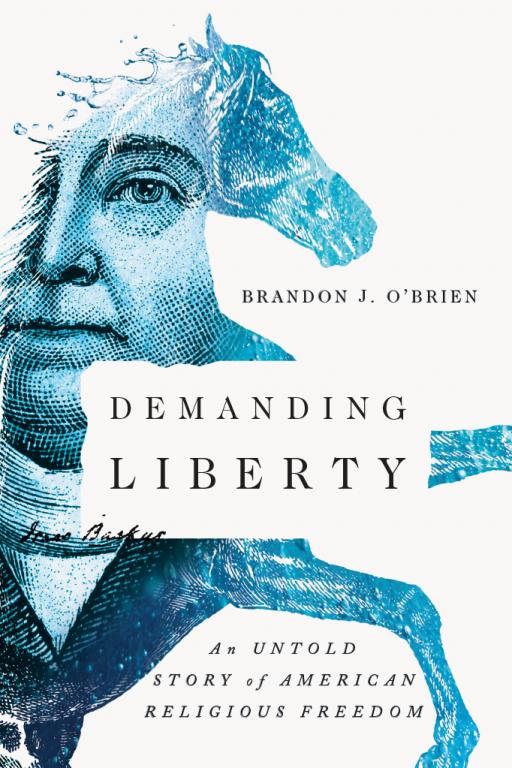
Image: IVP

Overall it is well-written, informative, and, from what I can tell, a good way to get a taste of the Baptist struggle for religious liberty in the mid- to late-1700s. O’Brien focuses (rightly) on the life and writings of Isaac Backus and his struggles with the Congregationalist established church in Massachusetts, as well as with the entrenched idea of having an establishment in the first place that was so dominant even among non-religious founders like John Adams.
I can cheerfully recommend the vast majority of this book.
The bits I’m a bit more hesitant about are the few times O’Brien makes moves towards modern day application. For example, when talking about Backus’ petition to the Continental Congress for religious freedom, O’Brien argues that Backus mistakenly used in-house Christian/theological language instead of appealing in the language of the dominant political culture of the time.
“To make any progress in debates and discussions about religious liberty, we have to figure out how to have the conversations in the lingua franca of the modern political system. This is especially true when the appeal for religious liberty today is perceived as a cover for misogyny, racism, or homophobia. Appeals to Scripture and the Christian tradition become shrill when the hearer doesn’t speak the language. In other words, original sin may be a helpful concept for understanding religious liberty within the family of faith. But the concept will likely come across as tone deaf in the broader culture. Advocating for our own religious liberty–and defending the rights of others–requires the mental agility to have the conversation differently with insiders and outsiders.” (123-124)
There is certainly a sense in which this is true. We shouldn’t speak in a way intentionally meant to offend the culture, and we should be wise in how we speak to the broader society. With that said, I’m not convinced of the wisdom of letting that broader culture define how we articulate our beliefs to anyone, whether ourselves or the world. It doesn’t really matter if we’re speaking inside or outside, our language should be defined by Scripture.
There are several reasons for this. For one, although there are times when the culture is more friendly and times when the culture is less friendly, at heart the culture’s basic rule of discussion is “Christians lose.” For another, we ought to be wary of having two different languages. The world will find this out (it’s not like we really keep things secret–our meetings are open to the public after all!) and both call us hypocrites and judge us by the worst possible interpretation of our beliefs. It’s not a losing game at the end of the day (read Revelation if you don’t believe me there), but it’s a game we’re not going to win in the short term or on the culture’s terms.
As another example of a point where I’m a bit hesitant about what O’Brien says, when discussing Backus’ transition from a Congregationalist to a Baptist he makes the point that we should be generously flexible:
“Public discourse in twenty-first-century America increasingly forces people to take firm stands and draw clear lines in the sand over a wide range of issues. This sort of tribalism ignores that basic fact that all opinions are under construction… In the current sociopolitical climate, churches would do well to model the kind of accommodation Backus was willing to attempt regarding the issue of baptism in his church….
A second reason we ought to extend this posture of generous disagreement to one another is that the gospel makes us humble. Or it should…. there was a time when I got some important things wrong. It should prompt us to assume that we will again in the future get something important all wrong.” (68-69)
Again, I think I’m mostly on board with this. We should be humble. We should be aware that we are wrong about something now and will be corrected on it someday. We should be tolerant of our brothers’ and sisters’ weaknesses when they are wrong. We should be broad in the spectrum of beliefs allowed in the church.
And yet, there are also some warning signs here as well. When we’re talking about the context of the church, we should be tolerant within the context of agreement on the Gospel. That is, we should tolerate each others’ differences of opinion on, say, Calvinism vs. Arminianism. But we should not tolerate differences of opinion over the Deity of Christ, the inspiration of Scripture, penal substitution, or other fundamental doctrines of the faith. In those instances, what might appear to be toleration is actually the destruction of the very foundation of the church’s confession of faith. I suspect that O’Brien agrees with this, but I could see how someone reading this book could quite easily over-read and insist on toleration as the highest good.
Aside from a handful of moments like these (mostly clustered at the end of each chapter in O’Brien’s analysis section), the book is worth your time. It has certainly convinced me that I need to read more about and by Isaac Backus and my own Baptist predecessors.
Dr. Coyle Neal is co-host of the City of Man Podcast and an Associate Professor of Political Science at Southwest Baptist University in Bolivar, MO.
Previous Post

August 24, 2018
‘Support the Girls’ Shows Sympathy Toward Deeply Flawed Characters
Next Post

August 31, 2018 In which I find that I might be a legalist
Browse Our Archives
Select a Category Action AFI Top 100 Animation Best Picture Winner BFI Top 250 Biography Biopic Books Childrens Christian Classics Classics Comedy Crime Documentary Drama Editor's Choice Family Fantasy Fantasy Films Foreign Historical Historical Fiction History Horror Horror IMDB Top 250 Indie Memoir Modern Novel Musical Mystery Non-Fiction Oscars Philosophy Poetry Popular Literature Reading and Writing Reality Romance Science Fiction Science Fiction Silent Sports Thriller TV Show Uncategorized Western Westerns Young Adult
Select a Month October 2026 September 2026 July 2026 June 2026 May 2026 April 2026 March 2026 February 2026 January 2026 December 2025 November 2025 October 2025 September 2025 August 2025 July 2025 June 2025 May 2025 April 2025 March 2025 February 2025 January 2025 December 2024 July 2024 June 2024 May 2024 April 2024 March 2024 February 2024 January 2024 December 2023 November 2023 October 2023 September 2023 August 2023 July 2023 June 2023 May 2023 April 2023 March 2023 February 2023 January 2023 December 2022 November 2022 October 2022 September 2022 August 2022 July 2022 June 2022 May 2022 April 2022 March 2022 February 2022 January 2022 December 2021 November 2021 October 2021 September 2021 August 2021 July 2021 June 2021 May 2021 April 2021 March 2021 February 2021 January 2021 December 2020 November 2020 October 2020 September 2020 August 2020 July 2020 June 2020 May 2020 April 2020 March 2020 February 2020 January 2020 December 2019 November 2019 October 2019 September 2019 August 2019 July 2019 June 2019 May 2019 April 2019 March 2019 February 2019 January 2019 December 2018 November 2018 October 2018 September 2018 August 2018 July 2018 June 2018 May 2018 April 2018 March 2018 February 2018 January 2018 December 2017 November 2017 October 2017 September 2017 June 2017 January 2017 December 2016 October 2016 September 2016 August 2016 July 2016 June 2016 May 2016 April 2016 March 2016 February 2016 January 2016 December 2015 November 2015 October 2015 September 2015 August 2015 July 2015 June 2015 May 2015 April 2015 March 2015 February 2015 January 2015 December 2014 November 2014 October 2014 September 2014 August 2014 July 2014 June 2014 May 2014 April 2014 March 2014 February 2014 January 2014 December 2013 November 2013 October 2013 September 2013 August 2013 July 2013 June 2013 May 2013 April 2013 March 2013 February 2013 January 2013 December 2012 November 2012 October 2012 September 2012 August 2012 July 2012
Follow Us!
TAKE THE
Religious Wisdom Quiz
What does "Genesis" mean?
Select your answer to see how you score.
Poetry Origin or Beginning Law Wisdom
Related posts from Schaeffer's Ghost




Thinking Critically about Critical Theory
TRENDING AT PATHEOS Religious Music & Entertainment

Emotion in Early Christianity by Andrew Crislip
Andrew Crislip’s Emotion in Early Christianity examines an often overlooked dimension of...

16 Spiritual Touchstones for a More Grounded Life
After decades of spiritual study, here are 16 principles I try...

Catholic Evangelization: Sharing Your Faith Every Day
Welcome back to the Graceful Awakening mini-series called, “From Faith to Mission.” ...

The Pillar of the Boatmen: the Ancient Monument...
The Pillar of the Boatmen is a Romano-Gaulish sculpture that dates from...

In one sense walking into Westminster Abbey is like walking down the...

'Super Scam Me' Exposes AI Jon Bon Jovi...
Leslie Pickett believed she was in a relationship with Jon Bon Jovi....
view all Religious Music & Entertainment blogs
Ad-Free & Subscriber Log-In Subscription Support
- About Us
- 2026 Calendar
- Videos
- Podcasts
- Library of World Religions
- Faith In Media Tracker
- Advertise With Us
- Write for Us
- Privacy Policy
- Terms of Service
- Do Not Sell My Data
- Contact Us
- Radiant Digital
- Manage Newsletter Subscriptions
- Unsubscribe From Notifications
- Sitemap
Copyright 2008-2026, Patheos. All rights reserved.
Subscription Support Ad-Free & Subscriber Log-In
Follow Patheos