
BuddhistCatholicContemplativeEvangelicalGeneral ChristianHinduJewishLatter-day SaintMuslimNew VisionsProgressive Christian
Beliefs
- Buddhist
- Catholic
- Contemplative
- Evangelical
- General Christian
- Hindu
- Jewish
- Latter-day Saint
- More Voices
- Muslim
- New Visions
- Pagan
- Progressive Christian
Topics
- Religion News
- Food and Religion
- Sports and Religion
- Religious Art
- Religious Music and Entertainment
- Religious Events
- History and Religion
- Style and Religion
- Politics and Religion
- Women in Religion
- Recreation Outdoors and Religion
- Business Finance and Religion
- Careers Workplace and Religion
- Education and Religion
- Family Parenting and Religion
- Health Fitness and Religion
- Home and Religion
- Relationships and Religion
- Technology and Religion
- Travel and Religion
Columnists
- Buddhist Columnists
- Business Finance and Religion Columnists
- Careers Workplace and Religion Columnists
- Catholic Columnists
- Contemplative Columnists
- Education and Religion Columnists
- Evangelists Columnists
- Family Parenting and Religion Columnists
- General Christian Columnists
- Health Fitness and Religion Columnists
- Hindu Columnists
- History and Religion Columnists
- Home and Religion Columnists
- Jewish Columnists
- More Voices Columnists
- Latter Day Columnists
- Muslim Columnists
- New Visions Columnists
- Nonreligious Columnists
- Pagan Columnists
- Politics and Religion Columnists
- Progressive Columnists
- Recreation Outdoors and Religion Columnists
- Relationships and Religion Columnists
- Religion News Columnists
- Religious Art Columnists
- Religious Events Columnists
- Religious Music and Entertainment Columnists
- Sports and Religion Columnists
- Style and Religion Columnists
- Technology and Religion Columnists
- Travel and Religion Columnists
- Women in Religion Columnists
Resource Library
- 2026 Calendar
- Library of World Religions
- The 100 Most Holy Places on Earth
- Patheos Answers
- Podcasts
- Videos
- Faith Leaders Database
- Anglican Episcopalian
- Bahai
- Baptist
- Buddhism
- Christianity
- Confucianism
- Eastern Orthodoxy
- Hinduism
- Holiness and Pentecostal
- ISKCON
- Islam
- Judaism
- Lutheran
- Methodist
- The Church of Jesus Christ of Latter-day Saints
- New Age
- Paganism
- Presbytarian and Reformed
- Protestantism
- Religion Behind the Scenes
- Roman Catholic
- Scientology
- Shia Islam
- Sikhism
- Sufism
- Sunni Islam
- Taoism
- Zen
- See all religions
Research Tools
 Ad-Free & Subscriber Log-In Subscription Support
Follow Patheos 

- Trending:
- Advent
- |
- Forgiveness
- |
- Thanksgiving
- |
- Election
- |
- Seasonal Holidays
- |
- Marriage

- Home
- Religious Music & Entertainment
- Review of ‘In Search of Ancient Roots’
Review of ‘In Search of Ancient Roots’
Last updated on: April 10, 2018 at 8:00 am by Coyle Neal
Review of ‘In Search of Ancient Roots’ 2018-04-02T17:29:20-06:00 Coyle Neal
Patheos Explore the world's faith through different perspectives on religion and spirituality! Patheos has the views of the prevalent religions and spiritualities of the world.
There aren’t really very many Evangelicals leaving the faith for Roman Catholicism or Eastern Orthodoxy, but it is still a trend that has seen a slight upswing in the past few years. Now, to be fair, that slight upswing is really nothing compared to the flood of Roman Catholics converting to Evangelical Christianity. (The numbers in the linked article are from the United States, and admittedly aren’t exactly a ‘flood;’ yet when when we add worldwide conversions to that list it really does constitute a flood. For example, this.) But, at least some of those Evangelical to Catholic conversions are high profile enough that Kenneth Stewart has written a response in the recent book In Search of Ancient Roots: The Christian Past and the Evangelical Identity Crisis.
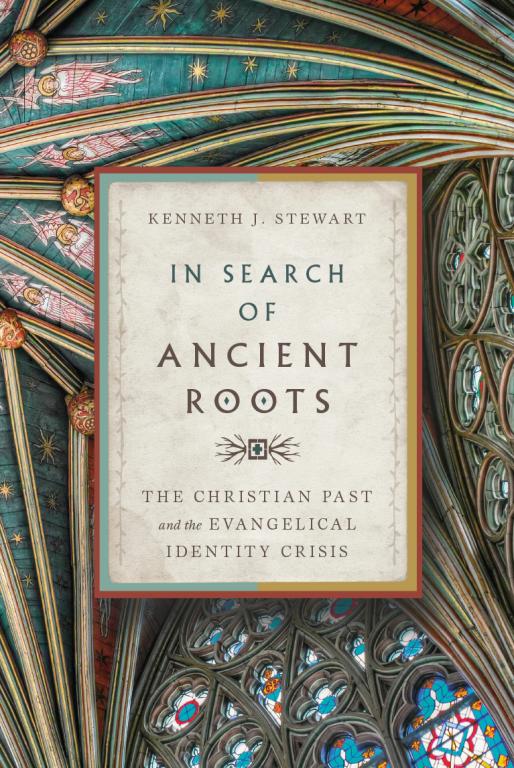
Image Source: IVP
This isn’t the kind of book that I thought it would be (which just shows you that I didn’t read the back cover before diving in). I had expected an apologetic for why Protestantism is true and Roman Catholicism (and to a lesser extent, Eastern Orthodoxy) are heretical. And to be sure there’s some of that (especially in the last three chapters). But by and large this book is a response to the reasons prominent Evangelicals have apostasized combined with some historical reasons why such apostasy is unnecessary.
And that is really a big point–there is a deficiency in contemporary Evangelicalism. This is not a deficiency in doctrine (in some ways our doctrine has been improving in the last half century). It is rather a deficiency in our practice and historical awareness. Specifically, Stewart spends much of the book pointing out that the modern Evangelical ignorance of our own history leads us to assume that anyone who knows even a modicum of history (i.e. Roman Catholicism and Eastern Orthodoxy) must have a more historically solid foundation. The problem of course is that both Roman Catholicism and Eastern Orthodoxy are, in their modern versions, no more ‘historical’ than Evangelicalism–though some of their adherents are slightly more familiar with their own histories than most Evangelicals.* This lack of historical awareness, the result of the anti-intellectualism and the “Bible-only” anti-creedal movements of the 19th and early 20th centuries, has certainly resulted in an Evangelical world today that
- Far too easily gets caught up in the political or millennarian movement of the moment (how else do we explain the contemporary Christian right and Christian left? or all those books with terrible eschatology that sell so well);
- Has a shallow, and occasionally silly, worship service that is far too focused on the trend of today rather than on the hard-won practices of the past. Seriously, our Protestant forbears risked their lives so that we participate in both elements of communion, and modern Evangelicals turn around and take communion online. Or using clowns.
As a result, it’s really no wonder that some Evangelicals look at the baubles of Rome that do genuinely predate our WWJD bracelets (some Roman Catholic practices do even go back to the Middle Ages–but not many) and say “there is historical depth, I want in on that.” Stewart points out that the problems with modern Evangelicalism do not establish the validity of Rome’s claim, nor have they been persistent in our history. He spends multiple chapters tracing the past strengths of Evangelical historical awareness and traditional practices, as well as the development of Catholic doctrine in its present form. These discussions are useful and interesting, and hopefully will serve a good purpose in encouraging Evangelicals to dig into our own tradition, rather than crossing the Tiber into heresy.
The primary limitation of this book is that it is a bit scattered in its presentation. I suspect this is because (as Stewart points out) the reasons people have for converting to Roman Catholicism are varied. Any Evangelical response is of necessity going to be wide-ranging and a bit confused. Still, I think a better structure would have helped this book significantly.
One thing that Stewart doesn’t get into: what would it take for reconciliation with Rome? Obviously I don’t mean in a political or social sense–we should be quite happy to work with Roman Catholics (and the Eastern Orthodox) when it comes to pro-life issues, or traditional marriage, or other social problems that require political involvement. But those are all, as C.S. Lewis would have said, ‘second things.’ What about matters of first importance? What would it take for true Christian fellowship between Evangelicals and Roman Catholics (the EO are in a different category, and would require a separate blog post). Well, I think there are three things that need to happen on their end. In order to establish the kind of fellowship that I (as a Baptist) experience with, say, my Presbyterian or Lutheran brothers, our Roman Catholic friends would have to
- Embrace the Biblical doctrine of justification by faith alone.
- Reject the doctrine of papal infallibility.
- Reject the doctrine of transubstantiation.
Until these things are done, there’s no hope of reconciliation with Rome–and Evangelicals who cross the Tiber ought to be treated as apostate. (i.e. We ought to patiently and kindly share the Gospel with them, like we do with everyone else.) Which means that practically we ought to continue to pray for the salvation of our Roman Catholic friends, and for the reform of their institutions.
*But only slightly more. When I was a grad student at The Catholic University of America, I can’t begin to tell you how many people told me that if only I knew the history of Christianity, I’d see that Catholicism was really true. So I decided that was a good point and sunk myself into an informal but intensive study of church history (including taking some CUA classes on the subject). After a few years of this, I’d find myself going into discussions about Catholicism where the Roman Catholic would say ‘you know the church has always done X’, and I’d reply ‘well, actually, in the Middle Ages that was hotly disputed and never settled, but here are the key sides.’ To which said Roman Catholic would reply ‘well, I don’t actually know much about that.’ So it’s not just Evangelicals who are ignorant of their own history.
I was given a free copy of this book for the purposes of review. I was not required to write a positive one.
Dr. Coyle Neal is co-host of the City of Man Podcast and an Assistant Professor of Political Science at Southwest Baptist University in Bolivar, MO, where he lives on the correct side of the Tiber.
Previous Post

April 6, 2018
‘A Quiet Place’ Asks: Who Are We If We Can’t Protect Our Kids?
Next Post

April 13, 2018 Is 'You Were Never Really Here' Just Another Violent Redemption Story?
Browse Our Archives
Select a Category Action AFI Top 100 Animation Best Picture Winner BFI Top 250 Biography Biopic Books Childrens Christian Classics Classics Comedy Crime Documentary Drama Editor's Choice Family Fantasy Fantasy Films Foreign Historical Historical Fiction History Horror Horror IMDB Top 250 Indie Memoir Modern Novel Musical Mystery Non-Fiction Oscars Philosophy Poetry Popular Literature Reading and Writing Reality Romance Science Fiction Science Fiction Silent Sports Thriller TV Show Uncategorized Western Westerns Young Adult
Select a Month October 2026 September 2026 July 2026 June 2026 May 2026 April 2026 March 2026 February 2026 January 2026 December 2025 November 2025 October 2025 September 2025 August 2025 July 2025 June 2025 May 2025 April 2025 March 2025 February 2025 January 2025 December 2024 July 2024 June 2024 May 2024 April 2024 March 2024 February 2024 January 2024 December 2023 November 2023 October 2023 September 2023 August 2023 July 2023 June 2023 May 2023 April 2023 March 2023 February 2023 January 2023 December 2022 November 2022 October 2022 September 2022 August 2022 July 2022 June 2022 May 2022 April 2022 March 2022 February 2022 January 2022 December 2021 November 2021 October 2021 September 2021 August 2021 July 2021 June 2021 May 2021 April 2021 March 2021 February 2021 January 2021 December 2020 November 2020 October 2020 September 2020 August 2020 July 2020 June 2020 May 2020 April 2020 March 2020 February 2020 January 2020 December 2019 November 2019 October 2019 September 2019 August 2019 July 2019 June 2019 May 2019 April 2019 March 2019 February 2019 January 2019 December 2018 November 2018 October 2018 September 2018 August 2018 July 2018 June 2018 May 2018 April 2018 March 2018 February 2018 January 2018 December 2017 November 2017 October 2017 September 2017 June 2017 January 2017 December 2016 October 2016 September 2016 August 2016 July 2016 June 2016 May 2016 April 2016 March 2016 February 2016 January 2016 December 2015 November 2015 October 2015 September 2015 August 2015 July 2015 June 2015 May 2015 April 2015 March 2015 February 2015 January 2015 December 2014 November 2014 October 2014 September 2014 August 2014 July 2014 June 2014 May 2014 April 2014 March 2014 February 2014 January 2014 December 2013 November 2013 October 2013 September 2013 August 2013 July 2013 June 2013 May 2013 April 2013 March 2013 February 2013 January 2013 December 2012 November 2012 October 2012 September 2012 August 2012 July 2012
Follow Us!
TAKE THE
Religious Wisdom Quiz
What is the biblical view of work?
Select your answer to see how you score.
Work hard as for the Lord Only kings should work Work is a curse Avoid work
Related posts from Schaeffer's Ghost



Thinking Critically about Critical Theory
TRENDING AT PATHEOS Religious Music & Entertainment

Watch and Pray: On Mark 13:33-37
Jesus said to his disciples: “Be watchful! Be alert! You do not...

Debate on Purgatory & Biblical Evidences for It
This is from a combox on my video channel, Catholic Bible Highlights....

Set the table for the coming King
On Thursday we visited my sister-in-law for Thanksgiving, and throughout the entire...

If I Stop Becoming, Will I Disappear?
(At our most recent half day Zen retreat, Dr Chris Hoff, a...

A Modest Proposal for President Trump
Trump should just quit the loser Republicans who failed him so badly...
Praise and Thanks As Natural as Breathing
This week I had the privilege of sitting down with Deacon Tom...
view all Religious Music & Entertainment blogs
Ad-Free & Subscriber Log-In Subscription Support
- About Us
- 2026 Calendar
- Videos
- Podcasts
- Library of World Religions
- Faith In Media Tracker
- Advertise With Us
- Write for Us
- Privacy Policy
- Terms of Service
- Do Not Sell My Data
- Contact Us
- Radiant Digital
- Manage Newsletter Subscriptions
- Unsubscribe From Notifications
- Sitemap
Copyright 2008-2026, Patheos, part of the Radiant Digital network of media brands. All rights reserved.
Subscription Support Ad-Free & Subscriber Log-In
Follow Patheos