
BuddhistCatholicContemplativeEvangelicalGeneral ChristianHinduJewishLatter-day SaintMuslimNew VisionsProgressive Christian
Beliefs
- Buddhist
- Catholic
- Contemplative
- Evangelical
- General Christian
- Hindu
- Jewish
- Latter-day Saint
- More Voices
- Muslim
- New Visions
- Pagan
- Progressive Christian
Topics
- Religion News
- Food and Religion
- Sports and Religion
- Religious Art
- Religious Music and Entertainment
- Religious Events
- History and Religion
- Style and Religion
- Politics and Religion
- Women in Religion
- Recreation Outdoors and Religion
- Business Finance and Religion
- Careers Workplace and Religion
- Education and Religion
- Family Parenting and Religion
- Health Fitness and Religion
- Home and Religion
- Relationships and Religion
- Technology and Religion
- Travel and Religion
Columnists
- Buddhist Columnists
- Business Finance and Religion Columnists
- Careers Workplace and Religion Columnists
- Catholic Columnists
- Contemplative Columnists
- Education and Religion Columnists
- Evangelists Columnists
- Family Parenting and Religion Columnists
- General Christian Columnists
- Health Fitness and Religion Columnists
- Hindu Columnists
- History and Religion Columnists
- Home and Religion Columnists
- Jewish Columnists
- More Voices Columnists
- Latter Day Columnists
- Muslim Columnists
- New Visions Columnists
- Nonreligious Columnists
- Pagan Columnists
- Politics and Religion Columnists
- Progressive Columnists
- Recreation Outdoors and Religion Columnists
- Relationships and Religion Columnists
- Religion News Columnists
- Religious Art Columnists
- Religious Events Columnists
- Religious Music and Entertainment Columnists
- Sports and Religion Columnists
- Style and Religion Columnists
- Technology and Religion Columnists
- Travel and Religion Columnists
- Women in Religion Columnists
Resource Library
- 2026 Calendar
- Library of World Religions
- The 100 Most Holy Places on Earth
- Patheos Answers
- Podcasts
- Videos
- Faith Leaders Database
- Anglican Episcopalian
- Bahai
- Baptist
- Buddhism
- Christianity
- Confucianism
- Eastern Orthodoxy
- Hinduism
- Holiness and Pentecostal
- ISKCON
- Islam
- Judaism
- Lutheran
- Methodist
- The Church of Jesus Christ of Latter-day Saints
- New Age
- Paganism
- Presbytarian and Reformed
- Protestantism
- Religion Behind the Scenes
- Roman Catholic
- Scientology
- Shia Islam
- Sikhism
- Sufism
- Sunni Islam
- Taoism
- Zen
- See all religions
Research Tools
 Ad-Free & Subscriber Log-In Subscription Support
Ad-Free & Subscriber Log-In Subscription Support
Follow Patheos 

- Trending:
- Forgiveness
- |
- Marriage
- |
- Consciousness
- |
- Death Penalty
- |
- Election
- |
- Halloween

- Home
- Religious Music & Entertainment
- Coyle’s Best of 2017
Coyle’s Best of 2017
Last updated on: December 28, 2017 at 10:44 am by Coyle Neal
Coyle’s Best of 2017 2017-12-28T10:44:29-07:00 Coyle Neal
Patheos Explore the world's faith through different perspectives on religion and spirituality! Patheos has the views of the prevalent religions and spiritualities of the world.
As the year draws to a close, it’s once again time to list the best books that I read in 2017. As before, these are not the best books of 2017 that were published this year, nor are they the best books you could have read in 2017. They are simply the best books I read in 2017. So do with that what you will:
Biography
John Quincy Adams by Harlow Unger. To most of us, John Quincy Adams is basically a ‘free space’ on high school Presidents tests. In reality, he was the last of our Aristocrat-Presidents, and the last person who achieved office on merit, accomplishments, and personal virtue alone (which is not what we’d expect, given that his father had been President). In his contested election against Andrew Jackson, Jackson made the argument that the Presidency rested not on merit, accomplishment, and virtue (some of which Jackson himself had), but rather on the will of the people. Which functionally means that JQA was our last President who truly represented the Founders’ ideal for the office. In our increasingly populist world, that mean’s he’s more and more out of favor. (Our current President, for example, recently moved Jackson’s portrait to the Oval Office.) But he was also much more than that– Secretary of State (and functional author of the ‘Monroe Doctrine’), Ambassaor, Representative, and deeply involved with the Amistad trial. All that to say, this book is excellent and you should read it.
Cicero by Anthony Everitt. I read this as prep for a short course on Cicero, and it was simply fantastic. (The book was fantastic–I suspect the course could use some improvement.) How does a dedicated republican live while his republic is collapsing into tyranny around him? Clearly, this book is deeply relevant in our own times.
The Man Who Saved the Union: Ulysses S. Grant in War and Peace by H.W. Brands. I’ve always thought (and taught) that Grant was a great General and a terrible President. Having read (well, ‘read’–the audiobook version is excellent!) this biography of Grant, I’m now convinced that he was a great General, an okay President, and a very decent human being.
Politics
The Vanishing American Adult by Ben Sasse. (Reviewed here.) What’s wrong with the current and upcoming generations of Americans? The title gives it away, but you can read this book to find out the source of the problem and a few suggested solutions.
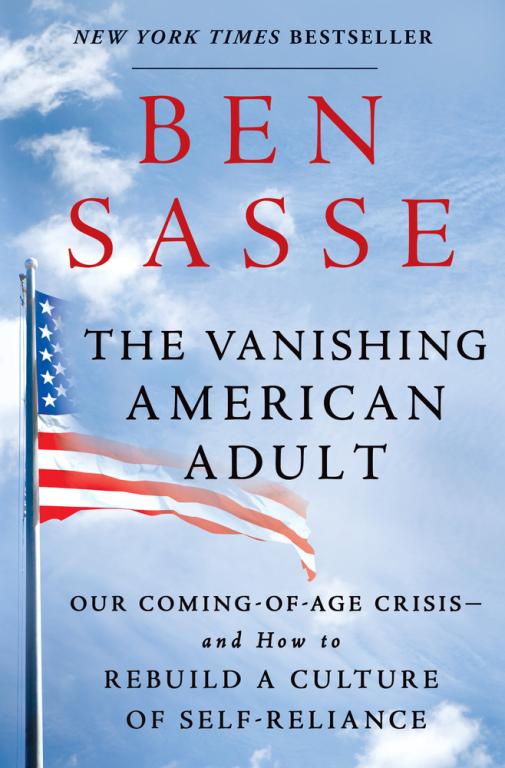
Source: Macmillan Press
Disquisition on Government by John Calhoun. (Interview on this text available here.) This is a classic work of American political thought. Calhoun argues that our government is (and should be) based on the idea of ‘concurrent majorities,’ or the rule that no major policy should be implemented without a majority of each major faction in the nation. In today’s setting, this would mean something like no tax bill, Obamacare, or other major/controversial law could be passed without 51% of Republicans and 51% of Democrats on board. Now, the elephant in the room is that Calhoun was writing specifically to preserve the slave-holding South, so by ‘concurrent majority’ he means 51% of the abolitionist North and 51% of the slave-holding South. That particular fact doesn’t make an appearance in this short book (you’ve got to read Calhoun’s extended writings to get that), but I also don’t know that it negates his basic idea in the Disquisition–which after all is just a rearticulation of the Federalist Papers. In any case, this book is worth reading and ruminating upon.
On Life and Death by Cicero. This recent translation includes what I believe to be Cicero’s best works (with all due respect to the letters and the orations). The First, Second, and Fifth Tusculan Disputations, and Cicero’s essays “On Friendship” and “On Old Age” are included. These are all part of what once would have been a standard Western education, and on reading it is easy to see why. This translation is especially fluid and is worth the cost (relative to the free public-domain versions available).
History
Destroyer of the Gods by Larry Hurtado. (Interview with the author available here.) What did the first three centuries of the church look like? How did Christians distinguish themselves from the culture at large? What did it cost them to do so? In a time when it is increasingly costly to live as traditional Christians, this well-written history is a useful reminder that being persecuted by the world is the norm for believers, America is the exception. Reading this book will help to give you a worthwhile perspective.
Triumph of Empire by Michael Kulikowski. (Interview with the author available here, book review available here.) If Christianity’s in its first three centuries was a picture of persecution, its next two were a picture of its struggle to live as an accepted, even dominant, religion. Triumph of Empire is the first part of a two-volume series exploring these later centuries as the Roman Empire ends and Christianity rises. In this volume Kulikowski especially focuses on the political transition of the Empire from government by amateur aristocrats to government by professional middle management and the rise/acceptance of Christianity in the political structure of the Empire. While this book is a bit detailed, with some effort it is a rewarding reflection on politics in a massive bureaucratic state. Not that Americans would know anything about that…
Rabid by Bill Wasik. Everything is rabies. Seriously, you’ll never want to pet a dog again. Still, this book is fascinating as a cultural history of the disease, as well as the phenomenal struggles to find a vaccine and a treatment for those for whom it’s too late to administer a vaccination. For what it’s worth, the vaccine is a godsend. The treatment… is too, I suppose. Even if it’s truly horrifying.
The Classical Athenian Democracy by David Stockton. While Stockton’s classic on Classical Athens isn’t exactly a page-turner, it is a thoughtful and useful reflection on the history, people, and institutions of the purest democracy in history. Everyone interested in popular rule should read this book.
Short Stories
A Century of Great Western Stories by John Jakes (ed) This book will not take you a century to read. The time it does take is well worth it, however. And I say this as someone who is only lukewarm towards Westerns in the first place. (Growing up on a ranch in Montana makes me less likely to want to sit around reading about people living on ranches in Montana.) Still, the collection is excellent, and reading stories from a genre that has been dying a slow death for the past forty years.
The Legend of Sleepy Hollow and Other Writings by Washington Irving. From what I understand, there are many early 19th century American authors who have fallen out of favor in middle and high school reading programs. If Irving is one of these, I sincerely hope he comes back into favor some time. Because he is a delightful writer and one of the very first to write in the new American republic, this book is especially important to have under your belt. What’s more, Irving is one of the original weird fiction/horror writers, so if you’re a fan of writers like Stephen King or H.P. Lovecraft then this will be right up your alley.
The Sword and Sorcery Anthology by David Hartwell (ed). Basically anything edited by David Hartwell is going to be excellent, but this is an especially solid collection. Like Westerns, I’m only lukewarm towards fantasy, but that in no way diminishes the quality of these stories.
The Savage Tales of Solomon Kane by Robert Howard. If there is a weak link on this list, it’s this collection of Robert Howard stories. This not because of the edition–this text is excellent. It includes all of the Solomon Kane stories and fragments, and artwork. The weakness is in some of the stories themselves, since Howard didn’t get to finish many of them before his death. This quite understandably gives a feeling on incompleteness to the work as a whole. Still, Howard is a solid enough writer that the stories are still a lot of fun. And of course, when else do we get a Puritan as an action hero? Avoid the movie, however. It’s deficient in many, many ways.
The Super Hugos by Isaac Asimov (ed). There are quite a few excellent collections of Science Fiction stories. So I don’t know that ‘super’ is necessarily an appropriate title to this work–though every story in it is a Hugo winner. And they’re all fantastic stories, so there’s that. “Neutron Star” by Larry Niven and “The Big Front Yard” by Clifford Simak especially stand out.
Tales of the Dying Earth by Jack Vance. Surely one of the most unique worlds in fiction, Vance write in this series about a far distant future when the sun has gone supernova and the earth is living its last few years. In that sense, the book is science fiction. Technology does make an appearance, but humanity is so far in the future that science has collapsed and is little more than a distant legend. Instead, magic is the common tool of the heroes and villains of the book, which means it’s also an important book in the fantasy genre. Which means there are two reasons you should read this book.
Science Fiction/Fantasy
The Cyborg and the Sorcerer by Lawrence Watt-Evans. Yet another sci-fi/fantasy mashup, in this book Slant is a cyborg whose body is being run by a suicidal computer still fighting a war that has been over for three centuries. His ship lands on a planet experiencing ‘gravitational anomalies’ (i.e. magic), and shenanigans ensue. This is a good, solid, fun read.
City by Clifford Simak. Just what does the great historian Rover think about the legendary past when the mysterious creature known as ‘man’ ruled the earth? Was it in fact man who gave dogs the power of speech and created robots to live in symbiosis with them? Or is that pure myth, for aren’t dogs eternal? Don’t act like you don’t want to know the answers to these questions!
The Unschooled Wizard by Barbara Hambly. This series had all the potential to be a Harry Potter-level series, but unfortunately the plot and characters don’t quite live up to the potential of the world Hambly has created. With that said, the world is pretty fantastic, and Hambly is a capable writer such that the book reads quickly and well.
Dune by Frank Herbert. I’ve read this book before, but I reread it this year and frankly I can’t imagine not putting Dune on a ‘best-of-the-year’ list in a year in which I’ve read it. To do otherwise would be dishonest.
Theology
Onward by Russell Moore. I suppose one way to look at the 2016 election is to say that Evangelical Christians aren’t as marginalized as they thought they were during the Obama years, and as such books like Onward aren’t relevant right now. But another, better, way to look at the 2016 election is as a confirmation that the spirit of the world is alive and well and has even infected much of the Evangelical church, and that as a result those who want to remain faithful to the Gospel need to think carefully and well about what it means to be a hated minority. To that end, Russell Moore’s Onward is an excellent place to start–though not the place to finish.
A Reader’s Guide to the Major Writings of Jonathan Edwards by Nathan Finn and Jeremy Kimble (eds) (Review available here.) If you’re not used to weighty reading, it’s not a good idea to dive right into the writings of Jonathan Edwards. He is dense and you’ll quickly get bogged down. Which is why this book by Finn and Kimble is a good place to start. This reader’s guide surveys Edwards’, well, major writings and provides guidance on how to start reading the greatest North American theologian.
Reformation Theology: A Systematic Summary by Matthew Barrett (ed) (Review available here.) 2017 was the 500th anniversary of the Reformation, and as a result commemorative volumes and conferences were legion. Still, if you need a one-stop survey of the theology of the major Reformation thinkers this is a great go-to text.
Devotional
The Flow of the Psalms by O. Palmer Robertson. When we read the Psalms, most of us think of the book as 150 separate and largely unrelated poems. Poems that don’t even rhyme. Yet O. Palmer Robertson’s book The Flow of the Psalms makes the convincing argument that whoever compiled these poems put them in a theological and narrative order that follows the order of redemption history. I’ll not try to recreate his argument in a blurb; suffice it to say that this book is definitely worth reading.
The Duties of Parents by Jacob Koelman. (Review available here.) I’m told raising children isn’t easy. Doing so as a Christian is even more difficult, which is where Koelman’s excellent little book comes in. While I don’t agree with everything in it (one ought not baptize children until they’ve confessed faith, for example), it’s still worth your time.
True Spirituality by Francis Schaeffer. Schaeffer is much better known for his philosophical and cultural writings. However, knowing Schaeffer only through these works ignores the fact that he was a pastor before he was a theologian. This book gives us Schaeffer’s concern for personal piety and pursuit of the Gospel in every aspect of our devotional lives.
I Will by Thom Rainer. Once we’re saved, what should our lives as believers look like? Thom Rainer answers that question with nine traits of the dedicated Christian. This is a good companion piece to Schaeffer. Where True Spirituality focuses on the inner life of the believer, I Will focuses on how that inner life becomes external action.
And there you have it! Hopefully there’s something here for all tastes–now go read some great books in 2018!
Dr. Coyle Neal is co-host of the City of Man Podcast and an Assistant Professor of Political Science at Southwest Baptist University in Bolivar, MO, where he reads more than he should and less than he’d like.
Previous Post

December 15, 2017
A Short Take on 'The Long Game'
Next Post
January 2, 2018 Washington Irving is still a master
Browse Our Archives
Select a Category Action AFI Top 100 Animation Best Picture Winner BFI Top 250 Biography Biopic Books Childrens Christian Classics Classics Comedy Crime Documentary Drama Editor's Choice Family Fantasy Fantasy Films Foreign Historical Historical Fiction History Horror Horror IMDB Top 250 Indie Memoir Modern Novel Musical Mystery Non-Fiction Oscars Philosophy Poetry Popular Literature Reading and Writing Reality Romance Science Fiction Science Fiction Silent Sports Thriller TV Show Uncategorized Western Westerns Young Adult
Select a Month October 2026 September 2026 July 2026 June 2026 May 2026 April 2026 March 2026 February 2026 January 2026 December 2025 November 2025 October 2025 September 2025 August 2025 July 2025 June 2025 May 2025 April 2025 March 2025 February 2025 January 2025 December 2024 July 2024 June 2024 May 2024 April 2024 March 2024 February 2024 January 2024 December 2023 November 2023 October 2023 September 2023 August 2023 July 2023 June 2023 May 2023 April 2023 March 2023 February 2023 January 2023 December 2022 November 2022 October 2022 September 2022 August 2022 July 2022 June 2022 May 2022 April 2022 March 2022 February 2022 January 2022 December 2021 November 2021 October 2021 September 2021 August 2021 July 2021 June 2021 May 2021 April 2021 March 2021 February 2021 January 2021 December 2020 November 2020 October 2020 September 2020 August 2020 July 2020 June 2020 May 2020 April 2020 March 2020 February 2020 January 2020 December 2019 November 2019 October 2019 September 2019 August 2019 July 2019 June 2019 May 2019 April 2019 March 2019 February 2019 January 2019 December 2018 November 2018 October 2018 September 2018 August 2018 July 2018 June 2018 May 2018 April 2018 March 2018 February 2018 January 2018 December 2017 November 2017 October 2017 September 2017 June 2017 January 2017 December 2016 October 2016 September 2016 August 2016 July 2016 June 2016 May 2016 April 2016 March 2016 February 2016 January 2016 December 2015 November 2015 October 2015 September 2015 August 2015 July 2015 June 2015 May 2015 April 2015 March 2015 February 2015 January 2015 December 2014 November 2014 October 2014 September 2014 August 2014 July 2014 June 2014 May 2014 April 2014 March 2014 February 2014 January 2014 December 2013 November 2013 October 2013 September 2013 August 2013 July 2013 June 2013 May 2013 April 2013 March 2013 February 2013 January 2013 December 2012 November 2012 October 2012 September 2012 August 2012 July 2012
Follow Us!
TAKE THE
Religious Wisdom Quiz
Who rebelled with 250 men against Moses and Aaron?
Select your answer to see how you score.
Korah Dathan Abihu Nadab
Related posts from Schaeffer's Ghost




Thinking Critically about Critical Theory
TRENDING AT PATHEOS Religious Music & Entertainment

When Halloween Unmasks Married Hearts
Written by Dr. David K. Ewen from Eternal Truth Bible College Behind...

Aristotle. He’s been called the father of logic, the father of the...

Methodist Central Hall and Westminster Abbey
Situated on the same square is Methodist Central Hall and Westminster Abbey. ...

57th Dove Awards Honor Dolly Parton, Crown New...
On gospel music’s biggest night, the 57th annual GMA Dove Awards honored...

The First Eucharistic Controversy: Christ’s Real Presence
For Catholics, the Eucharist is the source and summit of the Christian...

What a Stop Sign Can Teach Us About...
How to Make a Decision When You Can't Hear God Main point:...
view all Religious Music & Entertainment blogs
Ad-Free & Subscriber Log-In Subscription Support
- About Us
- 2026 Calendar
- Videos
- Podcasts
- Library of World Religions
- Faith In Media Tracker
- Advertise With Us
- Write for Us
- Privacy Policy
- Terms of Service
- Do Not Sell My Data
- Contact Us
- Radiant Digital
- Manage Newsletter Subscriptions
- Unsubscribe From Notifications
- Sitemap
Copyright 2008-2026, Patheos. All rights reserved.
Subscription Support Ad-Free & Subscriber Log-In
Follow Patheos