
BuddhistCatholicContemplativeEvangelicalGeneral ChristianHinduJewishLatter-day SaintMuslimNew VisionsProgressive Christian
Beliefs
- Buddhist
- Catholic
- Contemplative
- Evangelical
- General Christian
- Hindu
- Jewish
- Latter-day Saint
- More Voices
- Muslim
- New Visions
- Pagan
- Progressive Christian
Topics
- Religion News
- Food and Religion
- Sports and Religion
- Religious Art
- Religious Music and Entertainment
- Religious Events
- History and Religion
- Style and Religion
- Politics and Religion
- Women in Religion
- Recreation Outdoors and Religion
- Business Finance and Religion
- Careers Workplace and Religion
- Education and Religion
- Family Parenting and Religion
- Health Fitness and Religion
- Home and Religion
- Relationships and Religion
- Technology and Religion
- Travel and Religion
Columnists
- Buddhist Columnists
- Business Finance and Religion Columnists
- Careers Workplace and Religion Columnists
- Catholic Columnists
- Contemplative Columnists
- Education and Religion Columnists
- Evangelists Columnists
- Family Parenting and Religion Columnists
- General Christian Columnists
- Health Fitness and Religion Columnists
- Hindu Columnists
- History and Religion Columnists
- Home and Religion Columnists
- Jewish Columnists
- More Voices Columnists
- Latter Day Columnists
- Muslim Columnists
- New Visions Columnists
- Nonreligious Columnists
- Pagan Columnists
- Politics and Religion Columnists
- Progressive Columnists
- Recreation Outdoors and Religion Columnists
- Relationships and Religion Columnists
- Religion News Columnists
- Religious Art Columnists
- Religious Events Columnists
- Religious Music and Entertainment Columnists
- Sports and Religion Columnists
- Style and Religion Columnists
- Technology and Religion Columnists
- Travel and Religion Columnists
- Women in Religion Columnists
Resource Library
- 2026 Calendar
- Library of World Religions
- The 100 Most Holy Places on Earth
- Patheos Answers
- Podcasts
- Videos
- Faith Leaders Database
- Anglican Episcopalian
- Bahai
- Baptist
- Buddhism
- Christianity
- Confucianism
- Eastern Orthodoxy
- Hinduism
- Holiness and Pentecostal
- ISKCON
- Islam
- Judaism
- Lutheran
- Methodist
- The Church of Jesus Christ of Latter-day Saints
- New Age
- Paganism
- Presbytarian and Reformed
- Protestantism
- Religion Behind the Scenes
- Roman Catholic
- Scientology
- Shia Islam
- Sikhism
- Sufism
- Sunni Islam
- Taoism
- Zen
- See all religions
Research Tools
 Ad-Free & Subscriber Log-In Subscription Support
Ad-Free & Subscriber Log-In Subscription Support
Follow Patheos 

- Trending:
- Forgiveness
- |
- Marriage
- |
- Consciousness
- |
- Death Penalty
- |
- Election
- |
- Halloween

- Home
- Religious Music & Entertainment
- Does the Reformation still matter today?
Does the Reformation still matter today?
Last updated on: October 15, 2016 at 1:34 pm by Coyle Neal
Does the Reformation still matter today? 2016-10-15T13:34:48-06:00 Coyle Neal
Patheos Explore the world's faith through different perspectives on religion and spirituality! Patheos has the views of the prevalent religions and spiritualities of the world.
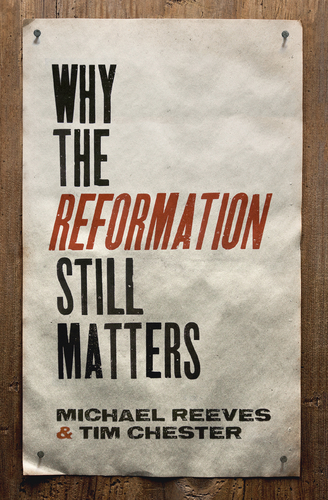
Review of Why the Reformation Still Matters by Michael Reeves and Tim Chester
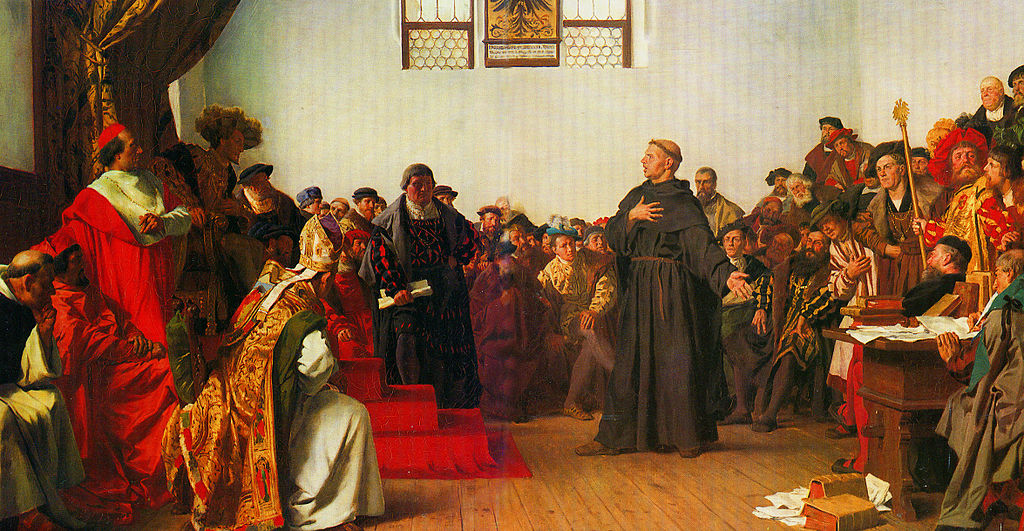
October 31, 2017 will be the 500th anniversary of the Protestant Reformation. (The “quingentesimus“, if you care about the fancy name for that particular anniversary.) As a result we have seen and will no doubt increasingly see a spate of books on the market celebrating or decrying the Reformers and the work God did through them. One of the best introductions to that reforming work so far is Why the Reformation Still Matters by Michael Reeves and Tim Chester.
Source: https://static.crossway.org/products/big/9781433545313.jpg

So just why does the Reformation still matter? I’m not sure the Reformation matters nearly so much relative to Catholicism—most Americans (including most Roman Catholic Americans) know so little about the formal heresies propounded by Rome that there is little point to refuting them these days. Which isn’t to say the Catholic/Protestant debate has gone away—just that it’s not necessarily at the forefront of anybody’s mind. Those who have witnessed to American Roman Catholics have found that very often the person they’re talking to knows so little about Catholicism proper that the Gospel is not primarily offensive because it stands in opposition to Rome. If we were presented with a robust and informed Catholicism that held heavily to traditional doctrines, then we would all be well-served by taking up Calvin’s Antidote to the Council of Trent and familiarizing ourselves with its arguments. Instead, we find ourselves in a time similar to that described by Bunyan’s Pilgrim, who comes across the caves of Pope and Pagan at the end of the Valley of the Shadow of Death:
“Now I saw in my dream, that at the end of this valley lay blood, bones, ashes, and mangled bodies of men, even of pilgrims that had gone this way formerly: and while I was musing what should be the reason, I espied a little before me a cave, where two giants, POPE and PAGAN, dwelt in old time, by whose power and tyranny, the men whose bones, blood, ashes, etc., lay there, were cruelly put to death. But by this place CHRISTIAN went without much danger; whereat I somewhat wondered. But I have learnt since, that PAGAN had been dead many a day; and as for the other, though he be yet alive, he is, by reason of age, and also of the many shrewd brushes that he met with in his younger days, grown so crazy and stiff in his joints, that he can now do little more than sit in his cave’s mouth grinning at pilgrims as they go by, and biting his nails, because he cannot come at them.” (Pilgrim’s Progress, 72)
True, there has been some stirring in the bones of both Pope and Pagan, these days. But by and large the Roman Catholicism most of us will encounter on the street is little more than a loosely-theistic reflection of the reigning cultural ideology. Which means that the declaration of justification by faith alone as opposed to belief in purgatory and the efficacy of the sacraments is going to be less applicable to most of us.*
Fortunately, Reeves and Chester don’t spend much time on that—the Reformation is important not just for the correction of doctrine and reorientation of the church on the Gospel in the 1500s, but also for the challenge it presents us today. In an age when most Americans are completely uninterested in anything that isn’t happening right now, it is useful to have a reminder that there is great wisdom and holiness in the past that can guide us and provide us with a model to how we ought to think and live in our own time.
And if I were to stop there, all I would have done is provided a good traditionalist argument for studying the past—there are great people and great ideas that we ought to be familiar with and try to emulate. But the Reformers are no mere Ciceros are Senecas or Socrateses. They, like their Patristic predecessors and their Revivalist heirs, matter “because eternal life still matters.” (18) To take just one example:
“Nothing matters more than justification by Christ alone through faith alone. If justification by faith seems obvious to you, then it is because of Luther. But we must not presume on his legacy.
Many attempts have been made to move the center ground of Christianity elsewhere. But the fact remains that the biggest problem facing humanity is God’s justice. God is committed to judging sin. And that means he is committed to judging my sin. This is our biggest problem because that means an eternity excluded from the glory of God.” (34)
The conservative in me begs modern Americans to take up a good book written prior to the 20th century and immerse yourself in it; but as a Christian I know it’s far more important that we hear that we are sinners who have angered God and that the only means of reconciliation is through the atonement made by Christ on the cross. The Reformers say that as clearly and as well as anyone before or since. Reeves and Chester have given us an excellent and readable survey of Reformation thought that introduces the key doctrines of the faith and explains why they matter.
If Why the Reformation Still Matters has a major weakness, it is that it focuses nearly exclusively on Martin Luther and (to a lesser extent) John Calvin—with only a minor aside for the anabaptists (their thoughts on the church) and the occasional mention of individuals like Richard Sibbes. In one sense this is perfectly appropriate. If the point of the book is to argue why the Reformation still matters relative to the deficiencies of our modern faith and practice, then Luther and Calvin really do give us all the necessary doctrines that concern Christian life and belief. If the point is to give us a sense of the breadth and depth of the Reformation, then more about the English, Swiss, and Anabaptist Reformers would have been a helpful addition (maybe for a second volume—More Reasons Why the Reformation Still Matters, or something along those lines?).
Even with that limitation, Why the Reformation Still Matters is an excellent book and well worth your attention.
*There are of course exceptions—for example, I spent seven years as a grad student at The Catholic University of America, where there were some better-informed Catholics. Even there, however, the majority of the Catholics (particularly undergraduates) I encountered were largely ignorant of the basic history and doctrines of their own faith. I do not think this was so much a failure of the school as it was a reflection on the state of contemporary American Catholicism.
This book was provided for free by the publisher on the condition that I write a review. I was not required to write a positive one.
Dr. Coyle Neal is an Assistant Professor of Political Science at Southwest Baptist University and co-host of the City of Man podcast (also available on iTunes). He lives in Bolivar, MO., where he daily resists the temptation to nail things to random doors around town.
Previous Post

October 14, 2016
Cameraperson Points Its Lens at Both Death and Life
Next Post

October 26, 2016 Passion Projects Light Up Middleburg Film Festival
Browse Our Archives
Select a Category Action AFI Top 100 Animation Best Picture Winner BFI Top 250 Biography Biopic Books Childrens Christian Classics Classics Comedy Crime Documentary Drama Editor's Choice Family Fantasy Fantasy Films Foreign Historical Historical Fiction History Horror Horror IMDB Top 250 Indie Memoir Modern Novel Musical Mystery Non-Fiction Oscars Philosophy Poetry Popular Literature Reading and Writing Reality Romance Science Fiction Science Fiction Silent Sports Thriller TV Show Uncategorized Western Westerns Young Adult
Select a Month October 2026 September 2026 July 2026 June 2026 May 2026 April 2026 March 2026 February 2026 January 2026 December 2025 November 2025 October 2025 September 2025 August 2025 July 2025 June 2025 May 2025 April 2025 March 2025 February 2025 January 2025 December 2024 July 2024 June 2024 May 2024 April 2024 March 2024 February 2024 January 2024 December 2023 November 2023 October 2023 September 2023 August 2023 July 2023 June 2023 May 2023 April 2023 March 2023 February 2023 January 2023 December 2022 November 2022 October 2022 September 2022 August 2022 July 2022 June 2022 May 2022 April 2022 March 2022 February 2022 January 2022 December 2021 November 2021 October 2021 September 2021 August 2021 July 2021 June 2021 May 2021 April 2021 March 2021 February 2021 January 2021 December 2020 November 2020 October 2020 September 2020 August 2020 July 2020 June 2020 May 2020 April 2020 March 2020 February 2020 January 2020 December 2019 November 2019 October 2019 September 2019 August 2019 July 2019 June 2019 May 2019 April 2019 March 2019 February 2019 January 2019 December 2018 November 2018 October 2018 September 2018 August 2018 July 2018 June 2018 May 2018 April 2018 March 2018 February 2018 January 2018 December 2017 November 2017 October 2017 September 2017 June 2017 January 2017 December 2016 October 2016 September 2016 August 2016 July 2016 June 2016 May 2016 April 2016 March 2016 February 2016 January 2016 December 2015 November 2015 October 2015 September 2015 August 2015 July 2015 June 2015 May 2015 April 2015 March 2015 February 2015 January 2015 December 2014 November 2014 October 2014 September 2014 August 2014 July 2014 June 2014 May 2014 April 2014 March 2014 February 2014 January 2014 December 2013 November 2013 October 2013 September 2013 August 2013 July 2013 June 2013 May 2013 April 2013 March 2013 February 2013 January 2013 December 2012 November 2012 October 2012 September 2012 August 2012 July 2012
Follow Us!
TAKE THE
Religious Wisdom Quiz
Which disciple brought his brother to Jesus, saying, 'We have found the Messiah'?
Select your answer to see how you score.
John James Andrew Peter
Related posts from Schaeffer's Ghost




Thinking Critically about Critical Theory
TRENDING AT PATHEOS Religious Music & Entertainment

57th Dove Awards Honor Dolly Parton, Crown New...
On gospel music’s biggest night, the 57th annual GMA Dove Awards honored...

The First Eucharistic Controversy: Christ’s Real Presence
For Catholics, the Eucharist is the source and summit of the Christian...

What a Stop Sign Can Teach Us About...
How to Make a Decision When You Can't Hear God Main point:...

Archdiocese Hosts Military Marriage Retreat in Germany
RASTATT, Germany — The transient military lifestyle, with its frequent deployments and...

Nearly every morning, I make the drive to Detroit with my high-school-age...

The Real AI Story Is Adoption Without Trust
Artificial intelligence has crossed a political threshold. It is no longer a...
view all Religious Music & Entertainment blogs
Ad-Free & Subscriber Log-In Subscription Support
- About Us
- 2026 Calendar
- Videos
- Podcasts
- Library of World Religions
- Faith In Media Tracker
- Advertise With Us
- Write for Us
- Privacy Policy
- Terms of Service
- Do Not Sell My Data
- Contact Us
- Radiant Digital
- Manage Newsletter Subscriptions
- Unsubscribe From Notifications
- Sitemap
Copyright 2008-2026, Patheos. All rights reserved.
Subscription Support Ad-Free & Subscriber Log-In
Follow Patheos