
BuddhistCatholicContemplativeEvangelicalGeneral ChristianHinduJewishLatter-day SaintMuslimNew VisionsProgressive Christian
Beliefs
- Buddhist
- Catholic
- Contemplative
- Evangelical
- General Christian
- Hindu
- Jewish
- Latter-day Saint
- More Voices
- Muslim
- New Visions
- Pagan
- Progressive Christian
Topics
- Religion News
- Food and Religion
- Sports and Religion
- Religious Art
- Religious Music and Entertainment
- Religious Events
- History and Religion
- Style and Religion
- Politics and Religion
- Women in Religion
- Recreation Outdoors and Religion
- Business Finance and Religion
- Careers Workplace and Religion
- Education and Religion
- Family Parenting and Religion
- Health Fitness and Religion
- Home and Religion
- Relationships and Religion
- Technology and Religion
- Travel and Religion
Columnists
- Buddhist Columnists
- Business Finance and Religion Columnists
- Careers Workplace and Religion Columnists
- Catholic Columnists
- Contemplative Columnists
- Education and Religion Columnists
- Evangelists Columnists
- Family Parenting and Religion Columnists
- General Christian Columnists
- Health Fitness and Religion Columnists
- Hindu Columnists
- History and Religion Columnists
- Home and Religion Columnists
- Jewish Columnists
- More Voices Columnists
- Latter Day Columnists
- Muslim Columnists
- New Visions Columnists
- Nonreligious Columnists
- Pagan Columnists
- Politics and Religion Columnists
- Progressive Columnists
- Recreation Outdoors and Religion Columnists
- Relationships and Religion Columnists
- Religion News Columnists
- Religious Art Columnists
- Religious Events Columnists
- Religious Music and Entertainment Columnists
- Sports and Religion Columnists
- Style and Religion Columnists
- Technology and Religion Columnists
- Travel and Religion Columnists
- Women in Religion Columnists
Resource Library
- 2026 Calendar
- Library of World Religions
- The 100 Most Holy Places on Earth
- Patheos Answers
- Podcasts
- Videos
- Faith Leaders Database
- Anglican Episcopalian
- Bahai
- Baptist
- Buddhism
- Christianity
- Confucianism
- Eastern Orthodoxy
- Hinduism
- Holiness and Pentecostal
- ISKCON
- Islam
- Judaism
- Lutheran
- Methodist
- The Church of Jesus Christ of Latter-day Saints
- New Age
- Paganism
- Presbytarian and Reformed
- Protestantism
- Religion Behind the Scenes
- Roman Catholic
- Scientology
- Shia Islam
- Sikhism
- Sufism
- Sunni Islam
- Taoism
- Zen
- See all religions
Research Tools
 Ad-Free & Subscriber Log-In Subscription Support
Ad-Free & Subscriber Log-In Subscription Support
Follow Patheos 

- Trending:
- Forgiveness
- |
- Marriage
- |
- Consciousness
- |
- Death Penalty
- |
- Election
- |
- Halloween

- Home
- Religious Music & Entertainment
- Lone Survivor: The Good War
Lone Survivor: The Good War
Last updated on: January 10, 2014 at 5:59 am by Paul D. Miller
Lone Survivor: The Good War 2014-01-10T05:59:57-07:00 Paul D. Miller
Patheos Explore the world's faith through different perspectives on religion and spirituality! Patheos has the views of the prevalent religions and spiritualities of the world.
Review of Lone Survivor, Directed by Peter Berg
Eleven years ago, when I was in the Army, some fellow troops and I went to see the Vietnam war movie We Were Soldiers (2002). We were a crowd of young guys who didn’t know anything, accompanied by one old master sergeant who was a Vietnam War veteran. The younger soldiers loved the movie and, afterwards, were palling around like normal. The old master sergeant was walking alone, quiet. I asked him what he thought of the movie. “There are some things you don’t need to see again,” he said.
His words came back to me after watching Lone Survivor, Hollywood’s first major film set in the Afghan war.
I.
There are two kinds of war movies. There are those in which war is necessary and just, no matter how harrowing and violent. These tend to be set in World War II, the war that audiences have the easiest time sympathizing with. They are stories of courage and loyalty and sacrifice among a band of brothers pulling together for the greater good. Think of Sands of Iwo Jima (1949), The Big Red One (1980), and Saving Private Ryan (1998).
Then there are movies in which war is futile, stupid, dehumanizing, brutal, and sometimes evil. These movies tend to be set in Vietnam. Think The Deer Hunter (1978), Platoon (1986), and Full Metal Jacket (1987). They are stories of alienation, cruelty, isolation, and loss by soldiers sent to die for nothing. There are some exceptions (The Green Berets, 1968), but the templates generally hold.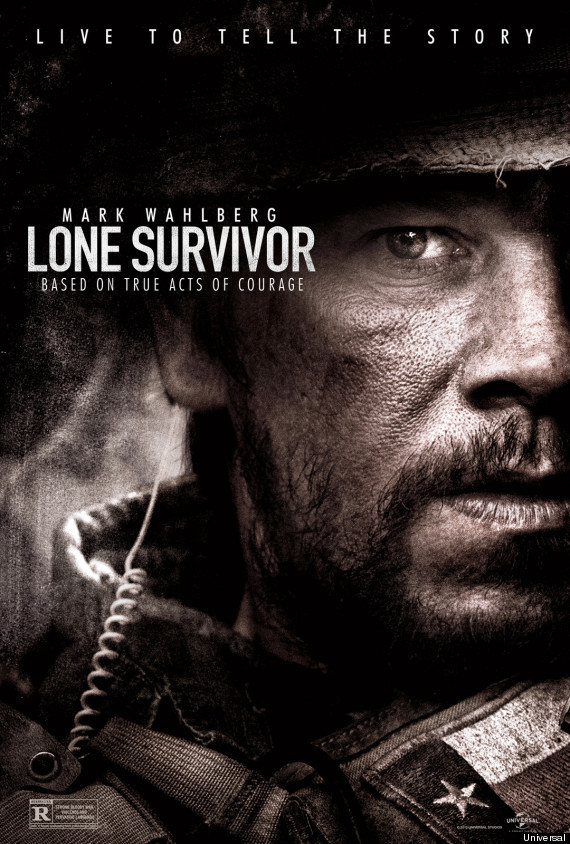
Lone Survivor is the first big-budget feature film set in the Afghan war. It is the true story of four Navy SEALs hopelessly trapped and surrounded in the mountains of Afghanistan, and of their lost-cause firefight against an overwhelming enemy. I expected the movie—indeed, any movie set in Afghanistan—to follow the Vietnam template. Most of the country has concluded that these wars were not worth fighting, that we didn’t win, and that therefore the only stories that can emerge from them are stories of loss and despair.
I was wrong. Lone Survivor is closer to being The Hurt Locker of the Afghan war. The Hurt Locker, winner of the 2009 Academy Award for Best Picture, is the story of a single soldier’s experience in Iraq that avoids commenting on the war itself. Similarly, Lone Survivor is technically brilliant, intense, violent, and wrenching, and almost neutral about the war. I say almost because in the end, the film astonished me: it presents both faces of war and answers the question—is it a good war or a bad war?—with an Afghan answer. This is one of the best and most profound American war movies of the last thirty years.
II.
I’ve written before about my own experience with Afghanistan. I served there in 2002 and spent the next decade working on the war as a civilian in various positions in and around Washington, D.C. As with Zero Dark Thirty last year, I felt something personal at stake in the film and found it deeply unsettling to watch.
On one level, the movie will be hard for anyone to watch, whether veteran or not, because it is a brutally violent film. Following in the footsteps of Saving Private Ryan, Black Hawk Down, and We Were Soldiers, the film shows the horrors of combat in unstinting detail. Once the shooting begins—maybe a full hour into the movie—it is an unremitting succession of men being shot, blown up, thrown against rock, shredded by shrapnel, stabbed, or plummeting to their death. Interestingly, the hardest thing to watch didn’t involve guns or bombs at all: a scene of men tumbling down a hillside elicited audible gasps and groans in my theater.
Some of what the SEALs endure borders on implausible, but the filmmakers open the movie with a documentary montage of Navy SEAL training that establishes how impossibly tough these guys are. The film manages the delicate balance of showing incredible action while keeping it grounded in horrible realism (heightened by superb sound editing—note the report of different caliber firearms echoing off the surrounding hillsides). Saving Private Ryan had long sequences of story in between major set-piece battle scenes: Lone Survivor is essentially one long continuous battle for a solid hour or more. It is on the borderline of sadism, saved only by its fidelity to history.
Despite the violence, the filmmakers (led by director Peter Berg) are at pains to deny viewers any sense of thrill for most of the film. The camera quickly cuts away from the Taliban when they are cut down and avoids showing their faces in death. The lens moves so quickly it is hard to make sense of the action—an intentional technique to make the viewer as confused and addled as the soldiers. The filmmaker’s one nod to the inspiring-war-movie-trope is in giving the doomed SEALs clean, noble deaths. Lt. Mike Murphy won the Medal of Honor for his heroism in this battle—the first such award since Vietnam—and the movie gives us a brief moment, too brief, of old school war-hero-worship.
[Spoilers ahead]
III.
The movie teeters on Vietnam clichés, forgivable because they are true. Bureaucratic blunders, officers’ arrogance, and technical breakdowns contribute to the disaster. The SEALs are trapped because their radios and phones don’t work. The quick reaction force can’t take off on time because their escort has been called away, and when it finally flies to the rescue it only brings more mayhem. A senior officer doesn’t care about the situation and barks, “Why are you telling me this?” These elements would be at home in any Vietnam war movie, and they hurt because they’re accurate. A fellow veteran once told me that wars are won by the side that is slightly less stupid. Sometime I wonder how we win wars at all.
But the film holds this in balance with two elements so incredible that they would be contrived and cheesy if they were fiction. The whole crisis is triggered when the SEALs are discovered by Afghan goatherders. The SEALs tie them up and debate whether or not to execute them on the spot—a debate marked by neither idealism nor barbarity, but simple pragmatic calculation. They decide to do the right thing and let the Afghans go—the sort of nobility reminiscent of the old Good War template. “Good things happen to good people,” one of them says, which is bad theology but an accurate reflection of how people think.
After the battle, the titular lone survivor is rescued by Afghan villagers (good karma coming back to reward him), who are then attacked by the Taliban and rally to defend themselves. The SEAL, wounded and barely living, is a peripheral character in the final battle between Afghans and Afghans. Explanatory text closes the movie, informing us that the Afghans protected their American guest out of their sense of tribal hospitality—more Good War echoes—and that their war against the Taliban continues.
With these elements, Lone Survivor presents both faces of war. It is stupid, noble, cruel, necessary, barbaric, and just at the same time. More: Lone Survivor, almost alone among American war movies, manages to be about more than just some American soldiers and their enemies. This movie ends up becoming a story about the Afghans in whose country the war is taking place. In that sense, the movie, which starts out as a small-scale story of four SEALs with no evident commentary on the war itself, ends up sidelining its heroes and focusing front and center on the real heart of the war: it is the Afghans’ war.
I cannot imagine American audiences showing up to watch a historical drama about a third-world civil war. The filmmakers know it, so they only give us the briefest of denouements that suggests what such a movie would be like (the movie ends too abruptly, one of its few major flaws). It is still vastly more than I expected, and it effectively doubles down the emotional toll of the film. Few can doubt that the villagers’ resistance to the Taliban’s brutal thuggery is a good war, whether we are a part of it or not. I was dumbstruck that the first movie about the Afghan war got it exactly right.
IV.
I wish I could end there. But there is one final observation I have to make about the film. I remember my old master sergeant’s words again: “There are some things you don’t need to see again.” I thought he meant he didn’t want to see the firefights, the death, or the bloodshed. Now I think there’s something else. Watching a movie about my war struck a raw nerve.
When I watch a World War II movie, the Nazis don’t frighten me. I’ve never met a Nazi. I know they were defeated, and they are ancient history. Watching the Taliban on screen, watching them assault the Afghan villagers, was deeply disturbing. I felt personal hatred: a righteous, blinding, murderous rage. When our Apache helicopters came to the rescue and slaughtered them from the air, I was drunk with delirium. I think when my master sergeant said there were things he didn’t want to see again, he wasn’t talking about images of violence. He was talking about what we see inside ourselves in wartime.
Previous Post

January 8, 2014
Laughs and crazies in American Hustle
Next Post
January 10, 2014 The Past Sneaks Up on You
Browse Our Archives
Select a Category Action AFI Top 100 Animation Best Picture Winner BFI Top 250 Biography Biopic Books Childrens Christian Classics Classics Comedy Crime Documentary Drama Editor's Choice Family Fantasy Fantasy Films Foreign Historical Historical Fiction History Horror Horror IMDB Top 250 Indie Memoir Modern Novel Musical Mystery Non-Fiction Oscars Philosophy Poetry Popular Literature Reading and Writing Reality Romance Science Fiction Science Fiction Silent Sports Thriller TV Show Uncategorized Western Westerns Young Adult
Select a Month October 2026 September 2026 July 2026 June 2026 May 2026 April 2026 March 2026 February 2026 January 2026 December 2025 November 2025 October 2025 September 2025 August 2025 July 2025 June 2025 May 2025 April 2025 March 2025 February 2025 January 2025 December 2024 July 2024 June 2024 May 2024 April 2024 March 2024 February 2024 January 2024 December 2023 November 2023 October 2023 September 2023 August 2023 July 2023 June 2023 May 2023 April 2023 March 2023 February 2023 January 2023 December 2022 November 2022 October 2022 September 2022 August 2022 July 2022 June 2022 May 2022 April 2022 March 2022 February 2022 January 2022 December 2021 November 2021 October 2021 September 2021 August 2021 July 2021 June 2021 May 2021 April 2021 March 2021 February 2021 January 2021 December 2020 November 2020 October 2020 September 2020 August 2020 July 2020 June 2020 May 2020 April 2020 March 2020 February 2020 January 2020 December 2019 November 2019 October 2019 September 2019 August 2019 July 2019 June 2019 May 2019 April 2019 March 2019 February 2019 January 2019 December 2018 November 2018 October 2018 September 2018 August 2018 July 2018 June 2018 May 2018 April 2018 March 2018 February 2018 January 2018 December 2017 November 2017 October 2017 September 2017 June 2017 January 2017 December 2016 October 2016 September 2016 August 2016 July 2016 June 2016 May 2016 April 2016 March 2016 February 2016 January 2016 December 2015 November 2015 October 2015 September 2015 August 2015 July 2015 June 2015 May 2015 April 2015 March 2015 February 2015 January 2015 December 2014 November 2014 October 2014 September 2014 August 2014 July 2014 June 2014 May 2014 April 2014 March 2014 February 2014 January 2014 December 2013 November 2013 October 2013 September 2013 August 2013 July 2013 June 2013 May 2013 April 2013 March 2013 February 2013 January 2013 December 2012 November 2012 October 2012 September 2012 August 2012 July 2012
Follow Us!
TAKE THE
Religious Wisdom Quiz
How lonely sits the city once full of people! How like a widow has she become! Which destroyed city does this mourn?
Select your answer to see how you score.
Babylon Nineveh Samaria Jerusalem
Related posts from Schaeffer's Ghost



Mortal Kombat 2: Can Video Game Movies Save...

TRENDING AT PATHEOS Religious Music & Entertainment

Methodist Central Hall and Westminster Abbey
Situated on the same square is Methodist Central Hall and Westminster Abbey. ...

57th Dove Awards Honor Dolly Parton, Crown New...
On gospel music’s biggest night, the 57th annual GMA Dove Awards honored...

The First Eucharistic Controversy: Christ’s Real Presence
For Catholics, the Eucharist is the source and summit of the Christian...

What a Stop Sign Can Teach Us About...
How to Make a Decision When You Can't Hear God Main point:...

Archdiocese Hosts Military Marriage Retreat in Germany
RASTATT, Germany — The transient military lifestyle, with its frequent deployments and...

Nearly every morning, I make the drive to Detroit with my high-school-age...
view all Religious Music & Entertainment blogs
Ad-Free & Subscriber Log-In Subscription Support
- About Us
- 2026 Calendar
- Videos
- Podcasts
- Library of World Religions
- Faith In Media Tracker
- Advertise With Us
- Write for Us
- Privacy Policy
- Terms of Service
- Do Not Sell My Data
- Contact Us
- Radiant Digital
- Manage Newsletter Subscriptions
- Unsubscribe From Notifications
- Sitemap
Copyright 2008-2026, Patheos. All rights reserved.
Subscription Support Ad-Free & Subscriber Log-In
Follow Patheos