
BuddhistCatholicContemplativeEvangelicalGeneral ChristianHinduJewishLatter-day SaintMuslimNew VisionsProgressive Christian
Beliefs
- Buddhist
- Catholic
- Contemplative
- Evangelical
- General Christian
- Hindu
- Jewish
- Latter-day Saint
- More Voices
- Muslim
- New Visions
- Pagan
- Progressive Christian
Topics
- Religion News
- Food and Religion
- Sports and Religion
- Religious Art
- Religious Music and Entertainment
- Religious Events
- History and Religion
- Style and Religion
- Politics and Religion
- Women in Religion
- Recreation Outdoors and Religion
- Business Finance and Religion
- Careers Workplace and Religion
- Education and Religion
- Family Parenting and Religion
- Health Fitness and Religion
- Home and Religion
- Relationships and Religion
- Technology and Religion
- Travel and Religion
Columnists
- Buddhist Columnists
- Business Finance and Religion Columnists
- Careers Workplace and Religion Columnists
- Catholic Columnists
- Contemplative Columnists
- Education and Religion Columnists
- Evangelists Columnists
- Family Parenting and Religion Columnists
- General Christian Columnists
- Health Fitness and Religion Columnists
- Hindu Columnists
- History and Religion Columnists
- Home and Religion Columnists
- Jewish Columnists
- More Voices Columnists
- Latter Day Columnists
- Muslim Columnists
- New Visions Columnists
- Nonreligious Columnists
- Pagan Columnists
- Politics and Religion Columnists
- Progressive Columnists
- Recreation Outdoors and Religion Columnists
- Relationships and Religion Columnists
- Religion News Columnists
- Religious Art Columnists
- Religious Events Columnists
- Religious Music and Entertainment Columnists
- Sports and Religion Columnists
- Style and Religion Columnists
- Technology and Religion Columnists
- Travel and Religion Columnists
- Women in Religion Columnists
Resource Library
- 2026 Calendar
- Library of World Religions
- The 100 Most Holy Places on Earth
- Patheos Answers
- Podcasts
- Videos
- Faith Leaders Database
- Anglican Episcopalian
- Bahai
- Baptist
- Buddhism
- Christianity
- Confucianism
- Eastern Orthodoxy
- Hinduism
- Holiness and Pentecostal
- ISKCON
- Islam
- Judaism
- Lutheran
- Methodist
- The Church of Jesus Christ of Latter-day Saints
- New Age
- Paganism
- Presbytarian and Reformed
- Protestantism
- Religion Behind the Scenes
- Roman Catholic
- Scientology
- Shia Islam
- Sikhism
- Sufism
- Sunni Islam
- Taoism
- Zen
- See all religions
Research Tools
 Ad-Free & Subscriber Log-In Subscription Support
Ad-Free & Subscriber Log-In Subscription Support
Follow Patheos 

- Trending:
- Forgiveness
- |
- Marriage
- |
- Consciousness
- |
- Death Penalty
- |
- Election
- |
- Halloween

- Home
- Religious Music & Entertainment
- ‘On the Road’ to Nowhere
‘On the Road’ to Nowhere
Last updated on: March 26, 2013 at 6:31 am by Alexis Neal
‘On the Road’ to Nowhere 2013-03-26T06:31:21-06:00 Alexis Neal
Patheos Explore the world's faith through different perspectives on religion and spirituality! Patheos has the views of the prevalent religions and spiritualities of the world.
Review of On the Road by Jack Kerouac
When I moved to D.C., some friends and I started a book club. Our goal was to work our way through the classics of English/American Literature and read the books that everyone else seemed to have read in high school or college. Books which, for some reason, had never actually wound up on the required reading lists for any of our classes. At the top of that list was Jack Kerouac’s On the Road (1957), which was supposed to be a classic and was included on several lists of the top English-language novels in the history of ever. So we dove right in, ready to be dazzled the best that American prose had to offer.
If you’re not familiar with the story of On the Road (such as it is), this loosely autobiographical novel follows beatnik Sal Paradise (a stand-in for the author, Jack Kerouac) and his buddy Dean Moriarty (based on writer Neal Cassady) as they road-trip back and forth across late 1940’s America. They do a lot of drugs, listen to a lot of jazz and poetry (well, “poetry”), go to a lot of parties, and romance a lot of women (if you can call it “romancing”). Sal is on a spiritual quest of sorts—trying to find … I don’t know. The meaning of Life, the Universe, and Everything, I guess. Dean mostly wants to smoke pot and have a lot of sex.
I hated every minute of this book. I hated the complete lack of any discernible plot—“stoners go to parties and hook up with girls” is not my idea of a show-stopping storyline. I hated the appalling writing, the style of which can only be described as “blitzed”.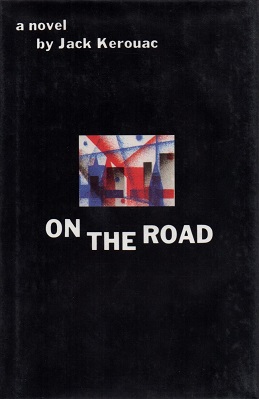
I realize this is not the universal reaction to Kerouac’s writing—he wound up on those ‘best novel’ lists for a reason, after all. Supposedly, this novel has all sorts of Important Things to Say about the Beat Generation and its dissatisfaction with the materialistic culture and conformity and, like, rules, man. Clearly some people like it, and perhaps you are (or will be) one of them. If you dig the drug-and-booze-addled ramblings of shiftless vagabonds, and the neighborhood dive bar is closed or you’re worried that a foray into the wilds of the city night life might be ill-advised, then by all means read this book. If, however, you prefer coherency, intelligence, substance, and anything within shouting distance of moral fortitude, you would be better served to look elsewhere.
But even more than the mind-numbingly dull plot, even more than the abysmal writing, I hated the characters. More specifically, I hated Dean. By the end of the novel, Dean has acquired (and, at various times, abandoned) no fewer than three wives and four children. In three years. He meets a girl, he likes her, he sleeps with her for a while, and maybe they even get married. Heaven only knows why Dean bothers to marry these women. His vows are about as meaningful as a United Nations sanction. As soon as the mood strikes him, he’s off again, without a backward glance at the wives and children he leaves behind. Responsibility means nothing to Dean. Commitment, well, it might as well be a Martian word for all the significance it has to this ‘hero.’ He has absolutely no compunction about leaving these women literally holding the baby. He is, quite simply, a selfish, sexist pig. For Dean, women are just another consumable—like the marijuana he smokes or the parties he attends. He only pays attention to the women in his life when he feels a craving coming on. Dean is driven by one thing and one thing only: his own desires. Dean is all Dean cares about. He is a walking id. And he is awful.
In Dean, we see the end result of a life spent searching for self-satisfaction. This is where our human depravity will take us. Our desires are not to be the lodestar of our lives—if we chase after them, we will find ourselves doing so at the expense of all those around us. Their well-being will be constantly, repeatedly sacrificed in favor of our enjoyment. Their discomfort, inconvenience, and pain are necessary costs that we are all too willing to pay to ensure our own pleasure, no matter how fleeting. People cease to be people, created in the image of God, possessed of personal dignity, and deserving of respect. Instead, they become objects whose worth is determined—and limited—by their capacity to gratify our own desires.
This is not a recipe for “a good life” in any sense of the phrase. It is, in a word, evil. And moreover, it is self-defeating. Because self-indulgence and gratification do not actually achieve the end desired. This is not a road to fulfillment, satisfaction, peace, or “IT”. It is a dead end.
King Solomon, who was top dog when it came to self-indulgence and personal gratification, learned this the hard way:
I said to myself, “Come now, I will test you with pleasure to find out what is good.” But that also proved to be meaningless. […]
I denied myself nothing my eyes desired;
I refused my heart no pleasure. […]
Yet when I surveyed all that my hands had done
and what I had toiled to achieve,
everything was meaningless, a chasing after the wind;
nothing was gained under the sun. (Ecclesiastes 2:1, 10-11)
As I read On the Road, in those few moments when I wasn’t overcome by loathing and disgust, I was struck by how utterly pointless Dean’s (and, to some extent, Sal’s) pursuit of pleasure really was. Rather than finding satisfaction in honest work, committed relationships, and self-sacrificing love—and, even more than that, in God, who alone can fully satisfy—they hunted for truth and meaning in complete and total selfishness. The emptiness—the meaninglessness—of this quest is almost heartbreaking.
The semi-autographical nature of this story makes it doubly tragic, because Sal and Dean aren’t just made up characters doing awful (but fictional) things so that we can learn from their mistakes. Real men lived out this story—maybe not in the details, but in the main. Their sad stories don’t get any happier, either. Kerouac died of cirrhosis at age 47. A comatose Cassady was found by some railroad tracks in Mexico after a night of partying, and never regained consciousness. He was 41.
On the Road is said to have been hugely influential on an entire generation—and many in future (and current) generations find that Kerouac’s “spiritual” “quest” resonates with their own desires for freedom and meaning. They see in Sal and Dean an experience to be replicated, to be imitated.
I remember hearing, back in the 1990’s, that a number of young women who saw Pretty Woman decided to run off and become prostitutes because of the glamorous lifestyle enjoying by Julia Roberts in the film. I have no idea whether there was any truth to this rumor, but I recall well the first time I saw the film—how awful her life was and how anomalous her happily-ever-after—and thought to myself, “Were those girls even watching the movie?”
I wonder the same thing about those who read Kerouac with wistful longing.
_______________________________________________________________
Alexis Neal is an attorney in the Washington, D.C., area. She regularly reviews young adult literature at www.childrensbooksandreviews.com and everything else at quantum-meruit.blogspot.com.
Previous Post

March 25, 2013
House of Cards’ Lady Macbeth
Next Post
March 27, 2013 Doctrine is for Living the Christian Life
Browse Our Archives
Select a Category Action AFI Top 100 Animation Best Picture Winner BFI Top 250 Biography Biopic Books Childrens Christian Classics Classics Comedy Crime Documentary Drama Editor's Choice Family Fantasy Fantasy Films Foreign Historical Historical Fiction History Horror Horror IMDB Top 250 Indie Memoir Modern Novel Musical Mystery Non-Fiction Oscars Philosophy Poetry Popular Literature Reading and Writing Reality Romance Science Fiction Science Fiction Silent Sports Thriller TV Show Uncategorized Western Westerns Young Adult
Select a Month October 2026 September 2026 July 2026 June 2026 May 2026 April 2026 March 2026 February 2026 January 2026 December 2025 November 2025 October 2025 September 2025 August 2025 July 2025 June 2025 May 2025 April 2025 March 2025 February 2025 January 2025 December 2024 July 2024 June 2024 May 2024 April 2024 March 2024 February 2024 January 2024 December 2023 November 2023 October 2023 September 2023 August 2023 July 2023 June 2023 May 2023 April 2023 March 2023 February 2023 January 2023 December 2022 November 2022 October 2022 September 2022 August 2022 July 2022 June 2022 May 2022 April 2022 March 2022 February 2022 January 2022 December 2021 November 2021 October 2021 September 2021 August 2021 July 2021 June 2021 May 2021 April 2021 March 2021 February 2021 January 2021 December 2020 November 2020 October 2020 September 2020 August 2020 July 2020 June 2020 May 2020 April 2020 March 2020 February 2020 January 2020 December 2019 November 2019 October 2019 September 2019 August 2019 July 2019 June 2019 May 2019 April 2019 March 2019 February 2019 January 2019 December 2018 November 2018 October 2018 September 2018 August 2018 July 2018 June 2018 May 2018 April 2018 March 2018 February 2018 January 2018 December 2017 November 2017 October 2017 September 2017 June 2017 January 2017 December 2016 October 2016 September 2016 August 2016 July 2016 June 2016 May 2016 April 2016 March 2016 February 2016 January 2016 December 2015 November 2015 October 2015 September 2015 August 2015 July 2015 June 2015 May 2015 April 2015 March 2015 February 2015 January 2015 December 2014 November 2014 October 2014 September 2014 August 2014 July 2014 June 2014 May 2014 April 2014 March 2014 February 2014 January 2014 December 2013 November 2013 October 2013 September 2013 August 2013 July 2013 June 2013 May 2013 April 2013 March 2013 February 2013 January 2013 December 2012 November 2012 October 2012 September 2012 August 2012 July 2012
Follow Us!
TAKE THE
Religious Wisdom Quiz
According to 1 John, what does everyone who has this hope in Christ do?
Select your answer to see how you score.
Believes Rejoices Purifies themselves Endures
Related posts from Schaeffer's Ghost




Thinking Critically about Critical Theory
TRENDING AT PATHEOS Religious Music & Entertainment

The Iron Gates and the Lion of the...
Yesterday, I didn't finish my report about, well, yesterday. So I'll...

Dolly Parton’s Last Song Wins Dove Award with...
Bluegrass band The Grascals, speaking on the red carpet at the 57th...

The Image: On the Horror of Capitalism and...
The Image Then went the Pharisees, and took counsel how they might...

We are approaching the date of our new American national holiday: October...

Letters on Living the Faith by C.S. Lewis
Most of us met C.S. Lewis as a public intellectual. Mere Christianity....

When Halloween Unmasks Married Hearts
Written by Dr. David K. Ewen from Eternal Truth Bible College Behind...
view all Religious Music & Entertainment blogs
Ad-Free & Subscriber Log-In Subscription Support
- About Us
- 2026 Calendar
- Videos
- Podcasts
- Library of World Religions
- Faith In Media Tracker
- Advertise With Us
- Write for Us
- Privacy Policy
- Terms of Service
- Do Not Sell My Data
- Contact Us
- Radiant Digital
- Manage Newsletter Subscriptions
- Unsubscribe From Notifications
- Sitemap
Copyright 2008-2026, Patheos. All rights reserved.
Subscription Support Ad-Free & Subscriber Log-In
Follow Patheos