
BuddhistCatholicContemplativeEvangelicalGeneral ChristianHinduJewishLatter-day SaintMuslimNew VisionsProgressive Christian
Beliefs
- Buddhist
- Catholic
- Contemplative
- Evangelical
- General Christian
- Hindu
- Jewish
- Latter-day Saint
- More Voices
- Muslim
- New Visions
- Pagan
- Progressive Christian
Topics
- Religion News
- Food and Religion
- Sports and Religion
- Religious Art
- Religious Music and Entertainment
- Religious Events
- History and Religion
- Style and Religion
- Politics and Religion
- Women in Religion
- Recreation Outdoors and Religion
- Business Finance and Religion
- Careers Workplace and Religion
- Education and Religion
- Family Parenting and Religion
- Health Fitness and Religion
- Home and Religion
- Relationships and Religion
- Technology and Religion
- Travel and Religion
Columnists
- Buddhist Columnists
- Business Finance and Religion Columnists
- Careers Workplace and Religion Columnists
- Catholic Columnists
- Contemplative Columnists
- Education and Religion Columnists
- Evangelists Columnists
- Family Parenting and Religion Columnists
- General Christian Columnists
- Health Fitness and Religion Columnists
- Hindu Columnists
- History and Religion Columnists
- Home and Religion Columnists
- Jewish Columnists
- More Voices Columnists
- Latter Day Columnists
- Muslim Columnists
- New Visions Columnists
- Nonreligious Columnists
- Pagan Columnists
- Politics and Religion Columnists
- Progressive Columnists
- Recreation Outdoors and Religion Columnists
- Relationships and Religion Columnists
- Religion News Columnists
- Religious Art Columnists
- Religious Events Columnists
- Religious Music and Entertainment Columnists
- Sports and Religion Columnists
- Style and Religion Columnists
- Technology and Religion Columnists
- Travel and Religion Columnists
- Women in Religion Columnists
Resource Library
- 2026 Calendar
- Library of World Religions
- The 100 Most Holy Places on Earth
- Patheos Answers
- Podcasts
- Videos
- Faith Leaders Database
- Anglican Episcopalian
- Bahai
- Baptist
- Buddhism
- Christianity
- Confucianism
- Eastern Orthodoxy
- Hinduism
- Holiness and Pentecostal
- ISKCON
- Islam
- Judaism
- Lutheran
- Methodist
- The Church of Jesus Christ of Latter-day Saints
- New Age
- Paganism
- Presbytarian and Reformed
- Protestantism
- Religion Behind the Scenes
- Roman Catholic
- Scientology
- Shia Islam
- Sikhism
- Sufism
- Sunni Islam
- Taoism
- Zen
- See all religions
Research Tools
 Ad-Free & Subscriber Log-In Subscription Support
Ad-Free & Subscriber Log-In Subscription Support
Follow Patheos 

- Trending:
- Forgiveness
- |
- Marriage
- |
- Consciousness
- |
- Death Penalty
- |
- Election
- |
- Halloween

- Home
- Religious Music & Entertainment
- Chasing the Orgastic Future with Jay Gatsby
Chasing the Orgastic Future with Jay Gatsby
Last updated on: November 29, 2023 at 12:36 pm by Paul D. Miller
Chasing the Orgastic Future with Jay Gatsby 2023-11-29T12:36:10-07:00 Paul D. Miller
Patheos Explore the world's faith through different perspectives on religion and spirituality! Patheos has the views of the prevalent religions and spiritualities of the world.
Review of The Great Gatsby by F. Scott Fitzgerald
The first time I read The Great Gatsby, I was high on codeine—recovering from surgery—and had vivid hallucinatory dreams of the green light every night for a week. Almost twenty years later, the trailer for Baz Luhrmann’s forthcoming screen adaptation is making the rounds, and I see that Luhrmann was also on drugs while making the film. Somehow this seems appropriate.
The Great Gatsby (1925) did not win the Pulitzer Prize or any other prestigious award when it was published, but today it regularly leads lists of the greatest novels of the 20th Century, including lists by Modern Library and Time. I failed to appreciate this fact when I first read the book. I was seventeen and understood nothing about life and the whole of the novel sailed effortlessly over my head. I picked it up again recently to reacquaint myself with Jay Gatsby before the movie comes along, and found twenty years of life did much to help me understand the book. Along with (legal) drug use, I recommend life experience as an aid to fully appreciating F. Scott Fitzgerald’s masterpiece. 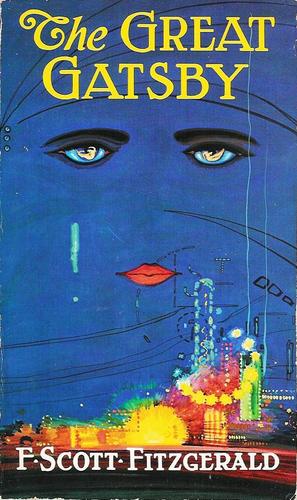
Who is Jay Gatsby? No one seems to know for certain. He enters the novel by reputation first. Rumors swirl about him like cigarette smoke. He is a war hero, a criminal, a bootlegger, a businessman, and Oxford man, a playboy, a fraud. Visions of Gatsby are fogged by the alcoholic haze that overcasts the parties at his mansion at which guests swap slander.
Gatsby spends half the novel basking in charismatic notoriety. Nobody knows Gatsby, but everyone likes to talk about him. We get to know Gatsby through the narrator, Nick Carraway, Gatsby’s neighbor, friend, and, eventually, confidant. It is from Carraway’s point of view that we first see Gatsby obsessing over the famous green light that triggered my hallucinations twenty years ago.
The green light is a very obvious example of Symbolism (read with a deep, echoing bass). It is a thing that stands for Another Thing that is Very Important to the Point of the Novel. In Gatsby’s case, the green light stands, on one level, for Daisy, his long-lost love, whose house is roughly where the green light is. On another level, it stands for all whole lot of other things that, for Gatsby, Daisy herself merely embodied.
The Symbolism is so obvious that Carraway even remarks on it. After [spoiler] Gatsby finally reunites with Daisy around the midpoint of the novel, Carraway notes that Gatsby is no longer so obsessed with the light. “Perhaps it had occurred to him that the colossal significance of that light had now vanished forever. Compared to the great distance that had separated him from Daisy it had seemed very near to her, almost touching her. It had seemed as close as a star to the moon. Now it was again a green light on a dock. His count of enchanted objects had diminished by one,” (93). Our dreams always disappoint us because achieving them makes them seem smaller, more prosaic, less legendary. It is only the elusive whale that becomes the mythical Moby Dick; the one you catch is just lunch.
Which is one reason Gatsby shrinks as the novel progresses. You could admire him when he was a larger-than-life rumor on mysterious business, but as a love-struck overgrown boy trying to recapture a moment of youthful romance, he is merely pathetic. He is, indeed, a con-man and probably a crook—having conned his way into riches and high society in order to find and impress Daisy—but ultimately not a very classy one. Idolatry only looks cool in the shadows. In the sunlight, it has all the garish glamor of a prostitute the morning after.
Daisy isn’t really what Gatsby is after. She is herself another symbol, or maybe an incarnation: of unattainable dreams, of the object of our driving ambition, of the impossible ideal, of whatever tantalizes us just out of reach. Gatsby, a self-made man of soaring, insatiable ambition, loved what his pursuit of her said about himself: that he would chase and catch the unattainable, that he would accomplish what no man has ever accomplished. He’s a little self-obsessed: “He talked a lot about the past, and I gathered that he wanted to recover something, some idea of himself perhaps, that had gone into loving Daisy,” (110). The green light burned with special intensity for him.
The novel’s final, famous lines make this clear. “Gatsby had believed in the green light, the orgastic future that year by year recedes before us. It eluded us then, but that’s no matter—tomorrow we will run faster, stretch out our arms farther …” (180). The sexual metaphor—the “orgastic future”—is apt, for it reminds us that in the Bible, adultery and idolatry are always closely tied. For Gatsby, conquering the future was one giant act of seduction. Lust and hubris are essentially the same drive applied to different objects: both involve overweening desire that violates proper bounds.
Note how the author brilliantly shifts the emphasis from Gatsby to us. “It eluded us … we will run faster …” We are all chasing a green light—a dream, an idol, a romance, whatever captures your heart short of God himself. Gatsby suffers a tragic end—one that is oddly unrelated to his crimes or flaws, but one that somehow feels fitting anyway. His life could be read as a cautionary tale against idolatry, a confirmation of the book of Ecclesiastes, a modern take on the Tower of Babel, or a retelling of the myth of Icarus—or Faust.
Previous Post

March 13, 2013
The Romance of the Noble Savage: The Deerslayer
Next Post
March 15, 2013 The Call: Trouble on the Line
Browse Our Archives
Select a Category Action AFI Top 100 Animation Best Picture Winner BFI Top 250 Biography Biopic Books Childrens Christian Classics Classics Comedy Crime Documentary Drama Editor's Choice Family Fantasy Fantasy Films Foreign Historical Historical Fiction History Horror Horror IMDB Top 250 Indie Memoir Modern Novel Musical Mystery Non-Fiction Oscars Philosophy Poetry Popular Literature Reading and Writing Reality Romance Science Fiction Science Fiction Silent Sports Thriller TV Show Uncategorized Western Westerns Young Adult
Select a Month October 2026 September 2026 July 2026 June 2026 May 2026 April 2026 March 2026 February 2026 January 2026 December 2025 November 2025 October 2025 September 2025 August 2025 July 2025 June 2025 May 2025 April 2025 March 2025 February 2025 January 2025 December 2024 July 2024 June 2024 May 2024 April 2024 March 2024 February 2024 January 2024 December 2023 November 2023 October 2023 September 2023 August 2023 July 2023 June 2023 May 2023 April 2023 March 2023 February 2023 January 2023 December 2022 November 2022 October 2022 September 2022 August 2022 July 2022 June 2022 May 2022 April 2022 March 2022 February 2022 January 2022 December 2021 November 2021 October 2021 September 2021 August 2021 July 2021 June 2021 May 2021 April 2021 March 2021 February 2021 January 2021 December 2020 November 2020 October 2020 September 2020 August 2020 July 2020 June 2020 May 2020 April 2020 March 2020 February 2020 January 2020 December 2019 November 2019 October 2019 September 2019 August 2019 July 2019 June 2019 May 2019 April 2019 March 2019 February 2019 January 2019 December 2018 November 2018 October 2018 September 2018 August 2018 July 2018 June 2018 May 2018 April 2018 March 2018 February 2018 January 2018 December 2017 November 2017 October 2017 September 2017 June 2017 January 2017 December 2016 October 2016 September 2016 August 2016 July 2016 June 2016 May 2016 April 2016 March 2016 February 2016 January 2016 December 2015 November 2015 October 2015 September 2015 August 2015 July 2015 June 2015 May 2015 April 2015 March 2015 February 2015 January 2015 December 2014 November 2014 October 2014 September 2014 August 2014 July 2014 June 2014 May 2014 April 2014 March 2014 February 2014 January 2014 December 2013 November 2013 October 2013 September 2013 August 2013 July 2013 June 2013 May 2013 April 2013 March 2013 February 2013 January 2013 December 2012 November 2012 October 2012 September 2012 August 2012 July 2012
Follow Us!
TAKE THE
Religious Wisdom Quiz
What city was Jesus born in?
Select your answer to see how you score.
Capernaum Jerusalem Nazareth Bethlehem
Related posts from Schaeffer's Ghost




Thinking Critically about Critical Theory
TRENDING AT PATHEOS Religious Music & Entertainment

When Halloween Unmasks Married Hearts
Written by Dr. David K. Ewen from Eternal Truth Bible College Behind...

Aristotle. He’s been called the father of logic, the father of the...

Methodist Central Hall and Westminster Abbey
Situated on the same square is Methodist Central Hall and Westminster Abbey. ...

57th Dove Awards Honor Dolly Parton, Crown New...
On gospel music’s biggest night, the 57th annual GMA Dove Awards honored...

The First Eucharistic Controversy: Christ’s Real Presence
For Catholics, the Eucharist is the source and summit of the Christian...

What a Stop Sign Can Teach Us About...
How to Make a Decision When You Can't Hear God Main point:...
view all Religious Music & Entertainment blogs
Ad-Free & Subscriber Log-In Subscription Support
- About Us
- 2026 Calendar
- Videos
- Podcasts
- Library of World Religions
- Faith In Media Tracker
- Advertise With Us
- Write for Us
- Privacy Policy
- Terms of Service
- Do Not Sell My Data
- Contact Us
- Radiant Digital
- Manage Newsletter Subscriptions
- Unsubscribe From Notifications
- Sitemap
Copyright 2008-2026, Patheos. All rights reserved.
Subscription Support Ad-Free & Subscriber Log-In
Follow Patheos