
BuddhistCatholicContemplativeEvangelicalGeneral ChristianHinduJewishLatter-day SaintMuslimNew VisionsProgressive Christian
Beliefs
- Buddhist
- Catholic
- Contemplative
- Evangelical
- General Christian
- Hindu
- Jewish
- Latter-day Saint
- More Voices
- Muslim
- New Visions
- Pagan
- Progressive Christian
Topics
- Religion News
- Food and Religion
- Sports and Religion
- Religious Art
- Religious Music and Entertainment
- Religious Events
- History and Religion
- Style and Religion
- Politics and Religion
- Women in Religion
- Recreation Outdoors and Religion
- Business Finance and Religion
- Careers Workplace and Religion
- Education and Religion
- Family Parenting and Religion
- Health Fitness and Religion
- Home and Religion
- Relationships and Religion
- Technology and Religion
- Travel and Religion
Columnists
- Buddhist Columnists
- Business Finance and Religion Columnists
- Careers Workplace and Religion Columnists
- Catholic Columnists
- Contemplative Columnists
- Education and Religion Columnists
- Evangelists Columnists
- Family Parenting and Religion Columnists
- General Christian Columnists
- Health Fitness and Religion Columnists
- Hindu Columnists
- History and Religion Columnists
- Home and Religion Columnists
- Jewish Columnists
- More Voices Columnists
- Latter Day Columnists
- Muslim Columnists
- New Visions Columnists
- Nonreligious Columnists
- Pagan Columnists
- Politics and Religion Columnists
- Progressive Columnists
- Recreation Outdoors and Religion Columnists
- Relationships and Religion Columnists
- Religion News Columnists
- Religious Art Columnists
- Religious Events Columnists
- Religious Music and Entertainment Columnists
- Sports and Religion Columnists
- Style and Religion Columnists
- Technology and Religion Columnists
- Travel and Religion Columnists
- Women in Religion Columnists
Resource Library
- 2026 Calendar
- Library of World Religions
- The 100 Most Holy Places on Earth
- Patheos Answers
- Podcasts
- Videos
- Faith Leaders Database
- Anglican Episcopalian
- Bahai
- Baptist
- Buddhism
- Christianity
- Confucianism
- Eastern Orthodoxy
- Hinduism
- Holiness and Pentecostal
- ISKCON
- Islam
- Judaism
- Lutheran
- Methodist
- The Church of Jesus Christ of Latter-day Saints
- New Age
- Paganism
- Presbytarian and Reformed
- Protestantism
- Religion Behind the Scenes
- Roman Catholic
- Scientology
- Shia Islam
- Sikhism
- Sufism
- Sunni Islam
- Taoism
- Zen
- See all religions
Research Tools
 Ad-Free & Subscriber Log-In Subscription Support
Ad-Free & Subscriber Log-In Subscription Support
Follow Patheos 

- Trending:
- Forgiveness
- |
- Marriage
- |
- Consciousness
- |
- Death Penalty
- |
- Election
- |
- Halloween

- Home
- Religious Music & Entertainment
- Lord of the Rings: A Timeless Trilogy
Lord of the Rings: A Timeless Trilogy
Last updated on: December 13, 2012 at 6:41 am by Paul D. Miller
Lord of the Rings: A Timeless Trilogy 2012-12-13T06:41:42-07:00 Paul D. Miller
Patheos Explore the world's faith through different perspectives on religion and spirituality! Patheos has the views of the prevalent religions and spiritualities of the world.
Review of The Lord of the Rings Trilogy, Directed by Peter Jackson
By PAUL D. MILLER
It is hard to remember how firmly entrenched the conventional wisdom was that The Lord of the Rings was unfilmable. A disastrous animated attempt in 1978, stuffed full of 70’s cheese, covered just half the story. The film only made $30 million, studio executives refused to fund the planned sequel, and a generation of children were condemned to confusion when the film ends and the ring has not been destroyed.
I remember reading a blurb in a magazine some 14 years ago confirming that someone was attempting a live-action trilogy of the entire book. I was mad, so convinced was I that the film would be poorly done and disrespectful of its source material. The high points of Hollywood’s few attempts at live-action big-budget epic fantasy before 2001 were Krull (1983), The Neverending Story (1984), Legend (1985), Labyrinth (1986), and Willow (1988). Those were the high points.
Like any fantasy geek, I actually liked most (okay, all) of those movies. But if that was Hollywood’s resume, would any rational adult believe it had the ability to adapt The Lord of the Rings? No. No one believed it could be done.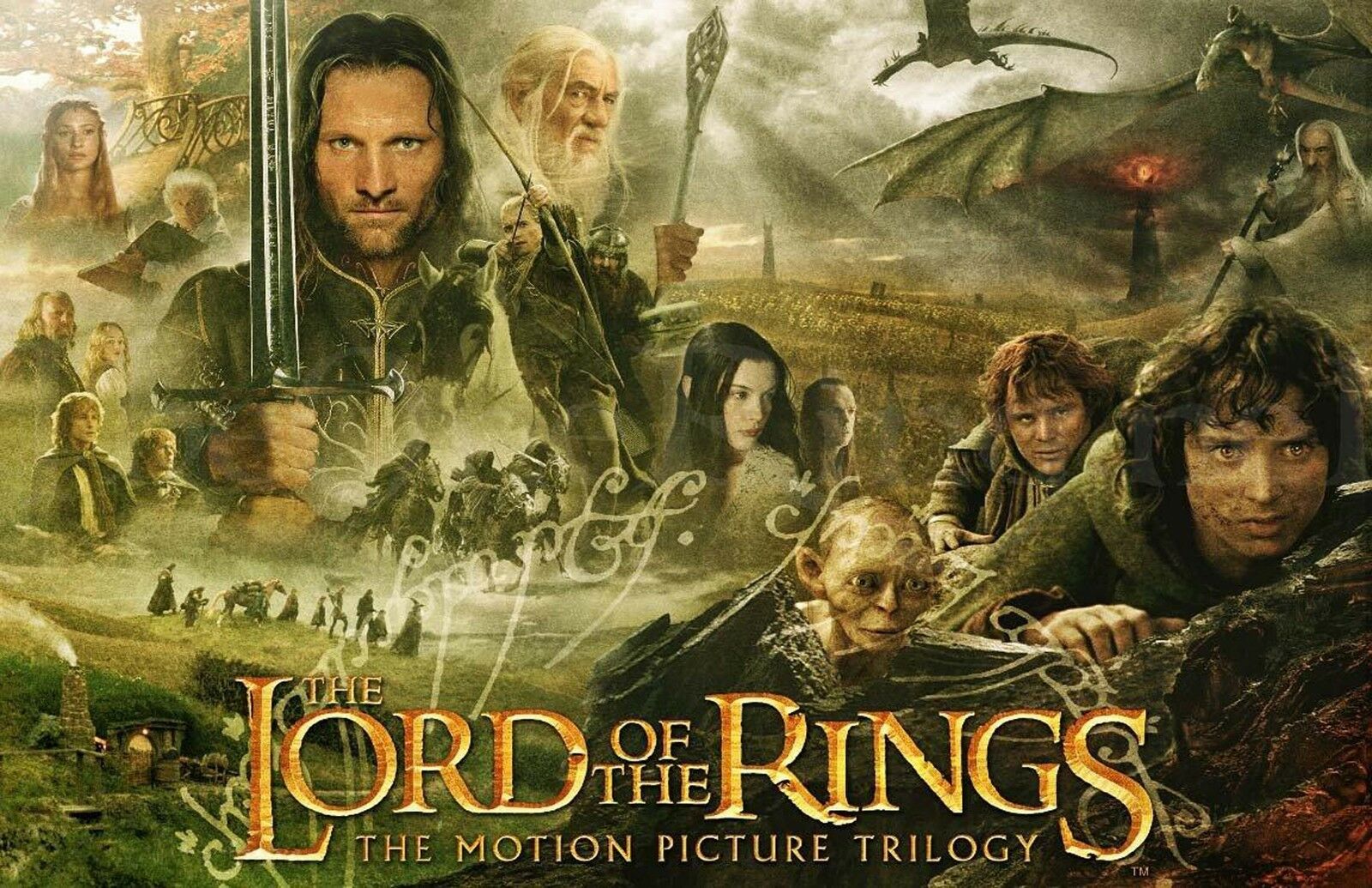
Peter Jackson proved the world wrong. The Lord of the Rings trilogy (2001-2003) earned $3 billion at the global box office, more than the original Star Wars trilogy. The films were nominated for 30 Oscars and won 19–more than the Godfather trilogy—including Best Picture, Director, Screenplay, Cinematography, and Visual Effects (three times). Contrary to popular belief, the acting was also recognized: Ian McKellen was nominated for acting in Fellowship of the Ring. All three movies are high on IMDB’s list of top movies (#13, 21, and 9, in order), and Fellowship of the Ring is #50 on the American Film Institute’s list of the greatest films of all time.
Few films achieve such complete success—commercial, popular, and critical—and are recognized in their own time as classics. Does The Lord of the Rings deserve its reputation?
Absolutely, yes, it does. But not for the reasons you might think. I suspect its ground-breaking special effects, which are truly a marvel and contributed heavily to the films’ success, may not hold up too well after another decade or so. In fact, they may not even look impressive compared to what we see in the upcoming Hobbit trilogy.
The truly impressive qualities of The Lord of the Rings, which will only gain lustre with age, are the trilogy’s fidelity to traditional themes (loyalty, friendship, and heroism), its surprisingly sophisticated psychology, and its evocation of powerful archetypal images.
For example, the key relationship across three movies is the friendship between Sam and Frodo. Sam’s loyalty to Frodo, and Frodo’s willingness to be seen in his weakness and to lean on his friend for help, is a powerful depiction of simple friendship. The hobbits’ courage—especially Merry and Pippin as they ride into battle—is another simple but powerful and timeless theme that grounds the films. Few movies evoke the virtues without including a snide subversion of them under the guise of irony. The Lord of the Rings is childlike in its guilelessness.
There is even genuine wisdom in the dialogue. Sam says at the end of The Two Towers: “There’s something good in this world, and it’s worth fighting for”—a decent one-line summary of just war theory. Earlier, in Fellowship of the Ring, Frodo talks with Gandalf:
Frodo: I wish none of this had happened.
Gandalf: So do all who live to see such times. But that is not for them to decide. All we have to decide is what to do with the time that is given to us.
This distinction between our circumstances and our responses to those circumstances is echoed in Paul David Tripp’s Instruments in the Redeemer’s Hands. As Christians, we understand that our circumstances are often filled with suffering and trial, but we nonetheless have a responsibility to choose to respond to them with patience and trust in God’s providential care.
The films also reflect a surprisingly deep and complex understanding of human nature. I know, I know: epics don’t focus on characters, and fantasy relies on archetypes. Gimli and Legolas aren’t exactly Hamlet.
But Gollum is. Gollum, the shrunken, hollow, sniveling wretch is among the great characters of literature. He is a tortured soul, a schizophrenic addict, a thing struggling against his own nature, conscious of his own looming damnation and unable to escape it. He is a heartbreaking portrayal of Romans 7:15-24 (alas, not verse 25).
Indeed, the object of Gollum’s idolatry—the titular Ring of Power—is a catalyst for sin for any characters who encounter it. Boromir and (initially) Faramir betray their promises, Gandalf and Galadriel become terrifying, and even Frodo becomes psychotic over the ring. It is the mechanism by which Tolkien introduces some depth and conflict into these fantasy characters.
The Lord of the Rings also paints some intensely powerful images. Whether or not Jungian archetypes really exist, Tolkien was apparently familiar with them and Peter Jackson found a way to project digital facsimiles directly onto the silver screen.
Gandalf’s dramatic return at the Battle of Helm’s Deep astride a white horse is the best artistic evocation of the Second Coming I’m aware of (Revelation 19:11). Note the music as he and the Rohirrim charge the field: it is a soft, redemptive, triumphant tune sung by an angelic choir, not the fast, heavy, tympanic track of an action scene. The point is not the swordplay, but the achievement of salvation.
It is not the only archetypical moment. The Shire is a warm, homey, comfortable place, with all the rustic comforts of a getaway to the countryside—a sort of permanent bed and breakfast where there is always a crackling fire and hot meal waiting for you. It is Home. The Gray Havens (Heaven); the Balrog (“a demon of the ancient world”); Sauron (Satan); Mordor (Hell); elves (angels); the Return of the King (the Return of the King)—Middle Earth is enchanted and peopled with images and ideas etched deep inside us. I could go on.
The Lord of the Rings gives opportunity after opportunity to see traces of the truth in it, which is reason enough to admire it. I have one more reason. The Return of the King came out in 2003. At the conclusion of the film, the four hobbits, having returned to the Shire, sit down at a pub. They look around uncomfortably: life has continued as normal during their absence. No one has any idea what the hobbits have been through, how close the world came to catastrophe, or what sacrifices they made. The hobbits look at each other knowingly: no one understands, and no one ever will, and you simply have to pick up your life and move on.
I am a veteran of the war in Afghanistan. Friends and family sometimes ask me to recount my experiences. I can recount facts, but I can’t make them understand. Jackson’s brief portrayal of returning veterans is wrenching, and cathartic, and true.
Previous Post

December 12, 2012
The Hopeless Innocence of Amelie
Next Post
December 14, 2012 Seeking a Better Country Than Middle Earth
Browse Our Archives
Select a Category Action AFI Top 100 Animation Best Picture Winner BFI Top 250 Biography Biopic Books Childrens Christian Classics Classics Comedy Crime Documentary Drama Editor's Choice Family Fantasy Fantasy Films Foreign Historical Historical Fiction History Horror Horror IMDB Top 250 Indie Memoir Modern Novel Musical Mystery Non-Fiction Oscars Philosophy Poetry Popular Literature Reading and Writing Reality Romance Science Fiction Science Fiction Silent Sports Thriller TV Show Uncategorized Western Westerns Young Adult
Select a Month October 2026 September 2026 July 2026 June 2026 May 2026 April 2026 March 2026 February 2026 January 2026 December 2025 November 2025 October 2025 September 2025 August 2025 July 2025 June 2025 May 2025 April 2025 March 2025 February 2025 January 2025 December 2024 July 2024 June 2024 May 2024 April 2024 March 2024 February 2024 January 2024 December 2023 November 2023 October 2023 September 2023 August 2023 July 2023 June 2023 May 2023 April 2023 March 2023 February 2023 January 2023 December 2022 November 2022 October 2022 September 2022 August 2022 July 2022 June 2022 May 2022 April 2022 March 2022 February 2022 January 2022 December 2021 November 2021 October 2021 September 2021 August 2021 July 2021 June 2021 May 2021 April 2021 March 2021 February 2021 January 2021 December 2020 November 2020 October 2020 September 2020 August 2020 July 2020 June 2020 May 2020 April 2020 March 2020 February 2020 January 2020 December 2019 November 2019 October 2019 September 2019 August 2019 July 2019 June 2019 May 2019 April 2019 March 2019 February 2019 January 2019 December 2018 November 2018 October 2018 September 2018 August 2018 July 2018 June 2018 May 2018 April 2018 March 2018 February 2018 January 2018 December 2017 November 2017 October 2017 September 2017 June 2017 January 2017 December 2016 October 2016 September 2016 August 2016 July 2016 June 2016 May 2016 April 2016 March 2016 February 2016 January 2016 December 2015 November 2015 October 2015 September 2015 August 2015 July 2015 June 2015 May 2015 April 2015 March 2015 February 2015 January 2015 December 2014 November 2014 October 2014 September 2014 August 2014 July 2014 June 2014 May 2014 April 2014 March 2014 February 2014 January 2014 December 2013 November 2013 October 2013 September 2013 August 2013 July 2013 June 2013 May 2013 April 2013 March 2013 February 2013 January 2013 December 2012 November 2012 October 2012 September 2012 August 2012 July 2012
Follow Us!
TAKE THE
Religious Wisdom Quiz
What does "Pentateuch" mean in Greek?
Select your answer to see how you score.
First law Book of peace Five scrolls Stories of heroes
Related posts from Schaeffer's Ghost



Mortal Kombat 2: Can Video Game Movies Save...

TRENDING AT PATHEOS Religious Music & Entertainment

The Iron Gates and the Lion of the...
Yesterday, I didn't finish my report about, well, yesterday. So I'll...

Dolly Parton’s Last Song Wins Dove Award with...
Bluegrass band The Grascals, speaking on the red carpet at the 57th...

The Image: On the Horror of Capitalism and...
The Image Then went the Pharisees, and took counsel how they might...

We are approaching the date of our new American national holiday: October...

Letters on Living the Faith by C.S. Lewis
Most of us met C.S. Lewis as a public intellectual. Mere Christianity....

When Halloween Unmasks Married Hearts
Written by Dr. David K. Ewen from Eternal Truth Bible College Behind...
view all Religious Music & Entertainment blogs
Ad-Free & Subscriber Log-In Subscription Support
- About Us
- 2026 Calendar
- Videos
- Podcasts
- Library of World Religions
- Faith In Media Tracker
- Advertise With Us
- Write for Us
- Privacy Policy
- Terms of Service
- Do Not Sell My Data
- Contact Us
- Radiant Digital
- Manage Newsletter Subscriptions
- Unsubscribe From Notifications
- Sitemap
Copyright 2008-2026, Patheos. All rights reserved.
Subscription Support Ad-Free & Subscriber Log-In
Follow Patheos