
BuddhistCatholicContemplativeEvangelicalGeneral ChristianHinduJewishLatter-day SaintMuslimNew VisionsProgressive Christian
Beliefs
- Buddhist
- Catholic
- Contemplative
- Evangelical
- General Christian
- Hindu
- Jewish
- Latter-day Saint
- More Voices
- Muslim
- New Visions
- Pagan
- Progressive Christian
Topics
- Religion News
- Food and Religion
- Sports and Religion
- Religious Art
- Religious Music and Entertainment
- Religious Events
- History and Religion
- Style and Religion
- Politics and Religion
- Women in Religion
- Recreation Outdoors and Religion
- Business Finance and Religion
- Careers Workplace and Religion
- Education and Religion
- Family Parenting and Religion
- Health Fitness and Religion
- Home and Religion
- Relationships and Religion
- Technology and Religion
- Travel and Religion
Columnists
- Buddhist Columnists
- Business Finance and Religion Columnists
- Careers Workplace and Religion Columnists
- Catholic Columnists
- Contemplative Columnists
- Education and Religion Columnists
- Evangelists Columnists
- Family Parenting and Religion Columnists
- General Christian Columnists
- Health Fitness and Religion Columnists
- Hindu Columnists
- History and Religion Columnists
- Home and Religion Columnists
- Jewish Columnists
- More Voices Columnists
- Latter Day Columnists
- Muslim Columnists
- New Visions Columnists
- Nonreligious Columnists
- Pagan Columnists
- Politics and Religion Columnists
- Progressive Columnists
- Recreation Outdoors and Religion Columnists
- Relationships and Religion Columnists
- Religion News Columnists
- Religious Art Columnists
- Religious Events Columnists
- Religious Music and Entertainment Columnists
- Sports and Religion Columnists
- Style and Religion Columnists
- Technology and Religion Columnists
- Travel and Religion Columnists
- Women in Religion Columnists
Resource Library
- 2026 Calendar
- Library of World Religions
- The 100 Most Holy Places on Earth
- Patheos Answers
- Podcasts
- Videos
- Faith Leaders Database
- Anglican Episcopalian
- Bahai
- Baptist
- Buddhism
- Christianity
- Confucianism
- Eastern Orthodoxy
- Hinduism
- Holiness and Pentecostal
- ISKCON
- Islam
- Judaism
- Lutheran
- Methodist
- The Church of Jesus Christ of Latter-day Saints
- New Age
- Paganism
- Presbytarian and Reformed
- Protestantism
- Religion Behind the Scenes
- Roman Catholic
- Scientology
- Shia Islam
- Sikhism
- Sufism
- Sunni Islam
- Taoism
- Zen
- See all religions
Research Tools
 Ad-Free & Subscriber Log-In Subscription Support
Ad-Free & Subscriber Log-In Subscription Support
Follow Patheos 

- Trending:
- Forgiveness
- |
- Marriage
- |
- Consciousness
- |
- Death Penalty
- |
- Election
- |
- Halloween
 Sarah Thebarge
- Home
- Progressive Christian
- so you want to change the world:healing vs. changing
so you want to change the world:healing vs. changing
Last updated on: February 9, 2018 at 4:46 pm by Sarah Thebarge
so you want to change the world:healing vs. changing 2018-02-09T16:46:38+00:00 Sarah Thebarge
Patheos Explore the world's faith through different perspectives on religion and spirituality! Patheos has the views of the prevalent religions and spiritualities of the world.
I have spent the past nine months working on my second book, which is about seeing Jesus show up in Togo, the least happy country in the world, during the three months I spent working at a hospital there last year.
I sent in the second rewrite last week. The day after I turned it in, I was riding the train from Bloomington, IL to Chicago to take my niece and nephews to the zoo. As we passed miles and miles of corn fields, I started out the window, trying to figure out how to explain what my book is really about.
In the writing world, they call it “The Elevator Pitch.” In other words, if you’re on the elevator with someone else, how can you explain your writing project to them before you get off on the next floor?
The closest I’d been able to come was that people talk about the art of medicine, and the science of medicine, but my book is the theology or spirituality of medicine.
When I interviewed for the Yale PA program, I told the admissions panel I was going to change the world someday. But what I have found in more than 10 years of practicing medicine in ER/Urgent Care settings, and then in Togo, is that it’s not possible for me to change patients. It’s only possible for me to heal them.
It’s not possible for me to single-handedly make them eat healthier, stop smoking, exercise more or take their medicine every day. It’s only possible for me to help the people who want to be helped, to offer resources and encouragement to patients who are motivated to change themselves.
To put it simply, if I wanted to change people, I should’ve become a politician. I should’ve spent money on a campaign, been voted into office, and wielded my power and influence to legislate behavior. But if I wanted to heal people, I needed to follow Jesus. And this, I realized, is the “Elevator Pitch” for the book. It’s about learning to heal a broken world instead of changing a wrong world.

When Jesus came into the world, he didn’t use politics to change the world (though he could have). Instead, he came to heal the world, offering healing to people who asked him to be healed, who self-identified what they needed help with. In my cursory search of the Gospels, the only person Jesus heals who didn’t ask to be healed was the man whose ear Peter chopped off when the mob came to Gethsemane to drag Jesus away — because who would dare to ask a favor of a man they were about to crucify? In healing his enemy, his adversary who was about to make false accusations that would lead to Jesus’ crucifixion, Jesus shows how deep his desire was to heal people who were broken – whether they were his enemies or his friends. Whether they “deserved” it or not.
For a brief period of time, I thought about going into politics. I followed the news closely, and even watched CSPAN with my uncle sometimes. When I was in junior high, I ran for student council. Our school was very small — I think there were 20 students in 6th-8th grades. Two of us ran for an empty seat on the student council, and I lost. Partly because I’m not good at being a politician, and partly because of my cheesy campaign slogan, “Put TheBarge In Charge.”
Anyway. I ended up going into medicine instead, which is probably good for everyone.
Even once I started practicing medicine, though, I tried to change people. When I interacted with patients who were diabetic or obese or who had high cholesterol or high blood pressure, I threatened them more than I educated them, trying to use the fear of consequences to force them to change.
If I saw someone in the outpatient setting who had symptoms of a potentially life-threatening condition, I referred them to the E.R. with a menacing warning that if they didn’t go to the E.R. for a workup to rule out a serious condition like a heart attack or a stroke, they might die. Patients often argued back, and it turned into a confrontation.
And then, mostly because I had cancer and I became a patient and I appreciated the medical professionals who were gentle with me, I began to soften my approach towards my own patients.
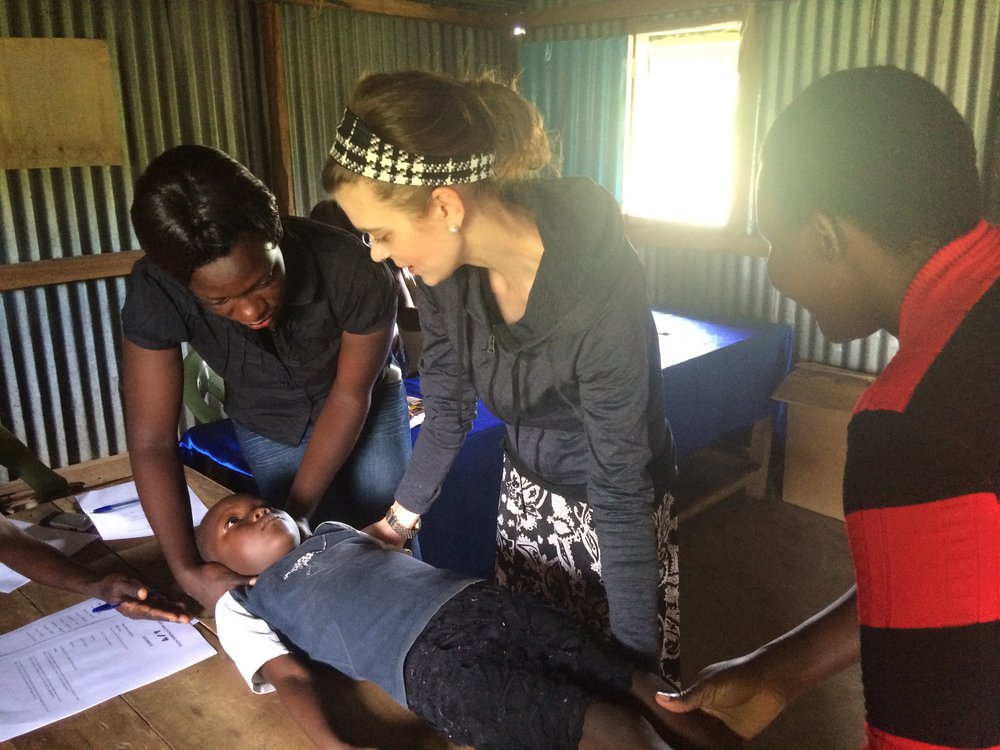
Instead of threatening them with data that showed the consequences they would experience if they didn’t change, I began to come alongside and offer whatever encouragement, support and resources the patient was ready to receive.
Instead of scaring people into going to the E.R., I began to say, “The world only gets one of you, so we have to take exceptionally good care of you!” And it worked. Patients were much more likely to follow my recommendations when I used love instead of fear to motivate them.
To put it simply, I began to follow in the steps of Jesus, to offer healing and mercy to the people who consented to receive it.
Not everyone will going into a career as a medical professional who literally heals the world, but I think there’s a lesson here for all of us.
So many times, Christians try to take a political approach to forcing the world to change — sometimes going so far as to literally use the Bible as a political platform. We frame it as an issue of Right vs. Wrong. But if Jesus didn’t use the political system to mend a broken world, why have we made that the most common tool we wield in our world? If Jesus chose to motivate people with hope and love, why do we harp on fear? If we truly believe that blessed are the merciful, why are we so quick to jump to judgment?
Instead of wanting to change a world that we think is wrong, what does it mean for us to use our faith to heal a world that is broken instead?
so you want to change the world
Previous Post

June 26, 2016
so you want to change the world: it starts with you
Next Post
July 4, 2016 no one's free until we're all free
Browse Our Archives
Select a Category Uncategorized
Select a Month February 2019 December 2018 November 2018 October 2018 September 2018 August 2018 July 2018 June 2018 May 2018 April 2018 March 2018 January 2018 December 2017 November 2017 October 2017 August 2017 July 2017 November 2016 October 2016 September 2016 August 2016 July 2016 June 2016 May 2016 April 2016 March 2016 February 2016 January 2016 December 2015 November 2015 October 2015 September 2015
TAKE THE
Religious Wisdom Quiz
True or False: Mordecai refused to bow down to Haman.
Select your answer to see how you score.
FALSE TRUE
Books by This Author Books by Sarah Thebarge
Related posts from Sarah Thebarge

Cisterns vs. Wells: Practicing rest in a restless...

The Meaning Of Mistletoe: How Love Brings The...

First Do No Harm: What Evangelical Missions Needs...

Why Christmas Should Be Cancelled This Year
TRENDING AT PATHEOS Progressive Christian

Why Christians Have a Sacred Duty to Vote:...
The Bible offers strong support for the sacred duty to vote. Here...

What Being a Modern-Day Apostle Means to Me
In my last column, I discussed the ins and outs of modern-day...

Did Ancient China Once Worship the God of...
Across human history, a common thread weaves through the origins of the...

Love Your Neighbor – Including Earth-Kin: Lev. 19,...
God’s command to love your neighbor means acting in an ethical and...

Lead a Church Study of “Jesus and Lao...
Guest writer Jack Thomas (The Irreverent Reverend) reflects on leading his church...

Principles for Understanding the Apostolic Ministry Today
Whenever people discover that my formal ministry title is "apostle," as in...
view all Progressive Christian blogs
Ad-Free & Subscriber Log-In Subscription Support
- About Us
- 2026 Calendar
- Videos
- Podcasts
- Library of World Religions
- Faith In Media Tracker
- Advertise With Us
- Write for Us
- Privacy Policy
- Terms of Service
- Do Not Sell My Data
- Contact Us
- Radiant Digital
- Manage Newsletter Subscriptions
- Unsubscribe From Notifications
- Sitemap
Copyright 2008-2026, Patheos. All rights reserved.
Subscription Support Ad-Free & Subscriber Log-In
Follow Patheos