
BuddhistCatholicContemplativeEvangelicalGeneral ChristianHinduJewishLatter-day SaintMuslimNew VisionsProgressive Christian
Beliefs
- Buddhist
- Catholic
- Contemplative
- Evangelical
- General Christian
- Hindu
- Jewish
- Latter-day Saint
- More Voices
- Muslim
- New Visions
- Pagan
- Progressive Christian
Topics
- Religion News
- Food and Religion
- Sports and Religion
- Religious Art
- Religious Music and Entertainment
- Religious Events
- History and Religion
- Style and Religion
- Politics and Religion
- Women in Religion
- Recreation Outdoors and Religion
- Business Finance and Religion
- Careers Workplace and Religion
- Education and Religion
- Family Parenting and Religion
- Health Fitness and Religion
- Home and Religion
- Relationships and Religion
- Technology and Religion
- Travel and Religion
Columnists
- Buddhist Columnists
- Business Finance and Religion Columnists
- Careers Workplace and Religion Columnists
- Catholic Columnists
- Contemplative Columnists
- Education and Religion Columnists
- Evangelists Columnists
- Family Parenting and Religion Columnists
- General Christian Columnists
- Health Fitness and Religion Columnists
- Hindu Columnists
- History and Religion Columnists
- Home and Religion Columnists
- Jewish Columnists
- More Voices Columnists
- Latter Day Columnists
- Muslim Columnists
- New Visions Columnists
- Nonreligious Columnists
- Pagan Columnists
- Politics and Religion Columnists
- Progressive Columnists
- Recreation Outdoors and Religion Columnists
- Relationships and Religion Columnists
- Religion News Columnists
- Religious Art Columnists
- Religious Events Columnists
- Religious Music and Entertainment Columnists
- Sports and Religion Columnists
- Style and Religion Columnists
- Technology and Religion Columnists
- Travel and Religion Columnists
- Women in Religion Columnists
Resource Library
- 2026 Calendar
- Library of World Religions
- The 100 Most Holy Places on Earth
- Patheos Answers
- Podcasts
- Videos
- Faith Leaders Database
- Anglican Episcopalian
- Bahai
- Baptist
- Buddhism
- Christianity
- Confucianism
- Eastern Orthodoxy
- Hinduism
- Holiness and Pentecostal
- ISKCON
- Islam
- Judaism
- Lutheran
- Methodist
- The Church of Jesus Christ of Latter-day Saints
- New Age
- Paganism
- Presbytarian and Reformed
- Protestantism
- Religion Behind the Scenes
- Roman Catholic
- Scientology
- Shia Islam
- Sikhism
- Sufism
- Sunni Islam
- Taoism
- Zen
- See all religions
Research Tools
 Ad-Free & Subscriber Log-In Subscription Support
Ad-Free & Subscriber Log-In Subscription Support
Follow Patheos 

- Trending:
- Forgiveness
- |
- Marriage
- |
- Consciousness
- |
- Death Penalty
- |
- Election
- |
- Halloween
 Sarah Thebarge
- Home
- Progressive Christian
- the (dis)comfort zone
the (dis)comfort zone
Last updated on: February 9, 2018 at 4:46 pm by Sarah Thebarge
the (dis)comfort zone 2018-02-09T16:46:39+00:00 Sarah Thebarge
Patheos Explore the world's faith through different perspectives on religion and spirituality! Patheos has the views of the prevalent religions and spiritualities of the world.
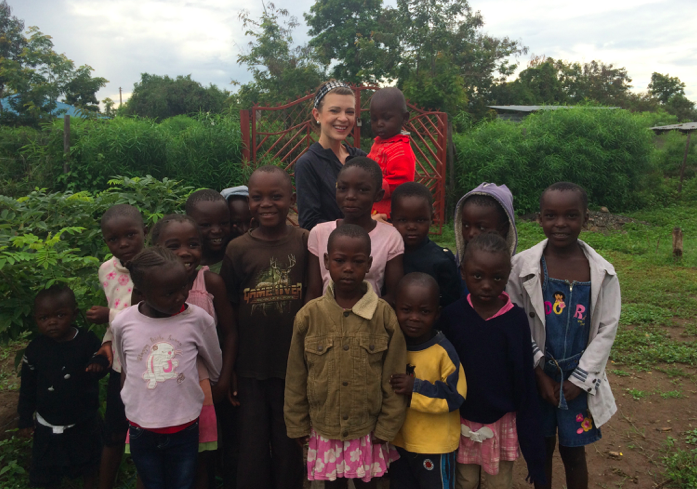
Today is my 4th day in Kenya. So far it’s been a great experience….very friendly people, a kind host family, fun kids and a very responsive staff.
And yet, it has certainly been a stretching experience. I’ve only seen two other white people on the island so far. Francis said they’re with the Peace Corps, and they’ve been here for a few years.
I haven’t had coffee since I got here because in this region, it isn’t a “thing.” You can’t even find it at the grocery store. Everyone here drinks black tea, water or Coca-Cola.
Every time I walk through the streets, the children yell, “Mzungu!” Which is the local dialect (Kiswahili) for “White Person.” And, just like the children in Togo did, they run to me and try to touch me to see if anything magical or disastrous happens 🙂
The moto taxi drivers won’t leave me alone. The shop keepers call to me, “Madam! Madam! Look! Very good for you! Very good!”
The food is delicious, but I don’t recognize anything I’ve eaten so far.
There’s no toilet paper, indoor plumbing, bath tubs or showers, and I have to walk 2 miles to the Internet cafe in town if I want to go online.
Lots of people here speak English, but most of the time they’re speaking Kiswahili or Luo (the local island dialect), so I sit in rooms with people and have no idea what they’re saying. “Don’t worry,” one man said when he saw me baffled by what everyone around me was chattering about. “We’re not talking bad about you.”
“Okay, good,” I said, laughing.
Last night, Mama, the 60-something-year-old woman I’m staying was lying down for a nap when I got home from town in the evening. Her grandson told me she was napping. Then another grandson told me she was sick. I asked if I could see her, and they said yes.
I went into her room where she was lying on her bed feverish, moaning and holding her head. I put my hand on her head, and she was burning up.
“Mama,” I said gently, sitting on the edge of her bed.
She groaned in response.
“Mama, do you think you have malaria?” I asked.
She nodded slightly.
“I think so too, I said.” I left to get medicine I had in my bag — CoArtem for malaria, Tylenol for fever and pain, Zofran for nausea and vomiting.
I helped her sit up and take the medicine. She collapsed back onto the bed and closed her eyes.
“Call me if you need me,” I said, and gently closed the door.
The rest of us ate dinner in the main room of the house, just outside her door. Her daughter gave her a sponge bath to cool her down. Then I went to check on her. She was sleeping and her skin temperature was cooler, which I took to be good signs.
I went to bed in the room right next door — which is separated by a wall that stops 18 inches from the ceiling, so it’s more of a divider than a wall. During the night, I heard her vomiting more. But she wasn’t calling for me, and I’d given her all the medicine I had, so I laid in bed waiting, praying, hoping that the medicine would work quickly, hoping she didn’t have something more serious.
“Is Ebola in Kenya?” I wondered at one point.
I wondered what we would do if she got sicker. The main hospital is a long ways away, and you have to take a moto — and then a ferry — to get there.
I also thought about her husband. He had thought it was going to rain the day before, but it hadn’t. He had told me at dinner that they desperately needed rain to grow the crops during the rainy season, otherwise there wouldn’t be enough food to last them through the dry season.
Again, I laid there waiting, praying, hoping for rain.
I was awake most of the night, listening to Mama’s soft, regular breathing on the other side of the wall as she slept between episodes of vomiting, listening for the sound of rain.
At some point during my vigil under the mosquito net, I dozed off. I woke just before dawn to hear the patter of rain on the tin roof above, followed by a torrential downpour…and I smiled.
I got ready, and went to Mama’s room to check on her. She was awake, sitting up in bed. I smiled again. I gave her the next dose of malaria medicine.
And then I left to teach a class for the orphanage school staff. When we started the day, they didn’t know what the Heimlich maneuver was, how to care for a wound, or what organ pneumonia infects. By the time the day was done, they answered every single question I asked them about what we’d covered.
“Welcome to the discomfort zone,” I thought as I left the classroom and walked to the Internet cafe to write this.
The downside of leaving our comfort zones is that the next step is the (dis)comfort zone. But the upside is that past the (dis)comfort zone, past the fear, past the culture shock, past the unfamiliarity, past the homesickness, past the long and sleepless nights, something beautiful waits for us on the other side.
It’s not easy. It’s not ever easy.
But it’s worth it.
Previous Post

April 28, 2016
the place with three doors
Next Post
May 2, 2016 $12 a day
Browse Our Archives
Select a Category Uncategorized
Select a Month February 2019 December 2018 November 2018 October 2018 September 2018 August 2018 July 2018 June 2018 May 2018 April 2018 March 2018 January 2018 December 2017 November 2017 October 2017 August 2017 July 2017 November 2016 October 2016 September 2016 August 2016 July 2016 June 2016 May 2016 April 2016 March 2016 February 2016 January 2016 December 2015 November 2015 October 2015 September 2015
TAKE THE
Religious Wisdom Quiz
How beautiful on the mountains are the feet of those who bring good news and proclaim what?
Select your answer to see how you score.
Victory Salvation Peace Deliverance
Books by This Author Books by Sarah Thebarge
Related posts from Sarah Thebarge

nobody said: notes about culture shock


it happened one day at starbucks
TRENDING AT PATHEOS Progressive Christian

Why Christians Have a Sacred Duty to Vote:...
The Bible offers strong support for the sacred duty to vote. Here...

What Being a Modern-Day Apostle Means to Me
In my last column, I discussed the ins and outs of modern-day...

Did Ancient China Once Worship the God of...
Across human history, a common thread weaves through the origins of the...

Love Your Neighbor – Including Earth-Kin: Lev. 19,...
God’s command to love your neighbor means acting in an ethical and...

Lead a Church Study of “Jesus and Lao...
Guest writer Jack Thomas (The Irreverent Reverend) reflects on leading his church...

Principles for Understanding the Apostolic Ministry Today
Whenever people discover that my formal ministry title is "apostle," as in...
view all Progressive Christian blogs
Ad-Free & Subscriber Log-In Subscription Support
- About Us
- 2026 Calendar
- Videos
- Podcasts
- Library of World Religions
- Faith In Media Tracker
- Advertise With Us
- Write for Us
- Privacy Policy
- Terms of Service
- Do Not Sell My Data
- Contact Us
- Radiant Digital
- Manage Newsletter Subscriptions
- Unsubscribe From Notifications
- Sitemap
Copyright 2008-2026, Patheos. All rights reserved.
Subscription Support Ad-Free & Subscriber Log-In
Follow Patheos