
BuddhistCatholicContemplativeEvangelicalGeneral ChristianHinduJewishLatter-day SaintMuslimNew VisionsProgressive Christian
Beliefs
- Buddhist
- Catholic
- Contemplative
- Evangelical
- General Christian
- Hindu
- Jewish
- Latter-day Saint
- More Voices
- Muslim
- New Visions
- Pagan
- Progressive Christian
Topics
- Religion News
- Food and Religion
- Sports and Religion
- Religious Art
- Religious Music and Entertainment
- Religious Events
- History and Religion
- Style and Religion
- Politics and Religion
- Women in Religion
- Recreation Outdoors and Religion
- Business Finance and Religion
- Careers Workplace and Religion
- Education and Religion
- Family Parenting and Religion
- Health Fitness and Religion
- Home and Religion
- Relationships and Religion
- Technology and Religion
- Travel and Religion
Columnists
- Buddhist Columnists
- Business Finance and Religion Columnists
- Careers Workplace and Religion Columnists
- Catholic Columnists
- Contemplative Columnists
- Education and Religion Columnists
- Evangelists Columnists
- Family Parenting and Religion Columnists
- General Christian Columnists
- Health Fitness and Religion Columnists
- Hindu Columnists
- History and Religion Columnists
- Home and Religion Columnists
- Jewish Columnists
- More Voices Columnists
- Latter Day Columnists
- Muslim Columnists
- New Visions Columnists
- Nonreligious Columnists
- Pagan Columnists
- Politics and Religion Columnists
- Progressive Columnists
- Recreation Outdoors and Religion Columnists
- Relationships and Religion Columnists
- Religion News Columnists
- Religious Art Columnists
- Religious Events Columnists
- Religious Music and Entertainment Columnists
- Sports and Religion Columnists
- Style and Religion Columnists
- Technology and Religion Columnists
- Travel and Religion Columnists
- Women in Religion Columnists
Resource Library
- 2026 Calendar
- Library of World Religions
- The 100 Most Holy Places on Earth
- Patheos Answers
- Podcasts
- Videos
- Faith Leaders Database
- Anglican Episcopalian
- Bahai
- Baptist
- Buddhism
- Christianity
- Confucianism
- Eastern Orthodoxy
- Hinduism
- Holiness and Pentecostal
- ISKCON
- Islam
- Judaism
- Lutheran
- Methodist
- The Church of Jesus Christ of Latter-day Saints
- New Age
- Paganism
- Presbytarian and Reformed
- Protestantism
- Religion Behind the Scenes
- Roman Catholic
- Scientology
- Shia Islam
- Sikhism
- Sufism
- Sunni Islam
- Taoism
- Zen
- See all religions
Research Tools
 Ad-Free & Subscriber Log-In Subscription Support
Ad-Free & Subscriber Log-In Subscription Support
Follow Patheos 

- Trending:
- Forgiveness
- |
- Marriage
- |
- Consciousness
- |
- Death Penalty
- |
- Election
- |
- Halloween
 Sarah Thebarge
- Home
- Progressive Christian
- blessed and broken: the week after easter
blessed and broken: the week after easter
Last updated on: February 9, 2018 at 4:46 pm by Sarah Thebarge
blessed and broken: the week after easter 2018-02-09T16:46:40+00:00 Sarah Thebarge
Patheos Explore the world's faith through different perspectives on religion and spirituality! Patheos has the views of the prevalent religions and spiritualities of the world.
It’s a few days after the resurrection and, as Jesus is walking down the road to Emmaus, he catches up with two men who are walking together, discussing the recent events in Jerusalem, asking questions about the Messiah.
Jesus walks with them, enters into their conversation, and answers their questions. They invite him to dinner. And when he stands and blesses the bread and then breaks it — they recognize him. And then he disappears.
They recognize Jesus not because of his resurrected, indestructible body. Not because he has the answers to all of their questions. They recognize him in the breaking.
There’s something about the resurrection that shines through the brokenness and the men see Jesus in a way they couldn’t see him before.
I thought about this in Togo, when I was touching brokenness — metaphorically and literally. I was in the least happy country in the world, witnessing a broken political system, a broken infrastructure, a broken economy. And I was literally touching broken bodies — bleeding wounds, broken bones, cracked teeth and nails and skin.
And somehow in that darkness, in the “least-happy”-ness and in the pain, Jesus showed up there in a way I had never seen Jesus before.
Somehow, in the rooms of the dying, as I held their hands and witnessed their last breaths, there was a Presence in the room I had never felt before.
Suddenly, I understood Leonard Cohen’s words: “There’s a crack in everything. That’s how the light gets in.”
And Rumi’s line: “The wound is the place where the light enters.”
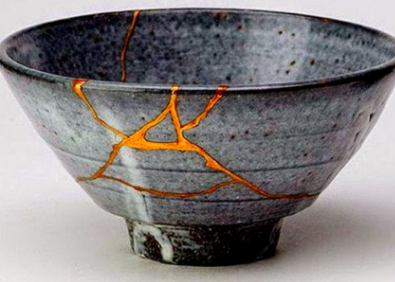
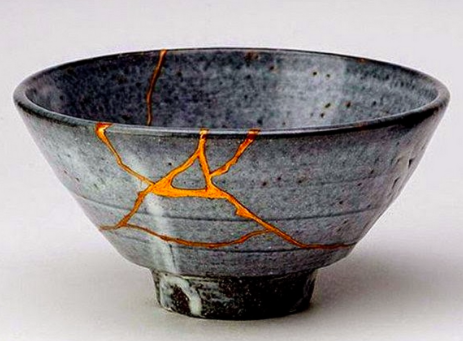
The Japanese express this in an art form called Kintsugi, where pottery is purposefully broken, and the cracks are repaired with laquer dusted with silver, gold or platinum. A piece of pottery that is cracked and repaired with gold is more valuable than pottery that has never been broken.
In P.A. school, the pediatrics professor taught us never to lie to children. If you’re going to give them a shot and they ask if it will hurt, a lot of us want to say, “No” so the child will cooperate better and not dread the coming pain. You can deal with the emotional reaction after the shot is completed and you no longer have a sharp object in your hand.
But if you lie to a child about pain, you will break their trust, and they won’t trust you again.
So, before giving shots or doing painful procedures, I tell my patients of all ages, “This is going to hurt.” And then I inflict the pain as quickly as possible, because the anticipation of pain is almost worse than the pain itself.
To me, the most beautiful part of Jesus breaking the bread is that before he breaks it, before he tears it apart, before he rends the loaf, he blesses it.
He blesses it as if to say, “This will hurt, but you can trust me. Because I’m doing this for your good. Because I am good.” And, as it is broken, the bread becomes holy. It goes from sustenance to sacrament, from banal to beautiful, from whole to holy.
I think human beings are like that bread.
As we go through life, we inevitably become broken (Trust me, I have lived this truth over the past two weeks.) It is an unavoidable, irrefutable fact of life: it will hurt. And, as William Goldman wrote in The Princess Bride, “Anyone who says differently is selling something.”
Paul writes,
We have this treasure in jars of clay to show this all-surpassing power is from God and not from us.
We are hard pressed on every side, but not crushed;
perplexed, but not in despair;
persecuted, but not abandoned;
struck down, but not destroyed.
We always carry around in our body the death of Jesus,
so that the life of Jesus may also be revealed in our body.
For we who are alive are always being given over to death for Jesus’ sake,
so that his life may also be revealed in our mortal body.
We mortals are Kintsugi pottery, God’s art form. Our bodies and our souls and our hearts break as we go through life. The promise we have from God is not that we won’t break, but that when we do, God will redeem the brokenness — or, in the words of Romans 8:28, work all things for good.
And God doesn’t just put us back together, like the King’s Men trying to reassemble Humpty Dumpty after he fell off the wall. God puts us together like a Kintsugi pottery master — carefully, artfully, beautifully — with extravagant, expensive, glimmering grace.
As you walk into this post-Easter world, remember that God brought you into the world with love. He holds you and speaks a blessing over you. And then he will allow you to be broken. And as God redeems your pain, you will be transformed.

From an ordinary jar of clay to priceless Kintsugi pottery.
From bread to sacrament.
From ashes to beauty.
From death to never-ending Life.
Previous Post

March 26, 2016
the day before resurrection
Next Post
March 30, 2016 when life doesn't add up
Browse Our Archives
Select a Category Uncategorized
Select a Month February 2019 December 2018 November 2018 October 2018 September 2018 August 2018 July 2018 June 2018 May 2018 April 2018 March 2018 January 2018 December 2017 November 2017 October 2017 August 2017 July 2017 November 2016 October 2016 September 2016 August 2016 July 2016 June 2016 May 2016 April 2016 March 2016 February 2016 January 2016 December 2015 November 2015 October 2015 September 2015
TAKE THE
Religious Wisdom Quiz
Who was the first woman created by God?
Select your answer to see how you score.
Rebekah Eve Sarah Mary
Books by This Author Books by Sarah Thebarge
Related posts from Sarah Thebarge

it happened one day at starbucks

Cisterns vs. Wells: Practicing rest in a restless...
TRENDING AT PATHEOS Progressive Christian

What Being a Modern-Day Apostle Means to Me
In my last column, I discussed the ins and outs of modern-day...

Did Ancient China Once Worship the God of...
Across human history, a common thread weaves through the origins of the...

Love Your Neighbor – Including Earth-Kin: Lev. 19,...
God’s command to love your neighbor means acting in an ethical and...

Lead a Church Study of “Jesus and Lao...
Guest writer Jack Thomas (The Irreverent Reverend) reflects on leading his church...

Pastoral Wisdom for Responding to Sermon Pushback
Getting sermon pushback on your social justice sermon? Learn practical, Proverbs-based strategies...

Principles for Understanding the Apostolic Ministry Today
Whenever people discover that my formal ministry title is "apostle," as in...
view all Progressive Christian blogs
Ad-Free & Subscriber Log-In Subscription Support
- About Us
- 2026 Calendar
- Videos
- Podcasts
- Library of World Religions
- Faith In Media Tracker
- Advertise With Us
- Write for Us
- Privacy Policy
- Terms of Service
- Do Not Sell My Data
- Contact Us
- Radiant Digital
- Manage Newsletter Subscriptions
- Unsubscribe From Notifications
- Sitemap
Copyright 2008-2026, Patheos. All rights reserved.
Subscription Support Ad-Free & Subscriber Log-In
Follow Patheos