
BuddhistCatholicContemplativeEvangelicalGeneral ChristianHinduJewishLatter-day SaintMuslimNew VisionsProgressive Christian
Beliefs
- Buddhist
- Catholic
- Contemplative
- Evangelical
- General Christian
- Hindu
- Jewish
- Latter-day Saint
- More Voices
- Muslim
- New Visions
- Pagan
- Progressive Christian
Topics
- Religion News
- Food and Religion
- Sports and Religion
- Religious Art
- Religious Music and Entertainment
- Religious Events
- History and Religion
- Style and Religion
- Politics and Religion
- Women in Religion
- Recreation Outdoors and Religion
- Business Finance and Religion
- Careers Workplace and Religion
- Education and Religion
- Family Parenting and Religion
- Health Fitness and Religion
- Home and Religion
- Relationships and Religion
- Technology and Religion
- Travel and Religion
Columnists
- Buddhist Columnists
- Business Finance and Religion Columnists
- Careers Workplace and Religion Columnists
- Catholic Columnists
- Contemplative Columnists
- Education and Religion Columnists
- Evangelists Columnists
- Family Parenting and Religion Columnists
- General Christian Columnists
- Health Fitness and Religion Columnists
- Hindu Columnists
- History and Religion Columnists
- Home and Religion Columnists
- Jewish Columnists
- More Voices Columnists
- Latter Day Columnists
- Muslim Columnists
- New Visions Columnists
- Nonreligious Columnists
- Pagan Columnists
- Politics and Religion Columnists
- Progressive Columnists
- Recreation Outdoors and Religion Columnists
- Relationships and Religion Columnists
- Religion News Columnists
- Religious Art Columnists
- Religious Events Columnists
- Religious Music and Entertainment Columnists
- Sports and Religion Columnists
- Style and Religion Columnists
- Technology and Religion Columnists
- Travel and Religion Columnists
- Women in Religion Columnists
Resource Library
- 2026 Calendar
- Library of World Religions
- The 100 Most Holy Places on Earth
- Patheos Answers
- Podcasts
- Videos
- Faith Leaders Database
- Anglican Episcopalian
- Bahai
- Baptist
- Buddhism
- Christianity
- Confucianism
- Eastern Orthodoxy
- Hinduism
- Holiness and Pentecostal
- ISKCON
- Islam
- Judaism
- Lutheran
- Methodist
- The Church of Jesus Christ of Latter-day Saints
- New Age
- Paganism
- Presbytarian and Reformed
- Protestantism
- Religion Behind the Scenes
- Roman Catholic
- Scientology
- Shia Islam
- Sikhism
- Sufism
- Sunni Islam
- Taoism
- Zen
- See all religions
Research Tools
 Ad-Free & Subscriber Log-In Subscription Support
Ad-Free & Subscriber Log-In Subscription Support
Follow Patheos 

- Trending:
- Forgiveness
- |
- Marriage
- |
- Consciousness
- |
- Death Penalty
- |
- Election
- |
- Halloween
 Sarah Over the Moon
- Home
- New Visions
- Why I Don’t Trust Pro-Life Feminists
Why I Don’t Trust Pro-Life Feminists
Last updated on: July 28, 2015 at 9:36 pm by Sarah Moon
Why I Don’t Trust Pro-Life Feminists 2015-07-28T21:36:29-05:00 Sarah Moon
Patheos Explore the world's faith through different perspectives on religion and spirituality! Patheos has the views of the prevalent religions and spiritualities of the world.
“A woman can insist she would never choose to have an abortion while affirming her support of the right of women to choose and still be an advocate of feminist politics. She cannot be anti-abortion and an advocate of feminism.” –bell hooks, Feminism Is For Everybody
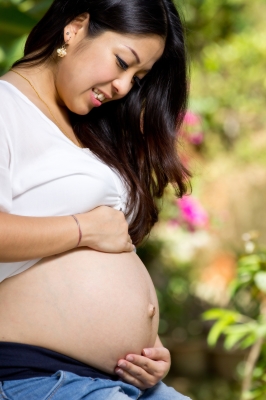
“Wonderful Pregnant Woman” by hin255, via Free Digital Downloads
When I saw Christianity Today published an article recently entitled “The Feminist Fight Against Abortion,” I immediately thought of the above quote by bell hooks. Though I don’t completely agree with hooks’ approach here (policing how people self-identify rarely accomplishes much) I don’t have much patience for feminists who are anti-abortion.
For me, this is not merely an issue of “choice” or of “when life begins.” It is an issue of holistic justice, and of the importance of the often-ignored bodily autonomy of oppressed people (here referring to people with uteruses, which includes many women as well as queer/trans and intersex people).
I have argued for years now that one can be personally uncomfortable with abortion and still work for holistic reproductive justice. Yet the feminists quoted in the recent Christianity Today article don’t seem to be going in that direction (with the exception, perhaps, of Rachel Held Evans, who seems to support the holistic reproductive health work Planned Parenthood does).
Take Sarah Bessey’s quote in the piece, for instance, which includes the line:
Abortion is a sign that we have failed women somehow, I think.
While Bessey does advocate for some holistic approaches to reproductive health (equal pay, contraception, etc.), she is still anti-abortion because it is “a sign that we have failed women.”
Can abortion be a sign that we have failed people with uteruses?*
Perhaps.
But my question for Sarah Bessey is, so what? Does that mean that abortion is “violence against women,” as Bessey argues on her blog?
I think of domestic violence shelters, the existence of which is undoubtedly a sign that we live in a society that has failed women. If domestic violence did not exist, if women had more access to the resources needed to survive without their abusive partners, etc. perhaps we would not need these shelters.
Perhaps.
But we don’t live in that world, and we aren’t even close.
No one would claim that we must tear down these shelters and focus on changing society. Society, obviously, needs to change, and if we focus only on building shelters and not on larger structural issues, we do fail women.
But we still need shelters. They aren’t “violence against women.”
They are a necessary safety net. They are a bandage on wounds that need to be healed with holistic approaches, but without those bandages, women would–often literally–bleed to death while waiting for change.
Abortion is a similar issue.
In many cases it may be a “bandage” on a larger problem. If people with uteruses had more options–healthcare, guaranteed income, better contraceptives, freedom from rape and abuse–then perhaps fewer “bandages” would be required.**
Yet we don’t live in that world.
Bessey wants to work on structural approaches to holistic justice, which is important.
But what about the people who need solutions now?
Would Bessey advocate defunding domestic violence shelters? How about food pantries? Would she call these “bandage” approaches “violence against survivors” or “violence against poor people?”
I doubt it.
So why this negative approach to Planned Parenthood (an organization that prevents a hell of a lot more abortions through their holistic healthcare than any church can claim to have done)?
There are lessons the pro-choice movement can learn from these pro-life feminists.
For instance, the pro-choice Richard Dawkins could learn a thing or two from Hilary Yancey’s (also quoted in the Christianity Today piece) story of her doctors’ insistence on dehumanizing her wanted, unborn child once they learned her child would likely be born with a disability.
Yet, approaches that insist on taking away necessary “bandage” approaches and forcing people into pregnancy are anything but “feminist.”
It often becomes clear, in fact, that many (not all of course) who claim a “pro-life feminist” position don’t actually care about pregnant people and/or people with uteruses.
For instance, Jonathan Merritt, who–after he put out a call to defund Planned Parenthood–behaved in an extremely dismissive, disrespectful manner toward a woman who challenged his position (as seen in this Storify piece by Dianna Anderson).
Another example includes Christian author Preston Yancey, who showed his true colors when challenged on his “defund Planned Parenthood” position, ultimately admitting that he views unwanted pregnancy as merely an “inconvenience.”

image is a tweet by Preston Yancey which reads “Stop making smokescreens to get around dealing with most of the time it’s just about ridding a body of an inconvenience.”
I have some empathy for pro-life feminist people who have uteruses, though I am frustrated that many who got to choose now turn around and deny others that same bodily autonomy.
But when it comes to “pro-life feminist” people like Preston Yancey and Merritt, I have no patience.
It is misogyny, pure and simple.
It may be a “benevolent” sexism on the surface, but scratch that surface and you’ll often find a complete lack of empathy for those who are facing the inherent horrific violence of forced pregnancy.
I do not trust these people, and I do not trust this “pro-life feminist” movement that is gaining ground. Ultimately, I believe that it is going to do much more violence and damage than good for the feminist movement and for holistic reproductive justice. I hope I am wrong.
*I emphasize “people with uteruses” rather than simply women. While most of the people who get abortions may identify as women, it is important to recognize the people who have been ignored in reproductive justice circles. Reproductive justice is also important for trans and queer people, as well as intersex people. When taking a truly holistic approach to reproductive justice, we must even consider those who do not have uteruses but are discriminated against in the areas of reproduction–for instance gay cisgender men who wish to adopt, black cisgender men who are prevented from raising their children because of unjust incarceration and police violence, or trans women who are forced to become sterilized in many countries.
**Of course, even in a more perfect world, I would still advocate for legal and safe abortion, because bodily autonomy is necessary for justice.
Previous Post

June 9, 2015
12 Reasons Why You Can Totally Call God "Mother"
Next Post

March 13, 2016 Liberating Liturgies: A Hymn for Queer Creation
Browse Our Archives
Select a Category Uncategorized
Select a Month June 2017 March 2017 November 2016 October 2016 July 2016 June 2016 March 2016 July 2015 June 2015 May 2015 April 2015 March 2015 February 2015 December 2014 November 2014 October 2014 September 2014 August 2014 July 2014 June 2014 May 2014 April 2014 March 2014 February 2014 January 2014 December 2013 November 2013 October 2013 September 2013 August 2013 July 2013 June 2013 May 2013 April 2013 March 2013 February 2013 January 2013 December 2012 November 2012 October 2012 September 2012 August 2012 July 2012 June 2012 May 2012 April 2012 March 2012 February 2012 January 2012 December 2011 November 2011 October 2011 September 2011 August 2011 July 2011 June 2011 March 2011 February 2011 January 2011 December 2010 October 2010 September 2010 August 2010
Follow Us!
TAKE THE
Religious Wisdom Quiz
What did Jesus do for Lazarus in Bethany?
Select your answer to see how you score.
Raised him from the dead Fed him Healed his blindness Turned him invisible
Related posts from Sarah Over the Moon
About That Anti-Abortion Meme Y'all Keep Sharing
Don't You Know What God Can Do With...
God's Not In Her Heaven. All's Not Right...
"Good Christian Sex:" A Book Review
TRENDING AT PATHEOS New Visions

Did Prayer Cure His Cancer? Or Was It...
At 4 AM one morning, Joshua W. Brown’s wife awoke to a...

8 Ways a Near-Death Experience Rewires the Soul
Does Consciousness Survive Physical Death? After 50 Years of Research, Dr. Raymond...

Holy Longing: What Our Restlessness Is Telling Us
“One can find so many pains when the rain is falling.” -John...

What this is NOT about. This blog is definitely not about...

Who said the Israelites were God’s chosen? That’s right, they did. Who...

The Spirit World Is the Real World: God...
A Monk’s Wisdom on Body and Spirit I sit with Brother Martin...
view all New Visions blogs
Ad-Free & Subscriber Log-In Subscription Support
- About Us
- 2026 Calendar
- Videos
- Podcasts
- Library of World Religions
- Faith In Media Tracker
- Advertise With Us
- Write for Us
- Privacy Policy
- Terms of Service
- Do Not Sell My Data
- Contact Us
- Radiant Digital
- Manage Newsletter Subscriptions
- Unsubscribe From Notifications
- Sitemap
Copyright 2008-2026, Patheos. All rights reserved.
Subscription Support Ad-Free & Subscriber Log-In
Follow Patheos