
BuddhistCatholicContemplativeEvangelicalGeneral ChristianHinduJewishLatter-day SaintMuslimNew VisionsProgressive Christian
Beliefs
- Buddhist
- Catholic
- Contemplative
- Evangelical
- General Christian
- Hindu
- Jewish
- Latter-day Saint
- More Voices
- Muslim
- New Visions
- Pagan
- Progressive Christian
Topics
- Religion News
- Food and Religion
- Sports and Religion
- Religious Art
- Religious Music and Entertainment
- Religious Events
- History and Religion
- Style and Religion
- Politics and Religion
- Women in Religion
- Recreation Outdoors and Religion
- Business Finance and Religion
- Careers Workplace and Religion
- Education and Religion
- Family Parenting and Religion
- Health Fitness and Religion
- Home and Religion
- Relationships and Religion
- Technology and Religion
- Travel and Religion
Columnists
- Buddhist Columnists
- Business Finance and Religion Columnists
- Careers Workplace and Religion Columnists
- Catholic Columnists
- Contemplative Columnists
- Education and Religion Columnists
- Evangelists Columnists
- Family Parenting and Religion Columnists
- General Christian Columnists
- Health Fitness and Religion Columnists
- Hindu Columnists
- History and Religion Columnists
- Home and Religion Columnists
- Jewish Columnists
- More Voices Columnists
- Latter Day Columnists
- Muslim Columnists
- New Visions Columnists
- Nonreligious Columnists
- Pagan Columnists
- Politics and Religion Columnists
- Progressive Columnists
- Recreation Outdoors and Religion Columnists
- Relationships and Religion Columnists
- Religion News Columnists
- Religious Art Columnists
- Religious Events Columnists
- Religious Music and Entertainment Columnists
- Sports and Religion Columnists
- Style and Religion Columnists
- Technology and Religion Columnists
- Travel and Religion Columnists
- Women in Religion Columnists
Resource Library
- 2026 Calendar
- Library of World Religions
- The 100 Most Holy Places on Earth
- Patheos Answers
- Podcasts
- Videos
- Faith Leaders Database
- Anglican Episcopalian
- Bahai
- Baptist
- Buddhism
- Christianity
- Confucianism
- Eastern Orthodoxy
- Hinduism
- Holiness and Pentecostal
- ISKCON
- Islam
- Judaism
- Lutheran
- Methodist
- The Church of Jesus Christ of Latter-day Saints
- New Age
- Paganism
- Presbytarian and Reformed
- Protestantism
- Religion Behind the Scenes
- Roman Catholic
- Scientology
- Shia Islam
- Sikhism
- Sufism
- Sunni Islam
- Taoism
- Zen
- See all religions
Research Tools
 Ad-Free & Subscriber Log-In Subscription Support
Ad-Free & Subscriber Log-In Subscription Support
Follow Patheos 

- Trending:
- Forgiveness
- |
- Marriage
- |
- Consciousness
- |
- Death Penalty
- |
- Election
- |
- Halloween
 Sarah Over the Moon
- Home
- New Visions
- How To Be Pro-Life Without Being Violent: Whose Bodies? Whose Choices?
How To Be Pro-Life Without Being Violent: Whose Bodies? Whose Choices?
Last updated on: March 31, 2015 at 7:27 pm by Sarah Moon
How To Be Pro-Life Without Being Violent: Whose Bodies? Whose Choices? 2015-03-31T19:27:30-05:00 Sarah Moon
Patheos Explore the world's faith through different perspectives on religion and spirituality! Patheos has the views of the prevalent religions and spiritualities of the world.
This post is part of a series on how pro-life and pro-choice people can find common ground to work for holistic reproductive justice. The introduction to this series can be found at this link.
In light of the recent arrest of Purvi Patel, a woman who is currently facing 20 years in prison because she had a miscarriage, I need to start this post by being VERY CLEAR that this series is not an excuse for violent pro-life ideologies.
Many pro-life people claim that they are not forcing people into pregnancy. Yet Patel’s story says otherwise. Whether you are using coercion to accuse people of murder when they refuse or are unable to donate their bodies to a fetus for nine months, or whether you actually support criminalizing these people, you are participating in violence.
However, I write this series because I agree with Andrea Smith when she says that we can “think more creatively about whom we could work in coalition with…” (Conquest, pg. 103) If you identify as pro-life, but are willing to let go of positions that would force anyone to become or remain pregnant, I think we can work together.
I write this series to talk about what that “common ground” might look like in practice.
Today, let’s look at one way:
1. Look At The Reasons Why People Seek Abortions
The reasons why people seek abortions are complicated and interrelated, and there is no one simple “alternative” to abortion. Pro-life people who are truly committed to non-violence must remember this. Slogans like, “Adoption, Not Abortion!” erase the nuanced situations that lead people to abortion.
At the same time, however, pro-choice feminist solutions also sometimes oversimplify people’s lives. As historian Rickie Solinger states (as quoted in Conquest, pg. 99):
Middle-class women could afford to choose. They had earned the right to choose motherhood, if they liked. According to many Americans, however, when choice was associated with poor women, it became a symbol of illegitimacy. Poor women had not earned the right to choose.
The focus on choice, as Andrea Smith says, “is connected to possession of resources.” (pg. 99) Put another way, if a poor person wants to have children, but “chooses” abortion because they cannot afford childcare, is that truly a “choice?” The corporate feminisms–and the pro-choice groups that they support–that center upper-class celebrities, women CEOs, and Lean In ideologies don’t do much to provide justice for all pregnant people, only those privileged enough to have access to actual “choice.”
So, why do people get abortions? Whether you are comfortable with the concept of abortion or not, it’s important to look at those reasons if we want justice for pregnant people.
Remember, that these reasons are complicated and often overlap. Let’s resist the urge to over-simplify as we go through them.
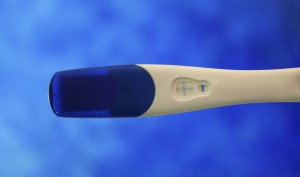
Image via Peter Togel (2014), FreeImages.com
Reason #1: People weren’t ready to become pregnant, or do not want any (or anymore) children
Sometimes the mainstream “pro-choice” movements do a good job of addressing the reasons for abortion. I think this is one such area. Most pro-choice movements that I have been involved in want access not only to safe and legal abortion, but also effective birth control and comprehensive sex education.
Though I don’t think there’s anything wrong with abortion, for most people it’s usually easier to avoid an unwanted pregnancy in the first place than to deal with the stress involved in finding out that you’re pregnant when you don’t want to be.
Pro-life people can help prevent abortions by preventing unwanted pregnancy. You can teach your children safer sex practices, and create a family environment where your teenagers who would like to have sex that could lead to pregnancy are not afraid to ask their about birth control options.
You can support comprehensive sex education programs that teach kids age-appropriate material that helps them make safer choices when it comes to sex. Even if you support abstinence, realize that not everyone does, and that it’s important for teenagers to have access to accurate information on pregnancy and prevention.
It’s also important to support access to insurance policies that cover effective birth control. If you were rooting for Hobby Lobby to be allowed to deny coverage for Plan B and other emergency contraceptives, I hate to break it to you, but you’re not going to be preventing many abortions. If you are part of a Christian college that stops student organizations from handing out condoms, you are limiting people’s options.
(Note: the pro-choice movement’s focus on birth control does have some problematic elements. I will be addressing these in a later post)
Reason #2: People who might otherwise want children cannot afford them
To reference Conquest once again, Andrea Smith brings up the point that many pro-choice “heroes” have failed to address “the conditions that put [people] in the position of having to make the decision in the first place.” (pg. 99)
Smith specifically calls out Bill Clinton, who was considered pro-choice, and yet called for welfare reforms that had extremely detrimental effects on people in poverty situations. Often, pro-choice people herald abortion as a solution to poverty. They’ve got it backward.
Though a person in poverty should be able to choose to have an abortion if wanted, poverty is a form of violence in and of itself. Without actual solutions to poverty–such as welfare, income equality, and affordable housing–abortion can become a form of violence too; it can become something that people are basically forced into, whether they want it or not.
No one who wants to become pregnant and have children should have to give up that dream just because they can’t afford to feed the kids they have now.
Childcare is also extremely expensive and inaccessible for many. Many people cannot afford to quit their jobs to care for their children, and many lower paying jobs do not provide paid parental leave. For these people, the idea of choice is basically an illusion.
Even people who could afford to quit their jobs for a short time to care for their children may not want to take the risk of losing out on a financially important career or education.
In a world where it is becoming harder and harder even for middle class people to make a living, people may not want to take that risk. What happens when they have to retire and weren’t able to save any money for it? Or when an illness prevents their spouse from working, and they are unable to get their own job because of the gaps in their resume when they stayed home to care for the kids for several years?
And giving birth, not to mention raising a child, is expensive. This is especially true when it comes to children or parents who have disabilities or illnesses that require extra care. Many people, especially those without jobs or those in low-paying jobs, don’t even have health insurance to help cover these costs.
Does your church or Christian college provide parental leave and health insurance for it’s employees? Does your seminary offer affordable childcare programs for students? Are you voting for politicians who support guaranteed livable income for all and a better social safety net? Are you standing in solidarity with low-wage workers who are fighting for a higher minimum wage and benefits?
Economic justice is an area that many pro-choice movements fail to address. Pro-life people who want to be non-violent can help pick up the slack in this area.
Reason #3: People may not want to have children because of an unhealthy or unstable family situation
In the world we live in, it’s hard to be a single parent. Society offers little support in this area, and stigmatizes those who try to raise a child without the help of a partner. Abortion may be an option for single people who find themselves pregnant, but it should not be the only option.
Many pregnant people may find themselves in abusive relationships that they are afraid to leave because of this. It is much harder to leave an abusive relationship when children are involved–in fact, many abusers know this and will try to get their victims pregnant as a means of control. Other people may end up pregnant as the result of rape. These people may not to give birth or raise a child in such an unhealthy situation.
Even in otherwise healthy situations, families may be broken apart because of overlapping oppressions. In our white supremacist society, black men are targeted by the prison industrial complex, and therefore many are unable to be there for their children. Many people of color find themselves as single parents because their partners are in prison, unjustly.
Even black women are unjustly targeted by racist prison systems (see Marissa Alexander). Who wants to give birth knowing that they might be facing 60 years in prison for defending themselves from domestic violence?
Does your church perpetuate stereotypes of single parents, or do they affirm single parents and provide them with the resources they need to care for their children? What steps have you taken to speak out against abuse and rape in your communities? Are you standing in solidarity with those challenging unjust systems that tear otherwise healthy families apart?
I will discuss this more in a later post.
Reason #4: People may not want to give birth because of medical or health issues
I will try to keep this brief, since this post is already nearly two thousand words.
Many people do not wish to give birth because doing so may be a serious health risk for them. Others may learn that the fetus they are carrying as serious health problems, and may be reluctant to give birth as a result.
Do you support universal health care for all people? Are you contributing to research that searches for solutions to serious medical problems that may put pregnant people or their potential children at risk? How will your pro-life communities support the parents of children who are born with health problems or disabilities? Do you have empathy for those who choose abortion because of health risks, or do you continue to shame people into risking their lives by giving birth? Does your community stigmatize or affirm the humanity of people with disabilities and/or mental health disorders?
There is no way to completely prevent the need for elective abortion. Safe and legal access will always be necessary. But if you lean toward a pro-life position on abortion, there are ways to reduce the need for it, while simultaneously reducing the violence that people with the potential to get pregnant have to face on a daily basis.
Previous Post

March 26, 2015
How To Be Pro-Life Without Being Violent: Holistic Reproductive Justice
Next Post
April 2, 2015 Liberating Liturgies: This Is Our Body. This Is Our Blood.
Browse Our Archives
Select a Category Uncategorized
Select a Month June 2017 March 2017 November 2016 October 2016 July 2016 June 2016 March 2016 July 2015 June 2015 May 2015 April 2015 March 2015 February 2015 December 2014 November 2014 October 2014 September 2014 August 2014 July 2014 June 2014 May 2014 April 2014 March 2014 February 2014 January 2014 December 2013 November 2013 October 2013 September 2013 August 2013 July 2013 June 2013 May 2013 April 2013 March 2013 February 2013 January 2013 December 2012 November 2012 October 2012 September 2012 August 2012 July 2012 June 2012 May 2012 April 2012 March 2012 February 2012 January 2012 December 2011 November 2011 October 2011 September 2011 August 2011 July 2011 June 2011 March 2011 February 2011 January 2011 December 2010 October 2010 September 2010 August 2010
Follow Us!
TAKE THE
Religious Wisdom Quiz
What does the name "Samuel" mean?
Select your answer to see how you score.
Gifted by God Heard by God Saved by God Sent by God
Related posts from Sarah Over the Moon
About That Anti-Abortion Meme Y'all Keep Sharing

Don't You Know What God Can Do With...

God's Not In Her Heaven. All's Not Right...
"Good Christian Sex:" A Book Review
TRENDING AT PATHEOS New Visions

Did Prayer Cure His Cancer? Or Was It...
At 4 AM one morning, Joshua W. Brown’s wife awoke to a...

8 Ways a Near-Death Experience Rewires the Soul
Does Consciousness Survive Physical Death? After 50 Years of Research, Dr. Raymond...

Holy Longing: What Our Restlessness Is Telling Us
“One can find so many pains when the rain is falling.” -John...

What this is NOT about. This blog is definitely not about...

Who said the Israelites were God’s chosen? That’s right, they did. Who...

The Spirit World Is the Real World: God...
A Monk’s Wisdom on Body and Spirit I sit with Brother Martin...
view all New Visions blogs
Ad-Free & Subscriber Log-In Subscription Support
- About Us
- 2026 Calendar
- Videos
- Podcasts
- Library of World Religions
- Faith In Media Tracker
- Advertise With Us
- Write for Us
- Privacy Policy
- Terms of Service
- Do Not Sell My Data
- Contact Us
- Radiant Digital
- Manage Newsletter Subscriptions
- Unsubscribe From Notifications
- Sitemap
Copyright 2008-2026, Patheos. All rights reserved.
Subscription Support Ad-Free & Subscriber Log-In
Follow Patheos