
BuddhistCatholicContemplativeEvangelicalGeneral ChristianHinduJewishLatter-day SaintMuslimNew VisionsProgressive Christian
Beliefs
- Buddhist
- Catholic
- Contemplative
- Evangelical
- General Christian
- Hindu
- Jewish
- Latter-day Saint
- More Voices
- Muslim
- New Visions
- Pagan
- Progressive Christian
Topics
- Religion News
- Food and Religion
- Sports and Religion
- Religious Art
- Religious Music and Entertainment
- Religious Events
- History and Religion
- Style and Religion
- Politics and Religion
- Women in Religion
- Recreation Outdoors and Religion
- Business Finance and Religion
- Careers Workplace and Religion
- Education and Religion
- Family Parenting and Religion
- Health Fitness and Religion
- Home and Religion
- Relationships and Religion
- Technology and Religion
- Travel and Religion
Columnists
- Buddhist Columnists
- Business Finance and Religion Columnists
- Careers Workplace and Religion Columnists
- Catholic Columnists
- Contemplative Columnists
- Education and Religion Columnists
- Evangelists Columnists
- Family Parenting and Religion Columnists
- General Christian Columnists
- Health Fitness and Religion Columnists
- Hindu Columnists
- History and Religion Columnists
- Home and Religion Columnists
- Jewish Columnists
- More Voices Columnists
- Latter Day Columnists
- Muslim Columnists
- New Visions Columnists
- Nonreligious Columnists
- Pagan Columnists
- Politics and Religion Columnists
- Progressive Columnists
- Recreation Outdoors and Religion Columnists
- Relationships and Religion Columnists
- Religion News Columnists
- Religious Art Columnists
- Religious Events Columnists
- Religious Music and Entertainment Columnists
- Sports and Religion Columnists
- Style and Religion Columnists
- Technology and Religion Columnists
- Travel and Religion Columnists
- Women in Religion Columnists
Resource Library
- 2026 Calendar
- Library of World Religions
- The 100 Most Holy Places on Earth
- Patheos Answers
- Podcasts
- Videos
- Faith Leaders Database
- Anglican Episcopalian
- Bahai
- Baptist
- Buddhism
- Christianity
- Confucianism
- Eastern Orthodoxy
- Hinduism
- Holiness and Pentecostal
- ISKCON
- Islam
- Judaism
- Lutheran
- Methodist
- The Church of Jesus Christ of Latter-day Saints
- New Age
- Paganism
- Presbytarian and Reformed
- Protestantism
- Religion Behind the Scenes
- Roman Catholic
- Scientology
- Shia Islam
- Sikhism
- Sufism
- Sunni Islam
- Taoism
- Zen
- See all religions
Research Tools
 Ad-Free & Subscriber Log-In Subscription Support
Ad-Free & Subscriber Log-In Subscription Support
Follow Patheos 

- Trending:
- Forgiveness
- |
- Marriage
- |
- Consciousness
- |
- Death Penalty
- |
- Election
- |
- Halloween
 Sarah Over the Moon
- Home
- New Visions
- Liberating Liturgies: Anselm of Canterbury, and Jesus Our Mother
Liberating Liturgies: Anselm of Canterbury, and Jesus Our Mother
Last updated on: September 24, 2014 at 3:31 am by Sarah Moon
Liberating Liturgies: Anselm of Canterbury, and Jesus Our Mother 2014-09-24T03:31:36-05:00 Sarah Moon
Patheos Explore the world's faith through different perspectives on religion and spirituality! Patheos has the views of the prevalent religions and spiritualities of the world.
Today’s Liberating Liturgy comes from an interesting source: Anselm of Canterbury, a monk who lived from 1033-1109 C.E. I found this Liberating Liturgy quoted in She Who Is, by Elizabeth A. Johnson (pg 151–emphasis mine):
But you too, good Jesus**, are you not also a mother**?
Are you not a mother who like a hen gathers her chicks beneath her wings? ….
And you, my soul, dead in yourself,
run under the wings of Jesus your mother
and lament your griefs under his feathers.
Ask that you wounds may be healed
and that, comforted, you may live again.
Christ, my mother, you gather your chickens under your wings…
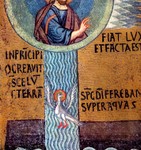
Image via Wikipedia Commons. Artist unknown.

A lot of people are willing to talk about the Holy Spirit using female imagery. Some people are even willing to call God “Mother.” But what about Christ? We can’t deny Christ was a man, who used he/him pronouns, right?
Well, yes and no.
I think we can concede that the historical person of Jesus was likely seen as male/a man by society. From what we can tell he identified as male/a man as well. Yet, many queer theologians argue that we can’t automatically assume Jesus easily fits into the mainstream binary gender/sex category.*
Virgina Mollenkott, for example, has suggested that the historical person of Jesus was an intersex individual. As Patrick S. Cheng states in Radical Love, (pg. 83-84)
Mollenkott argues that if Jesus’ birth was truly a result of a virgin pregnancy, then Jesus’ birth would be what biologists call parthenogenetic. This means that Jesus would have two X chromosomes (because there would not have been a Y chromosome contributed…), which means that Jesus would be chromosomally female [according to the binary biological categories of sex, which not everyone fits into*] yet phenotypically male.
Cheng goes on to explain more of Mollenkott’s work:
…this view of the intersex Christ is reinforced by the Eastern Orthodox Church’s characterization of Jesus’ wound in his side as [a vagina/vulva] that give[s] birth to his bride, the church…
The body of Jesus–like many of our own bodies–may not have fit easily into gender/sexual binaries.
I also believe that the part of the Trinity that we call Christ is more than just the historical person of Jesus. In the beginning was the Word that was made flesh and dwelt among us. Christ–God’s Word (or God’s Wisdom) in human flesh–preexisted the person of Jesus, and still works in the world today.
Christ exists in the Church, for one. The Apostle Paul believed that the Church was quite literally the body of Christ. As Sandra Schneiders says (as quoted in She Who Is, pg. 162–emphasis mine)
…the Christ is not exclusively the glorified Jesus, but the glorified Jesus animating his body which is the Church. Christ said to Paul “Why do you persecute me?” (Acts 9:4) because the literal fact is that the Christ is composed of all the baptized. This means that Christ, in contrast to Jesus, is not male, or more exactly, not exclusively male. Christ is quite accurately portrayed as black, old, Gentile, female, Asian or Polish. Christ is inclusively all the baptized.
Christ also exists in those that society treats as “the least of these.” Therefore Christ exists in women (including transgender women, and perhaps especially trans women of color). Christ exists in genderqueer people, non-binary people, intersex people, agender people.
One image for Christ doesn’t do them justice.
Christ is he and she and ze and they.
Christ is mother, father, parent, brother, sister, sibling, friend.
This isn’t some modern, radically new idea–Over a thousand years ago, Anselm of Canterbury was already pushing the boundaries of how we view Christ. Let’s follow Anselm’s example, and continue to create our own Liberating Liturgies! If you are interested in submitting your own liturgies to this project, read this blog post, and email me at moonsn11@gmail.com.
——-
*According to much of society’s beliefs about gender/sex, those born with a penis are males/boys/men, and those born with a vagina are females/girls/women. Simple, right? Yet reality is, sex and gender is much more complicated than that. Intersex people –people who have characteristics typical of both “male” and “female” people–exist, and may choose to identify as male, female, both, or neither. Trans people exist, who truly are a gender/sex other than the one they were assigned at birth. Genderqueer and non-binary people exist, who don’t exclusively fit into either male or female categories–they may be both, or neither, or something else entirely! God’s creation is diverse and wonderful and good!
Previous Post

September 21, 2014
Liberating Liturgies: Down On the Corner (A Guest Post By KP)
Next Post
September 25, 2014 Liberating Liturgies: A Creed By Ryan Kenji Kuramitsu
Browse Our Archives
Select a Category Uncategorized
Select a Month June 2017 March 2017 November 2016 October 2016 July 2016 June 2016 March 2016 July 2015 June 2015 May 2015 April 2015 March 2015 February 2015 December 2014 November 2014 October 2014 September 2014 August 2014 July 2014 June 2014 May 2014 April 2014 March 2014 February 2014 January 2014 December 2013 November 2013 October 2013 September 2013 August 2013 July 2013 June 2013 May 2013 April 2013 March 2013 February 2013 January 2013 December 2012 November 2012 October 2012 September 2012 August 2012 July 2012 June 2012 May 2012 April 2012 March 2012 February 2012 January 2012 December 2011 November 2011 October 2011 September 2011 August 2011 July 2011 June 2011 March 2011 February 2011 January 2011 December 2010 October 2010 September 2010 August 2010
Follow Us!
TAKE THE
Religious Wisdom Quiz
Who was Saul's son?
Select your answer to see how you score.
Jonathan Samuel David Absalom
Related posts from Sarah Over the Moon

Why Does Dr. James Dobson Pretend He's Sad...
Liberating Liturgies: A Hymn for Queer Creation

12 Reasons Why You Can Totally Call God...

Tony Jones' Cross is a Symbol of Abuse...
TRENDING AT PATHEOS New Visions

Did Prayer Cure His Cancer? Or Was It...
At 4 AM one morning, Joshua W. Brown’s wife awoke to a...

8 Ways a Near-Death Experience Rewires the Soul
Does Consciousness Survive Physical Death? After 50 Years of Research, Dr. Raymond...

Holy Longing: What Our Restlessness Is Telling Us
“One can find so many pains when the rain is falling.” -John...

What this is NOT about. This blog is definitely not about...

Who said the Israelites were God’s chosen? That’s right, they did. Who...

The Spirit World Is the Real World: God...
A Monk’s Wisdom on Body and Spirit I sit with Brother Martin...
view all New Visions blogs
Ad-Free & Subscriber Log-In Subscription Support
- About Us
- 2026 Calendar
- Videos
- Podcasts
- Library of World Religions
- Faith In Media Tracker
- Advertise With Us
- Write for Us
- Privacy Policy
- Terms of Service
- Do Not Sell My Data
- Contact Us
- Radiant Digital
- Manage Newsletter Subscriptions
- Unsubscribe From Notifications
- Sitemap
Copyright 2008-2026, Patheos. All rights reserved.
Subscription Support Ad-Free & Subscriber Log-In
Follow Patheos