
BuddhistCatholicContemplativeEvangelicalGeneral ChristianHinduJewishLatter-day SaintMuslimNew VisionsProgressive Christian
Beliefs
- Buddhist
- Catholic
- Contemplative
- Evangelical
- General Christian
- Hindu
- Jewish
- Latter-day Saint
- More Voices
- Muslim
- New Visions
- Pagan
- Progressive Christian
Topics
- Religion News
- Food and Religion
- Sports and Religion
- Religious Art
- Religious Music and Entertainment
- Religious Events
- History and Religion
- Style and Religion
- Politics and Religion
- Women in Religion
- Recreation Outdoors and Religion
- Business Finance and Religion
- Careers Workplace and Religion
- Education and Religion
- Family Parenting and Religion
- Health Fitness and Religion
- Home and Religion
- Relationships and Religion
- Technology and Religion
- Travel and Religion
Columnists
- Buddhist Columnists
- Business Finance and Religion Columnists
- Careers Workplace and Religion Columnists
- Catholic Columnists
- Contemplative Columnists
- Education and Religion Columnists
- Evangelists Columnists
- Family Parenting and Religion Columnists
- General Christian Columnists
- Health Fitness and Religion Columnists
- Hindu Columnists
- History and Religion Columnists
- Home and Religion Columnists
- Jewish Columnists
- More Voices Columnists
- Latter Day Columnists
- Muslim Columnists
- New Visions Columnists
- Nonreligious Columnists
- Pagan Columnists
- Politics and Religion Columnists
- Progressive Columnists
- Recreation Outdoors and Religion Columnists
- Relationships and Religion Columnists
- Religion News Columnists
- Religious Art Columnists
- Religious Events Columnists
- Religious Music and Entertainment Columnists
- Sports and Religion Columnists
- Style and Religion Columnists
- Technology and Religion Columnists
- Travel and Religion Columnists
- Women in Religion Columnists
Resource Library
- 2026 Calendar
- Library of World Religions
- The 100 Most Holy Places on Earth
- Patheos Answers
- Podcasts
- Videos
- Faith Leaders Database
- Anglican Episcopalian
- Bahai
- Baptist
- Buddhism
- Christianity
- Confucianism
- Eastern Orthodoxy
- Hinduism
- Holiness and Pentecostal
- ISKCON
- Islam
- Judaism
- Lutheran
- Methodist
- The Church of Jesus Christ of Latter-day Saints
- New Age
- Paganism
- Presbytarian and Reformed
- Protestantism
- Religion Behind the Scenes
- Roman Catholic
- Scientology
- Shia Islam
- Sikhism
- Sufism
- Sunni Islam
- Taoism
- Zen
- See all religions
Research Tools
 Ad-Free & Subscriber Log-In Subscription Support
Ad-Free & Subscriber Log-In Subscription Support
Follow Patheos 

- Trending:
- Forgiveness
- |
- Marriage
- |
- Consciousness
- |
- Death Penalty
- |
- Election
- |
- Halloween
 Sarah Over the Moon
- Home
- New Visions
- Crucifixion and Liberation
Crucifixion and Liberation
Last updated on: May 20, 2013 at 9:23 am by Sarah Moon
Crucifixion and Liberation 2013-05-20T09:23:57-05:00 Sarah Moon
Patheos Explore the world's faith through different perspectives on religion and spirituality! Patheos has the views of the prevalent religions and spiritualities of the world.
[Trigger warnings for abuse, rape, and violence against oppressed groups]
I recently wrote a blog post for Rachel Held Evans in which I talked about how many popular images of God are abusive. Someone left this comment:
I read something once -and it has troubled me since – that God requiring Jesus to die on the cross ‘for our sins’ was the equivalent of child abuse. I would love to hear some opinions on this matter.

Image by Aaron Douglas
A few commenters jumped in to say that since Jesus IS God, it was a personal choice and therefore not abusive and, well you know the rest. I’m sure you’ve heard justifications for this theology many times. My opinion on the matter was that penal substitution is still a terrifying theology about an abusive God.
I’m guessing many people that I know (including some of my readers) would be shocked to hear that I do not believe that God had to die because humans were just so evil and God was just so wrathful and required a blood sacrifice. I even know many self-identified progressive Christians who would probably assume that I wasn’t really a Christian if I told them I didn’t believe that Jesus died in the place of wicked human beings in order to save us from our sins.
I take a more, shall we say, literalist viewpoint.
God didn’t kill Jesus. People in power killed Jesus.
My friend David Henson recently said on Facebook:
If atonement is literally at-one-ment — being at one with — perhaps it is God that experiences atonement in the crucifixion by being with us and being at one with us in death.
I would take this even further. Christ didn’t experience just any death, but a death reserved for those who challenged the oppressive power structures of the time. Jesus’ teachings of liberation threatened Rome. But even more so, they threatened the religious leaders of the day: spiritually abusive leaders who had turned their backs on Judaism’s message of justice and mercy and had twisted the teachings to oppress others.
Jesus stood with the oppressed. He healed on the Sabbath. He advocated for the poor. He spoke out against the abuse of women.
And those in power killed him for it. They silenced his message (but it couldn’t quite stay dead, could it?).
Maybe this is the real message of the cross. That the God of all creation loved the oppressed enough to become one with them, even in death–the ultimate tool of oppressive forces.
I think of an article about the book The Cross and the Lynching Tree, by liberation theologian James Cone. Cone makes a comparison between the crucifixion of Jesus and the lynching of black people throughout the 19th and 20th centuries.
The cross and the lynching tree interpret each other. Both were public spectacles, shameful events, instruments of punishment reserved for the most despised people in the society. Any genuine theology and any genuine preaching of the Christian gospel must be measured against the test of the scandal of the cross and the lynching tree. Hengel asserts: “Jesus did not die a gentle death like Socrates, with his cup of hemlock. . . . Rather, he died like a [lynched black victim] or a common [black] criminal in torment, on the tree of shame.”
I don’t think many white people like this comparison (as a white person myself, it is challenging and sobering). So white theologians shy away from this comparison, as obvious as it seems. Instead, they embrace a spiritualized version of Christianity in which Jesus is nothing but a sacrifice, meant to save us from some abstract idea of inherited sin. Where Christ’s life of healing the sick, giving sight to the blind, raising the dead, touching the untouchables had nothing to do with his death. Where the promise of liberation and justice given by the Old Testament prophets to the oppressed in Israel is not considered part of the gospel. Where the only real result of Christ’s death and resurrection is that we are free from our sins (though we still sin), and go to heaven when we die (maybe–if we ask nicely).
If we did embrace the similarities between the cross and the lynching tree, it would open the doors to comparing Christ’s unjust death with the many other injustices that go on in our society.
The wife who is raped and beaten by her husband, and then told by her church to stay with him.
One of the transgender people that are murdered every three days.
The Muslim people who are bombed by the United States just because some people who looked like them happened to be terrorists.
The people in poverty who starve to death because they cannot afford food, or die slowly from illness because they cannot afford healthcare.
The woman on the street corner in Detroit who was forced into prostitution at age 11.
The young black man who is shot in the back of the head because he looked threatening.
The young woman from Steubenville who was gang-raped and then shamed for it.
The gay, black mayoral candidate who was beaten, set on fire, and killed in Mississippi.
Christ is crucified again and again as injustice goes on and on.
But the cross means, to the oppressed, that God is on our side.
As James Cone says,
The cross is the most empowering symbol of God’s loving solidarity with the “least of these,” the unwanted in society who suffer daily from great injustices. Christians must face the cross as the terrible tragedy it was and discover in it, through faith and repentance, the liberating joy of eternal salvation.
The cross can empower those who are suffering. It can give us hope. But as James Cone continues,
But we cannot find liberating joy in the cross by spiritualizing it, by taking away its message of justice in the midst of powerlessness, suffering, and death. The cross, as a locus of divine revelation, is not good news for the powerful, for those who are comfortable with the way things are, or for anyone whose understanding of religion is aligned with power.
The cross cannot just mean that we are “saved from sin,” and “going to heaven.” Our speaking about the cross cannot just sound like those cliched platitudes that Christians often tell those who are hurting. The cross that Jesus reclaimed from the Roman Empire has fallen back into the hands of oppressors, becoming a tool of white supremacy, of patriarchy, of heterosexism and transphobia, of the military and prison industrial complex, of those who wage warfare on the poor.
But I want to reclaim it, like Christ did.
If we are to find liberation in the crucifixion, then the cross must stand as a middle finger to oppressive power structures.
The cross of Jesus reveals the ugly truth behind oppressive power, and then the cross mocks that power through the resurrection.
The cross of Jesus calls those of us who are oppressors (most of us–myself included–are oppressed in some contexts and oppressors in others) to humility, repentance, and a new way of living.
The cross of Jesus tells the oppressed–in a world that tries to convince us that we are not even human–that we are not only made in God’s image, but that God came to earth to be made in ours.
The cross of Jesus tells the oppressed that we can take up our crosses and our protest signs and join together, armed with the power of love, to defeat the powers that rape, abuse, and murder us.
The cross of Jesus tells us that they can kill our bodies, but that doesn’t mean they win.
Previous Post

March 25, 2013
Creationism, Evolution, and Doing Justice to God
Next Post
March 29, 2013 The cross and radical activism
Browse Our Archives
Select a Category Uncategorized
Select a Month June 2017 March 2017 November 2016 October 2016 July 2016 June 2016 March 2016 July 2015 June 2015 May 2015 April 2015 March 2015 February 2015 December 2014 November 2014 October 2014 September 2014 August 2014 July 2014 June 2014 May 2014 April 2014 March 2014 February 2014 January 2014 December 2013 November 2013 October 2013 September 2013 August 2013 July 2013 June 2013 May 2013 April 2013 March 2013 February 2013 January 2013 December 2012 November 2012 October 2012 September 2012 August 2012 July 2012 June 2012 May 2012 April 2012 March 2012 February 2012 January 2012 December 2011 November 2011 October 2011 September 2011 August 2011 July 2011 June 2011 March 2011 February 2011 January 2011 December 2010 October 2010 September 2010 August 2010
Follow Us!
TAKE THE
Religious Wisdom Quiz
Who said, "Speak, Lord, for your servant is listening"?
Select your answer to see how you score.
Solomon David Eli Samuel
Related posts from Sarah Over the Moon

Why Does Dr. James Dobson Pretend He's Sad...

Liberating Liturgies: A Hymn for Queer Creation

12 Reasons Why You Can Totally Call God...
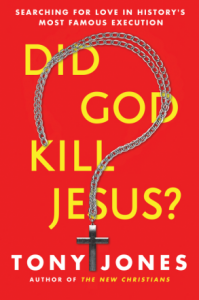
Tony Jones' Cross is a Symbol of Abuse...
TRENDING AT PATHEOS New Visions

Did Prayer Cure His Cancer? Or Was It...
At 4 AM one morning, Joshua W. Brown’s wife awoke to a...

8 Ways a Near-Death Experience Rewires the Soul
Does Consciousness Survive Physical Death? After 50 Years of Research, Dr. Raymond...

Holy Longing: What Our Restlessness Is Telling Us
“One can find so many pains when the rain is falling.” -John...

What this is NOT about. This blog is definitely not about...

Who said the Israelites were God’s chosen? That’s right, they did. Who...

The Spirit World Is the Real World: God...
A Monk’s Wisdom on Body and Spirit I sit with Brother Martin...
view all New Visions blogs
Ad-Free & Subscriber Log-In Subscription Support
- About Us
- 2026 Calendar
- Videos
- Podcasts
- Library of World Religions
- Faith In Media Tracker
- Advertise With Us
- Write for Us
- Privacy Policy
- Terms of Service
- Do Not Sell My Data
- Contact Us
- Radiant Digital
- Manage Newsletter Subscriptions
- Unsubscribe From Notifications
- Sitemap
Copyright 2008-2026, Patheos. All rights reserved.
Subscription Support Ad-Free & Subscriber Log-In
Follow Patheos