
BuddhistCatholicContemplativeEvangelicalGeneral ChristianHinduJewishLatter-day SaintMuslimNew VisionsProgressive Christian
Beliefs
- Buddhist
- Catholic
- Contemplative
- Evangelical
- General Christian
- Hindu
- Jewish
- Latter-day Saint
- More Voices
- Muslim
- New Visions
- Pagan
- Progressive Christian
Topics
- Religion News
- Food and Religion
- Sports and Religion
- Religious Art
- Religious Music and Entertainment
- Religious Events
- History and Religion
- Style and Religion
- Politics and Religion
- Women in Religion
- Recreation Outdoors and Religion
- Business Finance and Religion
- Careers Workplace and Religion
- Education and Religion
- Family Parenting and Religion
- Health Fitness and Religion
- Home and Religion
- Relationships and Religion
- Technology and Religion
- Travel and Religion
Columnists
- Buddhist Columnists
- Business Finance and Religion Columnists
- Careers Workplace and Religion Columnists
- Catholic Columnists
- Contemplative Columnists
- Education and Religion Columnists
- Evangelists Columnists
- Family Parenting and Religion Columnists
- General Christian Columnists
- Health Fitness and Religion Columnists
- Hindu Columnists
- History and Religion Columnists
- Home and Religion Columnists
- Jewish Columnists
- More Voices Columnists
- Latter Day Columnists
- Muslim Columnists
- New Visions Columnists
- Nonreligious Columnists
- Pagan Columnists
- Politics and Religion Columnists
- Progressive Columnists
- Recreation Outdoors and Religion Columnists
- Relationships and Religion Columnists
- Religion News Columnists
- Religious Art Columnists
- Religious Events Columnists
- Religious Music and Entertainment Columnists
- Sports and Religion Columnists
- Style and Religion Columnists
- Technology and Religion Columnists
- Travel and Religion Columnists
- Women in Religion Columnists
Resource Library
- 2026 Calendar
- Library of World Religions
- The 100 Most Holy Places on Earth
- Patheos Answers
- Podcasts
- Videos
- Faith Leaders Database
- Anglican Episcopalian
- Bahai
- Baptist
- Buddhism
- Christianity
- Confucianism
- Eastern Orthodoxy
- Hinduism
- Holiness and Pentecostal
- ISKCON
- Islam
- Judaism
- Lutheran
- Methodist
- The Church of Jesus Christ of Latter-day Saints
- New Age
- Paganism
- Presbytarian and Reformed
- Protestantism
- Religion Behind the Scenes
- Roman Catholic
- Scientology
- Shia Islam
- Sikhism
- Sufism
- Sunni Islam
- Taoism
- Zen
- See all religions
Research Tools
 Ad-Free & Subscriber Log-In Subscription Support
Ad-Free & Subscriber Log-In Subscription Support
Follow Patheos 

- Trending:
- Forgiveness
- |
- Marriage
- |
- Consciousness
- |
- Death Penalty
- |
- Election
- |
- Halloween
 Sarah Over the Moon
- Home
- New Visions
- Damming up justice: King David, power, and rape
Damming up justice: King David, power, and rape
Last updated on: February 21, 2013 at 7:28 pm by Sarah Moon
Damming up justice: King David, power, and rape 2013-02-21T19:28:11-06:00 Sarah Moon
Patheos Explore the world's faith through different perspectives on religion and spirituality! Patheos has the views of the prevalent religions and spiritualities of the world.
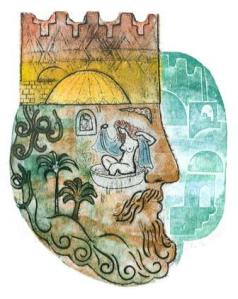
click for source
As many of you know, I’ve been doing research on Christian dating books and their treatment of rape and sexual assault. One such book that I’ve been reading is the infamous I Kissed Dating Goodbye, by Joshua Harris.
In one section that I found interesting, Harris is explaining that “purity does not happen by accident. After telling the story of David and Bathsheba, and reminding us that protecting our purity is a constant process, Josh Harris goes on to explain the “seductive spirit of idolatry” as symbolized in the “wayward adultress” of Proverbs 7.
Harris never directly ties this “seductive spirit of idolatry” to Bathsheba, but in the context of this chapter–David, the object, being led astray by some outside force–it seems that Harris is saying the spirit of idolatry comes from Bathsheba. That she is the wayward adultress.
I’ve heard this argument before.
Once I took part in a Mother’s Day banquet at my church that involved the youth group putting on a small skit in which we acted as the mothers of famous women from the Bible.
I got to be Bathsheba’s mother. Joy.
Of course, my lines were something along the lines of “Leave some for the imagination, Bathsheba! Cover up! Don’t advertise what’s not for sale.”
When my mother saw these lines? She was furious.
Why?
Because King David might have been a rapist.
No matter how you look at it, this story is not about consensual sex between equals.
My mother ended up going on a rant about how King David was a pervert. And I ended up ad-libbing all of my lines the day of the skit and basically repeating my mom’s rant. Much to the horror of the church ladies who put the whole thing together, I’m sure.
Reading Harris’ book, and remembering that skit made me think about this. Why is Bathsheba demonized throughout much of Christianity as the embodiment of the “seductive spirit of idolatry?” This woman, who was simply washing up after her period ended, like all Jewish women did? This woman who was simply following God’s purity laws, while, unbeknownst to her, a powerful King watched from above? This woman who had…what choice when the men of a King famous for killing tens of thousands came knocking at her door?
As this fantastic article by Crystal Lewis points out, even conservative commentaries on the Bible recognize Bathsheba’s lack of agency, of options (emphasis mine):
The conservative editors wander close to the real issue when they write that Bathsheba’s refusal “could mean punishment or death”… They touch lightly on power abuse, on coercion, and on the terrible status occupied by women in scripture… But then, the editors back away from the real issues and turn this very complicated matter into something black-and-white. In their effort to determine which “sins” were committed, they target the victim. The editors found a way to assign culpability to a woman who barely spoke at all in the story.
Christians don’t like to talk about the fact that King David might have been a rapist.
That would mean admitting that being “a man after God’s own heart” doesn’t make you a good person. That would mean admitting that maybe the men that God “calls” to leadership aren’t always good people either.
That would mean admitting that maybe the women in the Bible didn’t have it so good. That would mean that, maybe “Biblical womanhood” that focuses on submission for women and ultimate power for men isn’t actually what is best for the world.
Maybe, admitting that King David might have been a rapist would mean admitting that if God’s desire for justice rolling down like waters is to be fulfilled, we need feminists and womanists fighting for this justice.
Yet, much of the church isn’t ready to admit any of this. So they keep the same tired old story in place. And we keep the same old stories in place for the other women of the Bible. For Esther and Ruth and Mary and the woman at the well.
So, as Jason Dye points out, power structures stay in place.
Justice is stopped up by the dams that these structures built and goes stale.
Stories that could expose gross corruption become tame morality tales that we tell our children at bed time. The Bible becomes a book of fairy tales and Christianity becomes nothing but the purchase of a one-way ticket to heaven.
We don’t talk about power. We don’t talk about oppression. And we sure as hell don’t talk about liberation (except for our ambiguous discussions of freedom from sin).
And what’s the point of that? What does that do for women? For rape victims? For the hurting and for the oppressed?
Nothing, really. And that’s the point.
Previous Post

February 20, 2013
Loving my body for Lent
Next Post
February 23, 2013 On being a female body at a Christian college
Browse Our Archives
Select a Category Uncategorized
Select a Month June 2017 March 2017 November 2016 October 2016 July 2016 June 2016 March 2016 July 2015 June 2015 May 2015 April 2015 March 2015 February 2015 December 2014 November 2014 October 2014 September 2014 August 2014 July 2014 June 2014 May 2014 April 2014 March 2014 February 2014 January 2014 December 2013 November 2013 October 2013 September 2013 August 2013 July 2013 June 2013 May 2013 April 2013 March 2013 February 2013 January 2013 December 2012 November 2012 October 2012 September 2012 August 2012 July 2012 June 2012 May 2012 April 2012 March 2012 February 2012 January 2012 December 2011 November 2011 October 2011 September 2011 August 2011 July 2011 June 2011 March 2011 February 2011 January 2011 December 2010 October 2010 September 2010 August 2010
Follow Us!
TAKE THE
Religious Wisdom Quiz
What instrument did Miriam play?
Select your answer to see how you score.
Lyre Trumpet Harp Tambourine
Related posts from Sarah Over the Moon

12 Reasons Why You Can Totally Call God...

#TheNewPacifism: Preston Sprinkle, and the Cost of "Privileged...
Liberating Liturgies: Anselm of Canterbury, and Jesus Our...

Liberating Liturgies: A Creed and a Call
TRENDING AT PATHEOS New Visions

Did Prayer Cure His Cancer? Or Was It...
At 4 AM one morning, Joshua W. Brown’s wife awoke to a...

8 Ways a Near-Death Experience Rewires the Soul
Does Consciousness Survive Physical Death? After 50 Years of Research, Dr. Raymond...

Holy Longing: What Our Restlessness Is Telling Us
“One can find so many pains when the rain is falling.” -John...

What this is NOT about. This blog is definitely not about...

Who said the Israelites were God’s chosen? That’s right, they did. Who...

The Spirit World Is the Real World: God...
A Monk’s Wisdom on Body and Spirit I sit with Brother Martin...
view all New Visions blogs
Ad-Free & Subscriber Log-In Subscription Support
- About Us
- 2026 Calendar
- Videos
- Podcasts
- Library of World Religions
- Faith In Media Tracker
- Advertise With Us
- Write for Us
- Privacy Policy
- Terms of Service
- Do Not Sell My Data
- Contact Us
- Radiant Digital
- Manage Newsletter Subscriptions
- Unsubscribe From Notifications
- Sitemap
Copyright 2008-2026, Patheos. All rights reserved.
Subscription Support Ad-Free & Subscriber Log-In
Follow Patheos