
BuddhistCatholicContemplativeEvangelicalGeneral ChristianHinduJewishLatter-day SaintMuslimNew VisionsProgressive Christian
Beliefs
- Buddhist
- Catholic
- Contemplative
- Evangelical
- General Christian
- Hindu
- Jewish
- Latter-day Saint
- More Voices
- Muslim
- New Visions
- Pagan
- Progressive Christian
Topics
- Religion News
- Food and Religion
- Sports and Religion
- Religious Art
- Religious Music and Entertainment
- Religious Events
- History and Religion
- Style and Religion
- Politics and Religion
- Women in Religion
- Recreation Outdoors and Religion
- Business Finance and Religion
- Careers Workplace and Religion
- Education and Religion
- Family Parenting and Religion
- Health Fitness and Religion
- Home and Religion
- Relationships and Religion
- Technology and Religion
- Travel and Religion
Columnists
- Buddhist Columnists
- Business Finance and Religion Columnists
- Careers Workplace and Religion Columnists
- Catholic Columnists
- Contemplative Columnists
- Education and Religion Columnists
- Evangelists Columnists
- Family Parenting and Religion Columnists
- General Christian Columnists
- Health Fitness and Religion Columnists
- Hindu Columnists
- History and Religion Columnists
- Home and Religion Columnists
- Jewish Columnists
- More Voices Columnists
- Latter Day Columnists
- Muslim Columnists
- New Visions Columnists
- Nonreligious Columnists
- Pagan Columnists
- Politics and Religion Columnists
- Progressive Columnists
- Recreation Outdoors and Religion Columnists
- Relationships and Religion Columnists
- Religion News Columnists
- Religious Art Columnists
- Religious Events Columnists
- Religious Music and Entertainment Columnists
- Sports and Religion Columnists
- Style and Religion Columnists
- Technology and Religion Columnists
- Travel and Religion Columnists
- Women in Religion Columnists
Resource Library
- 2026 Calendar
- Library of World Religions
- The 100 Most Holy Places on Earth
- Patheos Answers
- Podcasts
- Videos
- Faith Leaders Database
- Anglican Episcopalian
- Bahai
- Baptist
- Buddhism
- Christianity
- Confucianism
- Eastern Orthodoxy
- Hinduism
- Holiness and Pentecostal
- ISKCON
- Islam
- Judaism
- Lutheran
- Methodist
- The Church of Jesus Christ of Latter-day Saints
- New Age
- Paganism
- Presbytarian and Reformed
- Protestantism
- Religion Behind the Scenes
- Roman Catholic
- Scientology
- Shia Islam
- Sikhism
- Sufism
- Sunni Islam
- Taoism
- Zen
- See all religions
Research Tools
 Ad-Free & Subscriber Log-In Subscription Support
Ad-Free & Subscriber Log-In Subscription Support
Follow Patheos 

- Trending:
- Forgiveness
- |
- Marriage
- |
- Consciousness
- |
- Death Penalty
- |
- Election
- |
- Halloween
 Samudra
- Home
- Hindu
- Importing elephant trophies to US is a clear violation of Hindu ethics
Importing elephant trophies to US is a clear violation of Hindu ethics
Last updated on: April 27, 2018 at 6:15 am by Mat McDermott
Importing elephant trophies to US is a clear violation of Hindu ethics 2018-04-25T12:14:17-04:00 Mat McDermott
Patheos Explore the world's faith through different perspectives on religion and spirituality! Patheos has the views of the prevalent religions and spiritualities of the world.
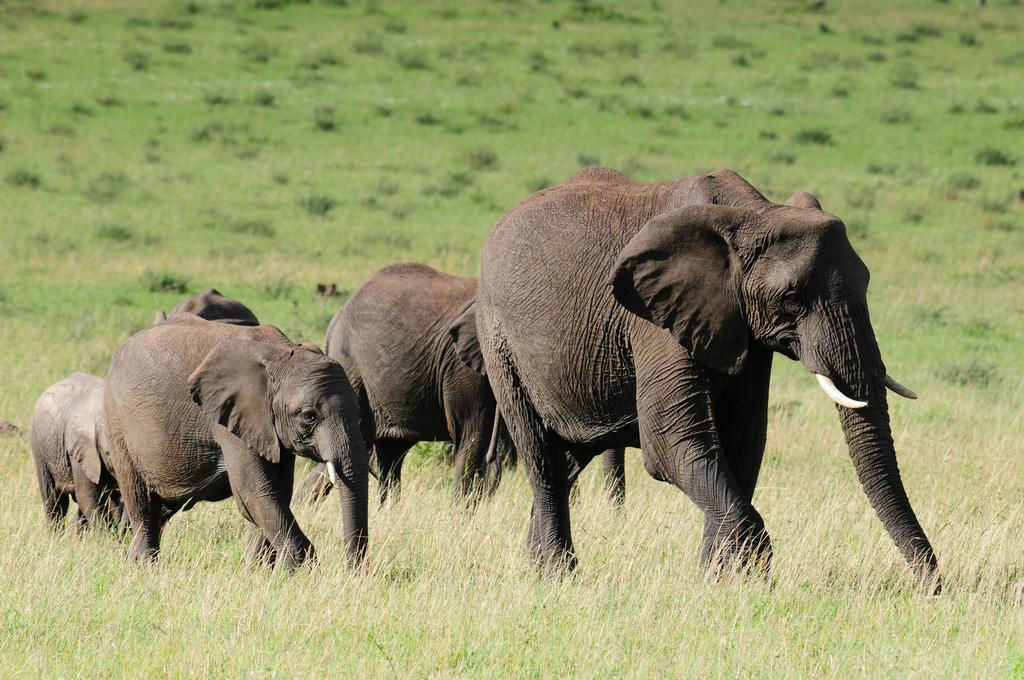
The Trump Administration reversed itself again last month on allowing trophy hunters to bring elephant heads into the United States. They’ve also been sued to prevent this from being enacted.
There has been plenty of commentary on the decision from a conservation perspective, so let’s leave that aside — other than keeping firmly in mind that African elephants are a seriously endangered species and the possibility of these hugely intelligent, emotionally advanced, and social creatures surviving into the next century is doubtful, if poaching trends continue.
What does Hindu ethics say about sport hunting?
The first yama (a set of Hindu ethical guidelines) is ahimsa, popularly translated as nonviolence or non-harming. Though sometimes presented as an absolute (think, Gandhi), in general Hindu thought applies ahimsa contextually.
Unless you have taken a vow of renunciation—as Hindu monks and ascetics do, for example—ahimsa doesn’t mean an absolute prohibition on forceful or violent action, if all other options have been ruled out.
For soldiers, police officers, security guards and the like, using force is part of their jobs and as such, when exercised reasonably, is not a violation of the principle of nonviolence.
Hunting or fishing for food is not necessarily a clear cut violation of ahimsa in certain circumstances either—even against the backdrop of Hindu teachings long extolling the virtue of vegetarian diet.
Killing an animal that is attacking you, or just about to attack you or someone near you, in an act of self-defense is also not a violation of nonviolence.
Sport hunting though is another matter entirely.
Under no circumstances could this be considered an ethically sound action. There is simply no justification for killing another living being for what is essentially the fun of it.
This is even more the case when we are talking about an endangered species — as the African elephant is, in no small part because they are being killed solely for their tusks.
Though in previous eras Indian nobility hunted for sport—it was this hunting that drove the Asiatic cheetah extinct, in fact—Hindu texts of a variety of types have portrayed hunting in a profoundly negative light.
An excellent short paper by Dr Lisa Kemmerer, from Montana State University, offers a good overview of this. In Hindu Ethics and Non-Human Animals, Dr Kemmerer writes:
“Animals are individuals and persons in Indian sacred literature. Some animal characters are noble and heroic, or holy, while others are lowly and evil—just like their human counterparts. Hindu readers think nothing of a swan or a deer, a character in their sacred texts, who is preaching or who lives in an organized community, complete with rulers and nuclear family units, just like a human community.”
What does Hindu scripture have to say about hunting?
Referring to the much beloved Ramayana, Kemmerer notes,
“Family relations are no less important for an eagle than they are for a human. The bear community also comes forward to fight for the good. Jambavan the bear is ‘full of knowledge and wisdom’ and provides important council as the tale unfolds. Each animal is intelligent, cultured, and sports her or his own spirit, achievements, and physique.”
In the Mahabharata (the world’s longest epic poem, in which the conflict between warring noble clans is the focal point) and the Panchatantra (a famous collection of animal fables), Kemmerer points out that hunters are routinely mocked. They “disrupt the lives of animals, terrifying them and destroying their families and communities;” they are “mocked for incompetence, greed, and their fundamentally bloodthirsty intent.”
This attitude of seeing other animals as beings in many ways on par with humans is summed up in passage 5.18 from the Bhagavad Gita, which advises us that the wise see “with equal vision, a learned and gentle teacher, a cow, an elephant, a dog…”
Meaning, though there may be superficial differences between these forms of life and their places within the world, all are part of the same divine matrix. All have the same fundamental right to exist.
Extrapolating, this passage indicates that no being should be exploited or subjected to unnecessary harm.
Clearly that would preclude animals being shot solely for the pleasure of the hunter, heads stuffed and stuck on a wall.
Doing so is an act of profound adharma—it is against that which is right, ethical, and productive in the world.
Want to help protect elephants?
Here are just some of the organizations doing so: Knot on My Planet, International Elephant Foundation, Save the Elephants, World Wildlife Fund
Previous Post

April 26, 2018
Are beer yoga, goat yoga, and naked yoga actually forms of yoga?
Next Post

April 28, 2018 Non-Desi Hindus are as diverse as Hinduism itself
Browse Our Archives
Select a Category Animals Culture Environment Yoga
Select a Month August 2018 July 2018 June 2018 May 2018 April 2018
Follow Us!
TAKE THE
Religious Wisdom Quiz
Why was Daniel thrown into the lion’s den?
Select your answer to see how you score.
He spoke against the king He prayed to God He stole from the treasury He refused to bow to the king
Related posts from Samudra

Most sinister part of Ramdev article in New...

Interviews with non-Indian Hindus: Gerald Barr

Interviews with non-Indian Hindus: Allegra Lovejoy

In pulling photo of Nikki Haley in front...
TRENDING AT PATHEOS Hindu

Indian Hindu pilot’s valor in line of duty...
There is a hoary maritime tradition that the captain of the...

Movie on Neem Karoli Baba’s life is a...
Neem Karoli Baba’s life (1900-1973) is associated with miracles he made in...

20 Questions to Ask Before an Interfaith Marriage,...
Four questions every interfaith couple should discuss before marriage: Conversion. Will either...

Avadhānam: The Art of Concentration and Intellectual Mastery
What is Avadhānam? In the summer of 2015, during a three-day Sanskrit...

Jesus in the Dharma: Where Christ Fits in...
Where Does Jesus Fit in Hinduism? That’s a question I get often...

Hormuz: A Shared Hindu and Zoroastrian Heritage
Every evening, somewhere in the world, a newsreader utters the words: "The...
view all Hindu blogs
Ad-Free & Subscriber Log-In Subscription Support
- About Us
- 2026 Calendar
- Videos
- Podcasts
- Library of World Religions
- Faith In Media Tracker
- Advertise With Us
- Write for Us
- Privacy Policy
- Terms of Service
- Do Not Sell My Data
- Contact Us
- Radiant Digital
- Manage Newsletter Subscriptions
- Unsubscribe From Notifications
- Sitemap
Copyright 2008-2026, Patheos. All rights reserved.
Subscription Support Ad-Free & Subscriber Log-In
Follow Patheos