
BuddhistCatholicContemplativeEvangelicalGeneral ChristianHinduJewishLatter-day SaintMuslimNew VisionsProgressive Christian
Beliefs
- Buddhist
- Catholic
- Contemplative
- Evangelical
- General Christian
- Hindu
- Jewish
- Latter-day Saint
- More Voices
- Muslim
- New Visions
- Pagan
- Progressive Christian
Topics
- Religion News
- Food and Religion
- Sports and Religion
- Religious Art
- Religious Music and Entertainment
- Religious Events
- History and Religion
- Style and Religion
- Politics and Religion
- Women in Religion
- Recreation Outdoors and Religion
- Business Finance and Religion
- Careers Workplace and Religion
- Education and Religion
- Family Parenting and Religion
- Health Fitness and Religion
- Home and Religion
- Relationships and Religion
- Technology and Religion
- Travel and Religion
Columnists
- Buddhist Columnists
- Business Finance and Religion Columnists
- Careers Workplace and Religion Columnists
- Catholic Columnists
- Contemplative Columnists
- Education and Religion Columnists
- Evangelists Columnists
- Family Parenting and Religion Columnists
- General Christian Columnists
- Health Fitness and Religion Columnists
- Hindu Columnists
- History and Religion Columnists
- Home and Religion Columnists
- Jewish Columnists
- More Voices Columnists
- Latter Day Columnists
- Muslim Columnists
- New Visions Columnists
- Nonreligious Columnists
- Pagan Columnists
- Politics and Religion Columnists
- Progressive Columnists
- Recreation Outdoors and Religion Columnists
- Relationships and Religion Columnists
- Religion News Columnists
- Religious Art Columnists
- Religious Events Columnists
- Religious Music and Entertainment Columnists
- Sports and Religion Columnists
- Style and Religion Columnists
- Technology and Religion Columnists
- Travel and Religion Columnists
- Women in Religion Columnists
Resource Library
- 2026 Calendar
- Library of World Religions
- The 100 Most Holy Places on Earth
- Patheos Answers
- Podcasts
- Videos
- Faith Leaders Database
- Anglican Episcopalian
- Bahai
- Baptist
- Buddhism
- Christianity
- Confucianism
- Eastern Orthodoxy
- Hinduism
- Holiness and Pentecostal
- ISKCON
- Islam
- Judaism
- Lutheran
- Methodist
- The Church of Jesus Christ of Latter-day Saints
- New Age
- Paganism
- Presbytarian and Reformed
- Protestantism
- Religion Behind the Scenes
- Roman Catholic
- Scientology
- Shia Islam
- Sikhism
- Sufism
- Sunni Islam
- Taoism
- Zen
- See all religions
Research Tools
 Ad-Free & Subscriber Log-In Subscription Support
Ad-Free & Subscriber Log-In Subscription Support
Follow Patheos 

- Trending:
- Forgiveness
- |
- Marriage
- |
- Consciousness
- |
- Death Penalty
- |
- Election
- |
- Halloween
 Sam Rocha
- Home
- Catholic
- What White Privilege Can and Cannot Do: A Clarification
What White Privilege Can and Cannot Do: A Clarification
Last updated on: August 16, 2016 at 3:15 pm by Sam Rocha
What White Privilege Can and Cannot Do: A Clarification 2016-08-16T15:15:54-05:00 Sam Rocha
Patheos Explore the world's faith through different perspectives on religion and spirituality! Patheos has the views of the prevalent religions and spiritualities of the world.
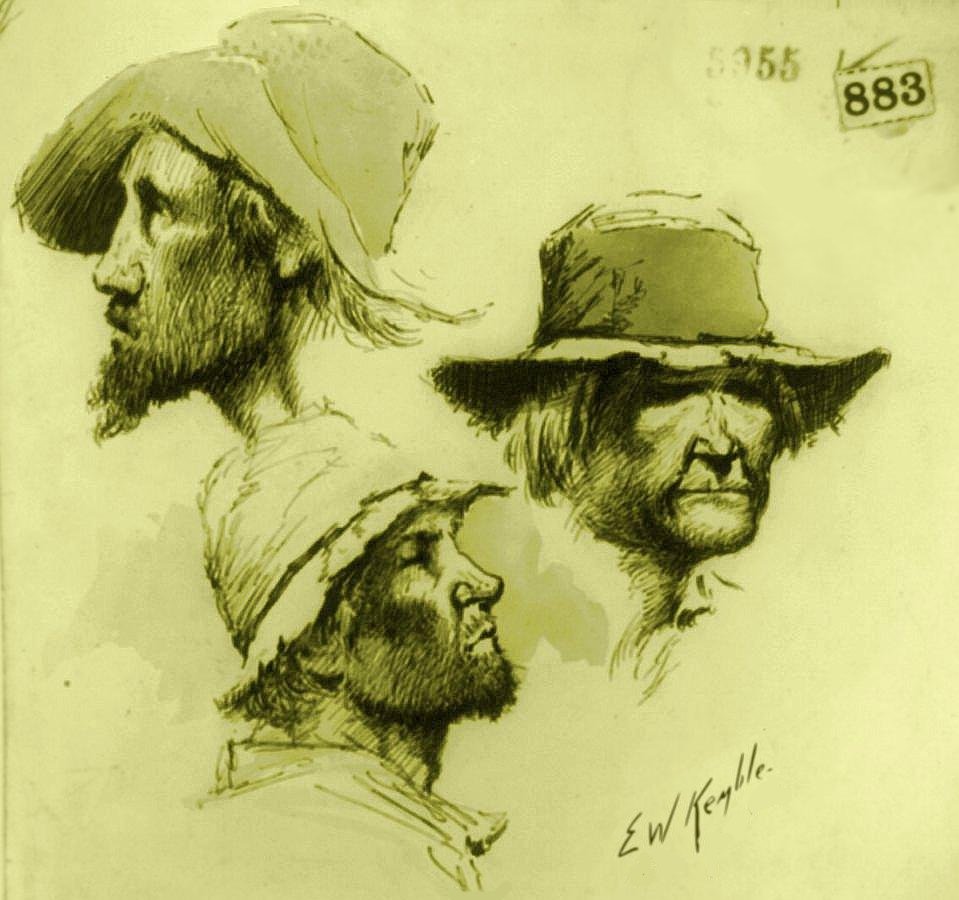
Georgia “cracker” types, circa 1891 by E. W. Kemble (1861-1933). Source: Wikipedia.
Yesterday’s post on White privilege produced some thoughtful exchanges with readers and a key criticism emerged, accusing me of not knowing or understanding what “White privilege” is.
I think it is a bit wrongheaded to talk about the concept of White privilege as a thing or an object, since it is really nothing more than an idea distilled from a short essay by Peggy McIntosh in the late 1980’s. How that essay ever became dogmatic is a mystery to me, but I can see how and why it is an important tool for doing a very particular sort of social analysis. This is why, to me, the question of White privilege should be functional: What can this concept do? And also: What can this concept not do?
···
The idea that is often conveyed on the Left is that the concept of White privilege (and others types of privilege, too) has an inexhaustible functional ability and that any challenge to it is somehow a complete denial of its insights. This reaction is of course an overreaction to an overreaction by those who would like to ignore McIntosh’s essay altogether. But that is not the case for me.
To be clear: I see many uses for the idea of White privilege but I also see limits and even abuses.
This need not be academic. After all, I am not White, and can clearly see White privilege from the marginal view that McIntosh argues is so hard to see from a White perspective. I’ve experienced the pain of racism and I realize that it cannot be simply reversed away. In this sense I can confidently say that White privilege maps onto many realities that I know and have experienced personally.
But there are limits to this concept. For one, it makes a number of assumptions that serve it well in the context of large scale sociological claims, but distort and even occlude things at a smaller scale. (Saying “But it is structural!” ignores the fact that there are bigger and smaller structures.) The first assumption is, of course, the very idea of Whiteness. We may take it for granted that Whiteness has no nuance or qualification to it, but my claim is precisely that this assumption is false and harmful.
···
Those who hold to a limitless understanding of the function of White privilege claim that even the poorest and most miserable White folks can dress up in a suit and go out into civil society and enjoy all the privileges of Whiteness in a way a non-White person cannot. This is patently and painfully false. This is a claim that is purely theoretical with no sense whatsoever of the body and voice marked by a Whiteness that denies its very Whiteness.
As a poor Mexican-American I understood that the poor Whites who were treated and acted like mongrels, snarling and swearing and spitting, stinking like piss on their leather-like skin, with black sweat on their t-shirt collar, were not anything like the rest of us, the Whites, Mexicans, and Blacks of our school and small town society. The truth of this claim goes far deeper than anything a White makeover might do in theory. I refuse and reject the simplicity of this analogy and its toxically essential notion of Whiteness.
This is not the nostalgia of modern Nashville country music. This is not the stupid pastiche of Redneck Americana from a Jeff Foxworthy routine. This is total and absolute wretched poverty that exists on a scale that is not exceptional except in its Whiteness.
My claim then is to try and show that the uses of White privilege are not infinite and that the any eternal sense of its function not only fail to give a faithful account of reality, they more dangerously support a notion of Whiteness that supplies it with a nefariously false metaphysical existence. White privilege, when left unchecked and unaccountable to reality, converts an ideology into a creature like Frankenstein’s damned invention.
···
One last thing: Almost every person who thinks they are White who is reading this post doesn’t qualify as the sort of person I am discussing when I write about White poverty. Even the poor ones. Poverty in this context is deeper than finances and having internet and being able to read my prose probably disqualifies one from it.
Previous Post
August 15, 2016
Where White Privilege Will Not Go: White Poverty in America
Next Post

August 17, 2016 Voting is Immoral
Browse Our Archives
Select a Category aesthetics audio class notes conversation Education En Español Interviews jazz jazzhop link Liturgy Music Nonsense pastoral philosophy phenomenology Philosophy philosophy of education photo Poetry Political Theology quote Race regular Schooling Uncategorized video Weekly Apocalypse
Select a Month June 2017 May 2017 April 2017 February 2017 January 2017 December 2016 November 2016 October 2016 September 2016 August 2016 July 2016 January 2015 December 2014 November 2014 October 2014 September 2014 August 2014 July 2014 June 2014 May 2014 April 2014 March 2014 February 2014 January 2014 December 2013 November 2013 October 2013 September 2013 August 2013 July 2013 June 2013 May 2013 April 2013 March 2013 February 2013 January 2013 December 2012 November 2012 October 2012 September 2012 August 2012 July 2012 June 2012 May 2012
Follow Us!
TAKE THE
Religious Wisdom Quiz
What Christian group traditionally worships in silence?
Select your answer to see how you score.
Anglicans Quakers Baptists Jehovah’s Witnesses
Related posts from Sam Rocha

BOOK RELEASE: Tell Them Something Beautiful by Sam...

"I cannot stand and sing the anthem." -...
Where White Privilege Will Not Go: White Poverty...
On the Castile Verdict and Violence Against Muslims
TRENDING AT PATHEOS Catholic

Rejecting Doom: Christian Hope And Human Action
Christianity is a religion of hope. We are to have hope and...

It’s What Comes From Within Which Matters
One of the most difficult things for us to understand is why...

Why I Choose the Eucharist Over the Sermon
Choose the Eucharist, Not the Sermon What are we supposed to get...

5 Design Elements Found in Spiritually Rooted Homes
Putting Spirituality Into Home Decor Our homes are more than our living...

Credo: A Story of God Told with the...
About 10 years ago, I began to imagine a personal "Credo" that...

The Anatomy of Divine Revelation in Catholic Thought
The claim that God has made Himself known to human beings is...
view all Catholic blogs
Ad-Free & Subscriber Log-In Subscription Support
- About Us
- 2026 Calendar
- Videos
- Podcasts
- Library of World Religions
- Faith In Media Tracker
- Advertise With Us
- Write for Us
- Privacy Policy
- Terms of Service
- Do Not Sell My Data
- Contact Us
- Radiant Digital
- Manage Newsletter Subscriptions
- Unsubscribe From Notifications
- Sitemap
Copyright 2008-2026, Patheos. All rights reserved.
Subscription Support Ad-Free & Subscriber Log-In
Follow Patheos