
BuddhistCatholicContemplativeEvangelicalGeneral ChristianHinduJewishLatter-day SaintMuslimNew VisionsProgressive Christian
Beliefs
- Buddhist
- Catholic
- Contemplative
- Evangelical
- General Christian
- Hindu
- Jewish
- Latter-day Saint
- More Voices
- Muslim
- New Visions
- Pagan
- Progressive Christian
Topics
- Religion News
- Food and Religion
- Sports and Religion
- Religious Art
- Religious Music and Entertainment
- Religious Events
- History and Religion
- Style and Religion
- Politics and Religion
- Women in Religion
- Recreation Outdoors and Religion
- Business Finance and Religion
- Careers Workplace and Religion
- Education and Religion
- Family Parenting and Religion
- Health Fitness and Religion
- Home and Religion
- Relationships and Religion
- Technology and Religion
- Travel and Religion
Columnists
- Buddhist Columnists
- Business Finance and Religion Columnists
- Careers Workplace and Religion Columnists
- Catholic Columnists
- Contemplative Columnists
- Education and Religion Columnists
- Evangelists Columnists
- Family Parenting and Religion Columnists
- General Christian Columnists
- Health Fitness and Religion Columnists
- Hindu Columnists
- History and Religion Columnists
- Home and Religion Columnists
- Jewish Columnists
- More Voices Columnists
- Latter Day Columnists
- Muslim Columnists
- New Visions Columnists
- Nonreligious Columnists
- Pagan Columnists
- Politics and Religion Columnists
- Progressive Columnists
- Recreation Outdoors and Religion Columnists
- Relationships and Religion Columnists
- Religion News Columnists
- Religious Art Columnists
- Religious Events Columnists
- Religious Music and Entertainment Columnists
- Sports and Religion Columnists
- Style and Religion Columnists
- Technology and Religion Columnists
- Travel and Religion Columnists
- Women in Religion Columnists
Resource Library
- 2026 Calendar
- Library of World Religions
- The 100 Most Holy Places on Earth
- Patheos Answers
- Podcasts
- Videos
- Faith Leaders Database
- Anglican Episcopalian
- Bahai
- Baptist
- Buddhism
- Christianity
- Confucianism
- Eastern Orthodoxy
- Hinduism
- Holiness and Pentecostal
- ISKCON
- Islam
- Judaism
- Lutheran
- Methodist
- The Church of Jesus Christ of Latter-day Saints
- New Age
- Paganism
- Presbytarian and Reformed
- Protestantism
- Religion Behind the Scenes
- Roman Catholic
- Scientology
- Shia Islam
- Sikhism
- Sufism
- Sunni Islam
- Taoism
- Zen
- See all religions
Research Tools
 Ad-Free & Subscriber Log-In Subscription Support
Ad-Free & Subscriber Log-In Subscription Support
Follow Patheos 

- Trending:
- Forgiveness
- |
- Marriage
- |
- Consciousness
- |
- Death Penalty
- |
- Election
- |
- Halloween
 Sam Rocha
- Home
- Catholic
- How to (Not) Destroy Catholic Art
How to (Not) Destroy Catholic Art
Last updated on: February 4, 2015 at 6:15 pm by Sam Rocha
How to (Not) Destroy Catholic Art 2015-02-04T18:15:28-06:00 Sam Rocha
Patheos Explore the world's faith through different perspectives on religion and spirituality! Patheos has the views of the prevalent religions and spiritualities of the world.
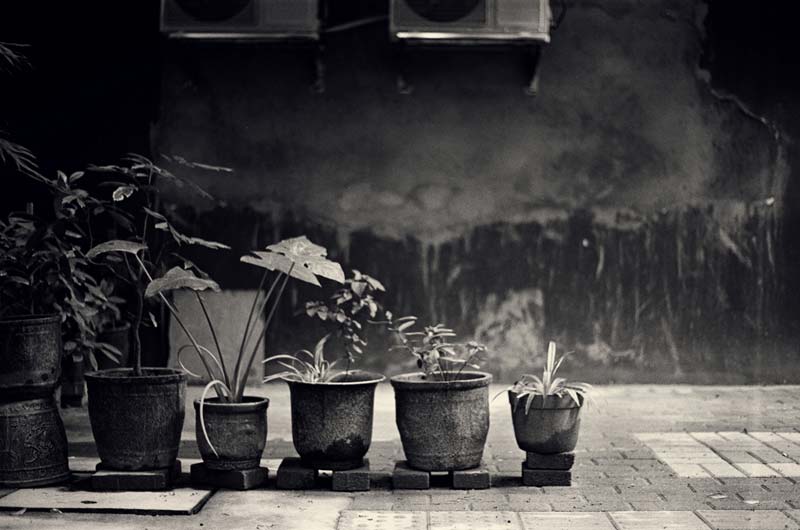
Catholic art is destroyed at the exact point in which it becomes necessary to have “Catholic” art.
*
The surging liturgical movement in the Roman Catholic Church over the past decade, often called “traditionalism,” is not so much evidence of the strength of Catholic liturgy today but, instead, of its remarkable weakness. We do not see “traditionalists” emerge unless (a) there is no tradition to begin with or (b) until a real tradition is in danger. Otherwise, traditions, real ones, are simply ordinary ways of being and living.
To kill a tradition, in its most organic and natural state, make it a “tradition.”
Find a place that is passionate about TRADITION and there you will find some amount of fear and insecurity. In the case of the Hebrew people, for example, there are very good historical reasons for this feeling. Same goes for indigenous peoples. Not all paranoia is unjustified. And just because you’re paranoid doesn’t mean that they’re not out to get you.
The general point is a simple one: whenever a special category is needed, that need reveals a lack of some kind. Depending on the motivations, context, and approach, these categories and movements can produce many good and bad fruits, revivals, and reminders — but the constitutive conditions remain, by and large, the same.
*
Catholic art is destroyed at the exact point at which it becomes necessary to have something, just one thing, just one reliable thing, just one little thing that has an imprimatur of some kind, that can be trusted and relied on, labeled as “Catholic” art.
I grew up hearing about how badly we need “Catholic” things. Merchandise. Music. Stuff to compete with the Protestants who were better at making stuff that looks just as “cool” as the secular stuff. Really good vegan bacon.
I also kept hearing about how we need “Catholic” things that are more Catholic than the current Catholic stuff. Qualitative degrees of Catholicism.
What I didn’t realize then was that, for me, a cradle Catholic, a Mestizo Mexican Tejano Southwestern boy, Catholicism was not an option. This specialized community of Catholics, who worried about having “Catholic” things, could not erode or affect a deeper and more interior and genealogical, ancestral Catholicism that had seeped into me and informed my imagination and dispositions.
Growing up in church offices and prayer meetings and weekday morning mass and lots ands lots of priests certainly helped. But there was a time when it seemed like it didn’t. I knew all the stuff, I had all the facts, I went to the right school, I could talk the talk and had walked more of the walk than most. I read the Catechism. But when certain things change and shift, foundations get shaken, and all the right answers wear threadbare, there is nothing that can prevent a fallout.
But I couldn’t, and still cannot, seem to fall out entirely. Grace, sure. Of course. But also the fact that being Catholic, for me, is not about a conference I went to or a t-shirt or a socio-cultural brand name — even a set of doctrines I understand and am willing to check off my belief list.
Mine was, still is, and always will be, a no exit Catholicism.
*
Catholic art is destroyed at the exact point when and where we become desperate and starving and will take anything, anything at all, so long as it is “Catholic,” and create special places for those books and CD’s at the store, so everyone can find it there, regardless of its content, just so long as it is “Catholic.”
Religious art is not what I am after here. But, in another sense, it is what I am after. What makes art religious? Its author, theme, use?
I don’t know nor do I particularly care. What I do know is that we do not need “Catholic” art. We need art. That is hard and rare enough.
Once the art is worthwhile, worthy of its class and peers and so on, then, perhaps, we might talk about its possible and present Catholicism.
*
I once assumed that “Catholic” music was all about use value. It you could use it at Mass, or any other sort of liturgical use, then it was “Catholic.” If you could use it at a prayer meeting or a devotional praise and worship setting, then it was “Catholic.” If it was not suitable for either of those uses, then, it was probably not “Catholic.” It always needed to have words. Sing-along music.
These two uses were really the same, and were often interchangeable, because what made for “Catholic” music was its ministerial use, which was built for participation. The word ‘performance’ was pejorative in the context of music ministry. To perform was selfish and prideful and bad.
As I improved on my instrument and my musical crafts, I began to hear the accusation of performing or of showing off. “But I’ve been playing guitar since I was five and am self-taught and these licks don’t come cheap and sound pretty good,” I would think. I would also think about how much better it would sound with a decent PA and more practice.
I soon began to realize that there was something deeply wrong with the idea that what makes something “Catholic,” especially something like music, is its use value. In fact, I began to see that the liturgy itself and the sacraments are too often disenchanted into mere utilities.
Art has no use. Liturgy is useless. Silence. God is not a life-coach.
*
I’ve slowly built these experiences into a type of music that already exists, but may not exist in an intentional way. There is soul music, gospel music, all kinds of religious and spiritual kinds of music out there. American music is, at its root, religious. The blues.
But there have been precious few artists who have made music that is faithful to both the religious roots of soul music, and intentionally avoid being labeled “Catholic” in a liturgical or devotional way, in order to be faithful to a deeper and more fundamental Catholicism.
Add Augustine to that and I think the picture becomes clearer still.
*
To restore Catholic art we need not restore anything but art itself. To restore art you just have to make it, and be very serious about it.
I am serious about this restoration and have, in many ways, spent my whole life preparing for it. I understand Augustine in a non-superficial way; I have worked on my musical craft for over twenty-five years.
I am passionate about showing and sharing this renewed sense of being Catholic that does not need to worry much about the label or the shirt tags.
*
But I need your help to do it. I need to get the word out to people who understand and can appreciate this sort of work. I need to find the community that is ready to help me create music that only exists in potentiality: Augustinian soul music.
Here are two samples, “Late to Love” (title track) and “Rest in You,” recorded from my study:
To support or share, visit to my Kickstarter page. And thanks to everyone who has already showed support!
Previous Post

February 20, 2014
The Tree of Life: An Overview
Next Post
March 8, 2014 Profane Praise: On Estuary Music
Browse Our Archives
Select a Category aesthetics audio class notes conversation Education En Español Interviews jazz jazzhop link Liturgy Music Nonsense pastoral philosophy phenomenology Philosophy philosophy of education photo Poetry Political Theology quote Race regular Schooling Uncategorized video Weekly Apocalypse
Select a Month June 2017 May 2017 April 2017 February 2017 January 2017 December 2016 November 2016 October 2016 September 2016 August 2016 July 2016 January 2015 December 2014 November 2014 October 2014 September 2014 August 2014 July 2014 June 2014 May 2014 April 2014 March 2014 February 2014 January 2014 December 2013 November 2013 October 2013 September 2013 August 2013 July 2013 June 2013 May 2013 April 2013 March 2013 February 2013 January 2013 December 2012 November 2012 October 2012 September 2012 August 2012 July 2012 June 2012 May 2012
Follow Us!
TAKE THE
Religious Wisdom Quiz
Who said, "I am not worthy to untie the strap of his sandals"?
Select your answer to see how you score.
Thomas Paul John the Baptist Peter
Related posts from Sam Rocha

BOOK RELEASE: Tell Them Something Beautiful by Sam...
Some Daiquiri Music: "A Todo VAR"

By Their Fruits: A Reply to Rod Dreher

The Benedict Option: A Critical Review
TRENDING AT PATHEOS Catholic

Rejecting Doom: Christian Hope And Human Action
Christianity is a religion of hope. We are to have hope and...

It’s What Comes From Within Which Matters
One of the most difficult things for us to understand is why...

Why I Choose the Eucharist Over the Sermon
Choose the Eucharist, Not the Sermon What are we supposed to get...

5 Design Elements Found in Spiritually Rooted Homes
Putting Spirituality Into Home Decor Our homes are more than our living...

Credo: A Story of God Told with the...
About 10 years ago, I began to imagine a personal "Credo" that...

The Anatomy of Divine Revelation in Catholic Thought
The claim that God has made Himself known to human beings is...
view all Catholic blogs
Ad-Free & Subscriber Log-In Subscription Support
- About Us
- 2026 Calendar
- Videos
- Podcasts
- Library of World Religions
- Faith In Media Tracker
- Advertise With Us
- Write for Us
- Privacy Policy
- Terms of Service
- Do Not Sell My Data
- Contact Us
- Radiant Digital
- Manage Newsletter Subscriptions
- Unsubscribe From Notifications
- Sitemap
Copyright 2008-2026, Patheos. All rights reserved.
Subscription Support Ad-Free & Subscriber Log-In
Follow Patheos