
BuddhistCatholicContemplativeEvangelicalGeneral ChristianHinduJewishLatter-day SaintMuslimNew VisionsProgressive Christian
Beliefs
- Buddhist
- Catholic
- Contemplative
- Evangelical
- General Christian
- Hindu
- Jewish
- Latter-day Saint
- More Voices
- Muslim
- New Visions
- Pagan
- Progressive Christian
Topics
- Religion News
- Food and Religion
- Sports and Religion
- Religious Art
- Religious Music and Entertainment
- Religious Events
- History and Religion
- Style and Religion
- Politics and Religion
- Women in Religion
- Recreation Outdoors and Religion
- Business Finance and Religion
- Careers Workplace and Religion
- Education and Religion
- Family Parenting and Religion
- Health Fitness and Religion
- Home and Religion
- Relationships and Religion
- Technology and Religion
- Travel and Religion
Columnists
- Buddhist Columnists
- Business Finance and Religion Columnists
- Careers Workplace and Religion Columnists
- Catholic Columnists
- Contemplative Columnists
- Education and Religion Columnists
- Evangelists Columnists
- Family Parenting and Religion Columnists
- General Christian Columnists
- Health Fitness and Religion Columnists
- Hindu Columnists
- History and Religion Columnists
- Home and Religion Columnists
- Jewish Columnists
- More Voices Columnists
- Latter Day Columnists
- Muslim Columnists
- New Visions Columnists
- Nonreligious Columnists
- Pagan Columnists
- Politics and Religion Columnists
- Progressive Columnists
- Recreation Outdoors and Religion Columnists
- Relationships and Religion Columnists
- Religion News Columnists
- Religious Art Columnists
- Religious Events Columnists
- Religious Music and Entertainment Columnists
- Sports and Religion Columnists
- Style and Religion Columnists
- Technology and Religion Columnists
- Travel and Religion Columnists
- Women in Religion Columnists
Resource Library
- 2026 Calendar
- Library of World Religions
- The 100 Most Holy Places on Earth
- Patheos Answers
- Podcasts
- Videos
- Faith Leaders Database
- Anglican Episcopalian
- Bahai
- Baptist
- Buddhism
- Christianity
- Confucianism
- Eastern Orthodoxy
- Hinduism
- Holiness and Pentecostal
- ISKCON
- Islam
- Judaism
- Lutheran
- Methodist
- The Church of Jesus Christ of Latter-day Saints
- New Age
- Paganism
- Presbytarian and Reformed
- Protestantism
- Religion Behind the Scenes
- Roman Catholic
- Scientology
- Shia Islam
- Sikhism
- Sufism
- Sunni Islam
- Taoism
- Zen
- See all religions
Research Tools
 Ad-Free & Subscriber Log-In Subscription Support
Ad-Free & Subscriber Log-In Subscription Support
Follow Patheos 

- Trending:
- Forgiveness
- |
- Marriage
- |
- Consciousness
- |
- Death Penalty
- |
- Election
- |
- Halloween
 Sam Rocha
- Home
- Catholic
- Primer Update and Sneak Peek
Primer Update and Sneak Peek
Last updated on: February 4, 2015 at 6:29 pm by Sam Rocha
Primer Update and Sneak Peek 2015-02-04T18:29:45-06:00 Sam Rocha
Patheos Explore the world's faith through different perspectives on religion and spirituality! Patheos has the views of the prevalent religions and spiritualities of the world.
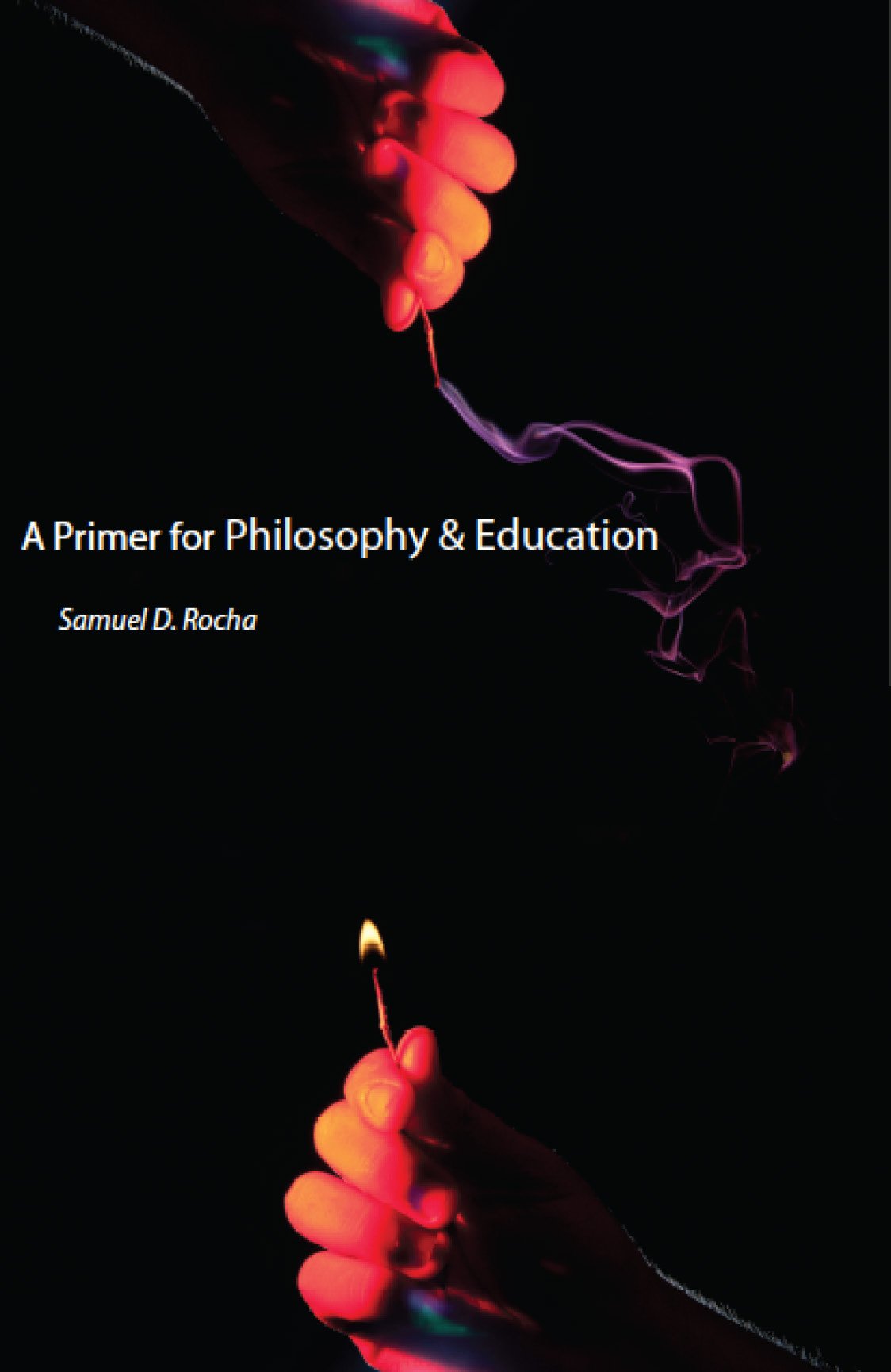
My latest book — A Primer for Philosophy & Education — was released two weeks ago. Since then, there have been two reviews — here and here — posted on Patheos blogs and there are several more to come from Patheos and elsewhere.
Entering this crucial third week, I’d like to ask you for your help once again. Anything helps: Facebook liking and sharing, Tweets, and especially personal recommendations to people you think might be interested are all a huge help. In the end, the proof is in the pudding: the best way to help is to purchase a copy.
Those of you with blogs or interest in writing periodical or journal reviews are welcome to contact me for a review copy. Instructors, teachers, and alike are encouraged to do the same.
The website has a long list of endorsements from a wide range of people, and more are on their way. Philosopher and pioneer of object oriented ontology and speculative realism, Graham Harman, read and enjoyed it.
For my Catholic readers, I’ve also received some nice reviews from Catholics. Like these ones:
“The New Evangelization depends on a renewal of philo-sophia – the authentic love of wisdom. Restoring Christian culture requires articulating the classical idea of education for the modern world. A Primer for Philosophy & Education serves those goals and is a valuable tool for parishes, schools, and families committed to Christian renewal of their minds.”
J.D. Flynn, Chancellor, Archdiocese of Denver
“I really admire Dr. Rocha’s creative approaches to communicating the essence of philosophical thought and true education to students and others. Dr. Rocha cares that his students learn and all of us are the richer for the witness of that caring and the creativity of his methods.”
Ralph Martin, S.T.D., Director Graduate Theology Programs in the New Evangelization, Sacred Heart Major Seminary, Archdiocese of Detroit
+++
Perhaps the most exciting thing for me are the illustrations by my talented youngest sister, Ana Maria Rocha, an art student at the University of North Texas School of Art and Design. Here are two of her creations (Can see the lion in the second one?):
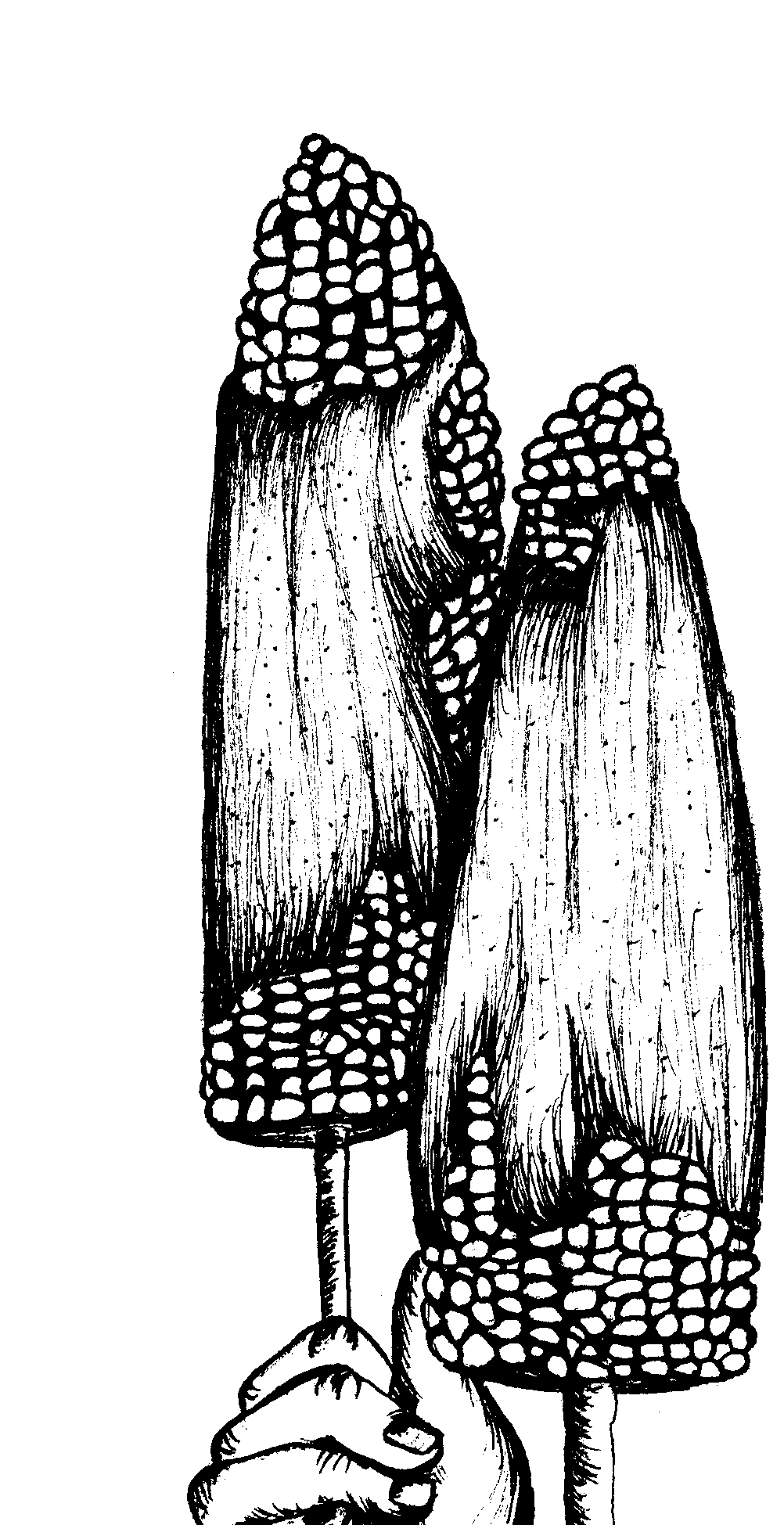
by Ana Maria Rocha
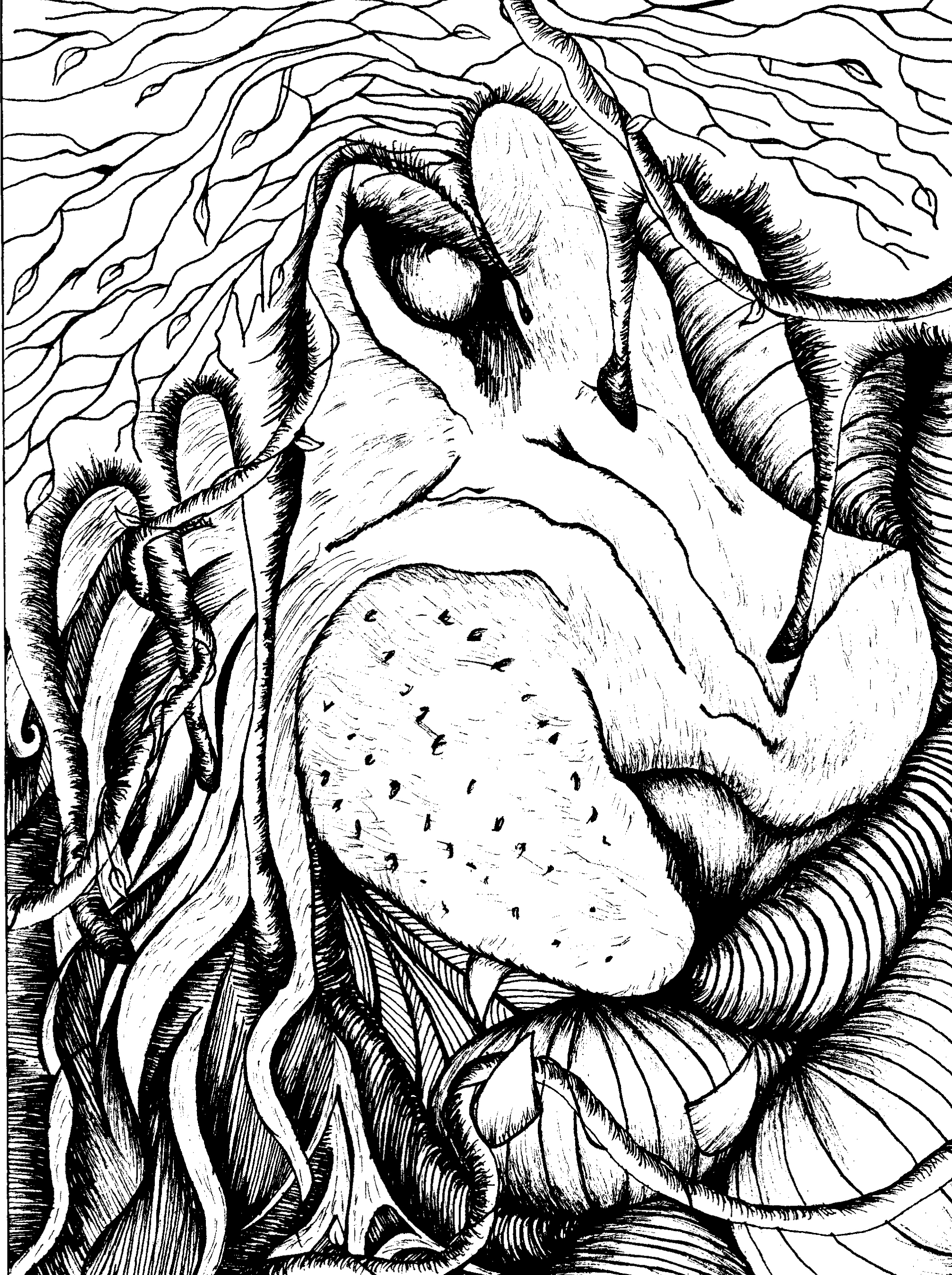
by Ana Maria Rocha
+++
And here, below, is a sneak peek of the preface to the book:
Preface
I’ve written this little book with three audiences in mind. The first two are obvious: those reading it for a course I am teaching, and others reading it on their own. The third audience may seem strange, but is absolutely true, nevertheless: I am the third audience.
This primer has different things to show each of us, or different ways of showing the same things. I will try to speak to some of those differences here.
To my students—I wrote this primer for instructional purposes. This book is, first and foremost, a text written by a teacher to and for his students. You shouldn’t wonder whether you have my full attention. I am not writing to you by accident or coincidence. I am not principally concerned with anyone else but you. This narrow, specialized focus should give you total confidence that you are the intended audience.
A major inspiration for this project comes from one of my favorite philosophers, William James. One of the many things I’ve learned from him is to avoid the dangers of incestuous writing, writing within an echo chamber.
James wrote for more than the highly schooled, professional audiences of the academy. He wrote for them, too, but he didn’t always write to or for an exclusive field of peers, due in large measure to the fact that he never belonged to a single field in the first place—he began in anatomy and physiology, moved to psychology, and ended in philosophy with major interests in religion and metaphysics.
Perhaps a better way to think about him is this: James belonged to a field of study coincidentally, classified by whatever he was working on at the moment, but never limited by or to that classification.
James published mostly works of popular philosophy that began as lectures he presented to audiences of all kinds of people. He also frequently wrote essays, reviews, and letters to periodicals and popular journals, sometimes under the pseudonym ignoramus. William James was a public intellectual in the most honorable sense; he had a deep sensitivity to what I call “pastoral philosophy”—an ordinary sense of philosophy that is thoroughly and principally educational.
As you will see in fuller detail, ‘philosophy’ and ‘education’ are different words for similar, if not the same, mysterious things. The terms should be taken as harmonious and complimentary.
My favorite set of essays by James, added to the end of his famous Talks to Teachers on Psychology, is titled AndTo Students, on Some of Life’s Ideals. This trio of essays has been influential to me for many reasons. Most importantly, I was a graduate student when I first read them; these essays were penned To Students. To me. I took them personally.
Again and again in his essays, books, and correspondence, James took time to write specifically to and for his students.
For example, after the publication of his magisterial ThePrinciples of Psychology, and at the height of his status as a psychological specialist, James published a shorter version of The Principles, for instructional purposes, titled Psychology: The Briefer Course. James aficionados have clever nicknames for each book: they call the first book “the James,” and the second “the Jimmy.”
Throughout his life, James showed a sensitive ability to move between “James” and “Jimmy,” to write To Students (and teachers) without compromising the integrity or rigor of his thought. I remain a student of James to this day. When I re-read him, I continue to find his voice powerful and intimate. Personal.
Following James, I want to be clear that it is you, the student, to whom I am writing. This book is for you. Feel welcome and at home in these pages. Live in them a little if you can.
This primer should acquaint you with what philosophy and education are to me, as far as I can understand them, and might become to you. It should also orient you to the disposition—the overall posture and attitude—that the work of philosophy and education require. I hope you refer to it as a practical resource you can use throughout the course. Use it well.
To others—As you surely know by now, this book was not principally written to or for you. I do not say this to try to exclude you outright. After all, one can be a student without being enrolled in a class or at a formal school. In a certain way of thinking, all readers are students as all authors are teachers. I became a student of Professor James by reading his books.
There is no reason to think of what I wrote in the previous section as somehow exclusive to those literally enrolled in my classes. To my potential and figurative students and interlocutors, to my readers: the same aforementioned spirit applies to and for you. The lines dividing my classroom from your own are not easily or neatly defined.
To myself—As I have edited and revised this project, I’ve developed another sense of purpose about it: I have also written it to remind and hold myself accountable to what philosophy and education are, are not, and might someday become.
In many ways, this short book holds all the bits and pieces of my previous work in the philosophy of education. This, again, underscores the merit in seeing and understanding this book as an instructional, pedagogical text: by writing this primer for philosophy and education, I am simultaneously and irreducibly acting as philosopher and educator.
I hope to revisit and measure my future work by the sentiments and intuitions contained here. This is not to say that I will not change. It is instead to hope that what is perennial to philosophy and education will endure, even as my thought (r)evolves.
Again: many, many thanks to all of you who’ve purchased copies and/or helped get the word out over the past two weeks. It’s working. But it’s still too early to tell. I thank you for your patience and continued support of me and my work. And look out this week for some giveaways!
SR
Previous Post

May 19, 2013
A Sunday Letter: Bikers and Fishing, Rhythm and Harmony
Next Post
June 18, 2013 Airport Affectations
Browse Our Archives
Select a Category aesthetics audio class notes conversation Education En Español Interviews jazz jazzhop link Liturgy Music Nonsense pastoral philosophy phenomenology Philosophy philosophy of education photo Poetry Political Theology quote Race regular Schooling Uncategorized video Weekly Apocalypse
Select a Month June 2017 May 2017 April 2017 February 2017 January 2017 December 2016 November 2016 October 2016 September 2016 August 2016 July 2016 January 2015 December 2014 November 2014 October 2014 September 2014 August 2014 July 2014 June 2014 May 2014 April 2014 March 2014 February 2014 January 2014 December 2013 November 2013 October 2013 September 2013 August 2013 July 2013 June 2013 May 2013 April 2013 March 2013 February 2013 January 2013 December 2012 November 2012 October 2012 September 2012 August 2012 July 2012 June 2012 May 2012
Follow Us!
TAKE THE
Religious Wisdom Quiz
Who said, "Lord, do not hold this sin against them"?
Select your answer to see how you score.
Paul Peter Stephen John
Related posts from Sam Rocha

BOOK RELEASE: Tell Them Something Beautiful by Sam...

By Their Fruits: A Reply to Rod Dreher

The Benedict Option: A Critical Review

ON PROTEST (AND THOSE WHO PROTEST AGAINST THEM)
TRENDING AT PATHEOS Catholic

Rejecting Doom: Christian Hope And Human Action
Christianity is a religion of hope. We are to have hope and...

It’s What Comes From Within Which Matters
One of the most difficult things for us to understand is why...

Why I Choose the Eucharist Over the Sermon
Choose the Eucharist, Not the Sermon What are we supposed to get...

5 Design Elements Found in Spiritually Rooted Homes
Putting Spirituality Into Home Decor Our homes are more than our living...

Credo: A Story of God Told with the...
About 10 years ago, I began to imagine a personal "Credo" that...

The Anatomy of Divine Revelation in Catholic Thought
The claim that God has made Himself known to human beings is...
view all Catholic blogs
Ad-Free & Subscriber Log-In Subscription Support
- About Us
- 2026 Calendar
- Videos
- Podcasts
- Library of World Religions
- Faith In Media Tracker
- Advertise With Us
- Write for Us
- Privacy Policy
- Terms of Service
- Do Not Sell My Data
- Contact Us
- Radiant Digital
- Manage Newsletter Subscriptions
- Unsubscribe From Notifications
- Sitemap
Copyright 2008-2026, Patheos. All rights reserved.
Subscription Support Ad-Free & Subscriber Log-In
Follow Patheos