
BuddhistCatholicContemplativeEvangelicalGeneral ChristianHinduJewishLatter-day SaintMuslimNew VisionsProgressive Christian
Beliefs
- Buddhist
- Catholic
- Contemplative
- Evangelical
- General Christian
- Hindu
- Jewish
- Latter-day Saint
- More Voices
- Muslim
- New Visions
- Pagan
- Progressive Christian
Topics
- Religion News
- Food and Religion
- Sports and Religion
- Religious Art
- Religious Music and Entertainment
- Religious Events
- History and Religion
- Style and Religion
- Politics and Religion
- Women in Religion
- Recreation Outdoors and Religion
- Business Finance and Religion
- Careers Workplace and Religion
- Education and Religion
- Family Parenting and Religion
- Health Fitness and Religion
- Home and Religion
- Relationships and Religion
- Technology and Religion
- Travel and Religion
Columnists
- Buddhist Columnists
- Business Finance and Religion Columnists
- Careers Workplace and Religion Columnists
- Catholic Columnists
- Contemplative Columnists
- Education and Religion Columnists
- Evangelists Columnists
- Family Parenting and Religion Columnists
- General Christian Columnists
- Health Fitness and Religion Columnists
- Hindu Columnists
- History and Religion Columnists
- Home and Religion Columnists
- Jewish Columnists
- More Voices Columnists
- Latter Day Columnists
- Muslim Columnists
- New Visions Columnists
- Nonreligious Columnists
- Pagan Columnists
- Politics and Religion Columnists
- Progressive Columnists
- Recreation Outdoors and Religion Columnists
- Relationships and Religion Columnists
- Religion News Columnists
- Religious Art Columnists
- Religious Events Columnists
- Religious Music and Entertainment Columnists
- Sports and Religion Columnists
- Style and Religion Columnists
- Technology and Religion Columnists
- Travel and Religion Columnists
- Women in Religion Columnists
Resource Library
- 2026 Calendar
- Library of World Religions
- The 100 Most Holy Places on Earth
- Patheos Answers
- Podcasts
- Videos
- Faith Leaders Database
- Anglican Episcopalian
- Bahai
- Baptist
- Buddhism
- Christianity
- Confucianism
- Eastern Orthodoxy
- Hinduism
- Holiness and Pentecostal
- ISKCON
- Islam
- Judaism
- Lutheran
- Methodist
- The Church of Jesus Christ of Latter-day Saints
- New Age
- Paganism
- Presbytarian and Reformed
- Protestantism
- Religion Behind the Scenes
- Roman Catholic
- Scientology
- Shia Islam
- Sikhism
- Sufism
- Sunni Islam
- Taoism
- Zen
- See all religions
Research Tools
 Ad-Free & Subscriber Log-In Subscription Support
Ad-Free & Subscriber Log-In Subscription Support
Follow Patheos 

- Trending:
- Forgiveness
- |
- Marriage
- |
- Consciousness
- |
- Death Penalty
- |
- Election
- |
- Halloween
 Sam Rocha
- Home
- Catholic
- July 25, 2012 9:04am
July 25, 2012 9:04am
Last updated on: February 4, 2015 at 7:15 pm by Sam Rocha
July 25, 2012 9:04am 2015-02-04T19:15:55-06:00 Sam Rocha
Patheos Explore the world's faith through different perspectives on religion and spirituality! Patheos has the views of the prevalent religions and spiritualities of the world.
Here is the lecture I gave yesterday at the Catholic Church of St. Paul in Ham Lake, Minnesota entitled “Liturgy as Mystagogy: Why We Must Dance to a Catholic Beat.” It follows the notes below:
I. Preface
My previous lecture’s principle argument—that the heart is fundamentally superior to the head, that Love is sufficient to being and becoming a human person—should primarily say something about beauty. I want to introduce today’s lecture by proposing the following relationship and order between truth and beauty: beauty is above and beyond truth; beauty is prior to truth in the Order of Love; beauty is fecund, pregnant, teeming with creative potential in a way that truth alone is not; without beauty, truth is sterile, barren, and incapable of consummation. This sentiment anchors today’s lecture and invites us to now consider the art of liturgy.
II. Three Introductory Stories
“Sam, the Protestant Guitarist”—“Dancing at Weddings”—“Amor y Pedagogía” “You were able to redeem from pedagogy a man, to make a man from a candidate for genius, may you make men, men of flesh and bone; with the companion of your life may you make them, in love, in love, in love, and not in pedagogy!” (Miguel de Unamuno, 1906)
III. We are Living in a Protestant/Secular Culture
Two examples come to mind that extend the remarks I made about modernity in the previous lecture and illustrate our present cultural situation. First: the yearly “Merry Christmas vs. Happy Holidays” controversy is certainly a religious conflict, but not a Catholic one. This debate rages during the season of Advent, not Christmas, and both greetings are abandoned during the liturgical season of Christmas. Catholic culture is excluded altogether, yet many Catholics take sides in this fight, leaving their cultural position untended. Second: the recent film For Greater Glory has garnered some very hasty comparisons to the current climate in the United States. Mexico has a Catholic religious identity (inherited from Spain) that is distinct from the Puritan/Enlightenment sensibilities of the United States. To be clear: Ecumenism is good and of great and serious importance, but equivocations between religious cultures do not promote Church unity anymore than mistaking one’s self for a grizzly bear promotes ecological harmony.
IV. Catholic Culture Requires Catholic Art (and Vice-Versa)
Consider the following questions and answers:
Q: What is Catholic art?
A: Catholic art is any thing created by a Catholic artist.
Q: Who is a Catholic artist?
A: A Catholic artist is someone whose art is produced from a distinctly Catholic imagination.
Q: Where does a Catholic imagination come from and how does it happen?
A: Imagination is made up of complimentary internal and external influences: internally from the human person’s interior life—conscience, heart, and mind—and externally by the surrounding cultural context. A Catholic imagination is no different, but it emphasizes the external aspect. Catholic imagination originates from a Catholic culture in the same way that one acquires an ear infection from a bacterial culture: by dwelling, simmering, and stewing in the same place for enough time. Think of a rich, bold, thick sauce.
Q: And what is a Catholic culture?
A: There have been and are many of them throughout the last two millennia to the present day, but they all share the same religious metronome, the same heartbeat, the same funky groove: Liturgy. Catholic cultures occur when and wherever a community lives in harmony, sync, and step with the liturgical pulse of the Church. This is the design and purpose of the structure of the Church: it is setup to allow for Catholicism to culture—and infect.
Q: Just why should I care about all of this today?
A: Today we, Catholics, find ourselves living in the most pedagogical, schooled time in human history, but we are slowly becoming mystagogical analphabets, with a receding cultural memory, forgetting how Catholics have danced in the past, and, more alarmingly, preferring to dance to other, more prevalent, liturgical bands and beats. Knowing about Catholicism is not the same as being Catholic. Liturgy as mystagogy is about how the liturgy teaches us to be, to dwell, to love in a distinctly and unmistakably Catholic way.
Q: What is required to live in a Catholic culture?
A: It is simple and free to live in a Catholic culture: one must BE Catholic. Being is all that is required. Do not be fooled, it is difficult to be: to be, one must be-in-love. In a Catholic culture, reading and writing and knowing are all optional. It is possible for pedagogically illiterate, unschooled people—people like Monica—to live and love in a Catholic culture. But it is impossible for mystagogically illiterate, uneducated people to live and love in a Catholic culture.
V. The Need to Move, to Dance Like Catholics
We need to move. We must dance to live, just as the heart must have a pulse to be alive. Ours is not a stagnant, static, or dead faith. It is alive and dynamic, in constant motion and revolutionary conversion (metanoia). In these heady (modern) times, let us pray for a conversion of the heart: from schooling to education, from orthodoxy to orthopraxy, from pedagogy into mystagogy. From a passive approach to religious culture to an active and artistic one, rooted in an awareness and appetite for the constant, heartfelt presence of Catholic liturgy in our daily, ordinary lives. The timing of Benedict XVI’s call to a Year of Faith is a perfect opportunity to begin anew.
Previous Post

July 24, 2012
July 24, 2012 7:50pm
Next Post
July 26, 2012 Review of "The Longest Daycare"
Browse Our Archives
Select a Category aesthetics audio class notes conversation Education En Español Interviews jazz jazzhop link Liturgy Music Nonsense pastoral philosophy phenomenology Philosophy philosophy of education photo Poetry Political Theology quote Race regular Schooling Uncategorized video Weekly Apocalypse
Select a Month June 2017 May 2017 April 2017 February 2017 January 2017 December 2016 November 2016 October 2016 September 2016 August 2016 July 2016 January 2015 December 2014 November 2014 October 2014 September 2014 August 2014 July 2014 June 2014 May 2014 April 2014 March 2014 February 2014 January 2014 December 2013 November 2013 October 2013 September 2013 August 2013 July 2013 June 2013 May 2013 April 2013 March 2013 February 2013 January 2013 December 2012 November 2012 October 2012 September 2012 August 2012 July 2012 June 2012 May 2012
Follow Us!
TAKE THE
Religious Wisdom Quiz
Who said, "Before I formed you in the womb I knew you"?
Select your answer to see how you score.
David God Isaiah Paul
Related posts from Sam Rocha

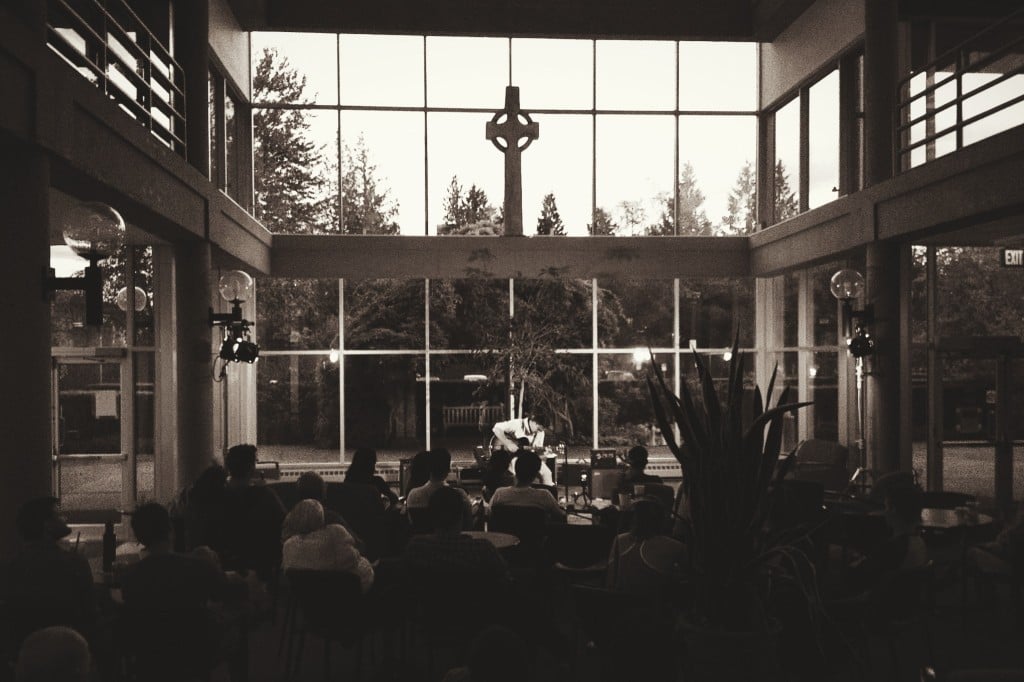
Late to Love: A Concert and Q&A

A Plea to Love my Alma Mater, Franciscan...

You, Sir, Are No Buckley: A Reply to...
TRENDING AT PATHEOS Catholic

Rejecting Doom: Christian Hope And Human Action
Christianity is a religion of hope. We are to have hope and...

It’s What Comes From Within Which Matters
One of the most difficult things for us to understand is why...

Why I Choose the Eucharist Over the Sermon
Choose the Eucharist, Not the Sermon What are we supposed to get...

5 Design Elements Found in Spiritually Rooted Homes
Putting Spirituality Into Home Decor Our homes are more than our living...

Credo: A Story of God Told with the...
About 10 years ago, I began to imagine a personal "Credo" that...

The Anatomy of Divine Revelation in Catholic Thought
The claim that God has made Himself known to human beings is...
view all Catholic blogs
Ad-Free & Subscriber Log-In Subscription Support
- About Us
- 2026 Calendar
- Videos
- Podcasts
- Library of World Religions
- Faith In Media Tracker
- Advertise With Us
- Write for Us
- Privacy Policy
- Terms of Service
- Do Not Sell My Data
- Contact Us
- Radiant Digital
- Manage Newsletter Subscriptions
- Unsubscribe From Notifications
- Sitemap
Copyright 2008-2026, Patheos. All rights reserved.
Subscription Support Ad-Free & Subscriber Log-In
Follow Patheos