
BuddhistCatholicContemplativeEvangelicalGeneral ChristianHinduJewishLatter-day SaintMuslimNew VisionsProgressive Christian
Beliefs
- Buddhist
- Catholic
- Contemplative
- Evangelical
- General Christian
- Hindu
- Jewish
- Latter-day Saint
- More Voices
- Muslim
- New Visions
- Pagan
- Progressive Christian
Topics
- Religion News
- Food and Religion
- Sports and Religion
- Religious Art
- Religious Music and Entertainment
- Religious Events
- History and Religion
- Style and Religion
- Politics and Religion
- Women in Religion
- Recreation Outdoors and Religion
- Business Finance and Religion
- Careers Workplace and Religion
- Education and Religion
- Family Parenting and Religion
- Health Fitness and Religion
- Home and Religion
- Relationships and Religion
- Technology and Religion
- Travel and Religion
Columnists
- Buddhist Columnists
- Business Finance and Religion Columnists
- Careers Workplace and Religion Columnists
- Catholic Columnists
- Contemplative Columnists
- Education and Religion Columnists
- Evangelists Columnists
- Family Parenting and Religion Columnists
- General Christian Columnists
- Health Fitness and Religion Columnists
- Hindu Columnists
- History and Religion Columnists
- Home and Religion Columnists
- Jewish Columnists
- More Voices Columnists
- Latter Day Columnists
- Muslim Columnists
- New Visions Columnists
- Nonreligious Columnists
- Pagan Columnists
- Politics and Religion Columnists
- Progressive Columnists
- Recreation Outdoors and Religion Columnists
- Relationships and Religion Columnists
- Religion News Columnists
- Religious Art Columnists
- Religious Events Columnists
- Religious Music and Entertainment Columnists
- Sports and Religion Columnists
- Style and Religion Columnists
- Technology and Religion Columnists
- Travel and Religion Columnists
- Women in Religion Columnists
Resource Library
- 2026 Calendar
- Library of World Religions
- The 100 Most Holy Places on Earth
- Patheos Answers
- Podcasts
- Videos
- Faith Leaders Database
- Anglican Episcopalian
- Bahai
- Baptist
- Buddhism
- Christianity
- Confucianism
- Eastern Orthodoxy
- Hinduism
- Holiness and Pentecostal
- ISKCON
- Islam
- Judaism
- Lutheran
- Methodist
- The Church of Jesus Christ of Latter-day Saints
- New Age
- Paganism
- Presbytarian and Reformed
- Protestantism
- Religion Behind the Scenes
- Roman Catholic
- Scientology
- Shia Islam
- Sikhism
- Sufism
- Sunni Islam
- Taoism
- Zen
- See all religions
Research Tools
 Ad-Free & Subscriber Log-In Subscription Support
Ad-Free & Subscriber Log-In Subscription Support
Follow Patheos 

- Trending:
- Forgiveness
- |
- Marriage
- |
- Consciousness
- |
- Death Penalty
- |
- Election
- |
- Halloween
 Sam Rocha
- Home
- Catholic
- July 11, 2012 4:41pm
July 11, 2012 4:41pm
Last updated on: February 4, 2015 at 7:25 pm by Sam Rocha
July 11, 2012 4:41pm 2015-02-04T19:25:03-06:00 Sam Rocha
Patheos Explore the world's faith through different perspectives on religion and spirituality! Patheos has the views of the prevalent religions and spiritualities of the world.
Here is recording of the guest lecture I gave yesterday at the Church of Saint Paul in Ham Lake, MN: “Sts. Augustine and Monica, the Head and the Heart.” The talk follows the annotated outline below:
I
This talk will introduce St. Augustine’s Confessions by making a somewhat bold claim: St. Monica is the sine qua non of the book, the character without which there is nothing at all. This claim asks us to imagine Augustine confessing to Monica, a story of a son confessing to his mother. Framing the Confessions in this way, we encounter Augustine as a son; not only a son of God and the Church, but, additionally: a son in the simple, (extra)ordinary sense of having a mother. This particular approach to the Confessions will be of use to us in the sections to follow. However, this simple picture of the book—as a story about a son confessing to (and through) his mother—cannot be lost. It must remain our starting and ending point. Hopefully, it renders the book into a narrative we might more readily relate to our ordinary, daily lives.
II
This opening claim about the book brings us to a parallel concern about life: the relationship between the head and the heart in the life of the human person, and the proper order therein. At this point, whether we realize it or not, we—you and me, in other words—enter the story: we are human persons, made in the image and likeness of God, living in the era when the imagus Dei has been discarded for the ego cogito, the human person as a purely cognitive being, the Man of reason and knowledge, the modern Man. One result of this era is this: our sense of what life is (and who we are) is in a state of serious disrepair. I think anyone with religious sensibilities can feel this reality, even if we lack words to describe it. We understand that things are unbalanced and out of tune, even though we may not know much more than that. Augustine’s complex struggle to reconcile his head to his heart—in tension with, and emulation of, his mother—shows us a mirror-like image of our own, present-day predicament and the truth the human person made and ordered by the ordo Amoris, the order of Love.
III
“Nemo est qui non amet”—“I am nothing without love.” This dictum from Augustine completes our progression. The head and the heart are not equal or competing aspects of the Confessions or the person. Love, the cause and effect of the heart, is primary, superior, and sufficient. Augustine’s Confessions reveal a man of reason, kin to our modern selves, struggling to submit his head to his heart, to be faithful to Love. Fidelity to love: submitting reason and intellect to the ordo Amoris, the order of Love; knowing because we believe, not believing because we know. The following, contrasting quotes show what has been said: in the opening paragraphs of book one, Augustine prays, “‘Grant me Lord to know and understand’ (Ps. 118: 34, 73. 144) which comes first—to call upon you or to praise you, and whether knowing you precedes calling upon you. But who calls upon you when he does not [first] know you?” In book nine, dedicated to the death of Monica, we hear her final, dying words, “Nothing is distant from God, and there is no ground for fear that he may not acknowledge me at the end of the world and raise me up.” Amen.
Previous Post

July 10, 2012
Update
Next Post
July 11, 2012 July 11, 2012, 5:53pm
Browse Our Archives
Select a Category aesthetics audio class notes conversation Education En Español Interviews jazz jazzhop link Liturgy Music Nonsense pastoral philosophy phenomenology Philosophy philosophy of education photo Poetry Political Theology quote Race regular Schooling Uncategorized video Weekly Apocalypse
Select a Month June 2017 May 2017 April 2017 February 2017 January 2017 December 2016 November 2016 October 2016 September 2016 August 2016 July 2016 January 2015 December 2014 November 2014 October 2014 September 2014 August 2014 July 2014 June 2014 May 2014 April 2014 March 2014 February 2014 January 2014 December 2013 November 2013 October 2013 September 2013 August 2013 July 2013 June 2013 May 2013 April 2013 March 2013 February 2013 January 2013 December 2012 November 2012 October 2012 September 2012 August 2012 July 2012 June 2012 May 2012
Follow Us!
TAKE THE
Religious Wisdom Quiz
What was a biblical measurement of a span?
Select your answer to see how you score.
Quarter cubit Half a cubit Third of a cubit Full cubit
Related posts from Sam Rocha

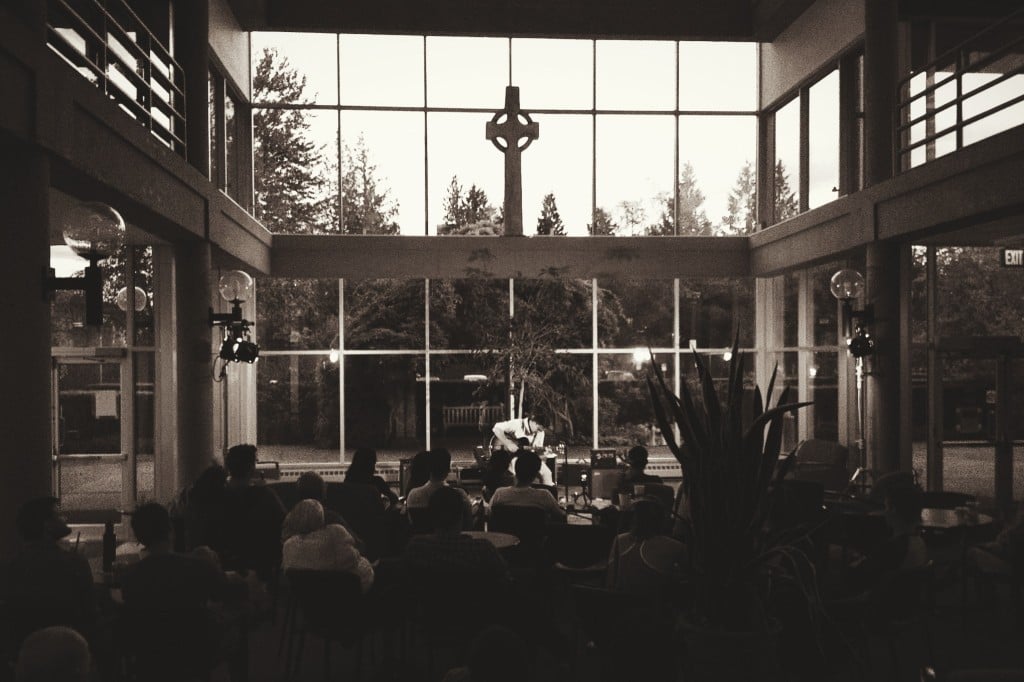
Late to Love: A Concert and Q&A

A Plea to Love my Alma Mater, Franciscan...

You, Sir, Are No Buckley: A Reply to...
TRENDING AT PATHEOS Catholic

Rejecting Doom: Christian Hope And Human Action
Christianity is a religion of hope. We are to have hope and...

It’s What Comes From Within Which Matters
One of the most difficult things for us to understand is why...

Why I Choose the Eucharist Over the Sermon
Choose the Eucharist, Not the Sermon What are we supposed to get...

5 Design Elements Found in Spiritually Rooted Homes
Putting Spirituality Into Home Decor Our homes are more than our living...

Credo: A Story of God Told with the...
About 10 years ago, I began to imagine a personal "Credo" that...

The Anatomy of Divine Revelation in Catholic Thought
The claim that God has made Himself known to human beings is...
view all Catholic blogs
Ad-Free & Subscriber Log-In Subscription Support
- About Us
- 2026 Calendar
- Videos
- Podcasts
- Library of World Religions
- Faith In Media Tracker
- Advertise With Us
- Write for Us
- Privacy Policy
- Terms of Service
- Do Not Sell My Data
- Contact Us
- Radiant Digital
- Manage Newsletter Subscriptions
- Unsubscribe From Notifications
- Sitemap
Copyright 2008-2026, Patheos. All rights reserved.
Subscription Support Ad-Free & Subscriber Log-In
Follow Patheos