
BuddhistCatholicContemplativeEvangelicalGeneral ChristianHinduJewishLatter-day SaintMuslimNew VisionsProgressive Christian
Beliefs
- Buddhist
- Catholic
- Contemplative
- Evangelical
- General Christian
- Hindu
- Jewish
- Latter-day Saint
- More Voices
- Muslim
- New Visions
- Pagan
- Progressive Christian
Topics
- Religion News
- Food and Religion
- Sports and Religion
- Religious Art
- Religious Music and Entertainment
- Religious Events
- History and Religion
- Style and Religion
- Politics and Religion
- Women in Religion
- Recreation Outdoors and Religion
- Business Finance and Religion
- Careers Workplace and Religion
- Education and Religion
- Family Parenting and Religion
- Health Fitness and Religion
- Home and Religion
- Relationships and Religion
- Technology and Religion
- Travel and Religion
Columnists
- Buddhist Columnists
- Business Finance and Religion Columnists
- Careers Workplace and Religion Columnists
- Catholic Columnists
- Contemplative Columnists
- Education and Religion Columnists
- Evangelists Columnists
- Family Parenting and Religion Columnists
- General Christian Columnists
- Health Fitness and Religion Columnists
- Hindu Columnists
- History and Religion Columnists
- Home and Religion Columnists
- Jewish Columnists
- More Voices Columnists
- Latter Day Columnists
- Muslim Columnists
- New Visions Columnists
- Nonreligious Columnists
- Pagan Columnists
- Politics and Religion Columnists
- Progressive Columnists
- Recreation Outdoors and Religion Columnists
- Relationships and Religion Columnists
- Religion News Columnists
- Religious Art Columnists
- Religious Events Columnists
- Religious Music and Entertainment Columnists
- Sports and Religion Columnists
- Style and Religion Columnists
- Technology and Religion Columnists
- Travel and Religion Columnists
- Women in Religion Columnists
Resource Library
- 2026 Calendar
- Library of World Religions
- The 100 Most Holy Places on Earth
- Patheos Answers
- Podcasts
- Videos
- Faith Leaders Database
- Anglican Episcopalian
- Bahai
- Baptist
- Buddhism
- Christianity
- Confucianism
- Eastern Orthodoxy
- Hinduism
- Holiness and Pentecostal
- ISKCON
- Islam
- Judaism
- Lutheran
- Methodist
- The Church of Jesus Christ of Latter-day Saints
- New Age
- Paganism
- Presbytarian and Reformed
- Protestantism
- Religion Behind the Scenes
- Roman Catholic
- Scientology
- Shia Islam
- Sikhism
- Sufism
- Sunni Islam
- Taoism
- Zen
- See all religions
Research Tools
 Ad-Free & Subscriber Log-In Subscription Support
Ad-Free & Subscriber Log-In Subscription Support
Follow Patheos 

- Trending:
- Forgiveness
- |
- Marriage
- |
- Consciousness
- |
- Death Penalty
- |
- Election
- |
- Halloween
 Messages from Pluto
- Home
- Pagan
- Change-Making: Thoughts on Pantheacon 2016
Change-Making: Thoughts on Pantheacon 2016
Last updated on: February 20, 2016 at 12:27 pm by Sonja Sadovsky
Change-Making: Thoughts on Pantheacon 2016 2016-02-20T12:27:12-05:00 Sonja Sadovsky
Patheos Explore the world's faith through different perspectives on religion and spirituality! Patheos has the views of the prevalent religions and spiritualities of the world.
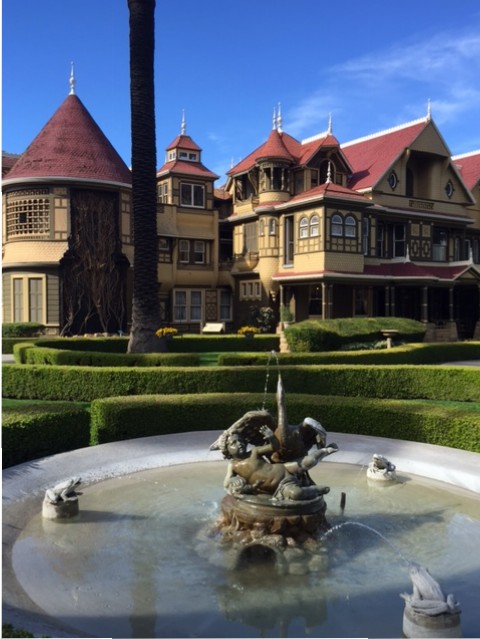
Winchester Mystery House- Mad collection of rooms and whimsical details
We are back from our adventures in California, a bit jet-lagged, but excited to be home. Pantheacon is one of the most stimulating Pagan events that I attend, and this year did not disappoint. I have been visiting this festival for 3 years now, and had the honor of presenting this time around. Tried a new format in which I presented a topic, but opened the floor to include participants to tell their stories and experiments with Intentional Community. It was one of those workshops in which people kind of came and went, but we had more gathered and conversing at the end than we started with. The dialogue was so intriguing that we actually ran until the next batch of folks were coming for another workshop, which is always a good sign. Happily, folks from all over the country spoke up about their experience, which was the point of the exercise. Folks stated that they were satisfied with the palaver, felt heard, and had food for thought to take home to their households. Next time I will begin with encouraging folks to introduce themselves and their goals on the front end, and say my blurb at the end. As always, it’s a work in progress.
This year was challenging as I was traveling with the kids (ages 4 and 5) and my brother, the original Grunckle (Really Great Uncle). We stayed a bit farther from the Con than I had in previous years. In some ways, this was good, as it gave us some exercise and time to reflect on the happenings at the Con. However, one night I did find out how close the San Jose airport really is to the DoubleTree. Mostly because I was not paying attention, and partly because it’s easy to get a bit tipsy chatting excitedly with other thirsty authors. Luckily, the kids had already gone to bed hours before, so it turned out to be an amusing side trip. Mental note: Do not assume that people from out of town know where you are going any better than you do.
The best part was the chance to connect with some of the best and brightest in the world-wide Pagan community, and it was refreshing to chat with folks that I admire and now consider friends. Pantheacon has this interesting effect on people, and simple conversations have the power to uncover some really pertinent issues and subject matter that often radiates outward to engage the wider community. This event is a marketplace of ideas, and folks from different traditions, geographic locations, and politics come together to compare notes and trade stories. For some, revelations on details of personal practice and politics can be shocking (as evidenced by the reaction to the idea of using bullets as an offering to Deity) but I find this a good thing, as it widens people’s perceptions on Pagan practice and creates dialogue.
There is always a thing that comes up during Pantheacon that creates some controversy, at least this has been the trend from my experience. Creating awareness around question of race, Kink parties, Exclusivity vs. Inclusiveness, have been some of the themes that I have seen unfold in the last few years. This year’s theme seems to be coalescing around regional and political differences in personal practice. I got to have a few brief but interesting conversations with Thorn Mooney around this idea, who I am nominating to write a book on this subject, as clearly it’s time has come. I have a few thoughts to share on this topic from kicking around the globe, but an in-depth study of this topic really calls for a professional. Wouldn’t it be great if there was a really savvy writer, culturally sensitive to Pagan currents, with a background in ethnographic studies available for the project? (Sorry to call you out like this, but it would benefit the community, like yesterday, so there you go. You’re welcome!)
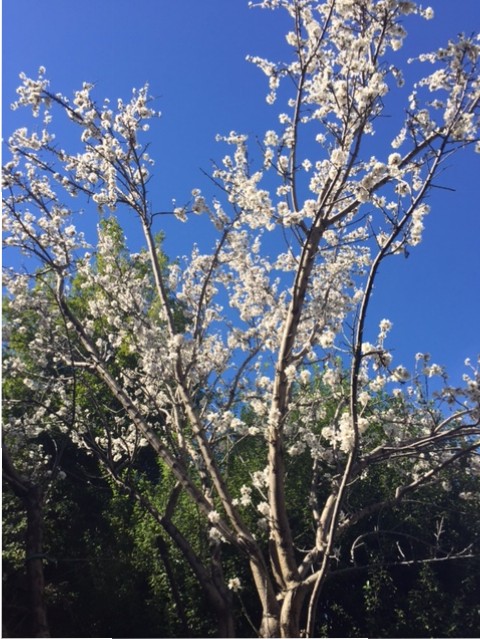
Almond blossoms
Here are a few observations from the past few year’s recent travels to the Midwest and the West Coast. I share them in a spirit of friendship, in effort to move the dialogue forward and hopefully create some awareness to explore our similarities and differences. No positive or negative value to these statements, they are simply offered as conversation starters.
- Much of public Pagan dialogue is dominated by liberal politics and flavored by the West Coast. Public perception is shaped by market share, and the simple truth is that there is a concentration of writers and activists on the West Coast that are vocal and public advocates for a variety of Pagan thought. People within and outside of the movement itself assume that this vocal segment speaks for the entire Pagan movement, and that there is a commonality of experience and practice. In reality, there are Pagans all over the world with extremely different views on every issue one can conceive. One recent example is a friend of mine visiting from the Midwest literally went speechless when he realized that the engaging group of witches that he most connected with and enjoyed hanging out with were…Republicans! Mind blown. Apparently, they just don’t have that brand of witch up where he comes from. Elsewhere, it’s actually not that uncommon to find Pagans that identify as Independent, Libertarian, and yes, even Republican. There are pacifist Pagans, there are Pagans in the military. The movement encompasses viewpoints that are not cohesive, and this is fantastic. Homogeneity is stagnation. We are stronger through variation, and share more common ground than surface politics could predict. Think of it like a big crazy mansion full of secret rooms and unusual details. Sometimes those stairs lead to nowhere, sometimes that closet turns out to be the entrance to a beautiful garden.
- Socio-economic factors affect our practices more than we care to admit. There is a vast difference in the kind of conversations that people are having, issues that are of major importance, and much of this is tied to the affluence of the Pagan community of that region. In the context of religious studies, Neo- paganismand related currents (which is what we are all lumped into for scholastic convenience) is largely influenced and maintained by an educated and upwardly mobile class of individuals. Again, this references the reality that much of the published conversation comes from folks with college degrees, which in turn is taken to be representative of the entire current. This is the theory, but in my experience, does not reflect what is actually going on in different regions of the world. Class warfare, economic terrorism (without gender/racial lens), and how this influences our spiritual practice is a subject that we examine only rarely as a community. When it does come up, it is a celebrated anomaly, but easily sidelined a this is a tough conversation. The topic of financial literacy creates much dissent and is emotionally charged, as the disparity in wealth is just as real in the Pagan community as the wider culture.
- The question of where kids fit into all of this is still tough for many Pagan populations to answer. As many folks are child-free in our movement, this may not seem to be a personal concern, except for those who have reproduced. Questions of inclusion seem to focus almost exclusively on gender/race/sexual identity and orientation. Those of us from initiatory traditions that are frankly designed for consenting adults are silent on this topic. The reaction I get when I bring it up is usually some variant of “not my circus, not my monkeys” which is understandable. I never considered the kids topic until my little stowaways showed up. However, there is a vast amount of personal wisdom that child-free folks have to offer young people and their parents, and in my opinion, this is a unique gift that our movement can supply. We can describe how to create family that is not determined by biology. We have an opportunity to transmit our collective knowledge and experience to the younger generation, to collaborate and create a new paradigm of safety and awareness that none of us have ever seen. This is where the rubber will meet the road as to whether we can hold honest conversations and translate our mad experiments into something truly sustainable.
All in all, it was a productive experience, and I sincerely hope to make it to the next gathering. It is so important for us to be refreshed in the company of friends, and challenged by new perspectives. Keeps the mind limber and the fingers nimble, writing all of this down. Merry meet, merry part, and merry meet again!
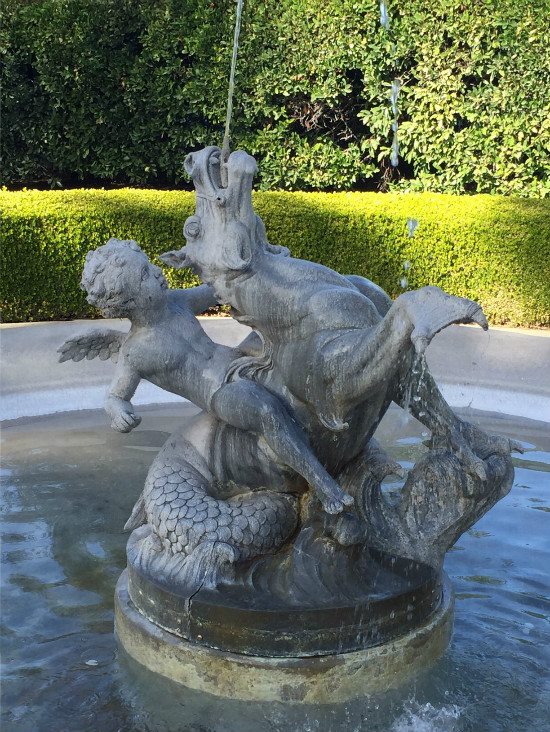
Cherub riding a hippogryph: my metaphor for kids taking our chimeric mythology into the future
Previous Post

February 10, 2016
Grunckles and Aunties: Creating Intentional Community
Next Post
February 23, 2016 Are there Stars Upon Thar's?
Browse Our Archives
Select a Category Uncategorized
Select a Month February 2019 July 2018 June 2018 February 2018 January 2018 November 2017 October 2017 September 2017 July 2017 June 2017 May 2017 April 2017 March 2017 February 2017 December 2016 November 2016 October 2016 June 2016 April 2016 February 2016 January 2016
Follow Us!
TAKE THE
Religious Wisdom Quiz
What happened to the first stone tablets of the Ten Commandments?
Select your answer to see how you score.
They were placed in the Ark Moses broke them They were lost in battle Pharaoh destroyed them
Related posts from Messages from Pluto
The Heel and the Face: Politics of Esoteric...
The Apolitical Witch: Are you Crafting Connection, or...
Financial Wizardry: Elements of Flow
TRENDING AT PATHEOS Pagan

I was recently chatting with someone on Instagram. She asked me what...

While there are many people who share their results, the end of...

On July 23, I saw Christopher Nolan's The Odyssey which is Homer’s...

As I write this two big events have just finished up. One...

Restoring the Watershed of Divine Love
Perhaps cooperation is not something we manufacture through legislation, ideology, or moral...

Many UUs don’t pray because of bad experiences in a previous religion,...
view all Pagan blogs
Ad-Free & Subscriber Log-In Subscription Support
- About Us
- 2026 Calendar
- Videos
- Podcasts
- Library of World Religions
- Faith In Media Tracker
- Advertise With Us
- Write for Us
- Privacy Policy
- Terms of Service
- Do Not Sell My Data
- Contact Us
- Radiant Digital
- Manage Newsletter Subscriptions
- Unsubscribe From Notifications
- Sitemap
Copyright 2008-2026, Patheos. All rights reserved.
Subscription Support Ad-Free & Subscriber Log-In
Follow Patheos