
BuddhistCatholicContemplativeEvangelicalGeneral ChristianHinduJewishLatter-day SaintMuslimNew VisionsProgressive Christian
Beliefs
- Buddhist
- Catholic
- Contemplative
- Evangelical
- General Christian
- Hindu
- Jewish
- Latter-day Saint
- More Voices
- Muslim
- New Visions
- Pagan
- Progressive Christian
Topics
- Religion News
- Food and Religion
- Sports and Religion
- Religious Art
- Religious Music and Entertainment
- Religious Events
- History and Religion
- Style and Religion
- Politics and Religion
- Women in Religion
- Recreation Outdoors and Religion
- Business Finance and Religion
- Careers Workplace and Religion
- Education and Religion
- Family Parenting and Religion
- Health Fitness and Religion
- Home and Religion
- Relationships and Religion
- Technology and Religion
- Travel and Religion
Columnists
- Buddhist Columnists
- Business Finance and Religion Columnists
- Careers Workplace and Religion Columnists
- Catholic Columnists
- Contemplative Columnists
- Education and Religion Columnists
- Evangelists Columnists
- Family Parenting and Religion Columnists
- General Christian Columnists
- Health Fitness and Religion Columnists
- Hindu Columnists
- History and Religion Columnists
- Home and Religion Columnists
- Jewish Columnists
- More Voices Columnists
- Latter Day Columnists
- Muslim Columnists
- New Visions Columnists
- Nonreligious Columnists
- Pagan Columnists
- Politics and Religion Columnists
- Progressive Columnists
- Recreation Outdoors and Religion Columnists
- Relationships and Religion Columnists
- Religion News Columnists
- Religious Art Columnists
- Religious Events Columnists
- Religious Music and Entertainment Columnists
- Sports and Religion Columnists
- Style and Religion Columnists
- Technology and Religion Columnists
- Travel and Religion Columnists
- Women in Religion Columnists
Resource Library
- 2026 Calendar
- Library of World Religions
- The 100 Most Holy Places on Earth
- Patheos Answers
- Podcasts
- Videos
- Faith Leaders Database
- Anglican Episcopalian
- Bahai
- Baptist
- Buddhism
- Christianity
- Confucianism
- Eastern Orthodoxy
- Hinduism
- Holiness and Pentecostal
- ISKCON
- Islam
- Judaism
- Lutheran
- Methodist
- The Church of Jesus Christ of Latter-day Saints
- New Age
- Paganism
- Presbytarian and Reformed
- Protestantism
- Religion Behind the Scenes
- Roman Catholic
- Scientology
- Shia Islam
- Sikhism
- Sufism
- Sunni Islam
- Taoism
- Zen
- See all religions
Research Tools
 Ad-Free & Subscriber Log-In Subscription Support
Ad-Free & Subscriber Log-In Subscription Support
Follow Patheos 

- Trending:
- Forgiveness
- |
- Marriage
- |
- Consciousness
- |
- Death Penalty
- |
- Election
- |
- Halloween

- Home
- Catholic
- Francis, The Pope Of Mercy, 12 Years After His Election
Francis, The Pope Of Mercy, 12 Years After His Election
Last updated on: June 3, 2025 at 11:10 pm by Mauricio Pérez
Francis, The Pope Of Mercy, 12 Years After His Election 2025-06-03T23:10:13-07:00 Mauricio Pérez
Patheos Explore the world's faith through different perspectives on religion and spirituality! Patheos has the views of the prevalent religions and spiritualities of the world.
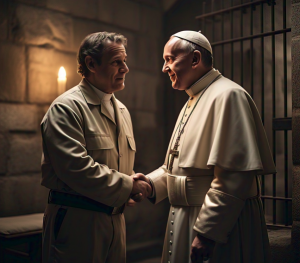
Pope Francis bears witness to God’s mercy | Image generated by Meta AI
After 12 years of pontificate, Pope Francis could be remembered as the Pope of Mercy. His constant emphasis on this value has been one of the cornerstones of his message and his pastoral care. Throughout his pontificate, he has emphasized the importance of living mercy not only as a theological concept, but as a concrete and daily practice. This is reflected in various aspects of his teaching, his gestures and his way of guiding the Catholic Church. Already from his very first appearances on the balcony in St. Peter’s Square, for the prayer of the Angelus, the Pope urged us to go to confession, telling us that God does not get tired of forgiving us. It is us who get tired of asking him for forgiveness.
A Jubilee of Mercy
A key point of his pontificate was the institution of the Extraordinary Jubilee of Mercy, in 2015 and 2016, an event in which he made a global call to rediscover God’s mercy, both in personal life and in social relationships. That year he gave the all priests, and not only to the penitential ones, the faculty to lift the excommunication to those who confessed to having committed an abortion. Pope Francis has insisted that the Church must be a place of welcome and forgiveness. He has repeatedly spoken about the need to forgive others, even in situations of great suffering and profound offenses. For Francis, mercy is not only an attitude of God towards men, but also a command for believers: to be merciful like the Father, misericordes sicut Pater.
Thus, mercy is a principle that should guide all human actions and relationships. Throughout his papacy, Francis has made visible gestures of mercy, such as visiting the sick and the most needy, including those on the peripheries of society, such as migrants, the poor and prisoners. One of his most emblematic gestures has been washing the feet of prisoners on Holy Thursday, reflecting his constant invitation to live closeness and compassion with the most marginalized.
Mercy to transform the Catholic Church
For Pope Francis, mercy also implies a transformation of the Church itself. In his exhortation Evangelii Gaudium (The Joy of the Gospel), the one he wrote “with four hands” together with Benedict XVI —who was the one who initiated it—, Pope Francis speaks of an outgoing Church, which goes towards the peripheries of the world, not only in geographical terms, but also in terms of the most distant or wounded people, especially those who feel rejected or removed from faith. In addition, his constant call for greater pastoral openness, without losing the truth, is linked to mercy: giving space for conversion and repentance beyond the limits of the Church.
Francis has tried to inspire a worldwide culture of mercy, promoting a constant dialogue between different religions and working for peace in places of conflict. His encyclical Fratelli Tutti (We Are All Brothers) reflects this approach, since he proposes a global fraternity where mercy and mutual respect are fundamental to overcome divisions and build a more just and supportive world. On World Youth Day in Lisbon, Portugal, in 2023, the Pope said words that sowed many: “I would like to be clear with you, who are allergic to falsehood and empty words: in the Church there is space for everyone, for everyone in the Church, no one is too much, none is too much, there is room for everyone.”
Mercy to bless everyone
The Pope demonstrated a year later, just this past 2024, that he not only preaches words, but also performs works. Under his instructions, the Dicastery for the Doctrine of the Faith issued the doctrinal declaration Fiducia Suplicans, which allows people living in an irregular union of any kind to receive the blessing. The Pope did not change the doctrine of marriage at all with this; he could not, because God himself created the marriage reality. Therefore, this document, in just its third paragraph, makes it clear that it “remains firm on the traditional doctrine of the Church about marriage, not allowing any type of liturgical rite or blessing similar to a liturgical rite that can create confusion”.
That is, the Church does not have the power to bless an irregular couple to sanctify that union as if it were the sacrament of marriage. What priests can and should do is blessing each of the two people who are part of that couple, because, even when someone cannot receive a sacrament, such as communion, absolutely everyone needs God’s blessing. And that’s why we can receive it, as we all do, regardless of our moral situation, at the end of each mass.
How is anyone going to overcome their human failures if it is not with the grace of God? Hence the need to receive God’s blessing when you are in the fight. But this cost the Pope the criticism and mockery of many who tore their garments. Nothing new: he is the Vicar of Christ, and the same thing happened to Christ himself. If something made the Pharisees of that time upset and furious, it was the mercy of a rabbi who sat at the table with the worst sinners —and even worse, that even forgave them! In the same way, the mercy that Pope Francis teaches and dispenses makes his fiercest critics rage, once and again, being either lay people, priests and even some bishops alike.
A fisherman who sails through difficult waters
Pope Francis has been the most criticized, slandered and attacked in history. This is because, to complicate things, he had to sail St. Peter’s boat among the waters of social media, which on the one hand are a spring of crystal clear waters, but on the other, a bitter naval battle that encourages many who, hidden behind the frigates of anonymity, the aircraft carriers of a keyboard or the ships of a screen, have the guts to offend in ways that they would never be able to do it in person before the Holy Father.
Jesus was the Messiah of Mercy; Pope Francis, his Vicar, is the Pope of Mercy. In that speech to the youth gathered in Lisbon, Francis pointed out, “In the Church there is a place for all, and that is the Church, the mother of all. There is room for everyone, the Lord does not point with his finger, but opens his arms. It is curious, the Lord does not know how to do that, but does this: he embraces us all, shows us Jesus on the cross, who so much opened his arms to be crucified and die for us. He never closes the door, never, but invites you to come in. Come in.”
The third of a peculiar trilogy of popes
A priest follows a specific formation program. When he is a seminarian, first philosophy, then theology, and finally he practices pastoral care for a while. In God’s providence, the Church of the Second Vatican Council, in which we have had to live, enjoyed several years of the pontificate of a philosopher of the highest caliber, Carol Wojtyla (St. John Paul II). Then, God wanted to give us the theological instruction of the best of our times, Joseph Ratzinger (Benedict XVI). After training us in philosophy and theology, like the seminarians, God has given the Church a master of pastoral care: Jorge Mario Bergoglio, Pope Francis, the Pope of Mercy.
This trilogy of post-conciliar Popes and the formative sequence they represent for the Church is something that we should not overlook. It is something for which we must thank God.
12 years after the beginning of the pontificate of our dear Pope Francis, let us pray for him with all our strength, because since the first hour of his pontificate, he’s been asking us to do so.
About Mauricio I. Pérez
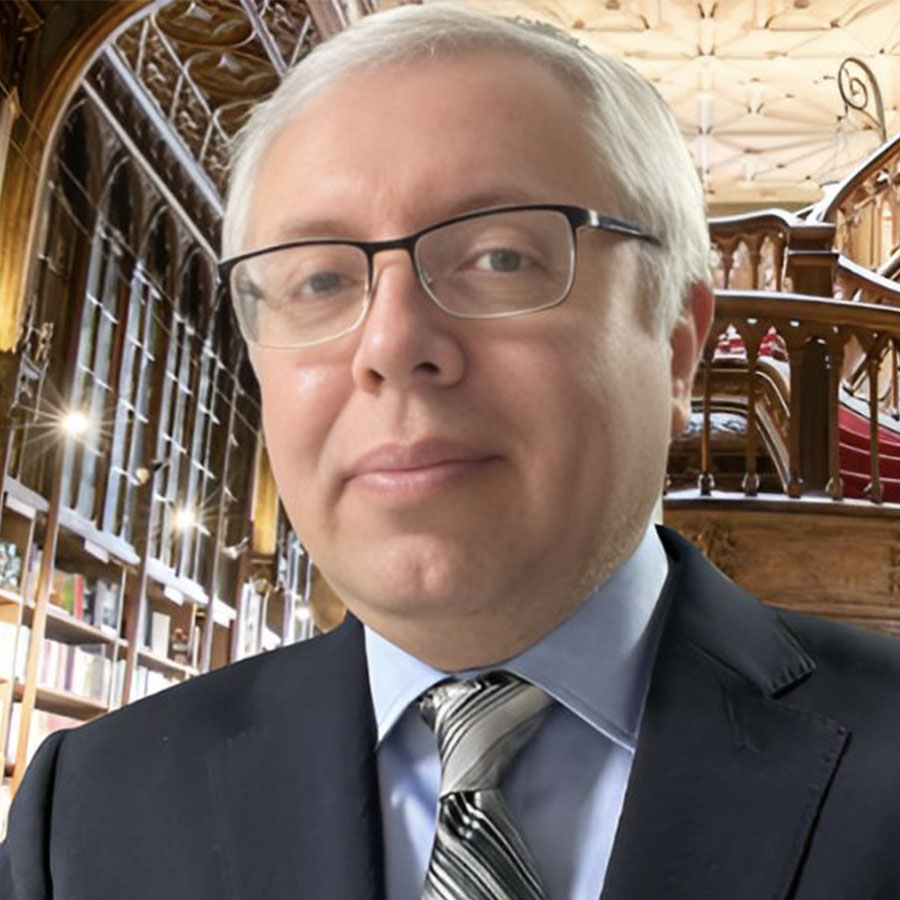
Mauricio I. Pérez is a Catholic writer, journalist and YouTuber. He has received five national journalism awards by the Catholic Media Association. Mauricio has authored 18 books on Biblical commentary, spirituality and Catholic fiction, six of them bestsellers in Amazon. He has earned a diploma in Sacred Liturgy by the Universidad Pontificia de México and has graduated from several Liturgy programs at the Pontificio Istituto Liturgico in Rome. You can read more about the author here.
Previous Post
February 21, 2025
Paquita la del Barrio: A Voice of Heartbreak and Faith
Next Post
March 31, 2025 The Prodigal Son: Perdition, Conversion, Forgiveness
Browse Our Archives
Select a Category Catholic Church News Christology Easter Eucharist Exegesis Holy Week Holy Week Illness Jubilee 2025 Jubilee of Hope Lent Letters Liturgy National Eucharistic Congress National Eucharistic Revival New Testament New Testament Ordinary Jubilee 2025 Ordinary Time Pope Francis Pope Francis Pope Leo XIV Pope Leo XIV Prayer Readings Scripture Spirituality Spirituality Theology Uncategorized Vatican Year of Prayer 2024
Select a Month September 2026 November 2025 June 2025 May 2025 April 2025 March 2025 February 2025 July 2024 June 2024 May 2024 April 2024 March 2024
Follow Us!
TAKE THE
Religious Wisdom Quiz
What is the meaning of Emmanuel?
Select your answer to see how you score.
Jehovah Saves Praise the Lord God with Us Messiah
Books by This Author Books by Sacred Threads
Related posts from Sacred Threads
Was Robert Prevost Chosen By Francis To Be...
Pope Francis Dies at 88: Remembering the Pope...
Reverent Liturgies at the National Eucharistic Congress?
Be Authentic Fathers: Pope Francis' Letter To Parish...
TRENDING AT PATHEOS Catholic

Rejecting Doom: Christian Hope And Human Action
Christianity is a religion of hope. We are to have hope and...

It’s What Comes From Within Which Matters
One of the most difficult things for us to understand is why...

Why I Choose the Eucharist Over the Sermon
Choose the Eucharist, Not the Sermon What are we supposed to get...

5 Design Elements Found in Spiritually Rooted Homes
Putting Spirituality Into Home Decor Our homes are more than our living...

Credo: A Story of God Told with the...
About 10 years ago, I began to imagine a personal "Credo" that...

The Anatomy of Divine Revelation in Catholic Thought
The claim that God has made Himself known to human beings is...
view all Catholic blogs
Ad-Free & Subscriber Log-In Subscription Support
- About Us
- 2026 Calendar
- Videos
- Podcasts
- Library of World Religions
- Faith In Media Tracker
- Advertise With Us
- Write for Us
- Privacy Policy
- Terms of Service
- Do Not Sell My Data
- Contact Us
- Radiant Digital
- Manage Newsletter Subscriptions
- Unsubscribe From Notifications
- Sitemap
Copyright 2008-2026, Patheos. All rights reserved.
Subscription Support Ad-Free & Subscriber Log-In
Follow Patheos