
BuddhistCatholicContemplativeEvangelicalGeneral ChristianHinduJewishLatter-day SaintMuslimNew VisionsProgressive Christian
Beliefs
- Buddhist
- Catholic
- Contemplative
- Evangelical
- General Christian
- Hindu
- Jewish
- Latter-day Saint
- More Voices
- Muslim
- New Visions
- Pagan
- Progressive Christian
Topics
- Religion News
- Food and Religion
- Sports and Religion
- Religious Art
- Religious Music and Entertainment
- Religious Events
- History and Religion
- Style and Religion
- Politics and Religion
- Women in Religion
- Recreation Outdoors and Religion
- Business Finance and Religion
- Careers Workplace and Religion
- Education and Religion
- Family Parenting and Religion
- Health Fitness and Religion
- Home and Religion
- Relationships and Religion
- Technology and Religion
- Travel and Religion
Columnists
- Buddhist Columnists
- Business Finance and Religion Columnists
- Careers Workplace and Religion Columnists
- Catholic Columnists
- Contemplative Columnists
- Education and Religion Columnists
- Evangelists Columnists
- Family Parenting and Religion Columnists
- General Christian Columnists
- Health Fitness and Religion Columnists
- Hindu Columnists
- History and Religion Columnists
- Home and Religion Columnists
- Jewish Columnists
- More Voices Columnists
- Latter Day Columnists
- Muslim Columnists
- New Visions Columnists
- Nonreligious Columnists
- Pagan Columnists
- Politics and Religion Columnists
- Progressive Columnists
- Recreation Outdoors and Religion Columnists
- Relationships and Religion Columnists
- Religion News Columnists
- Religious Art Columnists
- Religious Events Columnists
- Religious Music and Entertainment Columnists
- Sports and Religion Columnists
- Style and Religion Columnists
- Technology and Religion Columnists
- Travel and Religion Columnists
- Women in Religion Columnists
Resource Library
- 2026 Calendar
- Library of World Religions
- The 100 Most Holy Places on Earth
- Patheos Answers
- Podcasts
- Videos
- Faith Leaders Database
- Anglican Episcopalian
- Bahai
- Baptist
- Buddhism
- Christianity
- Confucianism
- Eastern Orthodoxy
- Hinduism
- Holiness and Pentecostal
- ISKCON
- Islam
- Judaism
- Lutheran
- Methodist
- The Church of Jesus Christ of Latter-day Saints
- New Age
- Paganism
- Presbytarian and Reformed
- Protestantism
- Religion Behind the Scenes
- Roman Catholic
- Scientology
- Shia Islam
- Sikhism
- Sufism
- Sunni Islam
- Taoism
- Zen
- See all religions
Research Tools
 Ad-Free & Subscriber Log-In Subscription Support
Ad-Free & Subscriber Log-In Subscription Support
Follow Patheos 

- Trending:
- Forgiveness
- |
- Marriage
- |
- Consciousness
- |
- Death Penalty
- |
- Election
- |
- Halloween

- Home
- Catholic
- History and Religion
- Astonishment In The Gospel According To Mark
Astonishment In The Gospel According To Mark
Last updated on: June 30, 2024 at 7:50 pm by Mauricio Pérez
Astonishment In The Gospel According To Mark 2024-06-30T19:50:49-07:00 Mauricio Pérez
Patheos Explore the world's faith through different perspectives on religion and spirituality! Patheos has the views of the prevalent religions and spiritualities of the world.
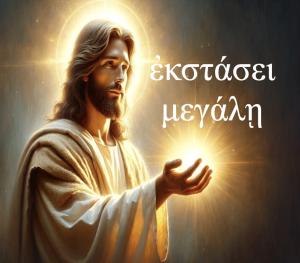
Witnessing Jesus’ power can be an ecstatic experience | Image by kar3nt, Pixabay
In the Gospel reading on the 13th Sunday in ordinary time, we listen to Mark’s pericope of the resurrection of Jairus’ daughter (Mk 5:21-43). Jairus was one of the synagogue officials. He approached Jesus, fell at his feet and pleaded earnestly, “My daughter is at the point of death. Please, come lay your hands on her that she may get well and live.”
Jesus took with him Peter, James and his brother, John. They followed Jairus to his house. Some people broke the sad news to Jairus that his daughter had passed. But Jesus reassured him, “Do not be afraid; just have faith.”
Reactions and emotions
They went inside the house, and found people weeping and wailing aloud. Jesus tried to calm them down telling them the child was not dead, but asleep. In response, they ridiculed him, so Jesus put them all out. Only his three apostles, Jairus and his wife remained inside.
Jesus took the child by the hand and said to her, “Talitha koum,” which means, “Little girl, I say to you, arise!” The girl arose immediately. The once who witnessed this were utterly astounded.
Around the miracle performed by Jesus, we see contrasting feelings and emotions. People wept, wailed, and ridiculed Jesus, because they didn’t have faith, neither in him, nor in his words. Jairus, his wife, and the three apostles instead, were utterly astounded after witnessing such a miracle.
Astonishment after Jesus resurrects the child
This utter astonishment is worth taking a deeper look. In the Greek version of Mk, we read,
καὶ εὐθὺς ἀνέστη τὸ κοράσιον καὶ περιεπάτει, ἦν γὰρ ἐτῶν δώδεκα. καὶ ἐξέστησαν ἐκστάσει μεγάλῃ” (v. 42)
In the Lectionary, ἐκστάσει μεγάλῃ is translated as “utterly astounded”. A literal translation, though, would be “immensely ecstatic”.
ἐκστάσει is the dative, singular, feminine form of the noun ἔκστασις, ecstasy. This means that those present at the child’s room, after seeing her alive again, were overwhelmed with emotion up to the point of almost falling into a state of trance —this is perhaps the closest translation to what the expression ἐκστάσει μεγάλῃ conveys in Greek.
Astonishment after the Resurrection of Jesus
It is interesting to find that the expression “utterly astonished” (in English), appears only twice in the Gospel according to Mark: in this episode and in the pericope of The Resurrection (16:1-8). When Mary Magdalene, Mary, the mother of James, and Salome go to the sepulcher bearing spices to anoint him, and enter the empty sepulcher, they find a young man clothed in a white robe (an angel), they are utterly astonished.
However, the Greek version of the Gospel says this time:
καὶ εἰσελθοῦσαι εἰς τὸ μνημεῖον εἶδον νεανίσκον καθήμενον ἐν τοῖς δεξιοῖς περιβεβλημένον στολὴν λευκήν, καὶ ἐξεθαμβήθησαν.
Entering into the tomb, they saw a young man sitting on the right side, dressed in a white robe, and they were dazzled. (16:5)
The young man tells them “not to be astonished”,
Μὴ ἐκθαμβεῖσθε.
Don’t be dazzled. (v. 6)
The expression here is not ἐκστάσει μεγάλῃ, but ἐξεθαμβήθησαν and ἐκθαμβεῖσθε, two forms in plural of ἐκθαμβέομαι, which means “to dazzle”.
So, the version of Mk in Greek presents a different reaction of dazzlement in these three women, versus the overwhelming emotion up to the point of falling into a state of trance of the ecstasy experienced by Jairus, his wife, Peter, James and John, his brother.
We actually run into the word ἔκστασις, ecstasy, just three verses down. This is the only other time Mark uses it in his gospel:
καὶ ἐξελθοῦσαι ἔφυγον ἀπὸ τοῦ μνημείου, εἶχεν γὰρ αὐτὰς τρόμος καὶ ἔκστασις· καὶ οὐδενὶ οὐδὲν εἶπαν, ἐφοβοῦντο γάρ.
They went out, and fled from the tomb, for trembling and ecstasy had come on them. (v. 8a)
The religious sense of astonishment in Mk
The only two times Mark uses the word ἔκστασις, ecstasy, is in connection to resurrection. First, after the resurrection of Jairus’ daughter. Second, after the resurrection of Jesus.
This “astonishment” or ecstasy, hence, in the Gospel according to Mark, is a profound religious experience in which those who witness the supreme power of the Son of God, capable of defeating death, are simply overwhelmed with emotion, up to the point of falling into a state of trance. It is something so beyond our human comprehension, that it can even be scary. 16:8 ends like this:
καὶ οὐδενὶ οὐδὲν εἶπαν, ἐφοβοῦντο γάρ.
And they said nothing to anyone; for they were afraid. (v. 8b)
History and Religion

About Mauricio I. Pérez
Mauricio I. Pérez is a Catholic writer, journalist and YouTuber. He has received five national journalism awards by the Catholic Media Association. Mauricio has authored 18 books on Biblical commentary, spirituality and Catholic fiction, six of them bestsellers in Amazon. He has earned a diploma in Sacred Liturgy by the Universidad Pontificia de México and has graduated from several Liturgy programs at the Pontificio Istituto Liturgico in Rome. You can read more about the author here.
Previous Post

June 11, 2024
2025 Jubilee: Getting Ready By Living A Year of Prayer
Next Post
July 7, 2024 Did Jesus Have Biological Brothers And Sisters?
Browse Our Archives
Select a Category Catholic Church News Christology Easter Eucharist Exegesis Holy Week Holy Week Illness Jubilee 2025 Jubilee of Hope Lent Letters Liturgy National Eucharistic Congress National Eucharistic Revival New Testament New Testament Ordinary Jubilee 2025 Ordinary Time Pope Francis Pope Francis Pope Leo XIV Pope Leo XIV Prayer Readings Scripture Spirituality Spirituality Theology Uncategorized Vatican Year of Prayer 2024
Select a Month September 2026 November 2025 June 2025 May 2025 April 2025 March 2025 February 2025 July 2024 June 2024 May 2024 April 2024 March 2024
Follow Us!
TAKE THE
Religious Wisdom Quiz
To whom does Paul say he has become all things so that by all possible means he might save some?
Select your answer to see how you score.
The weak The Gentiles The Jews Everyone
Books by This Author Books by Sacred Threads
Related posts from Sacred Threads
Forgive "77" Times? The Correct Math Behind The...
The Gospel That Demands You Speak Up

The Prodigal Son: Perdition, Conversion, Forgiveness
Jubilee Of Hope: Finding Hope In The Miraculous...
TRENDING AT PATHEOS Catholic

Rejecting Doom: Christian Hope And Human Action
Christianity is a religion of hope. We are to have hope and...

It’s What Comes From Within Which Matters
One of the most difficult things for us to understand is why...

Why I Choose the Eucharist Over the Sermon
Choose the Eucharist, Not the Sermon What are we supposed to get...

5 Design Elements Found in Spiritually Rooted Homes
Putting Spirituality Into Home Decor Our homes are more than our living...

Credo: A Story of God Told with the...
About 10 years ago, I began to imagine a personal "Credo" that...

The Anatomy of Divine Revelation in Catholic Thought
The claim that God has made Himself known to human beings is...
view all Catholic blogs
Ad-Free & Subscriber Log-In Subscription Support
- About Us
- 2026 Calendar
- Videos
- Podcasts
- Library of World Religions
- Faith In Media Tracker
- Advertise With Us
- Write for Us
- Privacy Policy
- Terms of Service
- Do Not Sell My Data
- Contact Us
- Radiant Digital
- Manage Newsletter Subscriptions
- Unsubscribe From Notifications
- Sitemap
Copyright 2008-2026, Patheos. All rights reserved.
Subscription Support Ad-Free & Subscriber Log-In
Follow Patheos