
BuddhistCatholicContemplativeEvangelicalGeneral ChristianHinduJewishLatter-day SaintMuslimNew VisionsProgressive Christian
Beliefs
- Buddhist
- Catholic
- Contemplative
- Evangelical
- General Christian
- Hindu
- Jewish
- Latter-day Saint
- More Voices
- Muslim
- New Visions
- Pagan
- Progressive Christian
Topics
- Religion News
- Food and Religion
- Sports and Religion
- Religious Art
- Religious Music and Entertainment
- Religious Events
- History and Religion
- Style and Religion
- Politics and Religion
- Women in Religion
- Recreation Outdoors and Religion
- Business Finance and Religion
- Careers Workplace and Religion
- Education and Religion
- Family Parenting and Religion
- Health Fitness and Religion
- Home and Religion
- Relationships and Religion
- Technology and Religion
- Travel and Religion
Columnists
- Buddhist Columnists
- Business Finance and Religion Columnists
- Careers Workplace and Religion Columnists
- Catholic Columnists
- Contemplative Columnists
- Education and Religion Columnists
- Evangelists Columnists
- Family Parenting and Religion Columnists
- General Christian Columnists
- Health Fitness and Religion Columnists
- Hindu Columnists
- History and Religion Columnists
- Home and Religion Columnists
- Jewish Columnists
- More Voices Columnists
- Latter Day Columnists
- Muslim Columnists
- New Visions Columnists
- Nonreligious Columnists
- Pagan Columnists
- Politics and Religion Columnists
- Progressive Columnists
- Recreation Outdoors and Religion Columnists
- Relationships and Religion Columnists
- Religion News Columnists
- Religious Art Columnists
- Religious Events Columnists
- Religious Music and Entertainment Columnists
- Sports and Religion Columnists
- Style and Religion Columnists
- Technology and Religion Columnists
- Travel and Religion Columnists
- Women in Religion Columnists
Resource Library
- 2026 Calendar
- Library of World Religions
- The 100 Most Holy Places on Earth
- Patheos Answers
- Podcasts
- Videos
- Faith Leaders Database
- Anglican Episcopalian
- Bahai
- Baptist
- Buddhism
- Christianity
- Confucianism
- Eastern Orthodoxy
- Hinduism
- Holiness and Pentecostal
- ISKCON
- Islam
- Judaism
- Lutheran
- Methodist
- The Church of Jesus Christ of Latter-day Saints
- New Age
- Paganism
- Presbytarian and Reformed
- Protestantism
- Religion Behind the Scenes
- Roman Catholic
- Scientology
- Shia Islam
- Sikhism
- Sufism
- Sunni Islam
- Taoism
- Zen
- See all religions
Research Tools
 Ad-Free & Subscriber Log-In Subscription Support
Follow Patheos 

- Trending:
- Advent
- |
- Forgiveness
- |
- Thanksgiving
- |
- Election
- |
- Seasonal Holidays
- |
- Marriage

- Home
- Catholic
- Religious Events
- The Perpetual Sacrifice Of Christ In Preface III of Easter
The Perpetual Sacrifice Of Christ In Preface III of Easter
Last updated on: May 16, 2024 at 10:30 pm by Mauricio Pérez
The Perpetual Sacrifice Of Christ In Preface III of Easter 2024-05-16T22:30:03-07:00 Mauricio Pérez
Patheos Explore the world's faith through different perspectives on religion and spirituality! Patheos has the views of the prevalent religions and spiritualities of the world.

Christ, the slain Lamb who lives forever | Image by Kar3nt, Pixabay
We continue this special series in which we consider the Christology expressed by each of the five prefaces of Easter Time. It’s now time to focus on Preface III, which is entitled “De Christo vivente et semper interpellante pro nobis”, “Christ living and always interceding for us”.
This title comes from the Letter to the Hebrews, “He is always able to save those who approach God through him, since he lives forever to make intercession for them” (7:25).
In Mass, we celebrate the Eucharistic sacrifice. Christ, indeed, offers himself up to his Father at the altar on every celebration of the breaking of the bread. However, He doesn’t get crucified once and again. It is rather as if his cross in Calvary, from 2000 years ago, continues to cast its shadow, through time and space, over each altar in every church and chapel in every celebration of the Holy Mass. This is what Preface III in Easter Time talks about.
The first article of this series focuses on the structure and meaning of the introduction and conclusion of the Easter prefaces, so we’ll focus here on the embolism of Preface III only.
The embolism of Preface III
It is truly right and just, our duty and our salvation,
at all times to acclaim you, O Lord,
and then a significant variant appears:
but on this time above all
to laud you yet more gloriously,
when Christ our Passover has been sacrificed.
He never ceases to offer himself for us
but defends us and ever pleads our cause before you:
he is the sacrificial Victim who dies no more,
the Lamb, once slain, who lives forever.
Therefore, overcome with paschal joy,
every land, every people exults in your praise
and even the heavenly Powers, with the angelic hosts,
sing to the their the unending hymn of your glory;
as they acclaim:
Holy, Holy, Holy Lord…
A perpetual sacrifice
The embolism of the third Paschal preface, in continuity with the conclusion of the introduction, confers on the offer that Christ makes of himself in our favor the character of a continually current reality. We need to understand the meaning of this statement well. If it is true that the glorified Christ remains in a state of perpetual offering to the Father, when we refer to the sacrificial value of the Eucharist we should risk ourselves to obscure its connection to the event of the crucifixion in which the intention of Christ to offer up his life becomes a definitive act. Otherwise, what would be present in the celebration would be the permanent intention of Christ to die for our salvation, rather than his self-offering on the cross.
Therefore, it seems appropriate, starting from the consideration that the sacrifice of the cross was made once and forever, to recognize that that single sacrifice is continually updated in the Eucharistic celebration, during which the total self-giving of the Son is presented again and again to the Father. In fact, it is not one more offering, in addition to the one made at Calvary. The author of the Letter to the Hebrews says: “It was fitting that we should have such a high priest: holy, innocent, undefiled, separated from sinners, higher than the heavens. He has no need, as did the high priests, to offer sacrifice day after day, first for his own sins and then for those of the people; he did that once for all when he offered himself” (Heb 7,26-27).
Every time the Eucharist is celebrated, it is above all the Father who commemorates the offering of the Son, made sacramentally present on the altar with all its salvific value.
Christ, our Advocate
Christ defends us and ever pleads our case before his Father. This role of Christ as an advocate (intercessor or paraclyte) is a clear reference to the First Letter of John: “If anyone does sin, we have an Advocate with the Father, Jesus Christ the righteous one. He is expiation for our sins, and not for our sins only but for those of the whole world” (1 Jn 2:1-2). This certainty does not take anything away from the role of the Holy Spirit, which Jesus himself defines as “another Paraclyte” (Jn 14:16).
His eternal life is, in fact, a life constantly given by us, his brothers: he is the Lamb sacrificed for our salvation. Immolated certainly once and for all, but that, at the same time, continually intercedes for us.
In fact, sitting at the right hand of the Father, he has not renounced his role as mediator: the priesthood of Christ is an eternal priesthood and he is the only mediator of the new and eternal covenant.
Christ, the sacrificial Victim who dies no more
As Paul wrote to the Romans, “We know that Christ, raised from the dead, dies no more; death has no longer power over him. As to his death, he died to sin once and for all; as to his life, he lives for God” (Rom 6:9-10).
Echoing these words in his treaty on the holy night of Easter, St. Augustine affirms that the Lord has risen and has begun for us, in his flesh, that life in which there is no death or sleep, awakening him again from the dead, so that he no longer dies and death no longer has power over him.
Christ, the slain Lamb who lives forever
The reference to the Lamb that was slain makes us think of his bloodshed. On the cross, Christ was wounded in the hands, feet and side. There is a phrase in Latin, common among the Fathers of the Church, that goes semper vivit occisus. In the fifth century, St. Peter Chrysologus, for example, preaches in one of his sermons about the spiritual sacrifice of Jesus. The “golden-worded” Doctor of the Church declares that “Christ… vitally sacrificed his body for the life of the world, and truly made his body a living sacrifice. He who, being killed, lives (vivit occiso)” (Sermo 108).
These wounds, in turn, make us think of the well-known pericope of the apparition of Jesus to the Apostles and Thomas in John’s Gospel. This episode is the core of the second Sunday of Easter, in which Jesus appears first to his Apostles —excluding Thomas—, and shows them his wounds. He appears later to the full group and shows Thomas his wounds as well. Even though he is risen in all his glory, he shows them his wounds. The wounds of Christ are not an accident that should be considered overcome. Those wounds have healed our wounds. Even after his Resurrection, those wounds are the visible evidence of the love of God for us. These are sacred wounds that remain visible forever, as everlasting is the love of God for us, his children.
To read to the full series
- Understanding Easter through the Eucharistic Prayer Prefaces
- Preface I – The Paschal Mystery
- Preface II – New life in Christ
- Preface III – Christ living and always interceding for us
- Preface IV – The restoration of the universe through the Paschal Mystery
- Preface V – Christ, Priest and Victim
Religious Events
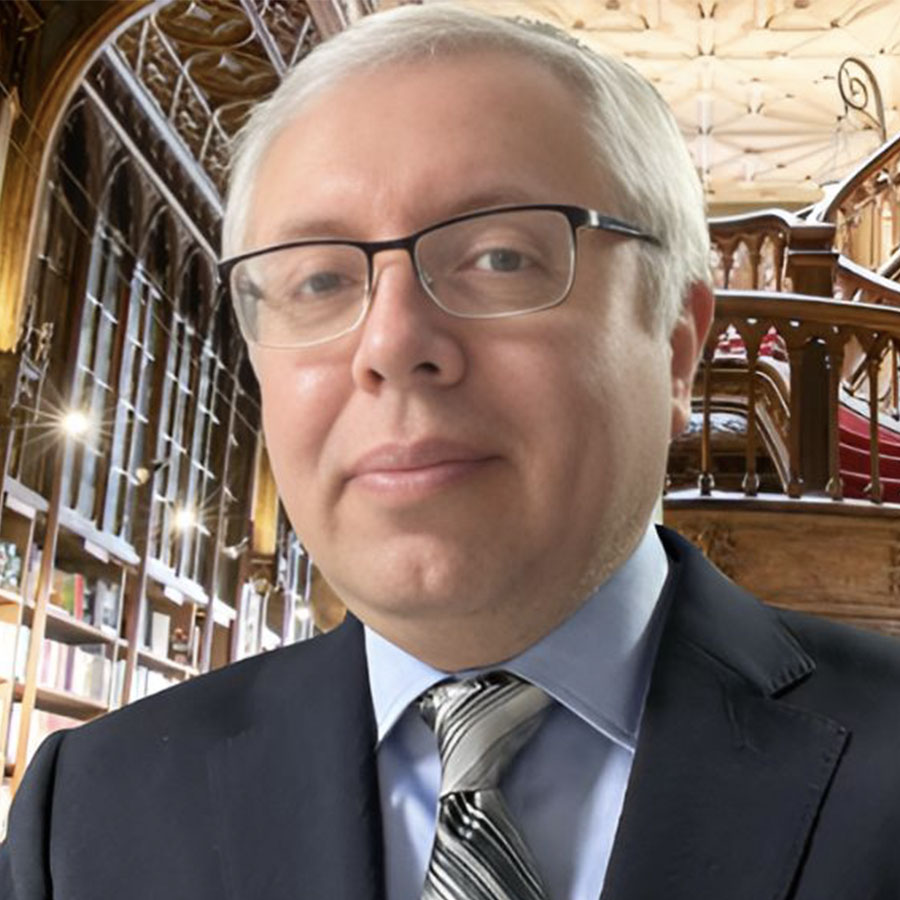
About Mauricio I. Pérez
Mauricio I. Pérez is a Catholic writer, journalist and YouTuber. He has received five national journalism awards by the Catholic Media Association. Mauricio has authored 18 books on Biblical commentary, spirituality and Catholic fiction, six of them bestsellers in Amazon. He has earned a diploma in Sacred Liturgy by the Universidad Pontificia de México and has graduated from several Liturgy programs at the Pontificio Istituto Liturgico in Rome. You can read more about the author here.
Previous Post
April 23, 2024
Our New Life In Christ In Preface II Of Easter Time
Next Post
May 3, 2024 Be Authentic Fathers: Pope Francis' Letter To Parish Priests
Browse Our Archives
Select a Category Catholic Church News Christology Easter Eucharist Exegesis Holy Week Holy Week Illness Jubilee 2025 Jubilee of Hope Lent Letters Liturgy National Eucharistic Congress National Eucharistic Revival New Testament New Testament Ordinary Jubilee 2025 Ordinary Time Pope Francis Pope Francis Pope Leo XIV Pope Leo XIV Prayer Readings Scripture Spirituality Spirituality Theology Uncategorized Vatican Year of Prayer 2024
Select a Month September 2026 November 2025 June 2025 May 2025 April 2025 March 2025 February 2025 July 2024 June 2024 May 2024 April 2024 March 2024
Follow Us!
TAKE THE
Religious Wisdom Quiz
True or False: In John's Gospel, Jesus raises Lazarus from the dead after he had been in the tomb for four days.
Select your answer to see how you score.
FALSE TRUE
Books by This Author Books by Sacred Threads
Related posts from Sacred Threads
Forgive "77" Times? The Correct Math Behind The...
The Gospel That Demands You Speak Up
The Prodigal Son: Perdition, Conversion, Forgiveness
Jubilee Of Hope: Finding Hope In The Miraculous...
TRENDING AT PATHEOS Catholic
When The Letter Of The Law Misses Its...
Jesus cared about people. He never ignored their needs, whether they were...

The Kingdom Of God In Ordinary Life And...
The kingdom of God is all around us; it is in us...

If Baptism Washes Away Sin, Why Do Catholics...
The seven sacraments stand as the foundation of Catholic ecclesial life. The...

The Power of Setting a Good Example
Remember last August when the Chicago White Sox hosted a "Pope Hat...

A Catholic Critique of Biblical Unitarianism
If the statistics are to be believed, Unitarianism is rising worldwide. Although...

How Grandma Tourism Helps Grandparents Live Their Vocation
Grandma, The New Travel Influencer What started as a nostalgia-inspired social media...
view all Catholic blogs
Ad-Free & Subscriber Log-In Subscription Support
- About Us
- 2026 Calendar
- Videos
- Podcasts
- Library of World Religions
- Faith In Media Tracker
- Advertise With Us
- Write for Us
- Privacy Policy
- Terms of Service
- Do Not Sell My Data
- Contact Us
- Radiant Digital
- Manage Newsletter Subscriptions
- Unsubscribe From Notifications
- Sitemap
Copyright 2008-2026, Patheos, part of the Radiant Digital network of media brands. All rights reserved.
Subscription Support Ad-Free & Subscriber Log-In
Follow Patheos