
BuddhistCatholicContemplativeEvangelicalGeneral ChristianHinduJewishLatter-day SaintMuslimNew VisionsProgressive Christian
Beliefs
- Buddhist
- Catholic
- Contemplative
- Evangelical
- General Christian
- Hindu
- Jewish
- Latter-day Saint
- More Voices
- Muslim
- New Visions
- Pagan
- Progressive Christian
Topics
- Religion News
- Food and Religion
- Sports and Religion
- Religious Art
- Religious Music and Entertainment
- Religious Events
- History and Religion
- Style and Religion
- Politics and Religion
- Women in Religion
- Recreation Outdoors and Religion
- Business Finance and Religion
- Careers Workplace and Religion
- Education and Religion
- Family Parenting and Religion
- Health Fitness and Religion
- Home and Religion
- Relationships and Religion
- Technology and Religion
- Travel and Religion
Columnists
- Buddhist Columnists
- Business Finance and Religion Columnists
- Careers Workplace and Religion Columnists
- Catholic Columnists
- Contemplative Columnists
- Education and Religion Columnists
- Evangelists Columnists
- Family Parenting and Religion Columnists
- General Christian Columnists
- Health Fitness and Religion Columnists
- Hindu Columnists
- History and Religion Columnists
- Home and Religion Columnists
- Jewish Columnists
- More Voices Columnists
- Latter Day Columnists
- Muslim Columnists
- New Visions Columnists
- Nonreligious Columnists
- Pagan Columnists
- Politics and Religion Columnists
- Progressive Columnists
- Recreation Outdoors and Religion Columnists
- Relationships and Religion Columnists
- Religion News Columnists
- Religious Art Columnists
- Religious Events Columnists
- Religious Music and Entertainment Columnists
- Sports and Religion Columnists
- Style and Religion Columnists
- Technology and Religion Columnists
- Travel and Religion Columnists
- Women in Religion Columnists
Resource Library
- 2026 Calendar
- Library of World Religions
- The 100 Most Holy Places on Earth
- Patheos Answers
- Podcasts
- Videos
- Faith Leaders Database
- Anglican Episcopalian
- Bahai
- Baptist
- Buddhism
- Christianity
- Confucianism
- Eastern Orthodoxy
- Hinduism
- Holiness and Pentecostal
- ISKCON
- Islam
- Judaism
- Lutheran
- Methodist
- The Church of Jesus Christ of Latter-day Saints
- New Age
- Paganism
- Presbytarian and Reformed
- Protestantism
- Religion Behind the Scenes
- Roman Catholic
- Scientology
- Shia Islam
- Sikhism
- Sufism
- Sunni Islam
- Taoism
- Zen
- See all religions
Research Tools
 Ad-Free & Subscriber Log-In Subscription Support
Follow Patheos 

- Trending:
- Advent
- |
- Forgiveness
- |
- Thanksgiving
- |
- Election
- |
- Seasonal Holidays
- |
- Marriage

- Home
- Catholic
- Religious Events
- Understanding Easter Through The Eucharistic Prayer Prefaces
Understanding Easter Through The Eucharistic Prayer Prefaces
Last updated on: May 7, 2024 at 11:04 am by Mauricio Pérez
Understanding Easter Through The Eucharistic Prayer Prefaces 2024-05-07T11:04:30-07:00 Mauricio Pérez
Patheos Explore the world's faith through different perspectives on religion and spirituality! Patheos has the views of the prevalent religions and spiritualities of the world.

The priest invites us to lift up our hearts – Photo by RDNE Stock Project, Pexels
On this first installment of a special series that will cover the Christology of each of the five Prefaces of the Eucharistic Prayer in Easter Time, I explain what a Preface is, its history in our Liturgy, how a Preface is structured and its liturgical and catechetical importance.
The Eucharistic Prayer prefaces in Easter Time develop a Christology that helps us understand Jesus better, as well as the liturgical time we are celebrating. At the same time, they give us concrete reasons to give thanks to the Lord when we celebrate the Eucharist. Through Easter Time, we pray five different prefaces, rich in Christological meaning. It´s important to know and understand each. Alas, most of the faithful attending Mass tend to disconnect themselves at this so important moment, leaving the celebrant priest to pray on his own. This makes it hard to appreciate what the Church intends to pray right before the consecration of the bread and wine in the Eucharistic Prayer.
This is the first article in a special series in which we will understand the Eucharistic Prayer prefaces and will dig into the Christology expressed by each of the prefaces of the Easter Time.
From the famous principle lex orandi, lex credendi, the norm of our prayer is the norm of our faith or, in other words, what we pray is what we believe, we realize the value that liturgical texts have as sources of catechesis for all believers. We recurrently attend Holy Mass, but we must pay attention to these texts so that they really help us to form ourselves in our faith. And I am not referring to the Word of God proclaimed from the ambo, but to the words with which his people address Him, the liturgical prayers, the euchological texts formally speaking.
Among the euchological texts, I am particularly passionate about collect prayers and prefaces. Hence, I will develop a special series here, in Sacred threads, to explain the christology expressed by the prefaces of the Time of Easter we are currently celebrating.
Before going into the Christology of the prefaces of Easter, we need to understand what the prefaces are their importance — this is the purpose of this first installment in this special series.
What is the Preface?
Every liturgical celebration has four purposes:
- To worship God (latreutic)
- To ask God (impetratory)
- To offer a sacrifice to God (propitiatory)
- To give thanks to God (eucharistic).
The preface prayer is a Eucharistic moment of the Holy Mass. As a preamble to the Eucharistic Prayer, the Preface expresses a specific reason why the Church gives thanks to God in that particular liturgical celebration.
The General Instruction of the Roman Missal (n. 79.a) explains about the preface that “the priest, in the name of the entire holy people, glorifies God the Father and gives thanks for the whole work of salvation or for some special aspect of it that corresponds to the day, festivity, or season.”
The history of the Eucharistic Prayer prefaces
For many centuries, the Church prayed only one Eucharistic prayer. The liturgical reform of Vatican II added more Eucharistic Prayers to the Missal, but that ancient one has been preserved: This is the Eucharistic Prayer I, the Roman Canon. The Eucharistic Prayer has always been preceded by a preface that expressed the particular aspect of the mystery that was celebrated on each particular day.
This led to the composition of a large number of prefaces over time. In the sixth century, there were 267 and in the tenth, 320. We find these in the sacramentaries of Verona and Fulda, from to those two centuries. But at the same time the number of prefaces was growing, there was a need to reduce them, so that they were really meaningful. Hence, between the two sacramentaries referred to, the Gregorian-Adrian Sacramentary contained only 14, in the eighth century.
A more recent missal, that of St. Pius V from 1570, included only 11 prefaces. Over the centuries, more were added to it: for the deceased (1919), for St. Joseph (1919), for Christ the King (1925) and for the Sacred Heart (1928). The result of the most recent liturgical reform was the addition of a preface to the Chrism Mass (1955).
The current Roman Missal, in its third edition, includes over 35 prefaces that run through each season in the liturgical calendar and special celebrations like Holy Thursday, the Most Holy Trinity, or Corpus Christi, as well as four prefaces focused on the Holy Eucharist.
The dialogue that precedes the Preface
Being the introduction to the Eucharistic Player, the Preface begins with a dialogue. Three interlocutions between the celebrant and the assembly conform it:
—The Lord be with you.
—And with your spirit.
—Lift up your hearts.
—We lift them up the Lord.
—Let us give thanks to the Lord, our God.
—It is right and just.
1. The greeting
As in other especially important moments of the Mass, the celebrant addresses the assembly with an epicleptic greeting. He invokes the presence of the Lord in the midst of the priestly people gathered for the celebration, so that he is present in the heart of each of those present and acts as well as the Church of Christ. It is a greeting of biblical origin (Ruth 2,4; 2 Corinthians 15,2; 2 Thessalonians 3,16), already used in the liturgy in the time of St. Augustine.
The assembly’s response, “And with your spirit,” refers to the gift of the Spirit that the minister has received through the sacrament of the Priestly Order. In a sense, this response reminds the priest that the consecration of bread and wine with his own hands he is about to perform, goes far beyond his abilities alone: if he can do it is by the gift of the Holy Spirit. For this reason, this dialogue is reserved for bishops, priests and deacons.
2. A spiritual flight to heaven
It is not only the assembly gathered in the particular church that gives thanks to God in the celebration, but that particular community joins the Universal Church at that time, including the triumphant church in heaven, formed by saints and angels which keep singing “Holy, holy, holy…”. Hence, the Preface is an exciting moment, because it lifts us —spiritually— in flight to heaven.
The priest invites the people to lift up their hearts to God.
—Lift up your hearts.
—We lift them up to the Lord.
These two expressions proceed from the verses of the book of Lamentations 3:41 and the Letter of St. Paul to the Colossians 3:1.
Sacramentally, the posture of the priest’s hands expresses this spiritual flight. The liturgists behind the liturgical reform of Vatican II wanted to emphasize this aspect by modifying the rubric that indicates that the priest extended his hands only while saying “Sursum corda“. The rubric prescribes now that the priest keesp his hands extended, lifting and holding us in flight, throughout the Preface.
3. An act of thanksgiving
The dialogue concludes with the Eucharistic invitation, that is, to an act of thanksgiving:
—Let us give thanks to the Lord, our God.
—It is right and just.
These expressions come from Revelation 11:17, 1 Thessalonians 1,2 and 2 Thessalonians 1,2. The priest invites the assembly to take part of the Eucharistic Prayer he is about to pray. It is important to emphasize that the attitude of the faithful must correspond to their words. It is not fair to declare on the one hand that “it is right and just” to thank God when from that moment on the mind becomes absent, leaving the priest to pray alone, without paying attention to him, and just repeat mechanically at the end “Holy, holy, holy” without even knowing the reason why God is being praised.
The structure of the Preface
All prefaces have always followed a specific pattern. We can distinguish three parts:
- A somewhat fixed introduction, that sounds almost the same in all prefaces.
- A central core called embolism, which mentions the particular reason we are giving thanks to God for.
- A conclusion, intended to introduce the great acclamation that immediately follows the preface: “Holy, holy, holy…”
It is the embolism of the preface that expresses its theological message. Hence, understanding the embolisms of the prefaces helps us to better understand the liturgical times we are celebrating.
The prefaces of Easter
In the next installments of this series, we will dig into each of the five prefaces of Easter, and understand the Christology the Church expresses through each:
Preface I of Easter – The Paschal Mystery: “He is the true Lamb who has taken away the sins of the world: by dying he has destroyed our death and by rising, restored our life.”
Preface II of Easter – The new life in Christ: “Through him the children of light rise to eternal life and the halls of the heavenly Kingdom are thrown open to the faithful; for this Death is our ransom from death, and in his rising the life of all has risen.”
Preface III of Easter – Christ living and always interceding for us: “He never ceases to offer himself for us but defends us and ever pleads our cause before the Father. He is the sacrificial Victim who dies no more, the Lamb, once slain, who lives forever.”
Preface IV of Easter – The restoration of the universe through the Paschal mystery: “With the old order destroyed, a universe cast down is renewed, and integrity of life is restored to us in Christ.”
Preface V of Easter – Christ, Priest and Victim: “By the oblation of his Body, he brought the sacrifices of old to fulfillment in the reality of the Cross and, by commending himself to the Father for our salvation, showed himself the Priest, the Altar, and the Lamb of sacrifice.”
To read to the full series
- Understanding Easter through the Eucharistic Prayer Prefaces
- Preface I – The Paschal Mystery
- Preface II – New life in Christ
- Preface III – Christ living and always interceding for us
- Preface IV – The restoration of the universe through the Paschal Mystery
- Preface V – Christ, Priest and Victim (to be published…)
Religious Events
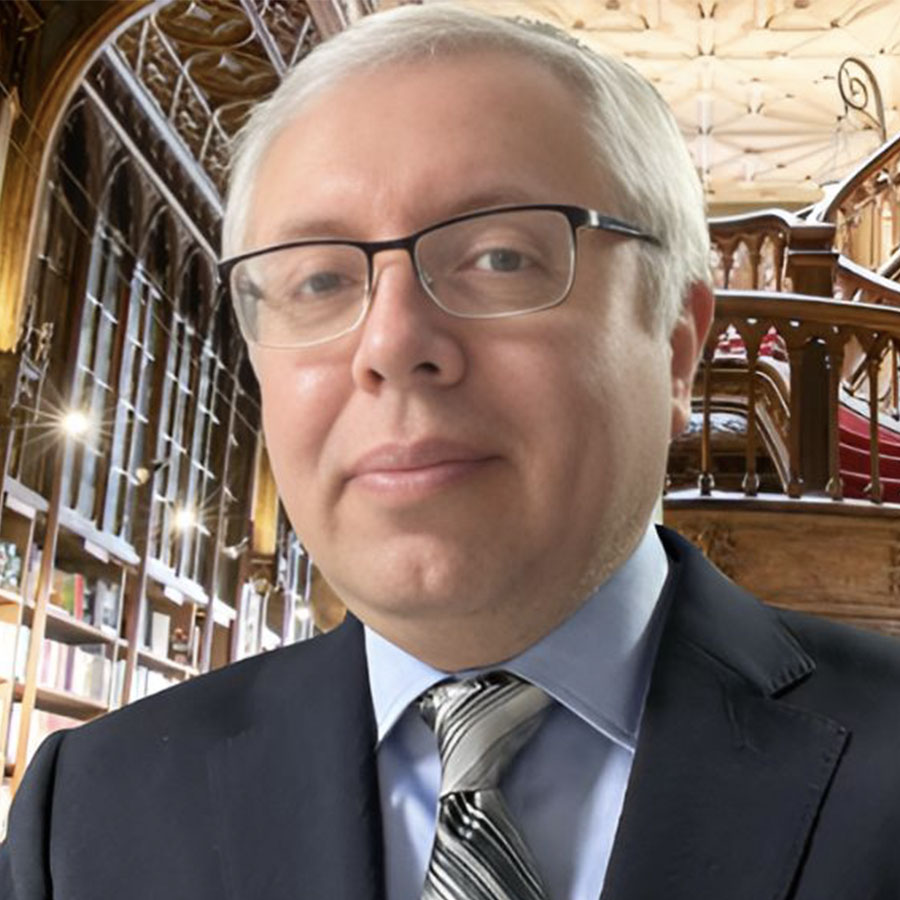
About Mauricio I. Pérez
Mauricio I. Pérez is a Catholic writer, journalist and YouTuber. He has received five national journalism awards by the Catholic Media Association. Mauricio has authored 18 books on Biblical commentary, spirituality and Catholic fiction, six of them bestsellers in Amazon. He has earned a diploma in Sacred Liturgy by the Universidad Pontificia de México and has graduated from several Liturgy programs at the Pontificio Istituto Liturgico in Rome. You can read more about the author here.
Previous Post
April 7, 2024
Understanding Easter Time Through Its Liturgy
Next Post
April 20, 2024 Understanding The Lamb Of God In The Preface I Of Easter
Browse Our Archives
Select a Category Catholic Church News Christology Easter Eucharist Exegesis Holy Week Holy Week Illness Jubilee 2025 Jubilee of Hope Lent Letters Liturgy National Eucharistic Congress National Eucharistic Revival New Testament New Testament Ordinary Jubilee 2025 Ordinary Time Pope Francis Pope Francis Pope Leo XIV Pope Leo XIV Prayer Readings Scripture Spirituality Spirituality Theology Uncategorized Vatican Year of Prayer 2024
Select a Month September 2026 November 2025 June 2025 May 2025 April 2025 March 2025 February 2025 July 2024 June 2024 May 2024 April 2024 March 2024
Follow Us!
TAKE THE
Religious Wisdom Quiz
True or False: In John's Gospel, Jesus raises Lazarus from the dead after he had been in the tomb for four days.
Select your answer to see how you score.
FALSE TRUE
Books by This Author Books by Sacred Threads
Related posts from Sacred Threads
Forgive "77" Times? The Correct Math Behind The...
The Gospel That Demands You Speak Up
The Prodigal Son: Perdition, Conversion, Forgiveness
Jubilee Of Hope: Finding Hope In The Miraculous...
TRENDING AT PATHEOS Catholic
When The Letter Of The Law Misses Its...
Jesus cared about people. He never ignored their needs, whether they were...

The Kingdom Of God In Ordinary Life And...
The kingdom of God is all around us; it is in us...

If Baptism Washes Away Sin, Why Do Catholics...
The seven sacraments stand as the foundation of Catholic ecclesial life. The...

The Power of Setting a Good Example
Remember last August when the Chicago White Sox hosted a "Pope Hat...

A Catholic Critique of Biblical Unitarianism
If the statistics are to be believed, Unitarianism is rising worldwide. Although...

How Grandma Tourism Helps Grandparents Live Their Vocation
Grandma, The New Travel Influencer What started as a nostalgia-inspired social media...
view all Catholic blogs
Ad-Free & Subscriber Log-In Subscription Support
- About Us
- 2026 Calendar
- Videos
- Podcasts
- Library of World Religions
- Faith In Media Tracker
- Advertise With Us
- Write for Us
- Privacy Policy
- Terms of Service
- Do Not Sell My Data
- Contact Us
- Radiant Digital
- Manage Newsletter Subscriptions
- Unsubscribe From Notifications
- Sitemap
Copyright 2008-2026, Patheos, part of the Radiant Digital network of media brands. All rights reserved.
Subscription Support Ad-Free & Subscriber Log-In
Follow Patheos