
BuddhistCatholicContemplativeEvangelicalGeneral ChristianHinduJewishLatter-day SaintMuslimNew VisionsProgressive Christian
Beliefs
- Buddhist
- Catholic
- Contemplative
- Evangelical
- General Christian
- Hindu
- Jewish
- Latter-day Saint
- More Voices
- Muslim
- New Visions
- Pagan
- Progressive Christian
Topics
- Religion News
- Food and Religion
- Sports and Religion
- Religious Art
- Religious Music and Entertainment
- Religious Events
- History and Religion
- Style and Religion
- Politics and Religion
- Women in Religion
- Recreation Outdoors and Religion
- Business Finance and Religion
- Careers Workplace and Religion
- Education and Religion
- Family Parenting and Religion
- Health Fitness and Religion
- Home and Religion
- Relationships and Religion
- Technology and Religion
- Travel and Religion
Columnists
- Buddhist Columnists
- Business Finance and Religion Columnists
- Careers Workplace and Religion Columnists
- Catholic Columnists
- Contemplative Columnists
- Education and Religion Columnists
- Evangelists Columnists
- Family Parenting and Religion Columnists
- General Christian Columnists
- Health Fitness and Religion Columnists
- Hindu Columnists
- History and Religion Columnists
- Home and Religion Columnists
- Jewish Columnists
- More Voices Columnists
- Latter Day Columnists
- Muslim Columnists
- New Visions Columnists
- Nonreligious Columnists
- Pagan Columnists
- Politics and Religion Columnists
- Progressive Columnists
- Recreation Outdoors and Religion Columnists
- Relationships and Religion Columnists
- Religion News Columnists
- Religious Art Columnists
- Religious Events Columnists
- Religious Music and Entertainment Columnists
- Sports and Religion Columnists
- Style and Religion Columnists
- Technology and Religion Columnists
- Travel and Religion Columnists
- Women in Religion Columnists
Resource Library
- 2026 Calendar
- Library of World Religions
- The 100 Most Holy Places on Earth
- Patheos Answers
- Podcasts
- Videos
- Faith Leaders Database
- Anglican Episcopalian
- Bahai
- Baptist
- Buddhism
- Christianity
- Confucianism
- Eastern Orthodoxy
- Hinduism
- Holiness and Pentecostal
- ISKCON
- Islam
- Judaism
- Lutheran
- Methodist
- The Church of Jesus Christ of Latter-day Saints
- New Age
- Paganism
- Presbytarian and Reformed
- Protestantism
- Religion Behind the Scenes
- Roman Catholic
- Scientology
- Shia Islam
- Sikhism
- Sufism
- Sunni Islam
- Taoism
- Zen
- See all religions
Research Tools
 Ad-Free & Subscriber Log-In Subscription Support
Ad-Free & Subscriber Log-In Subscription Support
Follow Patheos 

- Trending:
- Forgiveness
- |
- Marriage
- |
- Consciousness
- |
- Death Penalty
- |
- Election
- |
- Halloween

- Home
- Progressive Christian
- Relationships and Religion
- How Some Christians Abuse the Bible
How Some Christians Abuse the Bible
Last updated on: November 16, 2023 at 1:34 am by James Travis Young
How Some Christians Abuse the Bible 2023-11-16T01:34:27-06:00 James Travis Young
Patheos Explore the world's faith through different perspectives on religion and spirituality! Patheos has the views of the prevalent religions and spiritualities of the world.
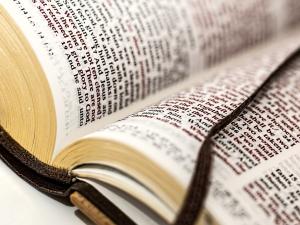
Some Christians use scripture to hurt others. Image by Steve Buissinne from Pixabay.
When someone quotes a scripture to support a particular point of view or argument without considering the broader context or the original intended meaning of the text, it’s called proof-texting.
We’ve all seen it. Some of you probably even do it. But cherry-picking verses to support preconceived notions or personal biases is not only dishonest, it’s dangerous.
This Will Make Some of You Angry
There are those who selectively highlight specific passages while ignoring others, manipulating scriptures to suit their agenda. This can result in a skewed understanding of the Bible and contribute to the perpetuation of misguided beliefs.
Even worse, the scriptures misrepresented typically are used to imply legalistic approaches that undermine core messages of love and grace that are overwhelmingly supported by the whole of the Bible.
This happens both in the flesh and on social media. You would assume that people who are educated to exegete scripture to provide context (such as clergy) would refrain from this practice, but unfortunately that is not always the case.
I have noticed a steep uptick of proof-texting on social media, but I’ve also heard it in podcasts and too many sermons by people who should know better.
Here is one troubling example of scripture I have seen taken out of context and weaponized recently:
“I will plant Israel in their own land, never again to be uprooted from the land I have given them.” (Amos 9:15)
Obviously, those who share this as a proof-text are misusing this verse to validate their political solidarity with Israel by conflating the historical kingdom of Israel with the modern nation currently at war with Hamas. But even extremely conservative scholars such as John MacArthur contextualize this passage as a prophecy of the coming Gospel—a fulfilled promise of salvation to Jew and Gentile alike who are in Christ. Which is the correct approach, because a literal interpretation would leave the prophecy totally unfulfilled, as it would then not only disregard the entire New Testament, but also the Israelites’ subsequent subjugation by the Assyrians, Babylonians, and Romans, and their current dispersion across the entire world.

Many LGBTQ+ Christians have endured exclusion from within the church. Photo by Another Believer. CC-BY-SA-3.0
Then there’s the common “clobber” verses that when taken out of context appear to condemn homosexuality, but do not in any way describe consensual loving relationships between two adults. Instead, these passages depict sexual assault (Genesis 9:20–27, 19:1–11), ritualized prostitution (Leviticus 18:22, 20:13), male prostitution and child abuse (1 Corinthians 6:9–10; 1 Timothy 1:10), and rituals of the Cult of Isis (Romans 1:26–27).
Nevertheless, I have frequently seen misguided/poorly educated fundamentalists weaponize these passages into hateful memes on social media. Unfortunately, besides twisting scripture and falsely suggesting Christians hate the LGBTQ+ community, these passive-aggressive posts invariably reveal the closeted homophobic fears of whomever shares them.
Because why else would you be sharing it?
And This Will Probably Offend Anyone Still Reading
TRIGGER WARNING: The following contains depictions of Disney characters some Evangelicals could find offensive, including references to topics such as the Kingdom of Arendelle, exegesis, form criticism, historical scholarship, and dinglehoppers. Discretion is advised.
Then there are well-meaning people who attempt to harmonize the canonical gospels.
Gospel harmonization theorizes pretty much what you could infer from synthesizing those two words: if each canonical gospel (Matthew, Mark, Luke, and John) are considered as like singing voices, though the notes are not the same in every regard, their voices should blend together in a way that is not only pleasing, when listened to in concert with one another, they are singing the same song in the same key—a “heavenly quartet.” By the voices being combined together, the song itself is elevated to a point that is greater than the sum of its parts—a comprehensive narrative superior to any single or lesser combined gospel account.
But no twenty-first century scholar in their right mind would endorse such foolishness. It’s like saying you can only appreciate Pretty Woman if you watch it with a copy of George Bernard Shaw’s Pygmalion open before you as you sit with Bianca the love doll from Lars and the Real Girl while listening to a cast recording of My Fair Lady.
Gospel harmonization is essentially using a chain reference Bible like a choose your own adventure novel. It’s easy not only to miss the point of any gospel this way—it dangerously creates extrabiblical narratives and doctrines that are not textually supported.
For example, if one decided that Disneyesque easter eggs interconnect each canonical narrative to one another, then not only did Anna and Elsa‘s parents die on the way to Flynn and Rapunzel’s wedding, Jesus must have cleansed the temple twice: right after he went to went to the wedding in Cana as depicted in John, and then again the last week of his life following the triumphal entry described in Matthew, Mark, and Luke.

Apparently, the Disney Princess universe is intricately connected. Photo by mydisneyadventures. CC-BY-2.0.
Or, Jesus while giving the Sermon on the Mount in Matthew must have felt sorry for the poor Galileans, because he didn’t go off and rail against the wealthy the same way he did when he delivered word for word almost the same sermon on a plain near Jerusalem as reported by Luke. Just like how Ariel while scavenging for thingamabobs and dinglehoppers had no idea she was actually plundering the very shipwreck that had marooned Elsa and Anna’s parents on an island where they built a treehouse, had a son who would be called Tarzan (the true prince of Arendelle), but were then tragically eaten by a leopard.
Now, it’s just plain obvs that Belle and Beast somehow surviving the French Revolution, emigrating to Germany then Britain, and their great granddaughter Jane marrying and taming the beastly Tarzan is both pure coincidence and history repeating itself. Similarly, by making a few unqualified assumptions, some believe that the women who visited Jesus’ tomb on the morning of the third day weren’t just Mary Magdalene and the “other Mary” as told in Matthew, but that the other Mary must have been Mary, mother of James according to Mark, who also includes Salome. And surely more women must have been there, because although Luke isn’t super specific about that who was at the tomb that precise moment, some infer from what he wrote earlier that he could have meant Mary Magdalene, Mary (James’ mother), and Joanna. That he doesn’t mention Salome could be coincidence, or could Joanna and Salome be the same person? Now wouldn’t that be interesting? I mean, no, it isn’t biblical, but sure, anything is possible right?
Yes, I Do Have a Point

Spread love, not anything else. Photo by RDNE Stock project via Pexels.
So sure, lots of people read the Bible and come to different conclusions.
I believe diversity within Christianity is a strength, not a weakness. But our differences should highlight our love, not our judgment. And twisting the gospels together into one story not only undermines the distinct theological message of each gospel, it makes our testimony of Jesus contradictory to our experiences in relationship with him.
The best gospel is in you, the life transformation you experienced through relationships with people who have loved you with the love of Jesus.
To use scripture to share your own ideas is backwards. It can spread lies and damage your witness. Distinct from but consistent with our personal witness, our theology should be formed by the whole of scripture and the study of it, overlooking no consideration. Of course, this seems like a monumental task, but for some it is a lifelong endeavor.
And by the way, if what you are sharing is not the unconditional love of Christ, you are sharing the wrong thing.
General Christian
Politics and Religion

About James Travis Young
James Travis Young is an ordained minister in the Church of the Nazarene making Christlike disciples alongside his spouse in Galveston, Texas, USA. Travis has served for decades in several active ministry roles including pastor, church planter, and teacher, and his writing has been featured in several books and publications. You can read more about the author here.
Previous Post

November 11, 2023
What Fundamentalists Can Learn From Kat Von D
Next Post

November 18, 2023 Why Jonestown Still Matters 45 Years Later
Browse Our Archives
Select a Category Art & Culture Atonement Book Review Cabrini Cancel Cuture Compassion Complementarianism Culture War Deconstruction Defending Your Life Depression Discipleship Egalitarian Essential Kenosis Evangelicals Evil Faith Faith & Doubt Faith and Mental Health Faith on Film Fear Film Review Foot Washing Fundalmentalists Fundamentalism Gaza Gender Identity Giving Gospel of John Gospel of Matthew Grace Guilt Hamas Healing History Holiness Homelessness Hope Hunger Incarnation Institutional Churches Israel January 6 Jesus Jesus' teachings Jonestown Judgment Kat Von D LGBTQ+ LGBTQ+ Affirmation Life Transformation Lost Coin Love Mercy Murder Neurodivergence Omnipotence Parables Peace Peoples Temple Persecution Personal Story Politics Poll Results Poverty Power Qualified Restoration Atonement Racism Relationships Religious Trauma SBC Schism Sermon on the Mount Sin Social Media Spirituality Suffering Thanksgiving The Exorcist The Shawshank Redemption Theology This Property Is Condemned Thomas Jay Oord Tornado Trump Uncategorized War Women
Select a Month June 2026 January 2026 December 2025 March 2025 December 2024 May 2024 April 2024 March 2024 February 2024 January 2024 December 2023 November 2023 October 2023 September 2023
Follow Us!
TAKE THE
Religious Wisdom Quiz
What is the meaning of the word "Golgotha"?
Select your answer to see how you score.
Peaceful Garden River of Blood Place of the Skull City of Bread
Related posts from Sacred Outcasts
The SBC’s Genital Obsession is Idolatry

How the Titanic Sank My Understanding of Redemption

What Jeff Buckley Taught Me About Grief

The Hidden Connection Between Zacchaeus and Jesus's Parable
TRENDING AT PATHEOS Progressive Christian

Why Christians Have a Sacred Duty to Vote:...
The Bible offers strong support for the sacred duty to vote. Here...

What Being a Modern-Day Apostle Means to Me
In my last column, I discussed the ins and outs of modern-day...

Did Ancient China Once Worship the God of...
Across human history, a common thread weaves through the origins of the...

Love Your Neighbor – Including Earth-Kin: Lev. 19,...
God’s command to love your neighbor means acting in an ethical and...

Lead a Church Study of “Jesus and Lao...
Guest writer Jack Thomas (The Irreverent Reverend) reflects on leading his church...

Principles for Understanding the Apostolic Ministry Today
Whenever people discover that my formal ministry title is "apostle," as in...
view all Progressive Christian blogs
Ad-Free & Subscriber Log-In Subscription Support
- About Us
- 2026 Calendar
- Videos
- Podcasts
- Library of World Religions
- Faith In Media Tracker
- Advertise With Us
- Write for Us
- Privacy Policy
- Terms of Service
- Do Not Sell My Data
- Contact Us
- Radiant Digital
- Manage Newsletter Subscriptions
- Unsubscribe From Notifications
- Sitemap
Copyright 2008-2026, Patheos. All rights reserved.
Subscription Support Ad-Free & Subscriber Log-In
Follow Patheos