
BuddhistCatholicContemplativeEvangelicalGeneral ChristianHinduJewishLatter-day SaintMuslimNew VisionsProgressive Christian
Beliefs
- Buddhist
- Catholic
- Contemplative
- Evangelical
- General Christian
- Hindu
- Jewish
- Latter-day Saint
- More Voices
- Muslim
- New Visions
- Pagan
- Progressive Christian
Topics
- Religion News
- Food and Religion
- Sports and Religion
- Religious Art
- Religious Music and Entertainment
- Religious Events
- History and Religion
- Style and Religion
- Politics and Religion
- Women in Religion
- Recreation Outdoors and Religion
- Business Finance and Religion
- Careers Workplace and Religion
- Education and Religion
- Family Parenting and Religion
- Health Fitness and Religion
- Home and Religion
- Relationships and Religion
- Technology and Religion
- Travel and Religion
Columnists
- Buddhist Columnists
- Business Finance and Religion Columnists
- Careers Workplace and Religion Columnists
- Catholic Columnists
- Contemplative Columnists
- Education and Religion Columnists
- Evangelists Columnists
- Family Parenting and Religion Columnists
- General Christian Columnists
- Health Fitness and Religion Columnists
- Hindu Columnists
- History and Religion Columnists
- Home and Religion Columnists
- Jewish Columnists
- More Voices Columnists
- Latter Day Columnists
- Muslim Columnists
- New Visions Columnists
- Nonreligious Columnists
- Pagan Columnists
- Politics and Religion Columnists
- Progressive Columnists
- Recreation Outdoors and Religion Columnists
- Relationships and Religion Columnists
- Religion News Columnists
- Religious Art Columnists
- Religious Events Columnists
- Religious Music and Entertainment Columnists
- Sports and Religion Columnists
- Style and Religion Columnists
- Technology and Religion Columnists
- Travel and Religion Columnists
- Women in Religion Columnists
Resource Library
- 2026 Calendar
- Library of World Religions
- The 100 Most Holy Places on Earth
- Patheos Answers
- Podcasts
- Videos
- Faith Leaders Database
- Anglican Episcopalian
- Bahai
- Baptist
- Buddhism
- Christianity
- Confucianism
- Eastern Orthodoxy
- Hinduism
- Holiness and Pentecostal
- ISKCON
- Islam
- Judaism
- Lutheran
- Methodist
- The Church of Jesus Christ of Latter-day Saints
- New Age
- Paganism
- Presbytarian and Reformed
- Protestantism
- Religion Behind the Scenes
- Roman Catholic
- Scientology
- Shia Islam
- Sikhism
- Sufism
- Sunni Islam
- Taoism
- Zen
- See all religions
Research Tools
 Ad-Free & Subscriber Log-In Subscription Support
Ad-Free & Subscriber Log-In Subscription Support
Follow Patheos 

- Trending:
- Forgiveness
- |
- Marriage
- |
- Consciousness
- |
- Death Penalty
- |
- Election
- |
- Halloween

- Home
- History and Religion
- Was James the Just Jesus’ True Successor?
Was James the Just Jesus’ True Successor?
Last updated on: March 12, 2026 at 3:51 pm by Alexander Koritz
Was James the Just Jesus’ True Successor? 2026-03-12T15:51:18-06:00 Alexander Koritz
Patheos Explore the world's faith through different perspectives on religion and spirituality! Patheos has the views of the prevalent religions and spiritualities of the world.
After Jesus died, his followers faced an uncomfortable question: who was supposed to lead next? Religious movements rarely survive on inspiration alone. Eventually someone has to step forward—someone to guide the community, settle disagreements, and carry the spirit of the founder into the future.
One of the earliest Christian texts, the Gospel of Thomas, captures this tension in a way that later tradition rarely acknowledged. When the disciples asked Jesus, “We know you will leave us—who will lead us then?” his answer was straightforward: “Go to James the Just, for whose sake heaven and earth came into being.” This isn’t metaphorical language. It’s a clear answer to a clear question, naming a real person as the one to look to next.
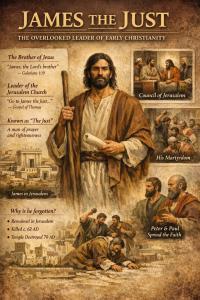
James The Just
For many readers today, that line hits differently. Most of Christian history is shaped by stories of Peter, Paul, and later institutional leadership. But here, Jesus seems to point to James — not Peter — as the one tied most closely to the continuing life of the early community.
James wasn’t just another follower. According to the New Testament, he was Jesus’ brother, mentioned alongside his siblings in the Gospels and referred to directly by Paul, who called him “the Lord’s brother.” In the first century, family connections carried weight. Leadership often grew out of family reputation and the trust it engendered. James also had a reputation for integrity so pronounced that early writers called him “the Just.”
In the early years after Jesus’ death, James became the central figure in the Jerusalem community — the heart of what we now call early Jewish Christianity. Paul refers to a meeting in Jerusalem where James shared authority with Peter and John, and the book of Acts highlights James’ leading voice at the Council of Jerusalem, where the first major debate about Gentile converts was settled.
So why isn’t James a household name the way Peter and Paul are? The answer lies less in theology and more in history. James stayed in Jerusalem. He lived his life there, led there, and died there — likely in the early 60s AD during a period of political upheaval in Judea, possibly executed under the Jewish authorities.
Jerusalem itself was the center of the first Christian movement, but it did not survive intact. In 70 AD the city and its Temple were destroyed, and the heart of Jewish Christianity was scattered. Leaders whose authority was rooted in place and community — like James — saw their influence fade. Others, like Peter and Paul, whose mission carried them outward, became the faces of a growing Gentile Christianity that developed into the institutional church most are familiar with today.
James’ legacy is subtle but profound. He represents a time when early Christianity was still deeply intertwined with Jewish tradition, moral earnestness, and a tight‑knit community rooted in life in Jerusalem. His leadership was less about titles and hierarchy and more about lived example and moral grounding.
Today, few people know his name outside academic circles or liturgical calendars. But if we revisit those early moments — the decisions made, the voices that shaped them — James emerges as someone worth remembering. Not as a rival to Peter or Paul, but as a reminder that the earliest Christian leadership was far more diverse and complex than later tradition often lets on.
Previous Post

February 11, 2026
Archetypes or God? The Spiritual Cost of Jungian Thinking
Next Post

April 29, 2026 Yeats vs. Crowley: Poetry, Magick and Desire
Recent Comments
"Important perspective if you are conscious about God."
Archetypes or God? The Spiritual Cost ..."
"Greetings from the Patheos Pagan channel, where about ten years ago there was a major ..."
Archetypes or God? The Spiritual Cost ..."
"https://uploads.disquscdn.c... The Michigan Tablets and artifacts are authentic. They were found across about 28 Michigan ..."
The Michigan Relics: A Controversial Family ..."
"This is a beautiful and insightful exploration of the concept of divine duality across different ..."
The Cosmic Dance of the Divine ..."
Browse Our Archives
Select a Category Anthroposophy Buddhism Celtic Spirituality Chakras Christmas Concert Contemplative Christianity Early Christianity Entertainment and Spirituality Esoteric Christianity Hinduism Judaism Michigan Relics Native American Mound Builders Politics Psychedelics Rudolf Steiner Sacred Geometry Spirituality of Work Stylianos Atteshlis The Nativity Theosophical Society Transhumanism Uncategorized
Select a Month October 2026 September 2026 June 2026 April 2026 March 2026 February 2026 September 2025 August 2025 May 2025 March 2025 February 2025 December 2024 November 2024 September 2024 July 2024 June 2024 May 2024 April 2024 March 2024 February 2024 January 2024 December 2023 November 2023
TAKE THE
Religious Wisdom Quiz
Which king was known for his extravagant building projects and many wives?
Select your answer to see how you score.
Solomon Hezekiah David Ahab
Related posts from Sacred Kaleidoscope
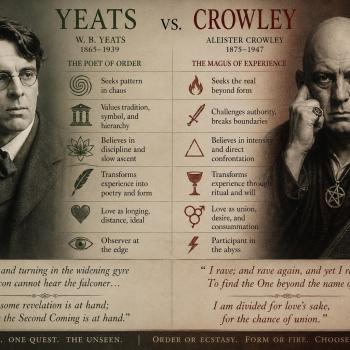
Yeats vs. Crowley: Poetry, Magick and Desire

Café Central: A Quiet Stage for the Crossroads...
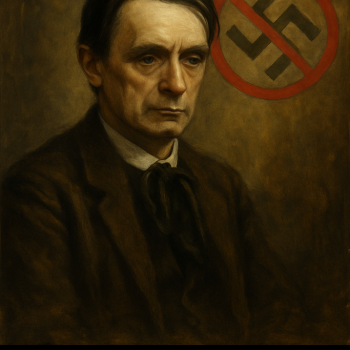
Did the Nazis Kill Rudolf Steiner? Exploring the...
The Cosmic Dance of the Divine Feminine and...
TRENDING AT PATHEOS History and Religion

How to Make a Decision When You Can't...
Main point: It’s much more valuable to stay close to God so...

Archdiocese Hosts Military Marriage Retreat in Germany
RASTATT, Germany — The transient military lifestyle, with its frequent deployments and...

Nearly every morning, I make the drive to Detroit with my high-school-age...

The Real AI Story Is Adoption Without Trust
Artificial intelligence has crossed a political threshold. It is no longer a...

A new article, written by Jeff Lindsay and Gale L. Pooley,...

Swimfan: Forgotten Aughts Pleasures
This is a recovery effort. In 2002, My Big Fat Greek Wedding...
view all History and Religion blogs
What Are Your Thoughts?leave a comment
Ad-Free & Subscriber Log-In Subscription Support
- About Us
- 2026 Calendar
- Videos
- Podcasts
- Library of World Religions
- Faith In Media Tracker
- Advertise With Us
- Write for Us
- Privacy Policy
- Terms of Service
- Do Not Sell My Data
- Contact Us
- Radiant Digital
- Manage Newsletter Subscriptions
- Unsubscribe From Notifications
- Sitemap
Copyright 2008-2026, Patheos. All rights reserved.
Subscription Support Ad-Free & Subscriber Log-In
Follow Patheos