
BuddhistCatholicContemplativeEvangelicalGeneral ChristianHinduJewishLatter-day SaintMuslimNew VisionsProgressive Christian
Beliefs
- Buddhist
- Catholic
- Contemplative
- Evangelical
- General Christian
- Hindu
- Jewish
- Latter-day Saint
- More Voices
- Muslim
- New Visions
- Pagan
- Progressive Christian
Topics
- Religion News
- Food and Religion
- Sports and Religion
- Religious Art
- Religious Music and Entertainment
- Religious Events
- History and Religion
- Style and Religion
- Politics and Religion
- Women in Religion
- Recreation Outdoors and Religion
- Business Finance and Religion
- Careers Workplace and Religion
- Education and Religion
- Family Parenting and Religion
- Health Fitness and Religion
- Home and Religion
- Relationships and Religion
- Technology and Religion
- Travel and Religion
Columnists
- Buddhist Columnists
- Business Finance and Religion Columnists
- Careers Workplace and Religion Columnists
- Catholic Columnists
- Contemplative Columnists
- Education and Religion Columnists
- Evangelists Columnists
- Family Parenting and Religion Columnists
- General Christian Columnists
- Health Fitness and Religion Columnists
- Hindu Columnists
- History and Religion Columnists
- Home and Religion Columnists
- Jewish Columnists
- More Voices Columnists
- Latter Day Columnists
- Muslim Columnists
- New Visions Columnists
- Nonreligious Columnists
- Pagan Columnists
- Politics and Religion Columnists
- Progressive Columnists
- Recreation Outdoors and Religion Columnists
- Relationships and Religion Columnists
- Religion News Columnists
- Religious Art Columnists
- Religious Events Columnists
- Religious Music and Entertainment Columnists
- Sports and Religion Columnists
- Style and Religion Columnists
- Technology and Religion Columnists
- Travel and Religion Columnists
- Women in Religion Columnists
Resource Library
- 2026 Calendar
- Library of World Religions
- The 100 Most Holy Places on Earth
- Patheos Answers
- Podcasts
- Videos
- Faith Leaders Database
- Anglican Episcopalian
- Bahai
- Baptist
- Buddhism
- Christianity
- Confucianism
- Eastern Orthodoxy
- Hinduism
- Holiness and Pentecostal
- ISKCON
- Islam
- Judaism
- Lutheran
- Methodist
- The Church of Jesus Christ of Latter-day Saints
- New Age
- Paganism
- Presbytarian and Reformed
- Protestantism
- Religion Behind the Scenes
- Roman Catholic
- Scientology
- Shia Islam
- Sikhism
- Sufism
- Sunni Islam
- Taoism
- Zen
- See all religions
Research Tools
 Ad-Free & Subscriber Log-In Subscription Support
Ad-Free & Subscriber Log-In Subscription Support
Follow Patheos 

- Trending:
- Forgiveness
- |
- Marriage
- |
- Consciousness
- |
- Death Penalty
- |
- Election
- |
- Halloween

- Home
- Hindu
- History and Religion
- The Cosmic Dance of the Divine Feminine and Masculine
The Cosmic Dance of the Divine Feminine and Masculine
Last updated on: May 23, 2025 at 1:14 pm by Alexander Koritz
The Cosmic Dance of the Divine Feminine and Masculine 2025-05-23T13:14:11-06:00 Alexander Koritz
Patheos Explore the world's faith through different perspectives on religion and spirituality! Patheos has the views of the prevalent religions and spiritualities of the world.

In the landscape of global mystical traditions, one encounters a recurring motif: the interplay between an eternal masculine principle of light or consciousness and a feminine force of wisdom, creativity, and manifestation. In Christian esotericism, this dance unfolds between the Christ Logos and the Divine Sophia. In Hindu metaphysics, it is the dynamic interplay between Purusha (Spirit) and Shakti (Power). Though their languages differ, both traditions articulate a vision of divine reality in which the masculine and feminine are not oppositional forces but essential counterparts—each incomplete without the other.
This article explores the profound resonances between these two sacred dyads: Christ Logos and Divine Sophia, Purusha and Shakti. By examining their cosmological origins, spiritual functions, and roles in human transformation, we discover a shared metaphysical vision—and a sacred invitation to inner integration.
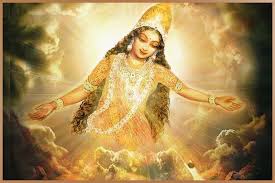
The Christ Logos: Cosmic Word and Spiritual Sun
In the esoteric Christian tradition, particularly through the teachings of Rudolf Steiner and Stylianos Atteshlis (known as Daskalos), the Logos is the eternal, divine principle of truth, order, and creative power. Originating from the unmanifest Father or Absolute, the Logos is described as the Second Person of the Trinity—not created, but begotten. In the Gospel of John, this idea is rendered poetically: “In the beginning was the Word (Logos), and the Word was with God, and the Word was God.”
Steiner taught that the Christ Being—identified with the Logos—once resided in the spiritual Sun. Long before the Earth came into being, Christ guided the evolution of humanity from beyond, offering light and spiritual direction. In what Steiner called the “Turning Point of Time,” the Logos entered directly into human history by incarnating in Jesus of Nazareth, thereby uniting cosmic divinity with human destiny. Through this act, the Logos became not only the redeemer of matter but the indwelling spiritual presence accessible to every human being.
For Daskalos, the Logos was not merely a metaphysical idea but a living, conscious being who emanates from the Absolute (the Father) and works through creation to awaken the divine spark within each soul. In both teachings, the Logos serves as the bridge between the unmanifest and the manifest—the pathway by which human beings are led back to their divine origin.
The Divine Sophia: World Soul and Feminine Wisdom
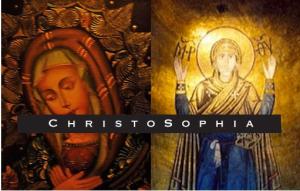
Running parallel to the Logos in esoteric Christianity is the figure of Divine Sophia, often referred to as Holy Wisdom. Unlike mainstream Christianity, which often marginalizes Sophia or conflates her with human wisdom, esoteric Christianity regards her as a real spiritual being—the feminine counterpart to the Logos.
Sophia is not simply knowledge or intelligence; she is the soul of the world, the anima mundi, the womb of all becoming. In Gnostic literature, Sophia emanates from the Pleroma (the fullness of divine being) and becomes entangled in creation. Her story is one of longing, exile, and return—a cosmic echo of the human soul’s journey. For Rudolf Steiner, Sophia is the spiritual archetype behind the Virgin Mary, the vessel pure enough to receive and birth the Christ.
Sophia operates not by descending into one historical body in the way that Christ does, but by permeating the intuitive, moral, and imaginative faculties of human beings. She is the light in the mind that sees clearly and the silence in the heart that listens deeply. If the Logos is the seed, Sophia is the fertile soil; if the Logos is the path, Sophia is the inner compass.
Purusha and Shakti: The Hindu Parallel
In Hindu cosmology, a strikingly similar duality governs the metaphysical structure of reality. Purusha represents pure consciousness—the silent, witnessing spirit. Shakti is the dynamic, creative energy that gives form and movement to that consciousness. According to the Samkhya school of philosophy and many yogic traditions, Shakti cannot exist without Purusha, and Purusha cannot be known without Shakti.
Shakti is personified in many forms: Kali, Durga, Saraswati, Lakshmi. She is the goddess, the mother, the power of speech, thought, and evolution. She is also Kundalini, the latent energy coiled at the base of the spine, which rises through the chakras to merge with Shiva (another name for Purusha) at the crown.
This inner ascent—Kundalini rising—is the symbolic marriage of Shakti and Shiva, or energy and consciousness. Just as Sophia and the Logos must be united within the soul, Shakti must rise to meet Purusha for the soul to awaken.
Inner Alchemy: The Marriage of Spirit and Wisdom
What unites these traditions is not just theological poetry but a practical mystical roadmap. Whether one calls them Logos and Sophia or Purusha and Shakti, these twin principles operate not only in the cosmos but within the human being. The human soul, in this light, is a vessel for spiritual alchemy: the inner marriage of masculine clarity and feminine wisdom, of transcendent purpose and immanent compassion.
In Steiner’s view, the Christ now lives in the etheric world, and Sophia is returning through the moral imagination of spiritually awakened individuals. Their union is not automatic; it requires human cooperation—a consciously chosen path of initiation, meditation, and love.
In the yogic framework, the rise of Shakti through disciplined spiritual practice leads to liberation (moksha), the realization that one’s soul (Atman) is none other than the eternal spirit (Brahman). Here again, union is the key—a merging of two complementary aspects of divine reality within the seeker.
Contemporary Relevance
In a fragmented world hungry for balance, this sacred union of spirit and wisdom offers more than just metaphysical interest. It presents a template for wholeness—personally, culturally, and cosmically.
- For the individual, it’s a call to integrate reason with intuition, action with contemplation, leadership with compassion.
- For culture, it is a correction to the overemphasis on intellect, productivity, and control—a re-invitation to reverence, receptivity, and co-creation.
- For spirituality, it is the end of the old binary: not a return to matriarchy over patriarchy, but a transcendent synthesis—a world where Logos and Sophia, Purusha and Shakti, move together in divine harmony.
Final Reflection
The mystics across time and tradition have told us something simple yet profound: the Divine is not one but two in one. Whether called Sophia and Logos, or Shakti and Purusha, these sacred polarities reflect the deepest structure of both cosmos and consciousness.
And within each of us, they await recognition. Not just as distant archetypes, but as living forces—calling us to awaken, to harmonize, and to become whole.
To walk the path of wisdom is to let Sophia rise. To walk the path of truth is to follow the Logos. And to walk the path of liberation is to let them unite—in the sacred temple of your soul.
Hindu
General Christian
Previous Post

March 16, 2025
A Sacred Exchange: Bringing Spirituality Back To Our Food
Next Post

August 3, 2025 Did the Nazis Kill Rudolf Steiner? Exploring the Conspiracy
Recent Comments
"Important perspective if you are conscious about God."
Archetypes or God? The Spiritual Cost ..."
"Greetings from the Patheos Pagan channel, where about ten years ago there was a major ..."
Archetypes or God? The Spiritual Cost ..."
"https://uploads.disquscdn.c... The Michigan Tablets and artifacts are authentic. They were found across about 28 Michigan ..."
The Michigan Relics: A Controversial Family ..."
"This is a beautiful and insightful exploration of the concept of divine duality across different ..."
The Cosmic Dance of the Divine ..."
Browse Our Archives
Select a Category Anthroposophy Buddhism Celtic Spirituality Chakras Christmas Concert Contemplative Christianity Early Christianity Entertainment and Spirituality Esoteric Christianity Hinduism Judaism Michigan Relics Native American Mound Builders Politics Psychedelics Rudolf Steiner Sacred Geometry Spirituality of Work Stylianos Atteshlis The Nativity Theosophical Society Transhumanism Uncategorized
Select a Month October 2026 September 2026 June 2026 April 2026 March 2026 February 2026 September 2025 August 2025 May 2025 March 2025 February 2025 December 2024 November 2024 September 2024 July 2024 June 2024 May 2024 April 2024 March 2024 February 2024 January 2024 December 2023 November 2023
TAKE THE
Religious Wisdom Quiz
Who parted the Red Sea for the Israelites?
Select your answer to see how you score.
Jacob Moses Aaron God
Related posts from Sacred Kaleidoscope

Yeats vs. Crowley: Poetry, Magick and Desire
Was James the Just Jesus' True Successor?

Café Central: A Quiet Stage for the Crossroads...
TRENDING AT PATHEOS History and Religion

In "Irreplaceable," our book on vocation and technology, Trevor Sutton and I...

I was strolling through the top floor of the brand new Parthenon...

What Does Gêvâh Mean For Kimberley Guifoyle &...
This week, a lot of the news is focused on Kimberly Guilfoyle....

INNER CIRCLE: Profound Mystery (Of Christ In All...
Ephesians 5:31-32 “For this reason, a man will leave his father and...

Do Not Rejoice When Your Enemy Falls: The...
Turning an execution into a public spectacle is a disturbing expression of...

'The Chosen' S6 Trailer: The Passion Gets Very...
Not many watching 'The Chosen' worry about spoilers, but just because they...
view all History and Religion blogs
What Are Your Thoughts?leave a comment
Ad-Free & Subscriber Log-In Subscription Support
- About Us
- 2026 Calendar
- Videos
- Podcasts
- Library of World Religions
- Faith In Media Tracker
- Advertise With Us
- Write for Us
- Privacy Policy
- Terms of Service
- Do Not Sell My Data
- Contact Us
- Radiant Digital
- Manage Newsletter Subscriptions
- Unsubscribe From Notifications
- Sitemap
Copyright 2008-2026, Patheos. All rights reserved.
Subscription Support Ad-Free & Subscriber Log-In
Follow Patheos