
BuddhistCatholicContemplativeEvangelicalGeneral ChristianHinduJewishLatter-day SaintMuslimNew VisionsProgressive Christian
Beliefs
- Buddhist
- Catholic
- Contemplative
- Evangelical
- General Christian
- Hindu
- Jewish
- Latter-day Saint
- More Voices
- Muslim
- New Visions
- Pagan
- Progressive Christian
Topics
- Religion News
- Food and Religion
- Sports and Religion
- Religious Art
- Religious Music and Entertainment
- Religious Events
- History and Religion
- Style and Religion
- Politics and Religion
- Women in Religion
- Recreation Outdoors and Religion
- Business Finance and Religion
- Careers Workplace and Religion
- Education and Religion
- Family Parenting and Religion
- Health Fitness and Religion
- Home and Religion
- Relationships and Religion
- Technology and Religion
- Travel and Religion
Columnists
- Buddhist Columnists
- Business Finance and Religion Columnists
- Careers Workplace and Religion Columnists
- Catholic Columnists
- Contemplative Columnists
- Education and Religion Columnists
- Evangelists Columnists
- Family Parenting and Religion Columnists
- General Christian Columnists
- Health Fitness and Religion Columnists
- Hindu Columnists
- History and Religion Columnists
- Home and Religion Columnists
- Jewish Columnists
- More Voices Columnists
- Latter Day Columnists
- Muslim Columnists
- New Visions Columnists
- Nonreligious Columnists
- Pagan Columnists
- Politics and Religion Columnists
- Progressive Columnists
- Recreation Outdoors and Religion Columnists
- Relationships and Religion Columnists
- Religion News Columnists
- Religious Art Columnists
- Religious Events Columnists
- Religious Music and Entertainment Columnists
- Sports and Religion Columnists
- Style and Religion Columnists
- Technology and Religion Columnists
- Travel and Religion Columnists
- Women in Religion Columnists
Resource Library
- 2026 Calendar
- Library of World Religions
- The 100 Most Holy Places on Earth
- Patheos Answers
- Podcasts
- Videos
- Faith Leaders Database
- Anglican Episcopalian
- Bahai
- Baptist
- Buddhism
- Christianity
- Confucianism
- Eastern Orthodoxy
- Hinduism
- Holiness and Pentecostal
- ISKCON
- Islam
- Judaism
- Lutheran
- Methodist
- The Church of Jesus Christ of Latter-day Saints
- New Age
- Paganism
- Presbytarian and Reformed
- Protestantism
- Religion Behind the Scenes
- Roman Catholic
- Scientology
- Shia Islam
- Sikhism
- Sufism
- Sunni Islam
- Taoism
- Zen
- See all religions
Research Tools
 Ad-Free & Subscriber Log-In Subscription Support
Ad-Free & Subscriber Log-In Subscription Support
Follow Patheos 

- Trending:
- Forgiveness
- |
- Marriage
- |
- Consciousness
- |
- Death Penalty
- |
- Election
- |
- Halloween

- Home
- Contemplative
- History and Religion
- Jesus Visited India and Tibet?
Jesus Visited India and Tibet?
Last updated on: August 2, 2024 at 1:22 pm by Alexander Koritz
Jesus Visited India and Tibet? 2024-08-02T13:22:13-06:00 Alexander Koritz
Patheos Explore the world's faith through different perspectives on religion and spirituality! Patheos has the views of the prevalent religions and spiritualities of the world.
The theory that Jesus spent his “lost years”—in India, Tibet, and Nepal is a subject of great fascination and controversy. This hypothesis fills in the gaps of Jesus’ life that the Bible does not account for, typically between the ages of 12 and 30.
The New Testament’s gospels provide little information about Jesus’ life during this period, leading to speculation and legend about what he might have been doing in those intervening years. One of the most intriguing theories is that Jesus traveled to India, and perhaps Tibet and Nepal, immersing himself in the philosophies and teachings of the East. I was recently in Nepal doing work with non-profit Choice Humanitarian and tried to imagine young Jesus toggling between Buddhist Stupas and Hindu Temples in search of the Great Mystery.
This theory (in its modern form) largely stems from a 19th-century Russian traveler and writer, Nicolas Notovitch, who claimed to have found evidence during his travels in India. According to Notovitch, a manuscript in a Tibetan monastery in Ladakh detailed the arrival of a holy man, named Issa (a name linked to Jesus), who matched Jesus’ description and teachings. Notovitch published his findings in a book titled “The Unknown Life of Jesus Christ,” which sparked immediate controversy and skepticism among scholars and theologians.
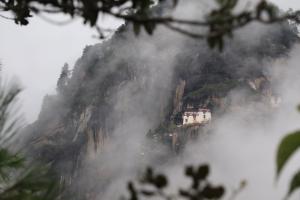
Despite the lack of concrete evidence, proponents of this theory argue that the moral and philosophical similarities between Jesus’ teachings and Eastern traditions suggest a link. They point out that principles such as compassion, non-violence, and the idea of overcoming the ego are central to both Christianity and Eastern religions like Buddhism and Hinduism.
Critics of the theory argue that Notovitch’s accounts were either fabricated or grossly misinterpreted. Scholars note that historical evidence for Jesus’ presence in India is virtually non-existent and that the New Testament provides sufficient detail about Jesus’ life and ministry. They also point to the cultural and religious milieu of Judea and the surrounding regions to explain the origins of Jesus’ teachings.
Additionally, some theologians argue that the theory undermines the traditional Christian understanding of Jesus, suggesting that it implies he was influenced by human teachings rather than being the divine source of new revelation. They also express concerns about appropriating Eastern religious concepts to fill in the gaps of the Christian narrative.
https://wp-media.patheos.com/blogs/sites/2123/2023/11/pexels-kaushik-mahadevan-10131370-Original.mp4
Despite the debates, the theory remains a part of popular discourse, inspiring books, documentaries, and even pilgrimages to sites in India and Nepal that some believe Jesus may have visited. For many, the exploration of this theory is not just about historical facts but about the universal appeal of Jesus’ message and the shared human desire to find common ground among the world’s religions.
Proponents of the theory include members of the Theosophical Society, particularly its founders Helena Blavatsky and Henry Steel Olcott, who are known for their esoteric beliefs and claims of ancient wisdom. They, along with others in the society, have been linked to the propagation of the idea that Jesus studied in the East, with some claims suggesting that there are records or manuscripts in Tibetan monasteries that support this theory. The Theosophical Society has been influential in promoting various mystical and esoteric concepts, including those that relate to the life and teachings of Jesus outside of the canonical Christian texts.
Revered spiritual teacher and the author of “Autobiography of a Yogi,” Paramahansa Yogananda, held a view that connects the life of Jesus Christ with Eastern spirituality. According to Yogananda, Jesus spent many of his formative years in India and Tibet, where he studied the ancient teachings of yoga and meditation. This perspective suggests that during the so-called “lost years” of Jesus, not accounted for in the New Testament, he was immersed in learning from sages and gurus, gaining profound wisdom that later influenced his teachings. Yogananda’s teachings propose that there is a deep, spiritual link between the teachings of Jesus and the universal truths found in Eastern traditions, asserting that the unity of all religious philosophies is centered around a direct personal experience of God. This idea, while not widely accepted in mainstream Christianity, offers an inclusive and intriguing bridge between Eastern and Western spiritual paths.

In 1959, Sri Daya Mata, who led the Self-Realization Fellowship which Yogananda founded, traveled to India and conversed with a distinguished Indian spiritual figure, His Holiness Sri Bharati Krishna Tirtha, the Shankaracharya of Puri. During their dialogue, Sri Daya Mata brought up accounts she had heard, suggesting that Jesus had spent a portion of his life in India, engaging with its enlightened sages. His Holiness confirmed these assertions, stating he had personally examined ancient documents housed within the archives of the Puri Jagannath Temple which corroborate this narrative. According to these records, Jesus, referred to as “Isha” in these texts, resided for a time within the Jagannath Temple itself. It is asserted that upon his return to his native region, he shared the teachings which would later form the foundation of Christianity.
In the end, the theory of Jesus’ lost years in India, Tibet, and Nepal remains speculative, although not without some intriguing historical proof. It continues to be a subject that captures the imagination, inspiring both spiritual reflection and scholarly debate. The idea challenges believers and skeptics alike to consider the mysteries of a time long past and the possibilities of intercultural exchange and spiritual growth. As for myself, I like to think of the young Jesus wandering the Himalayas in search of God-realization. He clearly found it.
Contemplative
Buddhism
Jesus and Eastern Spirituality
Previous Post

November 10, 2023
Rediscovering Jesus: How Christian Mysticism Can Rekindle Faith
Next Post

November 28, 2023 The Divine Blueprint: Sacred Geometry and the Spiritual Journey
Recent Comments
"Important perspective if you are conscious about God."
Archetypes or God? The Spiritual Cost ..."
"Greetings from the Patheos Pagan channel, where about ten years ago there was a major ..."
Archetypes or God? The Spiritual Cost ..."
"https://uploads.disquscdn.c... The Michigan Tablets and artifacts are authentic. They were found across about 28 Michigan ..."
The Michigan Relics: A Controversial Family ..."
"This is a beautiful and insightful exploration of the concept of divine duality across different ..."
The Cosmic Dance of the Divine ..."
Browse Our Archives
Select a Category Anthroposophy Buddhism Celtic Spirituality Chakras Christmas Concert Contemplative Christianity Early Christianity Entertainment and Spirituality Esoteric Christianity Hinduism Judaism Michigan Relics Native American Mound Builders Politics Psychedelics Rudolf Steiner Sacred Geometry Spirituality of Work Stylianos Atteshlis The Nativity Theosophical Society Transhumanism Uncategorized
Select a Month October 2026 September 2026 June 2026 April 2026 March 2026 February 2026 September 2025 August 2025 May 2025 March 2025 February 2025 December 2024 November 2024 September 2024 July 2024 June 2024 May 2024 April 2024 March 2024 February 2024 January 2024 December 2023 November 2023
TAKE THE
Religious Wisdom Quiz
What famous prayer did Jesus teach his followers?
Select your answer to see how you score.
The Jesus Prayer The Prayer of Jabez The Lord's Prayer The Hail Mary
Related posts from Sacred Kaleidoscope
Archetypes or God? The Spiritual Cost of Jungian...

Transhumanism vs. the Soul: The Fight for Human...
Meditation: President McKay’s “Secret Doorway to the Lord”

From Skeptic to Star-Gazer: My Astrological Revelation
TRENDING AT PATHEOS History and Religion

In "Irreplaceable," our book on vocation and technology, Trevor Sutton and I...

I was strolling through the top floor of the brand new Parthenon...

What Does Gêvâh Mean For Kimberley Guifoyle &...
This week, a lot of the news is focused on Kimberly Guilfoyle....

INNER CIRCLE: Profound Mystery (Of Christ In All...
Ephesians 5:31-32 “For this reason, a man will leave his father and...

Do Not Rejoice When Your Enemy Falls: The...
Turning an execution into a public spectacle is a disturbing expression of...

'The Chosen' S6 Trailer: The Passion Gets Very...
Not many watching 'The Chosen' worry about spoilers, but just because they...
view all History and Religion blogs
What Are Your Thoughts?leave a comment
Ad-Free & Subscriber Log-In Subscription Support
- About Us
- 2026 Calendar
- Videos
- Podcasts
- Library of World Religions
- Faith In Media Tracker
- Advertise With Us
- Write for Us
- Privacy Policy
- Terms of Service
- Do Not Sell My Data
- Contact Us
- Radiant Digital
- Manage Newsletter Subscriptions
- Unsubscribe From Notifications
- Sitemap
Copyright 2008-2026, Patheos. All rights reserved.
Subscription Support Ad-Free & Subscriber Log-In
Follow Patheos