
BuddhistCatholicContemplativeEvangelicalGeneral ChristianHinduJewishLatter-day SaintMuslimNew VisionsProgressive Christian
Beliefs
- Buddhist
- Catholic
- Contemplative
- Evangelical
- General Christian
- Hindu
- Jewish
- Latter-day Saint
- More Voices
- Muslim
- New Visions
- Pagan
- Progressive Christian
Topics
- Religion News
- Food and Religion
- Sports and Religion
- Religious Art
- Religious Music and Entertainment
- Religious Events
- History and Religion
- Style and Religion
- Politics and Religion
- Women in Religion
- Recreation Outdoors and Religion
- Business Finance and Religion
- Careers Workplace and Religion
- Education and Religion
- Family Parenting and Religion
- Health Fitness and Religion
- Home and Religion
- Relationships and Religion
- Technology and Religion
- Travel and Religion
Columnists
- Buddhist Columnists
- Business Finance and Religion Columnists
- Careers Workplace and Religion Columnists
- Catholic Columnists
- Contemplative Columnists
- Education and Religion Columnists
- Evangelists Columnists
- Family Parenting and Religion Columnists
- General Christian Columnists
- Health Fitness and Religion Columnists
- Hindu Columnists
- History and Religion Columnists
- Home and Religion Columnists
- Jewish Columnists
- More Voices Columnists
- Latter Day Columnists
- Muslim Columnists
- New Visions Columnists
- Nonreligious Columnists
- Pagan Columnists
- Politics and Religion Columnists
- Progressive Columnists
- Recreation Outdoors and Religion Columnists
- Relationships and Religion Columnists
- Religion News Columnists
- Religious Art Columnists
- Religious Events Columnists
- Religious Music and Entertainment Columnists
- Sports and Religion Columnists
- Style and Religion Columnists
- Technology and Religion Columnists
- Travel and Religion Columnists
- Women in Religion Columnists
Resource Library
- 2026 Calendar
- Library of World Religions
- The 100 Most Holy Places on Earth
- Patheos Answers
- Podcasts
- Videos
- Faith Leaders Database
- Anglican Episcopalian
- Bahai
- Baptist
- Buddhism
- Christianity
- Confucianism
- Eastern Orthodoxy
- Hinduism
- Holiness and Pentecostal
- ISKCON
- Islam
- Judaism
- Lutheran
- Methodist
- The Church of Jesus Christ of Latter-day Saints
- New Age
- Paganism
- Presbytarian and Reformed
- Protestantism
- Religion Behind the Scenes
- Roman Catholic
- Scientology
- Shia Islam
- Sikhism
- Sufism
- Sunni Islam
- Taoism
- Zen
- See all religions
Research Tools
 Ad-Free & Subscriber Log-In Subscription Support
Ad-Free & Subscriber Log-In Subscription Support
Follow Patheos 

- Trending:
- Forgiveness
- |
- Marriage
- |
- Consciousness
- |
- Death Penalty
- |
- Election
- |
- Halloween
 The Sacred Art of Living
- Home
- Progressive Christian
- Holy Saturday: The Space Between
Holy Saturday: The Space Between
Last updated on: March 24, 2016 at 12:00 am by Christine Valters Paintner
Holy Saturday: The Space Between 2016-03-07T09:22:00-06:00 Christine Valters Paintner
Patheos Explore the world's faith through different perspectives on religion and spirituality! Patheos has the views of the prevalent religions and spiritualities of the world.
 Don’t surrender your loneliness so quickly.
Let it cut more deep.
Let it ferment and season you as few human
Or even divine ingredients can.
Something missing in my heart tonight
Has made my eyes so soft,
My voice so tender,
My need of God
Absolutely clear. —Hafiz
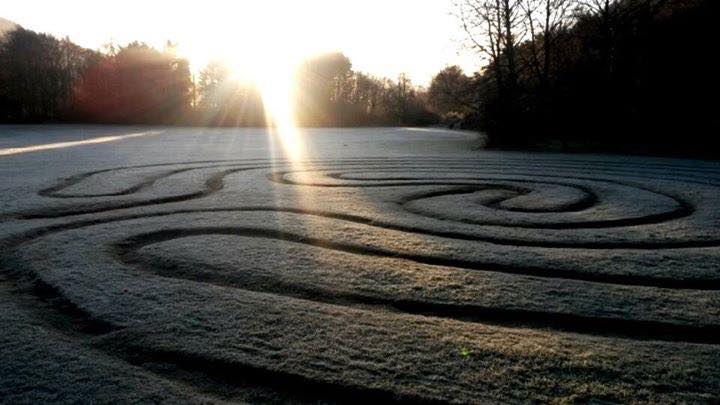
Holy Week invites us into a world full of betrayal, abandonment, mockery, violence, and ultimately death. The Triduum, those three sacred days which constitute one unfolding liturgy, call us to experience communion, loss, and the border spaces of unknowing. Holy Saturday is an invitation to make a conscious passage through the liminal realm of in-between.
I love the wide space of Holy Saturday that lingers between the suffering and death of Jesus on Friday and the vigil Saturday night proclaiming the return of the Easter fire. For me, Holy Saturday evokes much about the human condition—the ways we are called to let go of things or people, identities or securities and then wonder what will rise up out of the ashes of our lives. The suffering that we experience because of pain or grief or great sorrow and we don’t know if we will ever grasp joy again. Much of our lives rest in that space between loss and hope. Our lives are full of Holy Saturday experiences.
In their book The Last Week: What the Gospels Really Teach About Jesus’s Final Days in Jerusalem, Marcus Borg and John Dominic Crossan write:
Easter completes the archetypal pattern at the center of the Christian life: death and resurrection, crucifixion and vindication. Both parts of this pattern are essential: death and resurrection, crucifixion and vindication. When one is emphasized over the other distortion is the result. The two must be affirmed equally.
Before we rush to resurrection we must dwell fully in the space of unknowing, of holding death and life in tension with each other, to experience that liminal place so that we become familiar with its landscape and one day might accompany others who find themselves there and similarly disoriented. The wisdom of the Triduum is that we must be fully present to both the starkness of Friday and to the Saturday space between, before we can really experience the resurrection. We must know the terrible experience of loss wrought again and again in our world so that when the promise of new life dawns we can let it enter into us fully in the space carved by loss. As the great poet of Hafiz reminds us, we must let our loneliness “cut more deep” and “season” us, so that we are reminded of our absolute dependence on the Source of all.
When I first moved to the Pacific Northwest United States in 2003 I fell in love with trails that run along the border spaces between forest and ocean. Walking these paths is like walking along the edges where two wild places meet, and in that space I encounter the wilderness within me. This landscape of earth and sea pressed against each other, wild against wild, speaks to something deep within me—that place where God’s voice often whispers and sometimes roars. It reflects the landscape of my soul in a way that no other place had until I moved to Ireland and found a new landscape of wild edges. I somehow feel very much at home in this place of borders. We often try to domesticate God and to make spirituality about happiness or feeling good. We try and tie things up in neat packages. The spiritual journey is about none of these. It demands something of us and calls us to stand in uncomfortable places while the deserts of our lives strip away ego and power and identity. It calls us to embrace the God of wild borderlands.
This Lent has been in part for me about dwelling in the border spaces of my life and recognizing those places and experiences that do not offer me easy answers, those fierce edges of life where things are not as clear-cut as I hope for them to be. There is beauty in the border spaces, those places of ambiguity and mystery. In Esther de Waal’s rich little book To Pause at the Threshold: Reflections on Living on the Border, she writes that the ability to live with uncertainty requires courage and the need to ask questions over finding answers. I am called to hold the space for mystery within me.
In Living on the Border of the Holy: Renewing the Priesthood of All, William Countryman writes that this border country is one we all carry within us. There is a fault line running down the middle of our lives that connects our ordinary reality with its deeper roots. The border country, he argues, is what gives our lives meaning:
This border country is a place of intense vitality. It does not so much draw us away from the everyday world as it plunges us deeper into a reality of which the everyday world is like the surface . . . To live there for a while is like having the veils pulled away.
Threshold space opens us up to life that is vital, intense, and filled with unknowns. Borders and edges are the places of transformation, transformation that makes demands of us. Jesus’ journey in the desert was a willingness to dwell in the border space of that landscape and the walk toward Holy Week often fills me with more questions than answers.
Much of our lives are spent in Holy Saturday places but we spend so much energy resisting, longing for resolution and closure. Our practice this day is to really enter into the liminal zone, to be present to it with every cell of our being.
Make some time on Holy Saturday to sit with all of the paradoxes of life. Bring yourself as fully present as you can to the discomfort of the experience. Rest in the space of waiting and unknowing and resist trying to come up with neat answers or resolutions. Imagine yourself on a wild border or standing on a threshold, knowing that you cannot fully embrace what is on the other side until you have let this place shape and form your heart. When you notice your attention drifting or your mind starting to analyze, return to your breath and the present moment. Allow yourself to feel whatever arises in this space. Honor the mystery.
Previous Post

March 20, 2016
A Different Kind of Fast: Part Seven - Embrace Mystery
Next Post

March 27, 2016 Practice Resurrection: The Call of Easter
Browse Our Archives
Select a Category Easter Lent Uncategorized
Select a Month May 2016 April 2016 March 2016 February 2016 January 2016 September 2015 June 2015 May 2015 February 2015
Follow Us!
TAKE THE
Religious Wisdom Quiz
What does "Jairus" mean in Hebrew?
Select your answer to see how you score.
God is my portion Servant of God He enlightens The Lord judges
Related posts from The Sacred Art of Living
Practicing Resurrection: The Gift of Holy Surprise
Practicing Resurrection: The Journey Home
Practicing Resurrection: Love and Peace as Holy Direction

Practicing Resurrection: Love One Another
TRENDING AT PATHEOS Progressive Christian

Why Christians Have a Sacred Duty to Vote:...
The Bible offers strong support for the sacred duty to vote. Here...

What Being a Modern-Day Apostle Means to Me
In my last column, I discussed the ins and outs of modern-day...

Did Ancient China Once Worship the God of...
Across human history, a common thread weaves through the origins of the...

Love Your Neighbor – Including Earth-Kin: Lev. 19,...
God’s command to love your neighbor means acting in an ethical and...

Lead a Church Study of “Jesus and Lao...
Guest writer Jack Thomas (The Irreverent Reverend) reflects on leading his church...

Principles for Understanding the Apostolic Ministry Today
Whenever people discover that my formal ministry title is "apostle," as in...
view all Progressive Christian blogs
Ad-Free & Subscriber Log-In Subscription Support
- About Us
- 2026 Calendar
- Videos
- Podcasts
- Library of World Religions
- Faith In Media Tracker
- Advertise With Us
- Write for Us
- Privacy Policy
- Terms of Service
- Do Not Sell My Data
- Contact Us
- Radiant Digital
- Manage Newsletter Subscriptions
- Unsubscribe From Notifications
- Sitemap
Copyright 2008-2026, Patheos. All rights reserved.
Subscription Support Ad-Free & Subscriber Log-In
Follow Patheos