
BuddhistCatholicContemplativeEvangelicalGeneral ChristianHinduJewishLatter-day SaintMuslimNew VisionsProgressive Christian
Beliefs
- Buddhist
- Catholic
- Contemplative
- Evangelical
- General Christian
- Hindu
- Jewish
- Latter-day Saint
- More Voices
- Muslim
- New Visions
- Pagan
- Progressive Christian
Topics
- Religion News
- Food and Religion
- Sports and Religion
- Religious Art
- Religious Music and Entertainment
- Religious Events
- History and Religion
- Style and Religion
- Politics and Religion
- Women in Religion
- Recreation Outdoors and Religion
- Business Finance and Religion
- Careers Workplace and Religion
- Education and Religion
- Family Parenting and Religion
- Health Fitness and Religion
- Home and Religion
- Relationships and Religion
- Technology and Religion
- Travel and Religion
Columnists
- Buddhist Columnists
- Business Finance and Religion Columnists
- Careers Workplace and Religion Columnists
- Catholic Columnists
- Contemplative Columnists
- Education and Religion Columnists
- Evangelists Columnists
- Family Parenting and Religion Columnists
- General Christian Columnists
- Health Fitness and Religion Columnists
- Hindu Columnists
- History and Religion Columnists
- Home and Religion Columnists
- Jewish Columnists
- More Voices Columnists
- Latter Day Columnists
- Muslim Columnists
- New Visions Columnists
- Nonreligious Columnists
- Pagan Columnists
- Politics and Religion Columnists
- Progressive Columnists
- Recreation Outdoors and Religion Columnists
- Relationships and Religion Columnists
- Religion News Columnists
- Religious Art Columnists
- Religious Events Columnists
- Religious Music and Entertainment Columnists
- Sports and Religion Columnists
- Style and Religion Columnists
- Technology and Religion Columnists
- Travel and Religion Columnists
- Women in Religion Columnists
Resource Library
- 2026 Calendar
- Library of World Religions
- The 100 Most Holy Places on Earth
- Patheos Answers
- Podcasts
- Videos
- Faith Leaders Database
- Anglican Episcopalian
- Bahai
- Baptist
- Buddhism
- Christianity
- Confucianism
- Eastern Orthodoxy
- Hinduism
- Holiness and Pentecostal
- ISKCON
- Islam
- Judaism
- Lutheran
- Methodist
- The Church of Jesus Christ of Latter-day Saints
- New Age
- Paganism
- Presbytarian and Reformed
- Protestantism
- Religion Behind the Scenes
- Roman Catholic
- Scientology
- Shia Islam
- Sikhism
- Sufism
- Sunni Islam
- Taoism
- Zen
- See all religions
Research Tools
 Ad-Free & Subscriber Log-In Subscription Support
Ad-Free & Subscriber Log-In Subscription Support
Follow Patheos 

- Trending:
- Forgiveness
- |
- Marriage
- |
- Consciousness
- |
- Death Penalty
- |
- Election
- |
- Halloween
 The Vatican II Lutheran
- Home
- Catholic
- Part 4 – What Are We Asking In the Our Father
Part 4 – What Are We Asking In the Our Father
Last updated on: April 16, 2019 at 7:51 am by Russell E. Saltzman
Part 4 – What Are We Asking In the Our Father 2019-04-16T07:51:41-06:00 Russell E. Saltzman
Patheos Explore the world's faith through different perspectives on religion and spirituality! Patheos has the views of the prevalent religions and spiritualities of the world.
Give us our daily bread.
We have prayed both for and against ourselves in the early petitions. We have prayed for the Father’s kingdom against our own. We have prayed for the Father’s will, however much I might prefer my own. It is his kingdom, his will, and we have prayed that it will come and be done so we may know him as our Father. We have prayed against our own will, our own kingdom.
We must do this because the human inclination is to reject God and Christ, his Word. We’d rather go our own merry way even if it ends in oblivion. These are petitions asking God to put our sins to death that he might thereby, so Psalm 51 pleads, “create in me a clean heart.”
Clean hearts is God’s work. We’re not up to it. “Prone to wander, Lord, I feel it,” says Robert Robinson’s old hymn, “prone to leave the God I love.”
St. Augustine puts it, it is God who must make us obedient that we will greet his kingdom and happily seek his will. To do this he gives us his Word, the sacraments of the Church, our companions in faith. Through these the Holy Spirit works upon us to soften our hearts and train our minds, to summon us back from our wanderings.
Here’s the thing, no mistake: Every petition so far has been as much contra nos as it has been pro nobis.
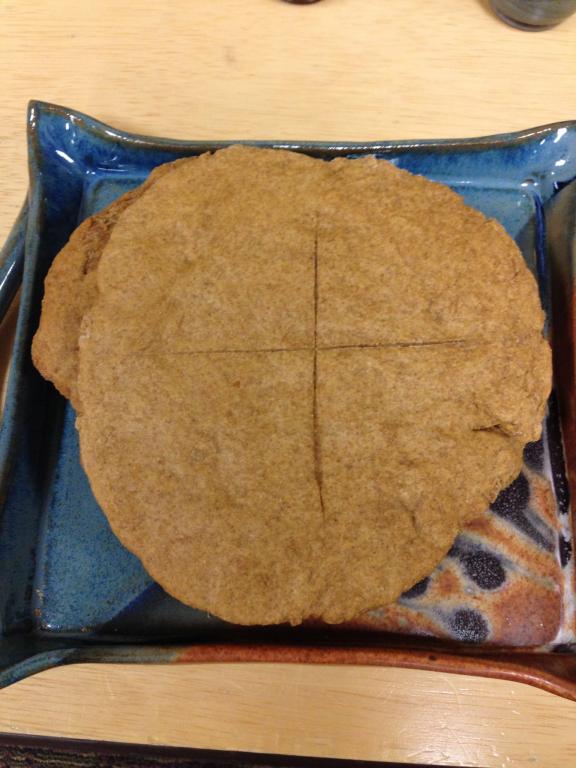
Photo Credit: River of Hope
We now come to the petitions from the resurrection side of baptism, praying “Give us our daily bread.” As bread goes, Psalm 145 says we’re already covered. “The eyes of all look hopefully to you; you give them their food in due season.”
If God does that, why do we ask? It is so we will know it is God’s bread and give thanks for it.
Oops. Here again we bump into fallen Adam, fallen Eve. They turn up their noses at God’s bread. “Why do I have to thank anybody for what I earn from my own work? It’s my bread. If I didn’t work for it, I wouldn’t get to eat it.”
Ah, stop. Remember, we are a new people washed in the waters of God’s love. By now, having prayed the previous petitions, we ought to know that life is more than our own triumphs and more than our own bellies.
Recognizing the gifts of God that imbue daily life, we begin to see his abundance in the small and defining things we encounter daily. It’s more than bread, you know. Bread is a summary, and as we sink our teeth deeper into the joys of life, God tenderizes our hearts.
The world is fallen into sin. Creation, in a word used by Paul J. Griffiths, is the world “devastated,” a charnel house of blood and violence. That is the effect of sin.
Yet God gives visions. We still catch the flickering traces of creation’s dramatic beauty and surprising kindnesses. These forecast our Father’s final creative goal. These hints, these sparkles that dazzle so, are providential visitations with an ultimate hope of Eden restored.
Raised in baptism to the life of Christ we see with new eyes the ennobling gifts that bless human living. “Bread,” like I said, means more than bread. To pray this is to give thanks for all needful things, including the gift of human ingenuity ― with all of its promise and threat ― in the co-creative task God has given to us.
Co-creative? In Genesis (2:18-20) – I love this story – God gives to humanity the chore of naming the animals, naming all things in creation. The force of the text indicates God would not know their names until spoken by the man. I am deeply fascinated by this. In my somewhat whimsical view of scripture, I imagine a conversation, God and humanity:
God: Okay. What’s this?
Man: A platypus.
God: Say what?
Man: You said I could name it.
God: Alright, a platypus. But remember, you have to take care of it.
We name the things of creation and become co-creators with the Father, and assume responsibility for the gifts the Father as given for our conscientious use. Like the writer of Psalm 90, we beg God to “prosper the work of our hands” when we beg for his bread.
We seek in creation everything that “bread” is: family, good government, faithful leaders in society and Church, peace, health, decency, honor, and enduring companionship.
We have also raised a plea for those who lack this day’s bread. To ask for God’s bread evokes our accountability to our neighbors, “in solidarity with their needs and sufferings.”
We finally ask also for the bread of life that is God’s Word. This petition relentlessly links us to the Eucharist, to the coming feast day of the kingdom consummated. As we pray for and know the joy of the bonds of kinship in our family suppers, so here we pray for a promised kinship transcending time and eternity.
Russell E. Saltzman lives in Kansas City, Missouri. His latest book is Speaking of the Dead. He can be reached at [email protected]and on Twitter @RESaltzman.
Previous Post

April 11, 2019
Part 3 - What Are We Asking In the Our Father
Next Post

April 18, 2019 Part 5 - What Are We Asking In the Our Father?
Browse Our Archives
Select a Category AIDS American Social Life American Solidarity Party Ash Wednesday Books Consciousness Death Penalty Diabetes Early Christianity End of Life Ethics Family inheritance Funeral Sermons God as Other Immigration Luther's Reformation March for Life Pagans v. Christians Pandemic Pets Politics Presidential Reporting Pro-Life LIterature Remembrance Richard Neuhaus Science Fiction The Devil The Our Father Uncategorized Watergate Wild life
Select a Month September 2022 August 2022 March 2022 November 2021 July 2021 September 2020 June 2020 February 2020 January 2020 October 2019 September 2019 August 2019 July 2019 April 2019 March 2019 February 2019 January 2019
Follow Us!
TAKE THE
Religious Wisdom Quiz
Who was Hosea's wife, whom he redeemed from slavery?
Select your answer to see how you score.
Esther Gomer Deborah Ruth
Related posts from The Vatican II Lutheran
Part 8 - What Are We Asking For...
Part 7 - What Are We Asking In...

Part 5 - What Are We Asking In...

Part 6 - What Are We Asking In...
TRENDING AT PATHEOS Catholic

The Parable Of The Sower And The Word...
One of Christ’s most famous parables is that of the sower who...

Rejecting Doom: Christian Hope And Human Action
Christianity is a religion of hope. We are to have hope and...

Why I Choose the Eucharist Over the Sermon
Choose the Eucharist, Not the Sermon What are we supposed to get...

5 Design Elements Found in Spiritually Rooted Homes
Putting Spirituality Into Home Decor Our homes are more than our living...

Credo: A Story of God Told with the...
About 10 years ago, I began to imagine a personal "Credo" that...

The Anatomy of Divine Revelation in Catholic Thought
The claim that God has made Himself known to human beings is...
view all Catholic blogs
Ad-Free & Subscriber Log-In Subscription Support
- About Us
- 2026 Calendar
- Videos
- Podcasts
- Library of World Religions
- Faith In Media Tracker
- Advertise With Us
- Write for Us
- Privacy Policy
- Terms of Service
- Do Not Sell My Data
- Contact Us
- Radiant Digital
- Manage Newsletter Subscriptions
- Unsubscribe From Notifications
- Sitemap
Copyright 2008-2026, Patheos. All rights reserved.
Subscription Support Ad-Free & Subscriber Log-In
Follow Patheos