
BuddhistCatholicContemplativeEvangelicalGeneral ChristianHinduJewishLatter-day SaintMuslimNew VisionsProgressive Christian
Beliefs
- Buddhist
- Catholic
- Contemplative
- Evangelical
- General Christian
- Hindu
- Jewish
- Latter-day Saint
- More Voices
- Muslim
- New Visions
- Pagan
- Progressive Christian
Topics
- Religion News
- Food and Religion
- Sports and Religion
- Religious Art
- Religious Music and Entertainment
- Religious Events
- History and Religion
- Style and Religion
- Politics and Religion
- Women in Religion
- Recreation Outdoors and Religion
- Business Finance and Religion
- Careers Workplace and Religion
- Education and Religion
- Family Parenting and Religion
- Health Fitness and Religion
- Home and Religion
- Relationships and Religion
- Technology and Religion
- Travel and Religion
Columnists
- Buddhist Columnists
- Business Finance and Religion Columnists
- Careers Workplace and Religion Columnists
- Catholic Columnists
- Contemplative Columnists
- Education and Religion Columnists
- Evangelists Columnists
- Family Parenting and Religion Columnists
- General Christian Columnists
- Health Fitness and Religion Columnists
- Hindu Columnists
- History and Religion Columnists
- Home and Religion Columnists
- Jewish Columnists
- More Voices Columnists
- Latter Day Columnists
- Muslim Columnists
- New Visions Columnists
- Nonreligious Columnists
- Pagan Columnists
- Politics and Religion Columnists
- Progressive Columnists
- Recreation Outdoors and Religion Columnists
- Relationships and Religion Columnists
- Religion News Columnists
- Religious Art Columnists
- Religious Events Columnists
- Religious Music and Entertainment Columnists
- Sports and Religion Columnists
- Style and Religion Columnists
- Technology and Religion Columnists
- Travel and Religion Columnists
- Women in Religion Columnists
Resource Library
- 2026 Calendar
- Library of World Religions
- The 100 Most Holy Places on Earth
- Patheos Answers
- Podcasts
- Videos
- Faith Leaders Database
- Anglican Episcopalian
- Bahai
- Baptist
- Buddhism
- Christianity
- Confucianism
- Eastern Orthodoxy
- Hinduism
- Holiness and Pentecostal
- ISKCON
- Islam
- Judaism
- Lutheran
- Methodist
- The Church of Jesus Christ of Latter-day Saints
- New Age
- Paganism
- Presbytarian and Reformed
- Protestantism
- Religion Behind the Scenes
- Roman Catholic
- Scientology
- Shia Islam
- Sikhism
- Sufism
- Sunni Islam
- Taoism
- Zen
- See all religions
Research Tools
 Ad-Free & Subscriber Log-In Subscription Support
Ad-Free & Subscriber Log-In Subscription Support
Follow Patheos 

- Trending:
- Forgiveness
- |
- Marriage
- |
- Consciousness
- |
- Death Penalty
- |
- Election
- |
- Halloween
 The Vatican II Lutheran
- Home
- Catholic
- Things Martin Luther Never Did
Things Martin Luther Never Did
Last updated on: February 5, 2019 at 2:04 pm by Russell E. Saltzman
Things Martin Luther Never Did 2019-02-05T14:04:44-06:00 Russell E. Saltzman
Patheos Explore the world's faith through different perspectives on religion and spirituality! Patheos has the views of the prevalent religions and spiritualities of the world.
I have an email asking why, as The Vatican II Lutheran, I have so far said little about Luther, Lutherans, or even Vatican II. No special reason; I’ve simply found other things to mention. But for the emailer, Marcia, girl, this is for you.
1) Nail his 95 Theses on indulgences to the door of the Wittenberg Castle church. This is a fable. Luther himself never spoke of the incident. In fact the story is not mentioned until after Luther’s death (d. 1546), some 30 years later. There are no contemporary accounts.
But in 1617, on the cusp of the Thirty Years’ War, Lutherans in the Rhineland were seeking something to boost morale against the Hapsburg Catholics. The centennial image of a stout son of Germany stalking down a Wittenberg avenue, hammer and nail in hand, striking the first sparks of German freedom against papal shackles, well, that was too good to ignore.
The Germans found other uses for “unser Luther” (our Luther). During World War I Germany invoked “Luther the Nationalist.” Properly propagandized, the picture of Luther’s stubborn moxie found good use in war time and, to Lutheran shame, his Against the Jews was trotted out by the Nazis for their Jewish persecutions. (Luther’s anti-Jewish writings have been solemnly repudiated by the Lutheran World Federation.)
What did happen? Luther sent his theses off to the Archbishop of Mainz, Prince-Elector Albert of Brandenburg, in whose lands the indulgences were being sold. That was October 31, 1517; hagiographers’ did get the date right.
Albert understood he had a problem and forwarded them on to the theological faculty at the University of Mainz. Albert had a stake in it. He was splitting indulgence sale proceeds with the Vatican. He initially hoped Luther could be persuaded quietly to drop his objections. That might have worked; Luther had no interest in embarrassing his Saxony prince and imperial elector, Fredrick the Wise (d. 1525), living next door to Albert.
Luther thought Albert would take the abuses into account and simply end the sales or, since they were theses, there might be a rousing but polite debate, Mainz v. Wittenberg. Mind you, Luther did not attack indulgences per se; only the commercial practices around them. He complained later he had done everything properly.
By that time, though, the Theses were out of Luther’s hand. They were published in German (without Luther’s knowledge) and raced around Wittenberg and Mainz and down to Rome. The indulgence market in Germany tanked. The questions Luther rather naively raised went far beyond Luther himself. He was then an unknown small-town university professor living in an Augustinian monastery. But they found a ready audience.
2) Luther removed 7 books from the Bible. Short answer: no he didn’t. How we ended up with a “protestant” Bible vs. a “catholic” Bible is a different story, but Luther kept all the same books presently found in the “catholic” Bible.
The intertestamental books are called the Apocrypha among Protestants and the Deuterocanon (“second canon”) by Roman Catho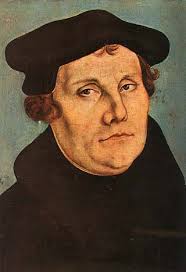 lics. Those books were written originally in Greek, and they are called “intertestamental” because were complied over the four centuries after Malachi and before Christ. The earlier books of the Old Testament are in Hebrew or Aramaic.
Luther put the Greek intertestamental books in a separate section. Oddly, St. Jerome (d. 420) did the same thing in his translation. Doing that, Jerome followed the same order the Jews did: Hebrew books first, Greek intertestamental books second.
Luther translated the New Testament into German from Greek in 1522, a labor of 10 intense months, using, by the way, the Greek translation by Erasmus of Rotterdam. He finished the Old Testament and Deuterocanon in 1538.
What Luther’s German Bible did was fix the High German language in the culture, in the same way Shakespeare fixed English. Had he never done anything else, had he not jilted Holy Mother Church, he would be remembered if only for his Bible.
3) Luther did not start the Reformation. In many ways it was already underway. Germans were awakening to a national spirit. The price-electors and free cities were loyal to the Holy Roman emperor, but ties with Rome were weakening. Luther’s prince-elector, Fredrick, was only one prince among many who forbade the sale of indulgences on their land; too much German money going to Rome. Religion was becoming a tool of statecraft.
Luther wasn’t the only theologian to critique Church practices and complain of corruption. Humanist philosophers such as St. Thomas More (d. 1535) and Erasmus of Rotterdam (d. 1536) were equally critical. Erasmus in his way was probably as stinging as Luther, but he had friends at the papal court. More became embroiled in English politics and lost his head to Henry VIII. What neither of them did was deny the legitimacy of the papacy itself, even while expressing harsh reservations about certain of its occupants.
The Lateran Council, 1512-1517, ended just 7 months before Luther’s Theses. It did make a number of reforms (including the one I best like, decreeing priests have “documented competence in preaching”). The reforms were actually more aspirational than operational. They simply did not have enough time to filter into the life of the Church before being overtaken by events.
Reformation was coming. The question was where and around whom it would coalesce. Luther was the fellow standing in the intersection when pileup happened. Protestant historians often call the Reformation a “tragic necessity.” I will say, “tragic,” and just leave it there.
Russell E. Saltzman publishes every Tuesday and Thursday at noon Central Time. He can be reached on Twitter as @RESaltzman, on Facebook as Russ Saltzman, and by email: [email protected]
Photo: Public Domain
Previous Post

January 29, 2019
March for Life after Covington
Next Post

February 5, 2019 About the Animals
Browse Our Archives
Select a Category AIDS American Social Life American Solidarity Party Ash Wednesday Books Consciousness Death Penalty Diabetes Early Christianity End of Life Ethics Family inheritance Funeral Sermons God as Other Immigration Luther's Reformation March for Life Pagans v. Christians Pandemic Pets Politics Presidential Reporting Pro-Life LIterature Remembrance Richard Neuhaus Science Fiction The Devil The Our Father Uncategorized Watergate Wild life
Select a Month September 2022 August 2022 March 2022 November 2021 July 2021 September 2020 June 2020 February 2020 January 2020 October 2019 September 2019 August 2019 July 2019 April 2019 March 2019 February 2019 January 2019
Follow Us!
TAKE THE
Religious Wisdom Quiz
What is a "cubit's" approximate length according to the Bible?
Select your answer to see how you score.
24 inches 36 inches 12 inches 18 inches
Related posts from The Vatican II Lutheran

Divorce and Dogs and Nobody Cares About the...

What the Church Fathers Had to Figure Out
Phillip K. Dick, a Charleston tour guide, and...
TRENDING AT PATHEOS Catholic

The Parable Of The Sower And The Word...
One of Christ’s most famous parables is that of the sower who...

Rejecting Doom: Christian Hope And Human Action
Christianity is a religion of hope. We are to have hope and...

Why I Choose the Eucharist Over the Sermon
Choose the Eucharist, Not the Sermon What are we supposed to get...

5 Design Elements Found in Spiritually Rooted Homes
Putting Spirituality Into Home Decor Our homes are more than our living...

Credo: A Story of God Told with the...
About 10 years ago, I began to imagine a personal "Credo" that...

The Anatomy of Divine Revelation in Catholic Thought
The claim that God has made Himself known to human beings is...
view all Catholic blogs
Ad-Free & Subscriber Log-In Subscription Support
- About Us
- 2026 Calendar
- Videos
- Podcasts
- Library of World Religions
- Faith In Media Tracker
- Advertise With Us
- Write for Us
- Privacy Policy
- Terms of Service
- Do Not Sell My Data
- Contact Us
- Radiant Digital
- Manage Newsletter Subscriptions
- Unsubscribe From Notifications
- Sitemap
Copyright 2008-2026, Patheos. All rights reserved.
Subscription Support Ad-Free & Subscriber Log-In
Follow Patheos