
BuddhistCatholicContemplativeEvangelicalGeneral ChristianHinduJewishLatter-day SaintMuslimNew VisionsProgressive Christian
Beliefs
- Buddhist
- Catholic
- Contemplative
- Evangelical
- General Christian
- Hindu
- Jewish
- Latter-day Saint
- More Voices
- Muslim
- New Visions
- Pagan
- Progressive Christian
Topics
- Religion News
- Food and Religion
- Sports and Religion
- Religious Art
- Religious Music and Entertainment
- Religious Events
- History and Religion
- Style and Religion
- Politics and Religion
- Women in Religion
- Recreation Outdoors and Religion
- Business Finance and Religion
- Careers Workplace and Religion
- Education and Religion
- Family Parenting and Religion
- Health Fitness and Religion
- Home and Religion
- Relationships and Religion
- Technology and Religion
- Travel and Religion
Columnists
- Buddhist Columnists
- Business Finance and Religion Columnists
- Careers Workplace and Religion Columnists
- Catholic Columnists
- Contemplative Columnists
- Education and Religion Columnists
- Evangelists Columnists
- Family Parenting and Religion Columnists
- General Christian Columnists
- Health Fitness and Religion Columnists
- Hindu Columnists
- History and Religion Columnists
- Home and Religion Columnists
- Jewish Columnists
- More Voices Columnists
- Latter Day Columnists
- Muslim Columnists
- New Visions Columnists
- Nonreligious Columnists
- Pagan Columnists
- Politics and Religion Columnists
- Progressive Columnists
- Recreation Outdoors and Religion Columnists
- Relationships and Religion Columnists
- Religion News Columnists
- Religious Art Columnists
- Religious Events Columnists
- Religious Music and Entertainment Columnists
- Sports and Religion Columnists
- Style and Religion Columnists
- Technology and Religion Columnists
- Travel and Religion Columnists
- Women in Religion Columnists
Resource Library
- 2026 Calendar
- Library of World Religions
- The 100 Most Holy Places on Earth
- Patheos Answers
- Podcasts
- Videos
- Faith Leaders Database
- Anglican Episcopalian
- Bahai
- Baptist
- Buddhism
- Christianity
- Confucianism
- Eastern Orthodoxy
- Hinduism
- Holiness and Pentecostal
- ISKCON
- Islam
- Judaism
- Lutheran
- Methodist
- The Church of Jesus Christ of Latter-day Saints
- New Age
- Paganism
- Presbytarian and Reformed
- Protestantism
- Religion Behind the Scenes
- Roman Catholic
- Scientology
- Shia Islam
- Sikhism
- Sufism
- Sunni Islam
- Taoism
- Zen
- See all religions
Research Tools
 Ad-Free & Subscriber Log-In Subscription Support
Ad-Free & Subscriber Log-In Subscription Support
Follow Patheos 

- Trending:
- Forgiveness
- |
- Marriage
- |
- Consciousness
- |
- Death Penalty
- |
- Election
- |
- Halloween

- Home
- Progressive Christian
- Family, Parenting and Religion
- How does support for abortion fulfill the Great Commandment and the Great Commission?
How does support for abortion fulfill the Great Commandment and the Great Commission?
Last updated on: July 3, 2023 at 11:53 am by Roland Warren
How does support for abortion fulfill the Great Commandment and the Great Commission? 2023-07-03T11:53:54-04:00 Roland Warren
Patheos Explore the world's faith through different perspectives on religion and spirituality! Patheos has the views of the prevalent religions and spiritualities of the world.
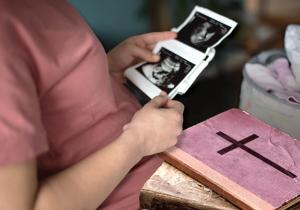
In my last post, I posed the question, “Is the Pro-Choice position consistent with the life and the teachings of Jesus Christ?” and provided some perspective regarding why this is a central question for all Christians to consider. There are 4 key follow-up questions to address to rightly and Biblically answer this question. The first is “How does support for abortion fulfill the Great Commandment and the Great Commission?” Indeed, as Christians, we are called to live out these two great initiatives. These two bookends of the Christian faith represent Christ’s call to all of us, and we are charged to promote and proclaim them in the public square as well.
The Great Commission and Abortion
The Great Commandment is found in the Gospel accounts of Matthew and Mark. Jesus also presents the Great Commandment as the answer to a question that was asked of him in Luke 10: 25-37. A lawyer comes to him and says, “What must I do to inherit the kingdom of God?” It’s a question any Christian should be asking. Of course, Jesus didn’t chastise him. Instead, we read that he leaned into the question because he thought it was a good one. And he responded, “What do the scriptures say?” The lawyer responded, “You should love your God with all your heart, with all your strength, with all your soul, and with all your mind, and love your neighbor as yourself.” Jesus gives him the thumbs up – this is the Great Commandment. In other parts of Scripture, Jesus teaches how all of Scripture is hanging on these commandments.
One can even see the Great Commandment in the creation story in Genesis. God created Adam and then He created Adam’s neighbor, Eve, from Adam’s rib bone. Eve was bone of Adam’s bone; so when Adam loved Eve, he was loving her like himself, because she was, in a real sense, himself. Therefore, until sin broke this love relationship with God and between neighbors in the Garden, we had the Great Commandment in action. Whenever there is conflict in any human relationship—family or society—it reflects a breakdown or violation of the Great Commandment.
Three Loves
The Great Commandment rests on three loves: love of God, love of neighbor, and love of self. When I started to reflect on this in the context of the life issue and abortion, I believe God gave me an amazing insight about the word “neighbor.” In the Greek, it actually means “near one” or “near fellow.” So, loving your neighbor as yourself means “loving your near one as you love yourself.”
And when you look at the word “love” that is used in this verse, it is the highest love possible. In Greek, it is agapē or agape love in English. It is a sacrificial love. The same word for love is used in John 3:16: “For God so loved the world, that he gave his only begotten son that whosoever believes in him will not perish, but have eternal life.” It is also used in John 15:13: “Greater love has no one than this, that he lays down his life for his friends.” So, per the Great Commandment, we are supposed to have a sacrificial love for our neighbors, our near ones.
How does this relate to the life issue? If a woman is pregnant, who is her nearest near one? Nearness can be considered in two ways—physical proximity (next to you) and relationship proximity (next of kin). In the case of a pregnant woman, it is her baby, growing in her womb. Her baby is as physically and relationally close to her as possible.
Now, if a man got a woman pregnant, who is his near one? In this context, the vulnerable woman certainly is his neighbor, but also the baby in her womb—bone of his bone and flesh of his flesh. That is his nearest near one—his next of kin.
So, whether we profess to be pro-life or pro-choice, we must as Christians ask ourselves a question: “How is the decision to abort a baby, one of God’s image bearers, an act of sacrificial love towards God?” Or, more succinctly, how does aborting a child align with the Great Commandment? Remember, Jesus said this commandment is the first and greatest: to love God and to love your neighbor as yourself.
As Christians, we must then ask ourselves a second question: “How is aborting your near one, this neighbor in the womb, an act of sacrificial love for your neighbor?” Again, there are three inseparable loves in this passage—love for God, love for neighbor, and love for self. If you separate these loves, the virtue of the Great Commandment can become a vice. For example, if one loves God but does not love his neighbor, 1 John 4:21 declares, “And this commandment we have from him: whoever loves God must also love his brother.” And, if one loves his neighbor but does not love God, that is humanism, where one’s love for neighbor is not anchored in anything immutable. It is like a boat tied to another boat, but not to a dock. Things are fine until the storms and challenges of life come and your neighbor’s boat starts pulling you into rough water. In those cases, we tend to cut the rope, don’t we? With humanism, our neighbors can easily become lives worth sacrificing.
Indeed, abortion is an act that declares from its core, “I don’t love God and I don’t love my neighbor, but I do love myself.” This type of self-love becomes the vice of idolatry. So the sacrificial love for others that Jesus calls us to in the Great Commandment becomes a sacrificing love for self—the vulnerable little one in the womb becomes a child sacrifice. A life worth sacrificing, not a life worth sacrificing for. The virtue becomes a vice.
The Story of the Good Samaritan
Returning to Luke, where Jesus lays out the Great Commandment, the lawyer responds to Jesus by asking, “So who is my neighbor?” The lawyer, realizing he is called to a sacrificial love, tries to narrow the scope. It’s much like when Peter asked Jesus, “How many times must I forgive my brother and sister who sins against me?” Sometimes as Christians, we are tempted to minimize a higher calling when we are face to face with it. We ask questions like, “How little do I need to do to get into heaven?” But Jesus didn’t answer the lawyer’s question directly.; He answered the question with a story: that of the Good Samaritan.
In that story, a vulnerable person—at risk and unable to advocate for himself—had been injured by robbers and left on the side of the road to die. A priest comes by but moves to the other side of the road to distance himself and get by. Later, a Levite does the same. But when a Samaritan comes along, he draws close to the dying man, binds his wounds, and takes him to an inn. He cares for the vulnerable person with a sacrifice of time, talent, and treasure.
The “people of the Book,” the priest and the Levite, moved far from the near one— the neighbor. They “aborted” him in his time of vulnerability. They had their reasons— spiritual, ministry-related, political, and maybe even social justice reasons. But their reasons did not align with Biblical justice, which requires sacrificial care for the vulnerable. The Samaritan’s act shows us that the pursuit of righteousness (which should have been the focus of the priest and the Levite) must be linked to the pursuit of justice and mercy if we are to truly live out the agape love required by the Great Commandment.
After Jesus tells the story, he then asks the lawyer, “Now, who was a neighbor to the person who fell?” The lawyer replies, “The one who showed him mercy.” Then Jesus instructs, “Go and do likewise.” In other words, be a neighbor to your neighbor.
The Hebrew root of the word “mercy” further bolsters the beauty of this story. The Hebrew root for the words “mercy” and “compassion” is the same root as the word for “womb.” So, the Good Samaritan put this vulnerable person in a “womb.” We are called to model his example by showing sacrificial love to our neighbors.
The Mercy of the Womb
The womb of a mother is a place of mercy. Indeed, our mother’s womb is a point of vulnerability that we share with every other person alive today, or who has ever lived. And the only language that babies in the womb have to express themselves is their heartbeats. I believe that every baby’s heartbeat says, “Have mercy… Have mercy…Have mercy.” And every time a mother hears that heartbeat, she hears, “Have mercy… Have mercy… Have mercy.”
For all of us living today, our mothers responded, like the Good Samaritan, with agape love. A sacrificial love that says our lives were not worth sacrificing but rather lives worth sacrificing for. In other words, the only reason any of us are here today is because our mothers, at least in that moment, followed the Great Commandment.
That is why, when you look at the life issue through the lens of the Great Commandment, you see a uniquely Christian, Pro Abundant Life apologetic straight from the mouth of Jesus. So, for Christians who profess to be pro-choice, they must reconcile their perspective with the Greatest Commandment of Jesus himself.
Whether it’s human trafficking, food security, helping the incarcerated, or caring for the poor, the Great Commandment is the standard we must use to direct our actions for every issue.
When Christians who profess to be pro-choice look at the life issue through this lens and link it to the story of the Good Samaritan, they are far more likely to come to a pro-life perspective.
The Great Commission and Abortion
The other bookend of our call as Christians is the Great Commission, which is found in Matthew 28:19-20. The Great Commission calls us to make disciples and to teach them to obey all that Christ taught us.
First, what is “all that Christ taught us”? Thankfully, Christ made this simple for us when he said of the Great Commandment, “On these two commandments the whole law and the prophets depend.” In other words, living out the Great Commandment prepares us to live out the Great Commission.
Second, we are called to make disciples…of whom? Our neighbors…our near ones. Every parent’s first “discipleship calling” is to the children with whom God blesses them. For Christians professing to be pro-choice, how is aborting their children—those who they are to make disciples of Jesus Christ—an act of disciple-making? That is the equivalent of missionaries going to a foreign land to make disciples and then killing everyone there; sacrificing them so that they can have better lives for themselves. In fact, this is a common criticism of some early missionary efforts; their “disciple-making” consisted of subjugating and even killing those who they were called to love sacrificially.
Again, the act of abortion is a violation of the Great Commandment, but it is also a violation of the Great Commission, a calling of all followers of Christ.
That said, in my next post, I will address the important question, “When did Jesus’s human life begin and how should this fact affect a Christian’s view of abortion?”
Progressive Christian
General Christian

Recent Comments
"full of sound and fury, signifying nothing."
Mary’s pregnancy and how it relates ..."
"You have to make a distiction between man's law (legally) and God's law (Biblically). And, ..."
When did Jesus’s human life begin ..."
"Life (personhood) does NOT begin at conception. Read this: https://www.academia.edu/80..."
When did Jesus’s human life begin ..."
"“My body, my choice!” is extended to the vulnerable with the additional mantra, “Your body, ..."
A Black History Month Reminder–Slavery and ..."
Browse Our Archives
Select a Category Abortion Culture Faith Family Fatherhood Marriage Men Parenting Politics Uncategorized
Select a Month October 2024 May 2024 March 2024 December 2023 August 2023 July 2023 June 2023 April 2023 March 2023 April 2022 March 2022 August 2021 May 2021 March 2021 January 2021 December 2020 November 2020 July 2020 April 2020 February 2020 January 2020 August 2019 July 2019 December 2018 November 2018 September 2018 August 2018 July 2018 June 2018 April 2018 March 2018 February 2018 January 2018 December 2017 October 2017 September 2017 July 2017 June 2017 May 2017 April 2017 March 2017 February 2017 January 2017 December 2016 November 2016 October 2016 September 2016 August 2016 July 2016 June 2016 May 2016 April 2016 March 2016
Follow Us!
TAKE THE
Religious Wisdom Quiz
What does the Hebrew title for Psalms, "Tehillim," mean?
Select your answer to see how you score.
Praises Poems Prayers Wisdom
Related posts from Roland Warren

Is a 15-Week Abortion Ban Actually Pro-Choice?
Mary's pregnancy and how it relates to the...

Uncertainty of when life begins and the abortion...
When did Jesus’s human life begin and how...
TRENDING AT PATHEOS Family, Parenting and Religion

Catholic Evangelization: Sharing Your Faith Every Day
Welcome back to the Graceful Awakening mini-series called, “From Faith to Mission.” ...

The Pillar of the Boatmen: the Ancient Monument...
The Pillar of the Boatmen is a Romano-Gaulish sculpture that dates from...

In one sense walking into Westminster Abbey is like walking down the...

'Super Scam Me' Exposes AI Jon Bon Jovi...
Leslie Pickett believed she was in a relationship with Jon Bon Jovi....

The Brazilian Remake of Kendricks' 'Flywheel' Opens in...
“Flywheel,” the story that launched the Kendrick Brothers’ filmmaking career is getting...

The Dangers of Gradual Accommodation (Winking at Sin)
Recently, the “law of gradualness” resurfaced during the opening of a weeklong,...
view all Family, Parenting and Religion blogs
What Are Your Thoughts?leave a comment
Ad-Free & Subscriber Log-In Subscription Support
- About Us
- 2026 Calendar
- Videos
- Podcasts
- Library of World Religions
- Faith In Media Tracker
- Advertise With Us
- Write for Us
- Privacy Policy
- Terms of Service
- Do Not Sell My Data
- Contact Us
- Radiant Digital
- Manage Newsletter Subscriptions
- Unsubscribe From Notifications
- Sitemap
Copyright 2008-2026, Patheos. All rights reserved.
Subscription Support Ad-Free & Subscriber Log-In
Follow Patheos