
BuddhistCatholicContemplativeEvangelicalGeneral ChristianHinduJewishLatter-day SaintMuslimNew VisionsProgressive Christian
Beliefs
- Buddhist
- Catholic
- Contemplative
- Evangelical
- General Christian
- Hindu
- Jewish
- Latter-day Saint
- More Voices
- Muslim
- New Visions
- Pagan
- Progressive Christian
Topics
- Religion News
- Food and Religion
- Sports and Religion
- Religious Art
- Religious Music and Entertainment
- Religious Events
- History and Religion
- Style and Religion
- Politics and Religion
- Women in Religion
- Recreation Outdoors and Religion
- Business Finance and Religion
- Careers Workplace and Religion
- Education and Religion
- Family Parenting and Religion
- Health Fitness and Religion
- Home and Religion
- Relationships and Religion
- Technology and Religion
- Travel and Religion
Columnists
- Buddhist Columnists
- Business Finance and Religion Columnists
- Careers Workplace and Religion Columnists
- Catholic Columnists
- Contemplative Columnists
- Education and Religion Columnists
- Evangelists Columnists
- Family Parenting and Religion Columnists
- General Christian Columnists
- Health Fitness and Religion Columnists
- Hindu Columnists
- History and Religion Columnists
- Home and Religion Columnists
- Jewish Columnists
- More Voices Columnists
- Latter Day Columnists
- Muslim Columnists
- New Visions Columnists
- Nonreligious Columnists
- Pagan Columnists
- Politics and Religion Columnists
- Progressive Columnists
- Recreation Outdoors and Religion Columnists
- Relationships and Religion Columnists
- Religion News Columnists
- Religious Art Columnists
- Religious Events Columnists
- Religious Music and Entertainment Columnists
- Sports and Religion Columnists
- Style and Religion Columnists
- Technology and Religion Columnists
- Travel and Religion Columnists
- Women in Religion Columnists
Resource Library
- 2026 Calendar
- Library of World Religions
- The 100 Most Holy Places on Earth
- Patheos Answers
- Podcasts
- Videos
- Faith Leaders Database
- Anglican Episcopalian
- Bahai
- Baptist
- Buddhism
- Christianity
- Confucianism
- Eastern Orthodoxy
- Hinduism
- Holiness and Pentecostal
- ISKCON
- Islam
- Judaism
- Lutheran
- Methodist
- The Church of Jesus Christ of Latter-day Saints
- New Age
- Paganism
- Presbytarian and Reformed
- Protestantism
- Religion Behind the Scenes
- Roman Catholic
- Scientology
- Shia Islam
- Sikhism
- Sufism
- Sunni Islam
- Taoism
- Zen
- See all religions
Research Tools
 Ad-Free & Subscriber Log-In Subscription Support
Ad-Free & Subscriber Log-In Subscription Support
Follow Patheos 

- Trending:
- Forgiveness
- |
- Marriage
- |
- Consciousness
- |
- Death Penalty
- |
- Election
- |
- Halloween

- Home
- Family, Parenting and Religion
- A Black History Month Reminder–Slavery and Abortion are Very Similar. Here’s Why…
A Black History Month Reminder–Slavery and Abortion are Very Similar. Here’s Why…
Last updated on: February 11, 2020 at 1:08 pm by Roland Warren
A Black History Month Reminder–Slavery and Abortion are Very Similar. Here’s Why… 2020-02-11T13:08:19-05:00 Roland Warren
Patheos Explore the world's faith through different perspectives on religion and spirituality! Patheos has the views of the prevalent religions and spiritualities of the world.
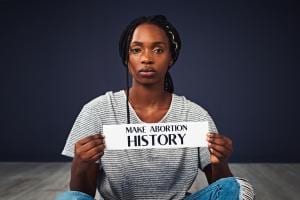 Recently, in a speech to students from Colorado Christian University, Secretary of Education Betsy DeVos, noted that opposition to abortion reminded her of the ending of slavery during President Lincoln’s administration. She said, “[Lincoln] too contended with the pro-choice arguments of his day. They suggested that a state’s choice to be slave or to be free had no moral question in it…Well, President Lincoln reminded those pro-choicers that there is a vast portion of the American people that do not look upon that matter as being this very little thing. They look upon it as a vast moral evil. Lincoln was right about the slavery ‘choice’ then, and he would be right about the life ‘choice’ today…”
Shortly after Secretary DeVos made these remarks, she was taken to task by Rep. Ayanna Pressley, who clearly had a problem the view that abortion had anything in common with slavery. Accordingly, she tweeted, “Dear Betsy, as a Black woman & the Chair of the abortion access task force, I invite you to come by the Hill and say this to my face. Would welcome the opportunity to educate you…”
Well, as a Black man who wants to see the end of abortion in this nation—a practice that has ended the lives of over 61 million babies, including an estimated 20 million who were black — I am delighted that Secretary DeVos highlighted the similarities between slavery and abortion advocacy. Ironically, it seems to me that if there is anyone in need of education this Black History month, it is Representative Pressley. Here’s why…
First, supporters of abortion and slavery both subscribe to the notion that how one came into “being” determines whether one should be considered a human being, in a legal sense. In other words, the circumstances of one’s birth determine one’s worth. In the case of slavery, just the fact that one was Black meant that one could be considered “less than” and as such, could be denied all constitutional rights and protections. With abortion, the issue is not skin color but rather “wantedness.” If a baby is not wanted by the mother, the baby is of less worth. Moreover, especially if a baby is conceived as a result of rape, the baby is considered of less worth of life than one that is not.
Interestingly, we rejected this notion as a society long ago. For example, there was a time when a child conceived out of wedlock was called “illegitimate” and even a “bastard.” And there was nothing that this child could do to erase this curse. Alas, this child’s birth determined his or her worth. No doubt, pro-choice people would agree that this type of thinking is immoral. and yet they embrace this perspective in their support of abortion.
Second, with slavery and abortion, there is a pernicious power dynamic at play. The frequently quoted pro-choice mantra “My body, my choice!” is extended to the vulnerable with the additional mantra, “Your body, my choice!” For example, “Slave Codes,” which regulated how slaves could be treated and punished, usually allowed for the killing of slaves, with no legal consequences for the slave owner. Even after slavery was ended, this “code” continued in the form of unwritten “lynch laws.” With abortion, Roe v. Wade and Doe v. Bolton operate under essentially the same principle. The unborn child is treated, not as a separate and distinct human life, but rather as the “property” of the mother that can be killed with no legal consequences. In fact, supporters of abortion are so wedded to this perspective they even reject common-sense legislation like the “Born-Alive Abortion Survivors Protection Act”, which would amend the federal criminal code to institute penalties and jail time for health care practitioners who don’t provide certain medical care in the case of an abortion or attempted abortion that results in a child born alive.
Third, with slavery and abortion, there is dehumanization and commercialization of vulnerable people. In other words, the notion that slaves and the unborn have intrinsic worth is rejected, and they have instead been ascribed a commercial value or an economic cost. For example, in former slave Frederick Douglass’s book, Narrative of the Life of Frederick Douglass, he describes the dehumanization and commercialization of slaves when he tells what happened to him after his plot to escape was foiled. Douglass writes: “We had been in jail scarcely twenty minutes, when a swarm of slave traders, and agents for slave traders, flocked into jail to look at us, and to ascertain if we were for sale… And after taunting us in various ways, they one by one went into an examination of us, with intent to ascertain our value.”
A similar dynamic is evident today in the case of the unborn. For example, in a recent news report, Iceland heralded the fact that there are virtually no babies born with Down’s Syndrome in the country. Here’s what one woman who counsels those carrying babies that may have Down’s Syndrome said she tells women: “This is your life. You have the right to choose how your life will look like…We don’t look at abortion as a murder. We look at it as a thing that we ended. We ended a possible life that may have had a huge complication… And I think that is more right than seeing it as a murder — that’s so black and white. Life isn’t black and white. Life is grey.”
Indeed, despite the compassionate sounding language, these mothers are not counseled to consider the intrinsic worth of the baby they are carrying, but rather their economic value—what will they cost to raise and what they can contribute to society. Since they are viewed as a “net expense,” they are immediately candidates for abortion. In short, when one adopts this perspective, moral clarity is lost in the “grey,” and in vitro genetic testing starts to look much like the examination that Frederick Douglass and other slaves faced on the auction block.
Finally, supporters of both slavery and abortion believe there are certain vulnerable lives worth sacrificing. This perspective is illustrated clearly in a Salon article by pro-choice writer, Mary Elizabeth Williams titled, “So What if Abortion Ends a Life.” In the article, she chastises pro-choice advocates who continue to argue that the unborn child is “just a clump of cells,” etc. Of course, holding to this notion makes one increasingly look like a “flat earther.” Why? Because at 3 weeks gestation, a heartbeat can be detected, and ultrasound technology offers a window into the womb to show human life that was not available when Roe v. Wade was decided.
Human life is not constructed like a Chevy on an assembly line, which, at some point, before it’s finished, can be scrapped to make a toaster. Human life develops like a Polaroid picture that has its God-given intrinsic worth and essence at conception and the fullness of its beauty and wonder are revealed over time. Human life can only be human life.
That said, one would think that once Williams had this epiphany about human life, she would change her position about abortion. But, alas, she did not. In fact, she ends her article with these words: “And I would put the life of a mother over the life of a fetus every single time — even if I still need to acknowledge my conviction that the fetus is indeed a life. A life worth sacrificing.”
Now, when you consider her words, it’s clear that abortion and slavery have much in common. For example, look what happens when you replace the words mother and fetus with slaveholder and slave: “And I would put the life of a slaveholder over the life of a slave every single time — even if I still need to acknowledge my conviction that the slave is indeed a life. A life worth sacrificing.”
When one considers the similarities between slavery and abortion, it’s clear that abortion must be rejected by our nation for the same reason slavery was. Indeed, as tragic as slavery was for my people, it pales in comparison, in terms of the loss of the most vulnerable black lives, as a result of abortion. So, there must be an urgency to address the one aspect that abortion and slavery don’t share in common. After slavery was codified, protected, and justified at the highest levels in the United States for hundreds of years, it was finally abolished with the 13th Amendment and black folks gained citizenship and equal rights with the 14th Amendment. Indeed, I await the great day when a similar court or legislative decision is made to finally liberate the unborn.
Born-Alive Abortion Survivors Protection Act
Previous Post

January 24, 2020
Whose Side Are You On?
Next Post

April 16, 2020 What Would Jesus Do in the time of the coronavirus? Three Key Things...
Browse Our Archives
Select a Category Abortion Culture Faith Family Fatherhood Marriage Men Parenting Politics Uncategorized
Select a Month October 2024 May 2024 March 2024 December 2023 August 2023 July 2023 June 2023 April 2023 March 2023 April 2022 March 2022 August 2021 May 2021 March 2021 January 2021 December 2020 November 2020 July 2020 April 2020 February 2020 January 2020 August 2019 July 2019 December 2018 November 2018 September 2018 August 2018 July 2018 June 2018 April 2018 March 2018 February 2018 January 2018 December 2017 October 2017 September 2017 July 2017 June 2017 May 2017 April 2017 March 2017 February 2017 January 2017 December 2016 November 2016 October 2016 September 2016 August 2016 July 2016 June 2016 May 2016 April 2016 March 2016
Follow Us!
TAKE THE
Religious Wisdom Quiz
Who did God ask to sacrifice his only son as a test?
Select your answer to see how you score.
Jacob Abraham Moses David
Related posts from Roland Warren

Is a 15-Week Abortion Ban Actually Pro-Choice?
Mary's pregnancy and how it relates to the...

Uncertainty of when life begins and the abortion...
When did Jesus’s human life begin and how...
TRENDING AT PATHEOS Family, Parenting and Religion

In one sense walking into Westminster Abbey is like walking down the...

'Super Scam Me' Exposes AI Jon Bon Jovi...
Leslie Pickett believed she was in a relationship with Jon Bon Jovi....

The Brazilian Remake of Kendricks' 'Flywheel' Opens in...
“Flywheel,” the story that launched the Kendrick Brothers’ filmmaking career is getting...

The Dangers of Gradual Accommodation (Winking at Sin)
Recently, the “law of gradualness” resurfaced during the opening of a weeklong,...

The Iron Gates and the Lion of the...
Yesterday, I didn't finish my report about, well, yesterday. So I'll...

The Image: On the Horror of Capitalism and...
The Image Then went the Pharisees, and took counsel how they might...
view all Family, Parenting and Religion blogs
Ad-Free & Subscriber Log-In Subscription Support
- About Us
- 2026 Calendar
- Videos
- Podcasts
- Library of World Religions
- Faith In Media Tracker
- Advertise With Us
- Write for Us
- Privacy Policy
- Terms of Service
- Do Not Sell My Data
- Contact Us
- Radiant Digital
- Manage Newsletter Subscriptions
- Unsubscribe From Notifications
- Sitemap
Copyright 2008-2026, Patheos. All rights reserved.
Subscription Support Ad-Free & Subscriber Log-In
Follow Patheos