
BuddhistCatholicContemplativeEvangelicalGeneral ChristianHinduJewishLatter-day SaintMuslimNew VisionsProgressive Christian
Beliefs
- Buddhist
- Catholic
- Contemplative
- Evangelical
- General Christian
- Hindu
- Jewish
- Latter-day Saint
- More Voices
- Muslim
- New Visions
- Pagan
- Progressive Christian
Topics
- Religion News
- Food and Religion
- Sports and Religion
- Religious Art
- Religious Music and Entertainment
- Religious Events
- History and Religion
- Style and Religion
- Politics and Religion
- Women in Religion
- Recreation Outdoors and Religion
- Business Finance and Religion
- Careers Workplace and Religion
- Education and Religion
- Family Parenting and Religion
- Health Fitness and Religion
- Home and Religion
- Relationships and Religion
- Technology and Religion
- Travel and Religion
Columnists
- Buddhist Columnists
- Business Finance and Religion Columnists
- Careers Workplace and Religion Columnists
- Catholic Columnists
- Contemplative Columnists
- Education and Religion Columnists
- Evangelists Columnists
- Family Parenting and Religion Columnists
- General Christian Columnists
- Health Fitness and Religion Columnists
- Hindu Columnists
- History and Religion Columnists
- Home and Religion Columnists
- Jewish Columnists
- More Voices Columnists
- Latter Day Columnists
- Muslim Columnists
- New Visions Columnists
- Nonreligious Columnists
- Pagan Columnists
- Politics and Religion Columnists
- Progressive Columnists
- Recreation Outdoors and Religion Columnists
- Relationships and Religion Columnists
- Religion News Columnists
- Religious Art Columnists
- Religious Events Columnists
- Religious Music and Entertainment Columnists
- Sports and Religion Columnists
- Style and Religion Columnists
- Technology and Religion Columnists
- Travel and Religion Columnists
- Women in Religion Columnists
Resource Library
- 2026 Calendar
- Library of World Religions
- The 100 Most Holy Places on Earth
- Patheos Answers
- Podcasts
- Videos
- Faith Leaders Database
- Anglican Episcopalian
- Bahai
- Baptist
- Buddhism
- Christianity
- Confucianism
- Eastern Orthodoxy
- Hinduism
- Holiness and Pentecostal
- ISKCON
- Islam
- Judaism
- Lutheran
- Methodist
- The Church of Jesus Christ of Latter-day Saints
- New Age
- Paganism
- Presbytarian and Reformed
- Protestantism
- Religion Behind the Scenes
- Roman Catholic
- Scientology
- Shia Islam
- Sikhism
- Sufism
- Sunni Islam
- Taoism
- Zen
- See all religions
Research Tools
 Ad-Free & Subscriber Log-In Subscription Support
Ad-Free & Subscriber Log-In Subscription Support
Follow Patheos 

- Trending:
- Forgiveness
- |
- Marriage
- |
- Consciousness
- |
- Death Penalty
- |
- Election
- |
- Halloween
 The Holy Kiss
- Home
- Progressive Christian
- Recreation, Outdoors and Religion
- Loving the Earth is Essential.
Loving the Earth is Essential.
Last updated on: April 24, 2023 at 9:34 pm by Roger Wolsey
Loving the Earth is Essential. 2023-04-24T21:34:41-07:00 Roger Wolsey
Patheos Explore the world's faith through different perspectives on religion and spirituality! Patheos has the views of the prevalent religions and spiritualities of the world.
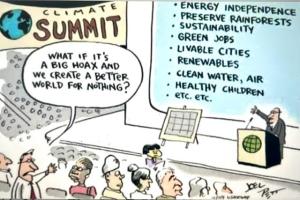
Our planet is not well. That’s an understatement. The Earth is in a state of crisis. Human aggravated global warming/climate change is a real and present danger. The frequency and severity of storms, flooding, and wildfires around the world is increasing. We Are to Blame. “Human activities have caused the world’s wildlife populations to plummet by more than two-thirds in the last 50 years, according to a report from the World Wildlife Fund.” Globally between September 2020 and February 2021, 12.5 million people were displaced by adverse impacts of climate change, the annual average exceeding 20 million. Such displacement leads to increased human conflict including war.
One of the reasons that I’m an advocate of progressive Christianity is its emphasis upon caring about the Earth that we live on. Unlike most other forms of the faith, progressive Christianity values the environment as part of our seeking to honor God and is committed to ensuring that we do our best to ensure a healthy plant for our children’s children to live upon.
 Indeed, a case can be made that Climate Change is the single most important moral matter of our day as all of the vital matters of social injustice can only be addressed if there is a sustainable planet upon which we can address them. Talk about inter-sectional.
As a somewhat prominent progressive Christian writer I’ve been asked “Why do you continue to be a Christian?” – given that I don’t believe that all Christians need to believe in certain things that many have come to believe are “expected” for Christianity. I don’t believe that all Christians need to believe in a literal virgin birth, in a literal devil or hell, a literal physical resurrection, that Jesus is literally God, that Jesus performed literal miracles (violations of the laws of physics), or that Christianity is the only or best way for humans to connect to God, etc. Notice, I haven’t overtly stated whether or not I happen believe in those things, I stated that progressive Christianity doesn’t require adherence to such beliefs.
I increasingly identify as a Christian mystic or as “a mystic who happens to be a Christian.” The mystics of the world’s religions tend to have more in common with each other than they do with the more conventional members of their respective traditions. In other words, I don’t really feel a need to be known or thought of as a Christian. That said, being a part of an established lineage matters to me. I seek to follow the way, teaching, and example of Jesus of Nazareth. Jesus (and the faith that centers him) is my love language and I seek to grow and develop in my faith in communion with fellow devotees to the way of love exemplified by Jesus. If anything, my commitment to continue to serve the Church has amplified. My sense of calling has been redoubled, and part of that is an increased awareness of the importance of my work as a Christian writer. There are 2.6 billion Christians in the world and inspiring as many of them as possible to take stewardship of the planet – Creation care – as being essential to Christian discipleship, is the most important thing I can be doing with my time left on the planet. The planet needs it. I feel strongly that this is WJWD – what Jesus would do.
Which brings us to an important matter – to what extent is the study of Jesus helpful in getting people to care about the environment?
Are we progressive Christians engaging in eisegesis – forcing our agenda onto Jesus and Christianity – rather than truly adhering to the actual teachings of Jesus?
Preaching about the environment and caring for God’s good green earth wasn’t exactly a top priority or emphasis for Jesus. I don’t think there’s any passages in the “red letters” attributed to Jesus where he is telling people to become environmentalists. Some scholars have suggested that Jesus truly felt that the world as we know it would end either within his lifetime, or within the lifetime of his first followers. To the extent that’s true, there isn’t much incentive to take care of the Earth or try to ensure it’s in good shape for future generations.
And, despite the wishes of certain vegetarians, there’s really no evidence to go around saying that “Jesus was a vegetarian – and that he wants us to not eat meat.” Jesus hung out with fishermen, and served fish to people on several occasions, and, as a faithful Jew, he likely ate lamb at Passover meals. A story has Jesus driving demons pulled from a man he healed into a herd of pigs which then jumped off a cliff. His parable known as “the prodigal son” features a celebrating father calling his servants to kill a fatted calf (veal?) as part of that celebration.
Moreover, Jesus seems to imply that humans are of greater worth and value than the other critters “Look at the birds of the air; they neither sow nor reap nor gather into barns, and yet your heavenly Father feeds them. Are you not of more value than they?” (Matthew 6:26) and he goes on to suggest there’s no reason to worry about the future “So do not worry about tomorrow, for tomorrow will bring worries of its own. Today’s trouble is enough for today.” (v.34)
Yet, if we look at the full constellation of his teachings we can find several very good reasons to believe that Jesus would bless and want us to step up our efforts to take care of this planet.
It is clear that Jesus was highly familiar with the agrarian culture he resided in. Many of the stories he told and analogies he used demonstrate someone who was highly aware of botany, farming, animal husbandry, and even meteorology. He employed such references as he knew his followers were aware of those things too.
When he interacted with a wealthy man (Mark 10:17-31) he implied that following the basics of the faith is foundational to experiencing eternal/abundant life and experiencing God’s kingdom. Jesus referred to the 10 commandments, but it’s fair to assume that he also meant to assume following God’s very first commandment to humanity – taking care of God’s creation found in the creation myth at the beginning of the Book of Genesis was also a given (Genesis 1:26-30).
Jesus actively called for people to repent from their loyalties and addictions to the way of worldly empire, and to instead shift to living simply in relational communitarian community. This way of living, sharing of wealth, resources, and property, tends toward having a low carbon footprint.
Furthermore Jesus was a Jew, and the Jewish understanding of salvation (“wholeness/well-being/healing”) is about the societal/collective just as much, if not more, than it is about the personal; and the same is true for its emphasis on the here and now – not just whatever happens after we die. Caring for the environment we live in is consistent for providing both societal and personal salvation. It’s engaging in “tikkun olam” – world repair.
Finally, if nothing else, Jesus was someone who was a radical of love. He called people to expand their sense of who to consider as being “their neighbor” – e.g., persons left for dead on the side of roads, Samaritans, tax collectors, and Roman soldiers. Jesus called us to even love our enemies – including those actively harming us. Jesus called for increasing our circle of care – realizing that everyone on the planet is our brother, sister, and sibling, and seeing that everyone is our neighbor. It is thus entirely consistent for us to work with and expand that teaching to include the rest of Creation in our circle of care – to start seeing the otters, deer, cow, ducks, bats, bugs, ponds, rivers, oceans, land, aquifers, and sky as being our siblings and neighbors too. This isn’t colonialist appropriation of the animist views of native Americans. This is valid, relevant, and appropriate exegeting and interpreting of our scriptures for our current context. Considering the planet that we live upon to not merely be “a stage” for us to temporarily use and abuse – but rather, embrace as a being for us to actively love – is a game-changer.
Many progressive Christians have come to reject the theology of supernatural theism and instead embrace the view of God via panentheism – i.e., fully immanent within all Creation as well as being fully transcendent from it. Many of us embrace Tillich’s view that God is “the ground of all being” and this jibes well with the mystic view of the Apostle Paul – that God is “the One in Whom we live, and move, and have our being.” (Acts 17:28) If those are our beliefs and understandings, then let’s behave accordingly. If we view the Earth as imbued with, and indeed part of, God – as being sacred and Divine – then we should practice what we preach and truly take care of the Earth and its environment as a priority.
Progressive Christians also do well to learn from womanist and feminist theological perspectives. We also do well to consider the insights of Creation Spirituality.
As Jesus put it, what we fail to do to “the least of these” we fail to do to him. (Matthew 25:45) We’re failing to love God by failing to reduce the spewing of global warming gasses. By engaging in such polluting of the atmosphere and aggravating global warming, we’re also “causing the little children on the planet to stumble” and not be able to thrive as God intends for them to do. (Matt. 18:6)
Jesus may not have called for us to care about having long lifespans, but he did call us to live faithfully. Living faithfully in 2023 means not just giving lip-service to Creation care. It means more than just switching to LED light-bulbs. It means listening to prophets such as Greta Thunberg and getting all hands on deck to shut down as many coal and natural gas burning power plants as quickly possible, and replace them with as many solar, wind, hydro, and even nuclear power plants as quickly as possible. It means reducing our consumption of red meat. It means reducing our driving and switching over to electric vehicles. It means shifting away from global consumerism and adopting a more regional economy. It means these things and much more.
 As a member of the Board of Directors of ProgressiveChristianity.Org (formerly The Center for Progressive Christianity) I’ve been part of the ongoing work of continually revising the “8 Points of Christianity” they created decades ago. Our most recent iteration – “Our 5 Core Values” – has within it a tenet overtly emphasizing seeking the sustainability and well-being of our planet.
May God bless us as we become evangelical in spreading the good news of Creation Care, “Green Church,” and calling for people to repent from our addictions to behaviors that harm the planet.
~ XX Roger
This article is a reworked version of an essay on Progressing Spirit, Oct. 28, 2021
(Cover art “Birth of a Planet” by Amanda Sage)
Rev. Roger Wolsey is a certified Spiritual Director, United Methodist pastor, and serves on the Board of Directors of ProgressiveChristianity.Org. He is a contributing writer for the Progressing Spirit newsletter, and author of Kissing Fish: christianity for people who don’t like christianity
His new book, Discovering Fire: Spiritual Practices That Transform Lives, is available on Amazon.

Roger’s other blogs on Patheos
If you would like to become a patron of Roger’s work as a spiritual writer, please click Here to learn more.
General Christian
Contemplative
Recreation, Outdoors and Religion
Previous Post

April 3, 2023
Discovering Fire - a Fiery Forward For Fungi Fueled Faith.
Next Post

May 11, 2023 Mother's Day on a Stick?
Recent Comments
"Is grooving with the Lord how you see it? Find another religion bud you have ..."
Why Must I Chase the Cat? ..."
"Boy you do go on and on. The world is sin soaked, terminally ill as ..."
Why Must I Chase the Cat? ..."
"Would love to comment but your views are not based on facts rather feelings."
The Zombie Apocalypse & Christian Nationalism.
"There is no god."
The Zombie Apocalypse & Christian Nationalism.
Browse Our Archives
Select a Category Uncategorized
Select a Month May 2024 March 2024 February 2024 December 2023 May 2023 April 2023 March 2023 February 2023 October 2022 June 2022 December 2021 September 2021 August 2021 April 2021 March 2021 September 2020 August 2020 March 2020 January 2020 December 2019 November 2019 October 2019 September 2019 August 2019 March 2019 January 2019 December 2018 November 2018 October 2018 September 2018 August 2018 June 2018 May 2018 April 2018 March 2018 February 2018 January 2018 December 2017 November 2017 September 2017 May 2017 February 2017 January 2017 October 2016 August 2016 April 2016 March 2016 February 2016 November 2015 September 2015 June 2015 May 2015 April 2015 March 2015 February 2015 January 2015 December 2014 October 2014 August 2014 July 2014 June 2014 May 2014 April 2014 March 2014 February 2014 January 2014 December 2013 November 2013 July 2013 April 2013 March 2013 December 2012 November 2012 October 2012 September 2012 August 2012 July 2012 June 2012 May 2012 April 2012 March 2012 February 2012 January 2012 December 2011 November 2011 October 2011
Follow Us!
TAKE THE
Religious Wisdom Quiz
What was the name of the blind beggar Jesus healed near Jericho?
Select your answer to see how you score.
Cornelius Simon Matthias Bartimaeus
Related posts from The Holy Kiss

A Progressive Perspective on a Personal God.


Grace, Gays, and Aircraft Carriers.

TRENDING AT PATHEOS Progressive Christian

Why Christians Have a Sacred Duty to Vote:...
The Bible offers strong support for the sacred duty to vote. Here...

What Being a Modern-Day Apostle Means to Me
In my last column, I discussed the ins and outs of modern-day...

Did Ancient China Once Worship the God of...
Across human history, a common thread weaves through the origins of the...

Love Your Neighbor – Including Earth-Kin: Lev. 19,...
God’s command to love your neighbor means acting in an ethical and...

Lead a Church Study of “Jesus and Lao...
Guest writer Jack Thomas (The Irreverent Reverend) reflects on leading his church...

Principles for Understanding the Apostolic Ministry Today
Whenever people discover that my formal ministry title is "apostle," as in...
view all Progressive Christian blogs
Ad-Free & Subscriber Log-In Subscription Support
- About Us
- 2026 Calendar
- Videos
- Podcasts
- Library of World Religions
- Faith In Media Tracker
- Advertise With Us
- Write for Us
- Privacy Policy
- Terms of Service
- Do Not Sell My Data
- Contact Us
- Radiant Digital
- Manage Newsletter Subscriptions
- Unsubscribe From Notifications
- Sitemap
Copyright 2008-2026, Patheos. All rights reserved.
Subscription Support Ad-Free & Subscriber Log-In
Follow Patheos