
BuddhistCatholicContemplativeEvangelicalGeneral ChristianHinduJewishLatter-day SaintMuslimNew VisionsProgressive Christian
Beliefs
- Buddhist
- Catholic
- Contemplative
- Evangelical
- General Christian
- Hindu
- Jewish
- Latter-day Saint
- More Voices
- Muslim
- New Visions
- Pagan
- Progressive Christian
Topics
- Religion News
- Food and Religion
- Sports and Religion
- Religious Art
- Religious Music and Entertainment
- Religious Events
- History and Religion
- Style and Religion
- Politics and Religion
- Women in Religion
- Recreation Outdoors and Religion
- Business Finance and Religion
- Careers Workplace and Religion
- Education and Religion
- Family Parenting and Religion
- Health Fitness and Religion
- Home and Religion
- Relationships and Religion
- Technology and Religion
- Travel and Religion
Columnists
- Buddhist Columnists
- Business Finance and Religion Columnists
- Careers Workplace and Religion Columnists
- Catholic Columnists
- Contemplative Columnists
- Education and Religion Columnists
- Evangelists Columnists
- Family Parenting and Religion Columnists
- General Christian Columnists
- Health Fitness and Religion Columnists
- Hindu Columnists
- History and Religion Columnists
- Home and Religion Columnists
- Jewish Columnists
- More Voices Columnists
- Latter Day Columnists
- Muslim Columnists
- New Visions Columnists
- Nonreligious Columnists
- Pagan Columnists
- Politics and Religion Columnists
- Progressive Columnists
- Recreation Outdoors and Religion Columnists
- Relationships and Religion Columnists
- Religion News Columnists
- Religious Art Columnists
- Religious Events Columnists
- Religious Music and Entertainment Columnists
- Sports and Religion Columnists
- Style and Religion Columnists
- Technology and Religion Columnists
- Travel and Religion Columnists
- Women in Religion Columnists
Resource Library
- 2026 Calendar
- Library of World Religions
- The 100 Most Holy Places on Earth
- Patheos Answers
- Podcasts
- Videos
- Faith Leaders Database
- Anglican Episcopalian
- Bahai
- Baptist
- Buddhism
- Christianity
- Confucianism
- Eastern Orthodoxy
- Hinduism
- Holiness and Pentecostal
- ISKCON
- Islam
- Judaism
- Lutheran
- Methodist
- The Church of Jesus Christ of Latter-day Saints
- New Age
- Paganism
- Presbytarian and Reformed
- Protestantism
- Religion Behind the Scenes
- Roman Catholic
- Scientology
- Shia Islam
- Sikhism
- Sufism
- Sunni Islam
- Taoism
- Zen
- See all religions
Research Tools
 Ad-Free & Subscriber Log-In Subscription Support
Ad-Free & Subscriber Log-In Subscription Support
Follow Patheos 

- Trending:
- Forgiveness
- |
- Marriage
- |
- Consciousness
- |
- Death Penalty
- |
- Election
- |
- Halloween
 The Holy Kiss
- Home
- Progressive Christian
- Food and Religion
- Fasting 101.
Fasting 101.
Last updated on: March 17, 2023 at 9:50 pm by Roger Wolsey
Fasting 101. 2023-03-17T21:50:51-07:00 Roger Wolsey
Patheos Explore the world's faith through different perspectives on religion and spirituality! Patheos has the views of the prevalent religions and spiritualities of the world.
 A time-honored spiritual practice within the Abrahamic family of religions is FASTING. There are certain special times of the year where fasting is particularly encouraged – the holy days of Yom Kippur, Lent, and Ramadan. In my experience, a higher percentage of Jews and Muslims take those established fasting days seriously. Many Christians only fast one day a year, if at all. That said, there are quite a few Christians who do fast during Lent, or at least who fast to some extent. Fasting generally means fasting from food – typically from sunrise to sunset, or from when darkness sets one night to when darkness returns the next night, and it’s often done for 30-40 days, (with Christians breaking-fast on Sundays, which are considered, “mini Easters” – days for feasting, not fasting). One can of course fast in various ways and to varying degrees. One can fast from all solid food, or just from meat. One can fast from food and liquids, or just from certain foods and liquids. One can even fast from social media, from arguing, from sex, from television, from the news, drugs, alcohol, exercise, or any other habit that a person might feel a time out from might be helpful.
Most of my fasts have been fasting from food; arguing; or social media (those last two can be a bit synonymous) – typically during the 6 weeks of Lent (the 40 days of devotional preparation before the big celebration of the resurrection of Jesus on Easter. In a way, I’ve been having a massive fast from social media with the unexpected “gift” of Facebook disabling my accounts five months ago. It’s looking like it could be permanent. I experienced massive withdrawal symptoms. I got grumpy. I felt down. I spent time, and some of my savings, seeking ways to get back online. I went through the 5 stages of grief until I landed on acceptance(-“ish”). While not a true fast, as it was imposed onto me rather than being mindfully chosen, a case can be made that my subconscious may’ve engaged in an act of unconscious volition by having me self-sabotage and force an issue in my life to help me learn an important lesson; i.e. the need for me to 1) break an addiction – all of the “likes” and comments to things I posted on Facebook provided hits of dopamine; and 2) to become less needing of the affirmation of others and to become more self-resourcing, and self-validating. To the extent that these shifts have happened, there are several people in my life who are likely saying, “Thank God.” *Update: Some friends created an online petition to have Facebook reactivate my account, and one of the people who came across that survey was someone who was active with the Wesley Foundation Campus ministry where I served as Director for 14 years. Turns out that after he graduated he worked at Facebook and he was able to do that in March, 2020.
Let’s focus on fasting from food. If one fasts from food for even just 24 hours, one feels it – with their whole being. Our bodies are used to a certain routine of being infused with calories, sugars, flavors, fairly frequently. It is rare for Westerners to have more than 12 hours pass without food entering our systems. So, when we make a point to avoid that, our whole system experiences it and feels it profoundly. Certain scriptures recommend sitting in ashes and sackcloth when one fasts (making it obvious to the world), others recommend putting oil on your face and rouge on your cheeks so as to avoid letting people know you’re fasting. I recommend avoiding people as much as possible when fasting. If I have any tendency to become a bit of a jerk, to let my inner arrogant asshole out, it’s when I’m hungry. I am an utter pill to be around when I’m fasting (esp. the first few days) so I try to do it on personal retreats. I often go to a favorite retreat center for the first week of January as a way to help me “shake the Etch-a-Sketch” of my life and feel renewed to start the new year. I can feel as crabby as I want at that center as I don’t have to talk to anyone. I can just fast and let it work its magic on me. Finally, I don’t recommend fasting from food for more than one day without consulting your doctor – as some folks may have certain particulars that aren’t compatible with rigorous fasting (elderly, children, diabetes, gout, being pregnant, etc.). I also advise against more than one 5-14 day total food fast per year. It’s too easy to turn this spiritual practice into an idol; it’s hard on the heart, brain, and body; it can aggravate eating-disorders; and it can contribute to people’s ego issues – their need to be seen by others as “special” or “really spiritual.”
I can’t speak for everyone, but there are two times in a week-long food fast (where I am not eating any food whatsoever for 7 days straight, not even after sunset) that I am especially a grump. On the first day, and on the third or fourth day. The conventional wisdom is that a human being can survive 3 weeks without food and 3 days without water. This of course depends upon climate, humidity, heat, physical exertion, etc. I’ve never fasted more than 12 days and my esteem and regard for my Muslim friends who fast for a month straight is massive. Sure, they eat after sundown, and I don’t eat at all when I fast for a week or more (well perhaps a few grapes and/or unsalted soda crackers), but to avoid food during the daytime every day for a month, and still try to live with loved ones, and get along with room-mates and co-workers? … hard to fathom.
I used to begin a week-long fast by eating more than normal the day before ( à la “Mardis Gras/Fat Tuesday”), but I’ve learned this just leads to increased misery during the fast. I’ve come to gradually eat smaller portions the three days before (and wean off of coffee over the 10 days before) so as to reduce the shock to my system. It’s also helpful to eat as healthy of a diet as possible for 5-7 days prior to the fast (organic, non-processed, mostly fruits, legumes, nuts, and veggies). I also recommend buying several gallons of purified spring water to consume during the fast, and also several cans of coconut water to provide minerals and electrolytes. Possibly, some beef, bone, or chicken broth. Drink 2-3 liters of liquid each day (primarily water) – closer to 3 liters (about twelve 1 cup servings) if you are over 180 pounds or need to be engaging in much physical activity – but no more than 30 ounces (4 cups) in any given 60 minute period. Again, it’s best to consult with a doctor before engaging in this sort of water/liquid-only fast.
There’s no official, “right” way to engage in a food fast. It helps me to dedicate the fast to a particular intention, for example: “God help me to be more humble and be more aware of my dependence on – or grateful for – you” – and to stick with that intention throughout the experience. I’ll share a composite “daily log” of several years of food fasts – including some of the mental struggles and challenges that I felt more in earlier years.
Day One: I drink water when I wake up. I begin the morning with prayer instead of breakfast. I’m totally fine until around 3PM. By 5PM my head hurts. By 7PM I have a real headache and feel like a lion at a zoo pacing its cage. Stay away. I will eat you. I go to bed early to try to avoid some of the misery. I can’t sleep. Ack! Why am I doing this to myself? Do I even believe in God? Why the heck would Jesus do this for 40 days? That’s 10 days, no, 40 days too long. What in the actual hell? I twist and turn through-out the night. (It’s gotten better over the years, but that first night is never a fun one).
Day Two: I wake up light-headed. It helps if I drink a lot of water before going to bed, but I sometimes forget. I drink water. I eat a grape. I pray. I go about my day. Mostly involving reading, centering prayer, and slow strolls in nature. I drink water throughout the day. I eat a soda cracker. I go to bed early again. I drink water before I get in the sheets. I think about God, Jesus, and ways I tend to be that aren’t me at my best, that aren’t helpful to me or others. I ask for help letting go of those ways.
Day Three. I wake up a little less light-headed. I drink water. Maybe eat a grape. I go about my business. If I don’t keep up the hydration, I become irritable. I stay hydrated. I’m “peeing clear.” Dreams are noticeable. Featuring food.
Day Four: I’m feeling good. I read and write – a lot. A bit of gentle yoga. Reading, writing, time in nature. Dreams are vivid.
Day Five: Feeling even better. Feeling shift happening in my system. Feeling less pent up anger about things that I don’t think are “going right” in my life. Feeling increased contentment. Dreams more vivid – seem to be of a more “spiritual” nature than usual.
Day Six: Feeling loose, free, and at ease with life. Perhaps a bit physically weak. Feeling more release from past stuff in my life. Less haunted by my past failings. Feeling more closure with things that need that. Less attached to a drive for worldly pursuits. Less of a need to strive for conventional notions of “success.” Less attached to the toxic masculinity in my system. Less attached to identifying with my wounds. Frankly, less attached to most everything including life itself – though I’m liking life all the more. Feeling far more gratitude. More open to new ways of being. Notable brightness and clarity of mind/thinking happening (even more on fasts that are over 9 days). Vivid dreams. Feeling the Divine – like “I’m breathing God and God is breathing me.”
Day Seven: I wonder about going a day or two longer… but then… no, that doesn’t feel right for me. Probably too hard on my system. I’m sticking with the plan. Feeling increased gratitude about my life. Looking forward to food!
On the days immediately after the fast, as much as you might want to, I recommend not pigging out at an all you can eat buffet. I advise 2 light meals the day after a fast – with much smaller portions than normal. Eating bland foods works best for me. Again, ideally, organic and non-processed. Spaced through-out the day in small portions, maybe some toast, butter, oatmeal, lentil soup, chicken broth, boiled potatoes, plain yogurt, and/or steamed veggies. Or, perhaps some homemade chicken noodle soup (a crock-pot makes this easy). Even without seasoning, the food tastes amazing. I frequently arise the next day reading Isaiah 58:1-12 reminding myself that my own personal holiness is really as only useful to the world as I seek to help people in need. Here’s a brief excerpt:
“..Is that what you call a fast, a day acceptable to the Lord? “Is not this the kind of fasting I have chosen: to loose the chains of injustice and untie the cords of the yoke, to set the oppressed free and break every yoke? Is it not to share your food with the hungry and to provide the poor wanderer with shelter— when you see the naked, to clothe them, and not to turn away from your own flesh and blood?” (NIV)
These prophetic words encourage me to work toward a world where there are fewer people in need, by reforming or changing the systems that result in people in need. For various reasons, some people may not feel they have the freedom in life (economic or otherwise) to fast for seven days straight, yet many of the effects of a week-long fast can be experienced in a fast of three days. The way Christians fast during the season of Lent can range from not eating sweets or deserts those 40 days; to not eating meat other than fish on Fridays; to not eating meat of any sort every day of Lent; to not engaging in sex or self-pleasuring during Lent; to not eating food during Lent during from sunrise until sunset (i.e. eating only when it’s dark out); etc. And again, one can be a faithful religious, or spiritual but not religious, person and never engage in fasting. It would be engaging in legalism to say that any particular spiritual practice is a must for everyone, or “better” or “more spiritual” than any of the others.
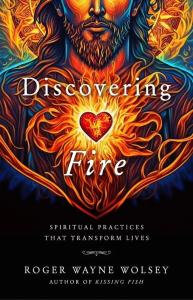
These words are an excerpt from Chapter 2 “Beauty of Broken Clocks,” in my soon to be released book “Discovering Fire: Spiritual Practices That Transform Lives.”
I’ll close with some additional words I posted to my Facebook page a couple of years ago:
The Christian season of Lent begins with Ash Wednesday which will occur on February 22, this year. Some Christians engage in the spiritual practice of fasting during those weeks before Easter. I am going to start a certain fast right now.
I’m going to fast from the bitterness of heart that I’ve carried with me for several years. And, if I’m being honest I’ve carried it with me longer than that. I’m at a place in life where I am able to make a conscious choice about this. It’s not a mental health issue, it’s a matter of the heart.
I’m not sure exactly how I’m going to go about this fast but I think it may mean choosing joy instead of dourness; to linger longer with people and celebrate the little things in our lives more; being even more friendly to cashiers and other people in customer service – in order to to sleep better at night and to generally be the kind of person that I enjoy being around. To be the company that I like to keep.
There are some other things that I will be fasting from that I will share about in the weeks ahead. But I have a hunch that this may be the most important one of all of them. In fact, if I can pull this fast off, the others won’t even necessarily be issues that I even need to be thinking about. This may be the fast that matters.
Wish me well my friends. Happy to be here. ~ Roger
See this link for an excerpt from the book describing Centering Prayer.
XX ~ Roger
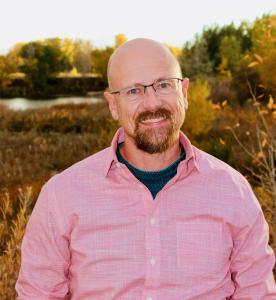 Rev. Roger Wolsey is a certified Spiritual Director, United Methodist pastor, and serves on the Board of Directors of ProgressiveChristianity.Org. He is a contributing writer for the Progressing Spirit newsletter, and author of Kissing Fish: christianity for people who don’t like christianity
His new book, Discovering Fire: Spiritual Practices That Transform Lives, will be available on Amazon April 4, 2023.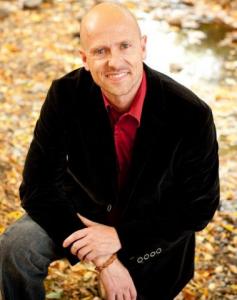
Roger’s other blogs on Patheos
Click Here to become a patron of Roger’s work as a spiritual writer.
If you would like to schedule Roger to speak at your church or event click Here:
Contemplative
Food and Religion
Previous Post

February 14, 2023
Omniamo - God's All-Loving Nature.
Next Post
March 16, 2023 Sensing the Sacred - Lectio Divina - a Spiritual Experience of Scripture
Recent Comments
"Is grooving with the Lord how you see it? Find another religion bud you have ..."
Why Must I Chase the Cat? ..."
"Boy you do go on and on. The world is sin soaked, terminally ill as ..."
Why Must I Chase the Cat? ..."
"Would love to comment but your views are not based on facts rather feelings."
The Zombie Apocalypse & Christian Nationalism.
"There is no god."
The Zombie Apocalypse & Christian Nationalism.
Browse Our Archives
Select a Category Uncategorized
Select a Month May 2024 March 2024 February 2024 December 2023 May 2023 April 2023 March 2023 February 2023 October 2022 June 2022 December 2021 September 2021 August 2021 April 2021 March 2021 September 2020 August 2020 March 2020 January 2020 December 2019 November 2019 October 2019 September 2019 August 2019 March 2019 January 2019 December 2018 November 2018 October 2018 September 2018 August 2018 June 2018 May 2018 April 2018 March 2018 February 2018 January 2018 December 2017 November 2017 September 2017 May 2017 February 2017 January 2017 October 2016 August 2016 April 2016 March 2016 February 2016 November 2015 September 2015 June 2015 May 2015 April 2015 March 2015 February 2015 January 2015 December 2014 October 2014 August 2014 July 2014 June 2014 May 2014 April 2014 March 2014 February 2014 January 2014 December 2013 November 2013 July 2013 April 2013 March 2013 December 2012 November 2012 October 2012 September 2012 August 2012 July 2012 June 2012 May 2012 April 2012 March 2012 February 2012 January 2012 December 2011 November 2011 October 2011
Follow Us!
TAKE THE
Religious Wisdom Quiz
How many days and nights did it rain during the flood?
Select your answer to see how you score.
7 10 12 40
Related posts from The Holy Kiss

The Zombie Apocalypse And Christian Nationalism


Grace, Gays, and Aircraft Carriers.

TRENDING AT PATHEOS Progressive Christian

What Being a Modern-Day Apostle Means to Me
In my last column, I discussed the ins and outs of modern-day...

Did Ancient China Once Worship the God of...
Across human history, a common thread weaves through the origins of the...

Love Your Neighbor – Including Earth-Kin: Lev. 19,...
God’s command to love your neighbor means acting in an ethical and...

Lead a Church Study of “Jesus and Lao...
Guest writer Jack Thomas (The Irreverent Reverend) reflects on leading his church...

Pastoral Wisdom for Responding to Sermon Pushback
Getting sermon pushback on your social justice sermon? Learn practical, Proverbs-based strategies...

Principles for Understanding the Apostolic Ministry Today
Whenever people discover that my formal ministry title is "apostle," as in...
view all Progressive Christian blogs
Ad-Free & Subscriber Log-In Subscription Support
- About Us
- 2026 Calendar
- Videos
- Podcasts
- Library of World Religions
- Faith In Media Tracker
- Advertise With Us
- Write for Us
- Privacy Policy
- Terms of Service
- Do Not Sell My Data
- Contact Us
- Radiant Digital
- Manage Newsletter Subscriptions
- Unsubscribe From Notifications
- Sitemap
Copyright 2008-2026, Patheos. All rights reserved.
Subscription Support Ad-Free & Subscriber Log-In
Follow Patheos