
BuddhistCatholicContemplativeEvangelicalGeneral ChristianHinduJewishLatter-day SaintMuslimNew VisionsProgressive Christian
Beliefs
- Buddhist
- Catholic
- Contemplative
- Evangelical
- General Christian
- Hindu
- Jewish
- Latter-day Saint
- More Voices
- Muslim
- New Visions
- Pagan
- Progressive Christian
Topics
- Religion News
- Food and Religion
- Sports and Religion
- Religious Art
- Religious Music and Entertainment
- Religious Events
- History and Religion
- Style and Religion
- Politics and Religion
- Women in Religion
- Recreation Outdoors and Religion
- Business Finance and Religion
- Careers Workplace and Religion
- Education and Religion
- Family Parenting and Religion
- Health Fitness and Religion
- Home and Religion
- Relationships and Religion
- Technology and Religion
- Travel and Religion
Columnists
- Buddhist Columnists
- Business Finance and Religion Columnists
- Careers Workplace and Religion Columnists
- Catholic Columnists
- Contemplative Columnists
- Education and Religion Columnists
- Evangelists Columnists
- Family Parenting and Religion Columnists
- General Christian Columnists
- Health Fitness and Religion Columnists
- Hindu Columnists
- History and Religion Columnists
- Home and Religion Columnists
- Jewish Columnists
- More Voices Columnists
- Latter Day Columnists
- Muslim Columnists
- New Visions Columnists
- Nonreligious Columnists
- Pagan Columnists
- Politics and Religion Columnists
- Progressive Columnists
- Recreation Outdoors and Religion Columnists
- Relationships and Religion Columnists
- Religion News Columnists
- Religious Art Columnists
- Religious Events Columnists
- Religious Music and Entertainment Columnists
- Sports and Religion Columnists
- Style and Religion Columnists
- Technology and Religion Columnists
- Travel and Religion Columnists
- Women in Religion Columnists
Resource Library
- 2026 Calendar
- Library of World Religions
- The 100 Most Holy Places on Earth
- Patheos Answers
- Podcasts
- Videos
- Faith Leaders Database
- Anglican Episcopalian
- Bahai
- Baptist
- Buddhism
- Christianity
- Confucianism
- Eastern Orthodoxy
- Hinduism
- Holiness and Pentecostal
- ISKCON
- Islam
- Judaism
- Lutheran
- Methodist
- The Church of Jesus Christ of Latter-day Saints
- New Age
- Paganism
- Presbytarian and Reformed
- Protestantism
- Religion Behind the Scenes
- Roman Catholic
- Scientology
- Shia Islam
- Sikhism
- Sufism
- Sunni Islam
- Taoism
- Zen
- See all religions
Research Tools
 Ad-Free & Subscriber Log-In Subscription Support
Follow Patheos 

- Trending:
- Advent
- |
- Forgiveness
- |
- Thanksgiving
- |
- Election
- |
- Seasonal Holidays
- |
- Marriage

- Home
- Evangelical
- How to Think about God 3
How to Think about God 3
Last updated on: July 1, 2026 at 3:08 pm by Roger E. Olson
How to Think about God 3 2026-07-01T15:08:53-05:00 Roger E. Olson
Patheos Explore the world's faith through different perspectives on religion and spirituality! Patheos has the views of the prevalent religions and spiritualities of the world.
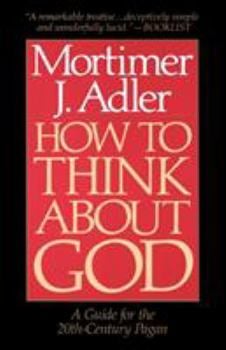
Here I continue discussion of the book How to Think about God: A Guide for the 20th-century Pagan by Mortimer Adler. If you have read chapters 6 and 7, feel free to comment. If not, feel free to ask a question. In about a week I will take up chapters 8 and 9 for discussion.
In these two chapters Adler argues that “God” is a unique word. Whatever it designates does not belong to a category. At least not in the West. And there is no empirical object called God; “God” is a theoretical construct because there can be no empirical experience of God. I think he means intersubjectively. He is not talking about exceptional, mystical experiences that cannot be shared by all who have senses.
This is necessary to lay the foundation for his whole argument about God. When we want to “think about God” philosophically, rationally, we cannot appeal to private experiences or empirical experiences. We can perhaps appeal to certain interpreted events or objects (e.g., the world as a whole), but God Godself is not an empirical object or one that any rational person can perceive LIKE he or she can perceive a planet through a telescope.
I agree that in a discussion like this “God” is a unique word. However, I question whether “God” must be, even for philosophy, a theoretical construct. If so, then, as I will say later here the God of the philosophers and the God of Abraham, Isaac, Jacob and Jesus are two very different beings.
Adler argues that God does not belong to any category. I question that. God and creatures both belong to the category of “being.” At least so the Catholic Church insists in the analogia entis. I tend to agree. Even Adler seems to think of God as the “supreme being.” That language implies that God belongs to the category of beings. Also, I think God belongs to the category of “persons.” God is personal and so are we. We are in the image of God; we share certain characteristics with God that came under the heading “personal characteristics.” Both God and we are persons even if God’s personhood is greater than ours can ever be.
However, and this is my biggest disagreement with Adler in this context, as a Christian I do not agree that the word “God” points to an object that can be pinned down by reason alone. I think that reason alone can reach to a something, even a Supreme Being, but in that sense “God” does not really MEAN to God of Abraham, Isaac and Jacob or of Jesus or of Christian faith.
Juergen Moltmann said in The Crucified God that “Anyone who says ‘God’ and does not hope for the resurrection of the dead and a new creation from the righteousness of God, has not said ‘God‘.” (218)
That is a riff on Karl Barth’s belief about the God of Jesus Christ, OUR God, the God believed in by Christians.
It is one thing to believe in “God” philosophically and something else to believe in the God of Jesus Christ who is more unique than the God of the philosophers. That is why when someone curses using the word “God” I am not as bothered as when someone curses using the name “Jesus Christ.” I filter the curse “God” through my own Christian mind interpreting that as “They don’t mean my God but a theoretical God who doesn’t even really exist.”
Now, don’t get me wrong. I think philosophical thinking can establish the existence of a Supreme Being, creator and moral governor of the universe, a deistic kind of God. And it is better to believe in that than not to believe at all. But such a God is a pale shadow of the God of Jesus Christ—at least to Christians. Believing in that God can be a step toward believing in the God of Jesus Christ, but that step requires a step of faith beyond what reason can reach by itself.
*Note: If you choose to comment, make sure your comment is relatively brief (no more than 100 words), on topic, addressed to me, civil and respectful (not hostile or argumentative), and devoid of pictures or links.*
Previous Post

June 29, 2026
Did God Kill My Mom?
Next Post

July 4, 2026 Can “Knowledge” Be Imperfect?
Recent Comments
"I'm wondering if there is a "meat sacrificed to idols" comparison. A "weaker brother" angle. ..."
Why I Struggle with “Inerrancy” Part ..."
"Yes, I consider it a “vain controversy.”"
Why I Struggle with “Inerrancy” Part ..."
"The kerfuffle over Biblical "inerrancy" is real and understandable. Roger, as you have made reference, ..."
Why I Struggle with “Inerrancy” Part ..."
"I grew up in an environment where inerrancy was assumed but not taught, and I ..."
Why I Struggle with “Inerrancy” Part ..."
Browse Our Archives
Select a Category Against Liberal Theology Uncategorized
Select a Month November 2026 October 2026 September 2026 August 2026 July 2026 June 2026 May 2026 April 2026 March 2026 February 2026 January 2026 December 2025 November 2025 October 2025 September 2025 August 2025 July 2025 June 2025 May 2025 April 2025 March 2025 February 2025 January 2025 December 2024 November 2024 October 2024 September 2024 August 2024 July 2024 June 2024 May 2024 April 2024 March 2024 February 2024 January 2024 December 2023 November 2023 October 2023 September 2023 August 2023 July 2023 June 2023 May 2023 April 2023 March 2023 February 2023 January 2023 December 2022 November 2022 October 2022 September 2022 August 2022 July 2022 June 2022 May 2022 April 2022 March 2022 February 2022 January 2022 December 2021 November 2021 October 2021 September 2021 August 2021 July 2021 June 2021 May 2021 April 2021 March 2021 February 2021 January 2021 December 2020 November 2020 October 2020 September 2020 August 2020 July 2020 June 2020 May 2020 April 2020 March 2020 February 2020 January 2020 December 2019 November 2019 October 2019 September 2019 August 2019 July 2019 June 2019 May 2019 April 2019 March 2019 February 2019 January 2019 December 2018 November 2018 October 2018 September 2018 August 2018 July 2018 June 2018 May 2018 April 2018 March 2018 February 2018 January 2018 December 2017 November 2017 October 2017 September 2017 August 2017 July 2017 June 2017 May 2017 April 2017 March 2017 February 2017 January 2017 December 2016 November 2016 October 2016 September 2016 August 2016 July 2016 June 2016 May 2016 April 2016 March 2016 February 2016 January 2016 December 2015 November 2015 October 2015 September 2015 August 2015 July 2015 June 2015 May 2015 April 2015 March 2015 February 2015 January 2015 December 2014 November 2014 October 2014 September 2014 August 2014 July 2014 June 2014 May 2014 April 2014 March 2014 February 2014 January 2014 December 2013 November 2013 October 2013 September 2013 August 2013 July 2013 June 2013 May 2013 April 2013 March 2013 February 2013 January 2013 December 2012 November 2012 October 2012 September 2012 August 2012 July 2012 June 2012 May 2012 April 2012 March 2012 February 2012 January 2012 December 2011 November 2011 October 2011 September 2011 August 2011 July 2011 June 2011 May 2011 April 2011 March 2011 February 2011 January 2011 December 2010 November 2010 October 2010 September 2010 August 2010 July 2010
TAKE THE
Religious Wisdom Quiz
What is the main theme of the Ten Commandments?
Select your answer to see how you score.
How to live in Jewish society How to be successful How to earn your way to Heaven How to live and treat others
Related posts from Roger E. Olson

Why I Struggle with "Inerrancy" Part 2
Why I Struggle with Biblical "Inerrancy"

Should Oneness Pentecostals Be Embraced as Evangelicals?

TRENDING AT PATHEOS Evangelical

For many years, Catholicism has been caught up in division over the...

'Statements of Faith' never get shorter
Nothing demonstrates a conservative commitment to faith and faithfulness like a "statement...

Michele's Reviews - Future Grace by John Piper
In God's Place, at God's Pace, by Future Grace Impatience is...

Bama Gramma's Blackout Christmas: the Power of Light...
Another Christmas Skit: I have an alter ego: Bama Gramma. She shows...

Thanksgiving as a Way of Life: A Christian...
Each year, Thanksgiving brings families and friends together to share meals, stories,...

Two Women Doctors Who Went Against the Current
Women physicians who transformed healthcare for "Indians" “I shall have an advantage...
view all Evangelical blogs
What Are Your Thoughts?leave a comment
Ad-Free & Subscriber Log-In Subscription Support
- About Us
- 2026 Calendar
- Videos
- Podcasts
- Library of World Religions
- Faith In Media Tracker
- Advertise With Us
- Write for Us
- Privacy Policy
- Terms of Service
- Do Not Sell My Data
- Contact Us
- Radiant Digital
- Manage Newsletter Subscriptions
- Unsubscribe From Notifications
- Sitemap
Copyright 2008-2026, Patheos, part of the Radiant Digital network of media brands. All rights reserved.
Subscription Support Ad-Free & Subscriber Log-In
Follow Patheos