
BuddhistCatholicContemplativeEvangelicalGeneral ChristianHinduJewishLatter-day SaintMuslimNew VisionsProgressive Christian
Beliefs
- Buddhist
- Catholic
- Contemplative
- Evangelical
- General Christian
- Hindu
- Jewish
- Latter-day Saint
- More Voices
- Muslim
- New Visions
- Pagan
- Progressive Christian
Topics
- Religion News
- Food and Religion
- Sports and Religion
- Religious Art
- Religious Music and Entertainment
- Religious Events
- History and Religion
- Style and Religion
- Politics and Religion
- Women in Religion
- Recreation Outdoors and Religion
- Business Finance and Religion
- Careers Workplace and Religion
- Education and Religion
- Family Parenting and Religion
- Health Fitness and Religion
- Home and Religion
- Relationships and Religion
- Technology and Religion
- Travel and Religion
Columnists
- Buddhist Columnists
- Business Finance and Religion Columnists
- Careers Workplace and Religion Columnists
- Catholic Columnists
- Contemplative Columnists
- Education and Religion Columnists
- Evangelists Columnists
- Family Parenting and Religion Columnists
- General Christian Columnists
- Health Fitness and Religion Columnists
- Hindu Columnists
- History and Religion Columnists
- Home and Religion Columnists
- Jewish Columnists
- More Voices Columnists
- Latter Day Columnists
- Muslim Columnists
- New Visions Columnists
- Nonreligious Columnists
- Pagan Columnists
- Politics and Religion Columnists
- Progressive Columnists
- Recreation Outdoors and Religion Columnists
- Relationships and Religion Columnists
- Religion News Columnists
- Religious Art Columnists
- Religious Events Columnists
- Religious Music and Entertainment Columnists
- Sports and Religion Columnists
- Style and Religion Columnists
- Technology and Religion Columnists
- Travel and Religion Columnists
- Women in Religion Columnists
Resource Library
- 2026 Calendar
- Library of World Religions
- The 100 Most Holy Places on Earth
- Patheos Answers
- Podcasts
- Videos
- Faith Leaders Database
- Anglican Episcopalian
- Bahai
- Baptist
- Buddhism
- Christianity
- Confucianism
- Eastern Orthodoxy
- Hinduism
- Holiness and Pentecostal
- ISKCON
- Islam
- Judaism
- Lutheran
- Methodist
- The Church of Jesus Christ of Latter-day Saints
- New Age
- Paganism
- Presbytarian and Reformed
- Protestantism
- Religion Behind the Scenes
- Roman Catholic
- Scientology
- Shia Islam
- Sikhism
- Sufism
- Sunni Islam
- Taoism
- Zen
- See all religions
Research Tools
 Ad-Free & Subscriber Log-In Subscription Support
Follow Patheos 

- Trending:
- Advent
- |
- Forgiveness
- |
- Thanksgiving
- |
- Election
- |
- Seasonal Holidays
- |
- Marriage

- Home
- Evangelical
- Holy Spirit: Shy Member of the Trinity? A Sermon
Holy Spirit: Shy Member of the Trinity? A Sermon
Last updated on: May 24, 2026 at 3:38 pm by Roger E. Olson
Holy Spirit: Shy Member of the Trinity? A Sermon 2026-05-24T15:38:02-05:00 Roger E. Olson
Patheos Explore the world's faith through different perspectives on religion and spirituality! Patheos has the views of the prevalent religions and spiritualities of the world.
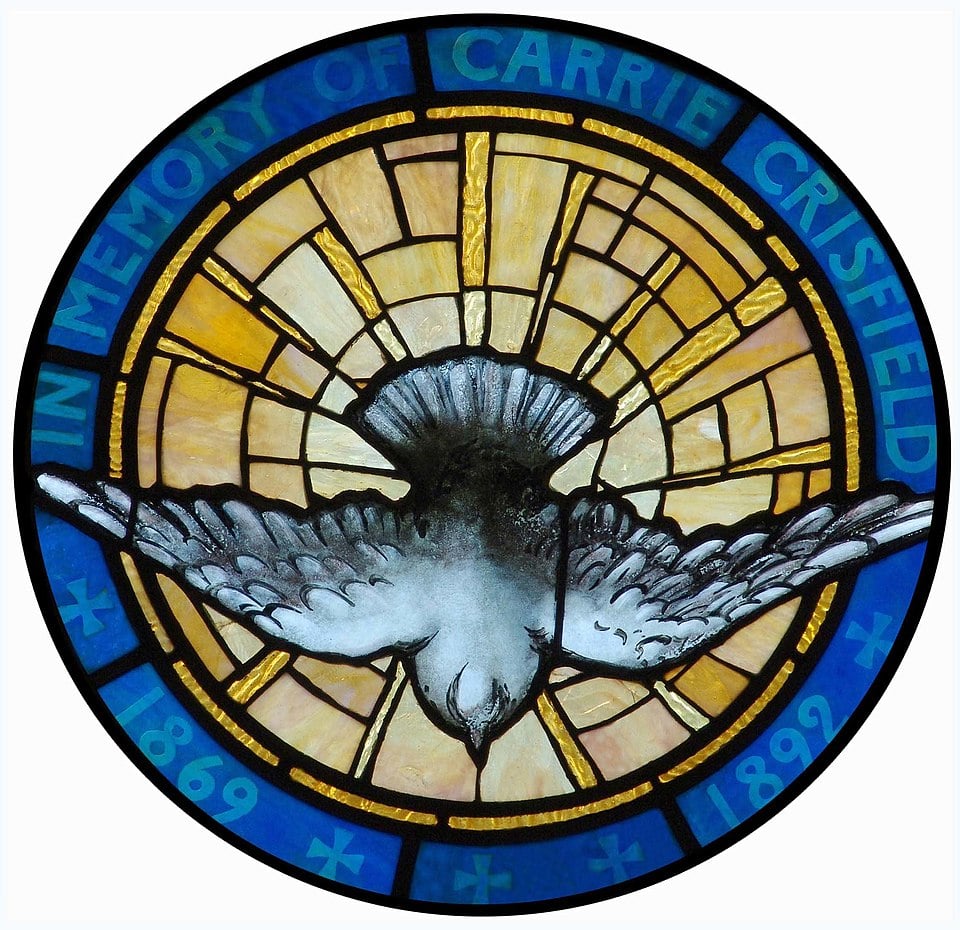
The Holy Spirit: Shy Member of the Trinity? (Part 1)
John 15:26-27; 16:4b-14
Today is Pentecost Sunday. That’s our Christian celebration of the birth of the church as recounted in Acts 2. Like Christmas and Easter, Pentecost is a Christian holy day. But, unlike Christmas and Easter, it’s not a holiday. Neither Christians nor secular people celebrate it although it often gets a nod in churches that follow the church calendar. Why isn’t it a holiday for Christians? Alongside Christmas and Easter? Perhaps it should be. But, then, again, if it were the secular world would probably create its own secular holiday of it alongside ours—as it has with Christmas and Easter. Perhaps it would sell “Pentecost doves” and hold “dove flying” contests. And forget that doves represent the Holy Spirit. I am becoming cynical and fanciful, I know.
But we Christians should pay more attention to Pentecost because of what happened on that day in Jerusalem two thousand years ago. You know the story. Jesus’s disciples and others were gathered in an “upper room” in Jerusalem after Jesus’s death, resurrection, and ascension. He had told them to go there and wait to be “endued with power from on high” that would then make them witnesses to him throughout the world. As they were gathered there, celebrating the Jewish feast of Pentecost, the Holy Spirit came upon them “like a rushing, mighty wind” and “tongues of flame” appeared over their heads. Then they spoke in tongues—foreign languages unknown to them. Apparently people from the area—gathered from all over the Roman Empire to celebrate Pentecost–flocked to see and hear this phenomenon and heard the gospel of Jesus Christ being preached in their own languages. They thought the disciples were drunk which indicates they were very excited.
So, that’s the story in a nutshell. On that day the Christian church was born; it didn’t exist before then. So what happened then, in that “upper room,” that birthed the Christian church? Christian tradition says what happened was the Holy Spirit was for the first time given to people—as an indwelling gift. The Holy Spirit, who before had been a somewhat elusive presence and power of God descending on prophets, suddenly came to dwell within Jesus’s followers.
We often talk about the church as “God’s people” and “followers of Jesus,” but we often neglect to mention that the church is also the dwelling place of God’s Spirit. Beginning on this day of Pentecost, in around 33 A.D., God’s own Spirit came to indwell, unite, energize and send forth the new people of God, the church.
Who is this “Holy Spirit?” One theologian published a book about the Holy Spirit entitled “The Shy Member of the Trinity.” His point was that the Holy Spirit does not want our attention; the Holy Spirit’s role is only to glorify Jesus Christ and to make him present to us and in us—if we believe in him and are his people. I’m not so sure about the Holy Spirit being “the Shy Member of the Trinity.” I agree that the Holy Spirit does seek to glorify Jesus, but I suspect that theologian’s tongue-in-cheek description of the Holy Spirit reflects many Christians’ hesitancy about the Holy Spirit.
I’ve taught mostly Baptist theology students for about thirty-five years now and most of them tell me they grew up in churches where the Holy Spirit was talked about, if at all, in hushed tones and with some anxiety. Whenever I have taught an elective course on the Holy Spirit it has filled up immediately; these students are hungry to know more about the Holy Spirit. When I ask them why they don’t already know much about the Holy Spirit they tell me their pastors and parents didn’t talk about the Holy Spirit much at all. When I ask why that is the case they say things like “We don’t want to be like those Pentecostals.”
I grew up Pentecostal—from birth to about age twenty-five when I “converted” to being Baptist. I won’t go into all the reasons why that happened; I will only say that to this day I consider myself a “Bapticostal”—a hybrid of Baptist and Pentecostal. I wish Pentecostals were a little more cautious about the Holy Spirit’s “manifestations” and Baptists were a little more open to them. I have often looked for the middle ground between the two groups but rarely found it.
But let’s go back to the question “Who is this Holy Spirit?”
In the Old Testament the Holy Spirit is hardly distinguished from Yahweh God, the Covenant Lord of Israel. Yet, there are hints here and there, especially in the prophets, that the Holy Spirit is a distinct person of God. The Holy Spirit came and went—occasionally descending on a prophet to reveal truth or to work miracles. But no prophet before John the Baptist was “filled with the Spirit.”
The New Testament has so much to say about the Holy Spirit it’s impossible to even touch on it all in one sermon. Sometimes I wonder why anyone would think the Holy Spirit is the “Shy Member of the Trinity”—given the prominent role of the Holy Spirit in the New Testament and really throughout church history after the first century.
Jesus promised the disciples that after he left them he would send “another Comforter” or “another “Advocate” to be with them and in them—to represent himself to them and to lead them into all truth. The Greek word in the New Testament translated “Comforter” or “Advocate” is “Paraclete.” This Paraclete, the promised Holy Spirit, is mentioned often in John’s gospel—especially in chapters 14 through 17. The Holy Spirit plays a prominent role in the Acts of the Apostles. The Apostle Paul mentions the Holy Spirit often and urges God’s people to “be not drunk with wine but be filled with the Holy Spirit.” He say that the Holy Spirit helps us pray—when we don’t know how to pray. He mentions several “gifts of the Holy Spirit” and “fruit of the Spirit.” There is no shortage of “talk” of the Holy Spirit in the New Testament.
And yet, for all that, somehow, for some reason, we Baptists especially have tended to shy away from talking about the Holy Spirit. And yet some of the greatest written treatises about the Holy Spirit in church history have been written by Baptists. I think we need to overcome our fear of being thought of as Pentecostals, who really are our spiritual and theological cousins, and rediscover the Holy Spirit. I’m sure that would be Jesus’s and Paul’s message to us. It’s my message to you on this Pentecost Sunday.
Bear with me as I do my “theologian’s thing” for a few minutes and teach about the Holy Spirit. Much of this many of you already know, but it doesn’t hurt to be reminded.
First, the Holy Spirit is God. Most of us know that, but even some good God-fearing, Bible-believing, Jesus-loving Christians are confused about who the Holy Spirit is. The Bible contains no “theology of the Holy Spirit” but when you put together all it says there’s only one reasonable conclusion to draw—the Holy Spirit is God. The Spirit does things only God can do.
Second, the Holy Spirit is a person, not an impersonal force or power like electricity. Again, when you put together all the Bible says about the Holy Spirit there’s only one reasonable conclusion to draw—the Holy Spirit is personal. I forbid my students from referring to the Holy Spirit as “it.” True, the Bible itself refers to the Holy Spirit as “it” but that’s only because in Greek the word for “spirit”—pneuma—is neuter. Our English translations should drop the neuter pronoun “it” and use “he” or even “she.” The Hebrew word for spirit is feminine. So there’s no reason, really, to only say “he” when referring to the Holy Spirit. And “it” tends to cause people to think of the Holy Spirit as an impersonal force or power like electricity. Instead, the New Testament tells us the Holy Spirit speaks, comforts, convicts, and can be grieved. An impersonal force or power cannot do any of that.
Third, the Holy Spirit is the third person of the Godhead—the Trinity. Again, putting all that the Bible says about the Holy Spirit together, the only reasonable conclusion is that the Holy Spirit is the third person of God—alongside Father and Son—and has been from all eternity.
Some of my Baptist students jokingly tell me they grew up thinking the Trinity is Father, Son and Holy Bible. Yes, we Baptists, especially conservative, evangelical Baptists, have tended to elevate the Bible to that status. I suspect that’s not only because we love the Bible but also because we are a bit afraid of the Holy Spirit. We know all too well what a “rushing, mighty wind” can do—especially in Texas. And we have seen on television Pentecostal evangelists like Benny Hinn and Rod Parsley doing very strange things. We don’t want to be like them.
Let me just stop right here—with a sidebar comment—and say from personal experience that not all Pentecostals are like the Pentecostal television evangelists. We Baptists don’t want to be lumped together with the Phelps family from Westboro Baptist Church in Kansas who picket funerals with hate speech, so let’s not lump all Pentecostals together with the strange televangelists, most of whom don’t belong to any organized Pentecostal group.
So the Holy Spirit is the third person of the Godhead—equal in every way with the Father and the Son but sent to us by the Father through the Son.
Like every other biblical subject the Holy Spirit has been the topic of much controversy throughout church history—possibly another reason many Christian shy away from giving the Spirit attention. The Eastern Orthodox churches and the Roman Catholic Church divided in 1054 A.D. over whether the Holy Spirit proceeds from the Father and the Son or only from the Father. I won’t go into all that; it seems speculative to us. Pentecostals broke away from Methodists and other Protestant groups over whether the Holy Spirit’s supernatural gifts are still available to Christians today or whether they ceased when the Bible was completed.
But I don’t want to dwell on controversies about the Holy Spirit; they interest me but aren’t the subject for Pentecost Sunday. Today we should focus together on the special function of the Holy Spirit among us and in us and not on debates and controversies.
So how does the New Testament speak to us about the Holy Spirit? What are the functions of the Holy Spirit that we should know about and seek to have working in us and among us?
First, the Holy Spirit is promise. Jesus promised that his leaving the disciples, a thought that deeply discouraged them, was actually a good thing. It was a good thing because he would send someone else to be his presence within and among them carrying on his mission. In other words, his no longer being bodily present among them was not, he said, something to be dreaded. The coming of the Spirit from him would more than take his place. He even said that they would do “greater things” than he did among them because of the Holy Spirit whom he would send to be in them and with them.
Backing up from Jesus’s promise of the Spirit taking his place, we see that the Hebrew prophet Joel promised that “in the last days” the Spirit would fill God’s people in a special way never experienced before. The disciple-apostle Peter interpreted the Day of Pentecost as the fulfillment of that promise.
*Note: If you choose to comment, make sure your comment is relatively brief (no more than 100 words), on topic, addressed to me, civil and respectful (not hostile or argumentative) and devoid of pictures or links*
Previous Post

May 20, 2026
Carl Henry’s Response to Piper’s View of Inerrancy
Next Post
May 28, 2026 If I Were a Young Earth Creationist
Recent Comments
"Which brings us back to what “good” means when attributed to the potter."
"In any case, it is an error, however, minor. My argument is that the word ..."
Why I Struggle with “Inerrancy” Part ..."
"Carl F. H. Henry founded the ETS and was, indeed, hung up on the word ..."
Reflections on the Evangelical Theological Society
"Because we don’t believe differently—except about a word."
Reflections on the Evangelical Theological Society
Browse Our Archives
Select a Category Against Liberal Theology Uncategorized
Select a Month November 2026 October 2026 September 2026 August 2026 July 2026 June 2026 May 2026 April 2026 March 2026 February 2026 January 2026 December 2025 November 2025 October 2025 September 2025 August 2025 July 2025 June 2025 May 2025 April 2025 March 2025 February 2025 January 2025 December 2024 November 2024 October 2024 September 2024 August 2024 July 2024 June 2024 May 2024 April 2024 March 2024 February 2024 January 2024 December 2023 November 2023 October 2023 September 2023 August 2023 July 2023 June 2023 May 2023 April 2023 March 2023 February 2023 January 2023 December 2022 November 2022 October 2022 September 2022 August 2022 July 2022 June 2022 May 2022 April 2022 March 2022 February 2022 January 2022 December 2021 November 2021 October 2021 September 2021 August 2021 July 2021 June 2021 May 2021 April 2021 March 2021 February 2021 January 2021 December 2020 November 2020 October 2020 September 2020 August 2020 July 2020 June 2020 May 2020 April 2020 March 2020 February 2020 January 2020 December 2019 November 2019 October 2019 September 2019 August 2019 July 2019 June 2019 May 2019 April 2019 March 2019 February 2019 January 2019 December 2018 November 2018 October 2018 September 2018 August 2018 July 2018 June 2018 May 2018 April 2018 March 2018 February 2018 January 2018 December 2017 November 2017 October 2017 September 2017 August 2017 July 2017 June 2017 May 2017 April 2017 March 2017 February 2017 January 2017 December 2016 November 2016 October 2016 September 2016 August 2016 July 2016 June 2016 May 2016 April 2016 March 2016 February 2016 January 2016 December 2015 November 2015 October 2015 September 2015 August 2015 July 2015 June 2015 May 2015 April 2015 March 2015 February 2015 January 2015 December 2014 November 2014 October 2014 September 2014 August 2014 July 2014 June 2014 May 2014 April 2014 March 2014 February 2014 January 2014 December 2013 November 2013 October 2013 September 2013 August 2013 July 2013 June 2013 May 2013 April 2013 March 2013 February 2013 January 2013 December 2012 November 2012 October 2012 September 2012 August 2012 July 2012 June 2012 May 2012 April 2012 March 2012 February 2012 January 2012 December 2011 November 2011 October 2011 September 2011 August 2011 July 2011 June 2011 May 2011 April 2011 March 2011 February 2011 January 2011 December 2010 November 2010 October 2010 September 2010 August 2010 July 2010
TAKE THE
Religious Wisdom Quiz
I will heal their waywardness and love them freely, making them blossom like this flower and fragrant like this tree. What plant and tree are mentioned?
Select your answer to see how you score.
Lotus and palm Iris and cypress Rose and olive Lebanon Cedar and Lilies
Related posts from Roger E. Olson

Reflections on the Evangelical Theological Society

Why I Struggle with "Inerrancy" Part 2
Why I Struggle with Biblical "Inerrancy"

Should Oneness Pentecostals Be Embraced as Evangelicals?
TRENDING AT PATHEOS Evangelical

As was predicted many years ago, the Interpreter Foundation's website is...

"Why Do Churches Talk So Much About Money?"
If you were inclined to do so, you could probably find any...

Watch and Pray: On Mark 13:33-37
Jesus said to his disciples: “Be watchful! Be alert! You do not...

Debate on Purgatory & Biblical Evidences for It
This is from a combox on my video channel, Catholic Bible Highlights....

Set the table for the coming King
On Thursday we visited my sister-in-law for Thanksgiving, and throughout the entire...

If I Stop Becoming, Will I Disappear?
(At our most recent half day Zen retreat, Dr Chris Hoff, a...
view all Evangelical blogs
What Are Your Thoughts?leave a comment
Ad-Free & Subscriber Log-In Subscription Support
- About Us
- 2026 Calendar
- Videos
- Podcasts
- Library of World Religions
- Faith In Media Tracker
- Advertise With Us
- Write for Us
- Privacy Policy
- Terms of Service
- Do Not Sell My Data
- Contact Us
- Radiant Digital
- Manage Newsletter Subscriptions
- Unsubscribe From Notifications
- Sitemap
Copyright 2008-2026, Patheos, part of the Radiant Digital network of media brands. All rights reserved.
Subscription Support Ad-Free & Subscriber Log-In
Follow Patheos