
BuddhistCatholicContemplativeEvangelicalGeneral ChristianHinduJewishLatter-day SaintMuslimNew VisionsProgressive Christian
Beliefs
- Buddhist
- Catholic
- Contemplative
- Evangelical
- General Christian
- Hindu
- Jewish
- Latter-day Saint
- More Voices
- Muslim
- New Visions
- Pagan
- Progressive Christian
Topics
- Religion News
- Food and Religion
- Sports and Religion
- Religious Art
- Religious Music and Entertainment
- Religious Events
- History and Religion
- Style and Religion
- Politics and Religion
- Women in Religion
- Recreation Outdoors and Religion
- Business Finance and Religion
- Careers Workplace and Religion
- Education and Religion
- Family Parenting and Religion
- Health Fitness and Religion
- Home and Religion
- Relationships and Religion
- Technology and Religion
- Travel and Religion
Columnists
- Buddhist Columnists
- Business Finance and Religion Columnists
- Careers Workplace and Religion Columnists
- Catholic Columnists
- Contemplative Columnists
- Education and Religion Columnists
- Evangelists Columnists
- Family Parenting and Religion Columnists
- General Christian Columnists
- Health Fitness and Religion Columnists
- Hindu Columnists
- History and Religion Columnists
- Home and Religion Columnists
- Jewish Columnists
- More Voices Columnists
- Latter Day Columnists
- Muslim Columnists
- New Visions Columnists
- Nonreligious Columnists
- Pagan Columnists
- Politics and Religion Columnists
- Progressive Columnists
- Recreation Outdoors and Religion Columnists
- Relationships and Religion Columnists
- Religion News Columnists
- Religious Art Columnists
- Religious Events Columnists
- Religious Music and Entertainment Columnists
- Sports and Religion Columnists
- Style and Religion Columnists
- Technology and Religion Columnists
- Travel and Religion Columnists
- Women in Religion Columnists
Resource Library
- 2026 Calendar
- Library of World Religions
- The 100 Most Holy Places on Earth
- Patheos Answers
- Podcasts
- Videos
- Faith Leaders Database
- Anglican Episcopalian
- Bahai
- Baptist
- Buddhism
- Christianity
- Confucianism
- Eastern Orthodoxy
- Hinduism
- Holiness and Pentecostal
- ISKCON
- Islam
- Judaism
- Lutheran
- Methodist
- The Church of Jesus Christ of Latter-day Saints
- New Age
- Paganism
- Presbytarian and Reformed
- Protestantism
- Religion Behind the Scenes
- Roman Catholic
- Scientology
- Shia Islam
- Sikhism
- Sufism
- Sunni Islam
- Taoism
- Zen
- See all religions
Research Tools
 Ad-Free & Subscriber Log-In Subscription Support
Ad-Free & Subscriber Log-In Subscription Support
Follow Patheos 

- Trending:
- Forgiveness
- |
- Marriage
- |
- Consciousness
- |
- Death Penalty
- |
- Election
- |
- Halloween

- Home
- Evangelical
- History and Religion
- Can God Change? Exploring Divine “Becoming” in Theology
Can God Change? Exploring Divine “Becoming” in Theology
Last updated on: March 16, 2026 at 1:08 pm by Roger E. Olson
Can God Change? Exploring Divine “Becoming” in Theology 2026-03-16T13:08:33-05:00 Roger E. Olson
Patheos Explore the world's faith through different perspectives on religion and spirituality! Patheos has the views of the prevalent religions and spiritualities of the world.
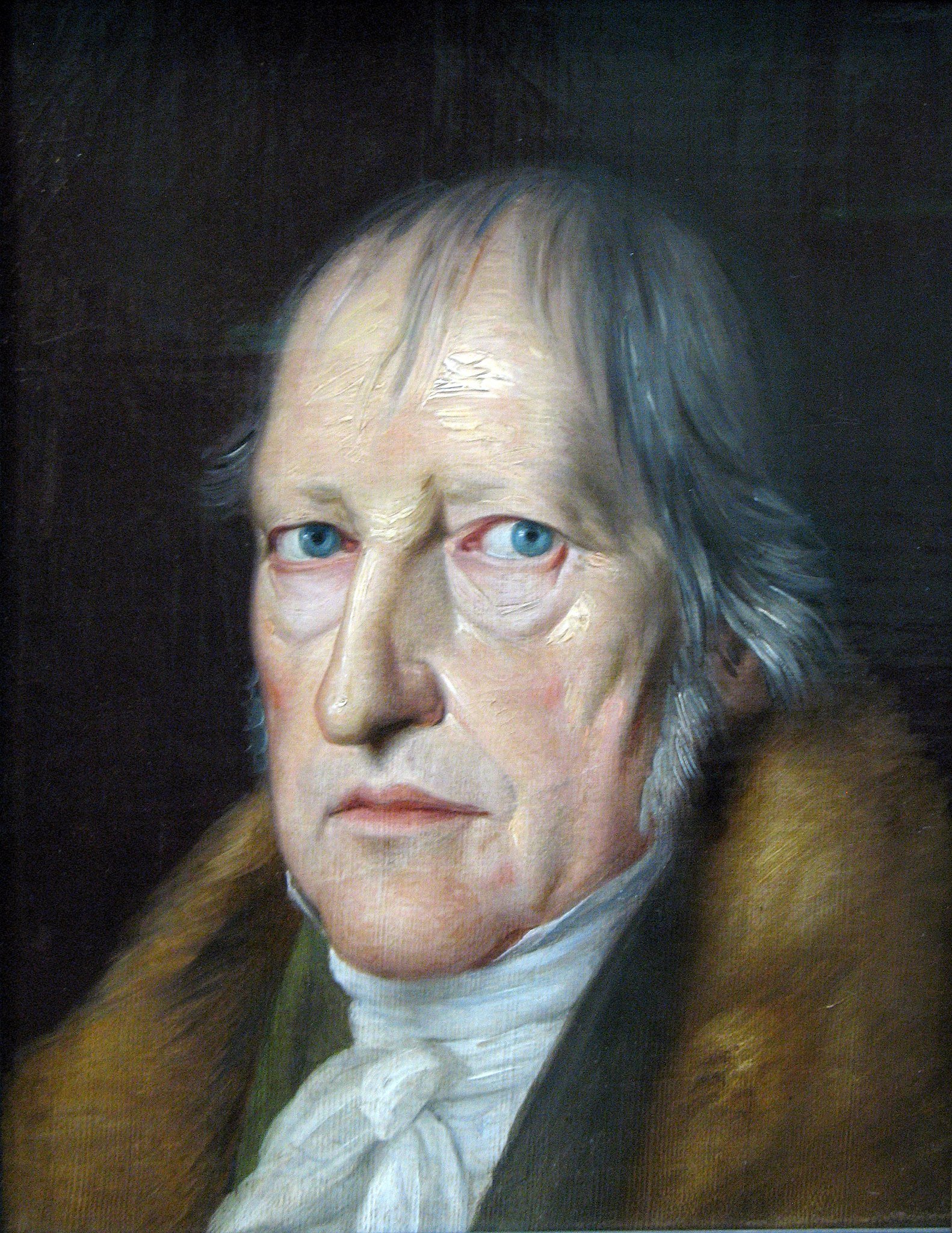
The Philosopher Georg Friedrich Wilhelm Hegel | Image courtesy of Jakob Schlesinger, Public domain, via Wikimedia Commons.

Before the German philosopher G. W. F. Hegel, Christian talk about God “becoming” was shockingly heretical. It still is in some conservative Christian circles.
Hegel started the ball rolling by talking about all consciousness becoming; for him there is no consciousness that does not become. For him, finite and infinite consciousness are intertwined together and by the very nature of consciousness itself both become through a dialectical process that involves negation and sublation (German: Aufhebung, suspension and transformation).
After Hegel, for whom God is Absolute Spirit, the “true infinite,” some Christian theologians began to be more comfortable talking about God becoming. The great but too often forgotten German theologian I. A. Dorner wrote about God’s “ethical immutability” in which God’s character cannot change but his actual life experience can and does. The influence of Hegel is clear in Dorner although Dorner did not buy into all of Hegel’s philosophy.
Then, in the 20th century came Alfred North Whitehead and Charles Hartshorne and “process theology.” Again, Hegel was in the background, not the foreground. But the influence is clear. For process theology God’s character cannot change but God’s actual experience changes in history.
I suspect Hegel would agree that God’s essential character cannot change. But he certainly believed God’s consciousness changes with history, especially the history of culture. God “realizes” or “actualizes” himself in the history of human cultures.
Then came German theologians Juergen Moltmann and Wolfhart Pannenberg who unleashed a volume of changes in Protestant theology by talking about God being historical. Pannenberg even went so far as to argue that “God does not yet exist.” (I had face-to-face conversation with him about what that means and does not mean.)
Then, in the midst of that, came German theologian Eberhard Juengel of Tuebingen, a university where Hegel once taught. Juengel wrote “God’s Being Is In Becoming.” It was a midrash on Barth’s theology but many wondered whether Barth would have agreed. For Juengel, God has a history of his own, within the immanent Trinity, but it is affected by the incarnation, so world history cannot be excluded from God’s historicity. Juengel’s classic “God as the Mystery of the World” expands on that idea and Hegel lurking in the background is obvious there.
Catholic theologian Hans Kueng chimed in with his own favorite book “The Incarnation of God” in which he explicitly used Hegel’s dialectical philosophy to argue that God is in himself historical and becomes both in himself and in world history.
There are two main lines of thought about God’s becoming: Hegelian and Whiteheadian. They overlap and share much in common, but their differences will have to await another time here.
Some evangelical theologians began to pick up on the theme of God’s becoming while eschewing both Hegel and Whitehead. Turning to the biblical drama of God with us, Clark Pinnock wrote about God as “The Most Moved Mover” and criticized classical theism for portraying God as untouched by history. For him and other evangelical theologians of God’s becoming the God of the Bible is personal and historical. While his character cannot change, his experience changes. What happens in the world, in history, affects God.
Finally, mention must be made of Dutch theologian A. Van de Beek whose book “Why? On Suffering, Guilt, and God” I reviewed and we discussed here some time ago. According to Van de Beek the God of the Bible actually learned how to be God through his relationships with his people, up until Jesus Christ when God’s character became solidified. “Increasingly God turned toward grace and salvation.” (P. 282) For Van de Beek and some other Dutch theologians (all Reformed by heritage and tradition) God becomes.
In my opinion, what really matters is that God’s essential, eternal character does not change. It does seem to me, however, that God has new and difference experiences in history. While I base that on the biblical story of God and us, I recognize Hegel as a philosopher who, like Plato, opened a door for new thinking in theology. Plato was a pagan and the church fathers borrowed heavily from him. Aristotle was a pagan and medieval Catholic theology (and some later Protestant theology) borrowed much from him. Hegel was a liberal German philosopher (but not liberal as in Schleiermacher who he secretly despised) who opened a door to rediscovery of God’s becoming in history.
*Note: If you choose to comment, make sure your comment is relatively brief (no more than 100 words), on topic, addressed to me, civil and respectful (not hostile or argumentative), and devoid of pictures or links.*
General Christian
History and Religion
Previous Post

March 3, 2026
How Christian Colleges Can Avoid Going Liberal
Next Post

March 9, 2026 A New Book Discussion: That We May Be One
Recent Comments
"No doubt Lewis was inspired by earlier thinkers. Ironically (or perhaps serendipitously) I am now ..."
The Abolition of Man: Chapter 3: ..."
"I am sure Lewis would agree. After all, as a Christian he believed in original ..."
The Abolition of Man: Chapter 3: ..."
"If I’m not mistaken, the quote from Lewis is his interpretation of the “Conditioners’” own ..."
The Abolition of Man: Chapter 3: ..."
"Thank you! It's been a great re-read of a thought provoking, but somewhat dense, little ..."
The Abolition of Man: Chapter 3: ..."
Browse Our Archives
Select a Category Against Liberal Theology Uncategorized
Select a Month October 2026 September 2026 August 2026 July 2026 June 2026 May 2026 April 2026 March 2026 February 2026 January 2026 December 2025 November 2025 October 2025 September 2025 August 2025 July 2025 June 2025 May 2025 April 2025 March 2025 February 2025 January 2025 December 2024 November 2024 October 2024 September 2024 August 2024 July 2024 June 2024 May 2024 April 2024 March 2024 February 2024 January 2024 December 2023 November 2023 October 2023 September 2023 August 2023 July 2023 June 2023 May 2023 April 2023 March 2023 February 2023 January 2023 December 2022 November 2022 October 2022 September 2022 August 2022 July 2022 June 2022 May 2022 April 2022 March 2022 February 2022 January 2022 December 2021 November 2021 October 2021 September 2021 August 2021 July 2021 June 2021 May 2021 April 2021 March 2021 February 2021 January 2021 December 2020 November 2020 October 2020 September 2020 August 2020 July 2020 June 2020 May 2020 April 2020 March 2020 February 2020 January 2020 December 2019 November 2019 October 2019 September 2019 August 2019 July 2019 June 2019 May 2019 April 2019 March 2019 February 2019 January 2019 December 2018 November 2018 October 2018 September 2018 August 2018 July 2018 June 2018 May 2018 April 2018 March 2018 February 2018 January 2018 December 2017 November 2017 October 2017 September 2017 August 2017 July 2017 June 2017 May 2017 April 2017 March 2017 February 2017 January 2017 December 2016 November 2016 October 2016 September 2016 August 2016 July 2016 June 2016 May 2016 April 2016 March 2016 February 2016 January 2016 December 2015 November 2015 October 2015 September 2015 August 2015 July 2015 June 2015 May 2015 April 2015 March 2015 February 2015 January 2015 December 2014 November 2014 October 2014 September 2014 August 2014 July 2014 June 2014 May 2014 April 2014 March 2014 February 2014 January 2014 December 2013 November 2013 October 2013 September 2013 August 2013 July 2013 June 2013 May 2013 April 2013 March 2013 February 2013 January 2013 December 2012 November 2012 October 2012 September 2012 August 2012 July 2012 June 2012 May 2012 April 2012 March 2012 February 2012 January 2012 December 2011 November 2011 October 2011 September 2011 August 2011 July 2011 June 2011 May 2011 April 2011 March 2011 February 2011 January 2011 December 2010 November 2010 October 2010 September 2010 August 2010 July 2010
TAKE THE
Religious Wisdom Quiz
Four beasts rose from the sea—one like a lion with eagle's wings, one like a bear, one like a leopard, and a fourth terrifying beast. What did these represent?
Select your answer to see how you score.
Four kingdoms Four kings Four judgments Four ages
Related posts from Roger E. Olson

The Abolition of Man: Chapter 3: The Abolition...

She Survived Her Execution. Should the State Try...
The Abolition of Man Part 2: Chapter 2:...

Ambiguity without Ambivalence in Faith
TRENDING AT PATHEOS Evangelical

I was strolling through the top floor of the brand new Parthenon...

What Does Gêvâh Mean For Kimberley Guifoyle &...
This week, a lot of the news is focused on Kimberly Guilfoyle....

INNER CIRCLE: Profound Mystery (Of Christ In All...
Ephesians 5:31-32 “For this reason, a man will leave his father and...

Do Not Rejoice When Your Enemy Falls: The...
Turning an execution into a public spectacle is a disturbing expression of...

'The Chosen' S6 Trailer: The Passion Gets Very...
Not many watching 'The Chosen' worry about spoilers, but just because they...

The purpose-driven labor priest
A labor activist reads Rick Warren and it gets me wondering about...
view all Evangelical blogs
What Are Your Thoughts?leave a comment
Ad-Free & Subscriber Log-In Subscription Support
- About Us
- 2026 Calendar
- Videos
- Podcasts
- Library of World Religions
- Faith In Media Tracker
- Advertise With Us
- Write for Us
- Privacy Policy
- Terms of Service
- Do Not Sell My Data
- Contact Us
- Radiant Digital
- Manage Newsletter Subscriptions
- Unsubscribe From Notifications
- Sitemap
Copyright 2008-2026, Patheos. All rights reserved.
Subscription Support Ad-Free & Subscriber Log-In
Follow Patheos