
BuddhistCatholicContemplativeEvangelicalGeneral ChristianHinduJewishLatter-day SaintMuslimNew VisionsProgressive Christian
Beliefs
- Buddhist
- Catholic
- Contemplative
- Evangelical
- General Christian
- Hindu
- Jewish
- Latter-day Saint
- More Voices
- Muslim
- New Visions
- Pagan
- Progressive Christian
Topics
- Religion News
- Food and Religion
- Sports and Religion
- Religious Art
- Religious Music and Entertainment
- Religious Events
- History and Religion
- Style and Religion
- Politics and Religion
- Women in Religion
- Recreation Outdoors and Religion
- Business Finance and Religion
- Careers Workplace and Religion
- Education and Religion
- Family Parenting and Religion
- Health Fitness and Religion
- Home and Religion
- Relationships and Religion
- Technology and Religion
- Travel and Religion
Columnists
- Buddhist Columnists
- Business Finance and Religion Columnists
- Careers Workplace and Religion Columnists
- Catholic Columnists
- Contemplative Columnists
- Education and Religion Columnists
- Evangelists Columnists
- Family Parenting and Religion Columnists
- General Christian Columnists
- Health Fitness and Religion Columnists
- Hindu Columnists
- History and Religion Columnists
- Home and Religion Columnists
- Jewish Columnists
- More Voices Columnists
- Latter Day Columnists
- Muslim Columnists
- New Visions Columnists
- Nonreligious Columnists
- Pagan Columnists
- Politics and Religion Columnists
- Progressive Columnists
- Recreation Outdoors and Religion Columnists
- Relationships and Religion Columnists
- Religion News Columnists
- Religious Art Columnists
- Religious Events Columnists
- Religious Music and Entertainment Columnists
- Sports and Religion Columnists
- Style and Religion Columnists
- Technology and Religion Columnists
- Travel and Religion Columnists
- Women in Religion Columnists
Resource Library
- 2026 Calendar
- Library of World Religions
- The 100 Most Holy Places on Earth
- Patheos Answers
- Podcasts
- Videos
- Faith Leaders Database
- Anglican Episcopalian
- Bahai
- Baptist
- Buddhism
- Christianity
- Confucianism
- Eastern Orthodoxy
- Hinduism
- Holiness and Pentecostal
- ISKCON
- Islam
- Judaism
- Lutheran
- Methodist
- The Church of Jesus Christ of Latter-day Saints
- New Age
- Paganism
- Presbytarian and Reformed
- Protestantism
- Religion Behind the Scenes
- Roman Catholic
- Scientology
- Shia Islam
- Sikhism
- Sufism
- Sunni Islam
- Taoism
- Zen
- See all religions
Research Tools
 Ad-Free & Subscriber Log-In Subscription Support
Ad-Free & Subscriber Log-In Subscription Support
Follow Patheos 

- Trending:
- Forgiveness
- |
- Marriage
- |
- Consciousness
- |
- Death Penalty
- |
- Election
- |
- Halloween

- Home
- Evangelical
- Why I Am An Arminian Evangelical Christian
Why I Am An Arminian Evangelical Christian
Last updated on: December 14, 2025 at 10:44 am by Roger E. Olson
Why I Am An Arminian Evangelical Christian 2025-12-14T10:44:20-05:00 Roger E. Olson
Patheos Explore the world's faith through different perspectives on religion and spirituality! Patheos has the views of the prevalent religions and spiritualities of the world.
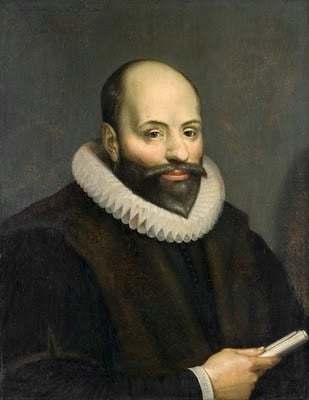
*Now continues a second part of this series; this series is about my reasons for being a Christian and for embracing a particular “brand” of Christianity called (as in the name of this blog) “evangelical Arminianism.” In order to understand this post you need to read the immediately preceding ones about my reasons for being an “evangelical” Christian.
9) My Third Reason for Embracing “Evangelical, Arminian Christianity”: “Arminian”
My immediately preceding post/essay explained why I am an evangelical Christian—both descriptively and prescriptively. Now, here, I turn to explanation of why I identify as an “Arminian evangelical Christian.” I have written about the meaning—to me—of “Arminian” here before, but perhaps I will now say something new that will enhance my explanation. So even if you have read me before on this topic, please consider reading this.
Again, as with “Christian” and “evangelical Christian,” Arminian is a label I (but not only I) use to describe what type of evangelical Christian I am. However, for me, anyway, it stands subordinate to “evangelical Christian.” So far as I know, and there may be exceptions I am not aware of, all true Arminians, all Arminians in the true historical-theological sense of the word, have been and are evangelical Christians in the broad sense I explained it in the two immediately preceding posts. For me, being “evangelical Christian” is much more important than being “Arminian.” However, in recent years especially, “Arminianism” has been so misrepresented and maligned by especially Calvinists—another type of evangelical Christians—that I have found it important to identify myself as such and use whatever influence I have—especially among evangelical Christians—to clarify its meaning. To explain it another way: Some years ago I realized that, at least among North American evangelical Christianity, especially among North American evangelical scholars and theologians, “evangelical Christianity” was being explained in a way that made so-called “Reformed theology,” including Calvinism, normative for authentic evangelical Christianity. Some evangelical theologians and historians were even going so far as to claim that Arminians could not be authentically, fully evangelical. That brought me “out of the closet,” so to speak, to defend my Arminian theology as fully, authentically evangelical and Christian.
A few examples of the phenomenon I am talking about that compelled me to defend my Arminian evangelical Christian heritage and theology may help readers understand my somewhat admittedly Quixotic campaign to defend Arminianism as equally evangelical and Christian (with Reformed/Calvinist theology). During my studies in a Baptist seminary I was informed by a professor that “Arminianism has historically led to liberal theology.” I knew that was not the case. I grew up among Arminian fundamentalists and conservative evangelicals. As I read and studied the history and theology of evangelical Christianity I found Jonathan Edwards being touted as the prototype—often to the complete exclusion of John Wesley. In 2003 a major news magazine published an article about the anniversary of Edwards’s birth without so much as a mention of Wesley who was born the same year (1703). I wrote a letter to the editor of that magazine mentioning the importance of Wesley to evangelical Christianity; it was published in the next issue. I noticed that the major trans-denominational evangelical organizations, seminaries, publishing houses, magazines, tended to favor Reformed/Calvinist evangelicalism. I definitely felt marginalized within late twentieth century and early twenty-first century North American evangelicalism’s centers of influence because I proudly wore my Arminian heritage “on my sleeve.” I was a contributing editor to Christianity Today, a major “voice” for evangelical Christians, when, in 2009 it celebrated the birth of John Calvin with an article about him in every issue. There was little to no mention of Arminius who died in 1609—in spite of the fact that I strongly suggested that CT publish at least some “nod” to Arminius and his influence that year.
I could go on and I have in earlier posts to this blog. I will finish by saying that my friend, church historian and theologian Donald W. Dayton, also an Arminian, raised this issue of the Reformed/Calvinist normativity in evangelical historiography and theology very perceptively and eloquently in Christian Scholar’s Review—a generically evangelical scholarly journal I edited from 1994 to 1999. Dayton argued for recognition of two paradigms of evangelicalism. He called them (as I now recall) the “Puritan Paradigm” and the “Pentecostal Paradigm,” but I came to call them the “Reformed Paradigm” and the “Arminian Paradigm.” The Reformed (Puritan-Presbyterian) paradigm was gradually pushing aside and ignoring the contributions of Arminian (Pietist-Pentecostal-Holiness) evangelical Christianity to the larger evangelical Christian ethos and movement.
There were several “straws” that broke this “camel’s back” and propelled me into a years-long campaign to rehabilitate Arminianism as a valid and important type of evangelical Christianity. One was when a very influential Reformed/Calvinist evangelical theologian publicly declared that Arminians can be “Christian, just barely.” Another was when an equally influential Reformed/Calvinist evangelical theologian publicly stated that one possible explanation for Arminianism among Christians is “demonic deception.” Both of those evangelical theologians, like many others, tended to equate Arminianism with Pelagianism or semi-Pelagianism; they assumed that Arminians deny the priority of grace in salvation and subordinate it to the sinner’s free will. They and many others labeled Arminianism essentially “humanistic” or “man-centered.”
I have said here, in this series of posts and before, that I was born in the “thick” of North American evangelical Christianity. I well remember my father, an evangelical pastor, “marching” together with the whole city “Evangelical Ministerial Alliance” in a city-wide parade. Like all such city evangelical ministerial groups it included both Arminians and Calvinists. Our denomination was a charter member of the National Association of Evangelicals. A major transdenominational evangelical organization called Youth for Christ (Billy Graham was one of its evangelists in the 1940s and early 1950s) was an important part of my spiritual nurture. My family and church were deeply imbedded in it and it included both Arminians and Calvinists.
So, for newcomers to this blog, and for those who need a bit of review about these categories: What is Arminianism? (Here I will only talk about what Reformed church historian-theologian Alan P. F. Sell labeled “Arminianism of the heart.”) In a nutshell, Arminianism is Protestant Christian belief in total depravity (all are sinners and incapable by themselves, apart from God’s supernatural grace, of doing anything to be saved), conditional election (the “elect” are all who, enabled by God’s grace, freely choose God’s offer of salvation), universal atonement (Christ’s atoning death on the cross was for all people), and resistible grace (God’s generous offer of salvation, reconciliation with himself, through Jesus Christ can be resisted even by those God wants to save). In other words, Arminianism is belief in a generous, loving God who genuinely wants to save everyone, and has suffered and died in Jesus Christ for all people, and who, through the gospel, makes it possible for depraved, helpless sinners to say “yes” to his offer of reconciliation with himself. In other words, it is denial of the “U,” the “L,” and the “I” of the famous T.U.L.I.P. scheme of Calvinism. It is not Pelagianism, belief that sinners can save themselves by simply deciding to obey God’s law, and it is not semi-Pelagianism, belief that sinners are capable of initiating their own salvation by means of unaided free will.
For more information and understanding of classical Arminianism consult my book Arminian Theology: Myths and Realities (InterVarsity Press). (I do not want to spend time describing in more detail here Arminianism. I have done that on my blog several times before and, if you do not want to read my book, at least use a search engine to find my previous blog posts expounding Arminianism and Arminian theology.)
So why am I an “Arminian evangelical Christian?” Why am I not Reformed-Calvinist?
First let me say that I consider most Reformed-Calvinist Christians as evangelical. There may be exceptions, but I have known many of them throughout my lifetime and find no reason to consider them “less evangelical” or “less Christian” than Arminians (or Lutherans—another subject I do not want to pursue here as I have done before). When I was growing up one wing of my large, extended family belong to the Christian Reformed Church; my cousins belonged to its youth group called “Young Calvinists.” We all got along just fine in spite of our disagreements about some matters of theology. I have had wonderful colleagues who were and are Calvinists; I have never insulted or demeaned their evangelical faith.
I was born into an Arminian form of evangelical Christianity and I have never found reason to “jump ship,” so to speak, into Reformed-Calvinist Christianity. I do not claim Arminianism is superior, even in terms of being “more evangelical” or “more Christian” than Arminianism. I simply think classical Calvinist theology is mistaken, even profoundly mistaken. Within it I find many problems of coherence (inconsistency) and it does not fit with my experience of God or myself. I find it to be a more problematic interpretation of the Bible than Arminianism. But I have explained all these reasons in Against Calvinism (Zondervan).
My most basic, fundamental reason for being Arminian rather than Calvinist (and those are the two main theological options among evangelical Christians—even where they do not call them by those names) is the character of God. I am not a humanist lover of free will; the only reason I believe in free will (or “freed will”—made free by God’s “prevenient grace”) is because I see it everywhere assumed in the Bible and without it God would be monstrous rather than loving (unless he saves everyone).
I often tell my students that both Calvinism and Arminianism have problems; there are mysteries deeply embedded within both views*.* I tell them that I can live with the problems and mysteries of Arminianism whereas I cannot live with the mysteries and problems of Calvinism. And, so far as I can see, and I have studied the matter in great depth and detail (I have shelves full of books about Reformed theology/Calvinism by noted Reformed/Calvinist theologians), whenever Calvinists attempt to “solve” the problems I see in their theology their Calvinism either becomes Arminianism (without that label) or they deepen the problems—at least for me.
I have no desire to create an Arminian hegemony of evangelical Christianity; I have said here, on my blog, and in my books that I “thank God for Reformed Christianity.” It has contributed much to my spiritual and theological life and work. My only concern has been to clear up misconceptions about Arminianism and point out the problems in Calvinism so that Calvinists or those inclined toward it can examine it carefully and critically.
*Note to commenters: This blog is not a discussion board; please respond with a question or comment solely to me (or the guest writer). If you do not share my evangelical Christian perspective, feel free to ask a question for clarification, but know that this is not a space for debating incommensurate perspectives/worldviews. In any case, know that there is no guarantee that your question or comment will be posted by the moderator or answered by the writer. If you hope for your question or comment to appear here and be answered or responded to, make sure it is civil, respectful, and “on topic.” Do not comment if you have not read the entire post and do not misrepresent what it says. Keep any comment (including questions) to minimal length (no more than 100 words); do not post essays, sermons or testimonies here. This is a space for expressions of the blogger’s (or guest writers’) opinions and constructive dialogue among especially evangelical Christians.
Previous Post

December 12, 2025
Is Annihilationism Heresy?
Next Post
December 17, 2025 A New Book Discussion Going Forward
Recent Comments
"No doubt Lewis was inspired by earlier thinkers. Ironically (or perhaps serendipitously) I am now ..."
The Abolition of Man: Chapter 3: ..."
"I am sure Lewis would agree. After all, as a Christian he believed in original ..."
The Abolition of Man: Chapter 3: ..."
"If I’m not mistaken, the quote from Lewis is his interpretation of the “Conditioners’” own ..."
The Abolition of Man: Chapter 3: ..."
"Thank you! It's been a great re-read of a thought provoking, but somewhat dense, little ..."
The Abolition of Man: Chapter 3: ..."
Browse Our Archives
Select a Category Against Liberal Theology Uncategorized
Select a Month October 2026 September 2026 August 2026 July 2026 June 2026 May 2026 April 2026 March 2026 February 2026 January 2026 December 2025 November 2025 October 2025 September 2025 August 2025 July 2025 June 2025 May 2025 April 2025 March 2025 February 2025 January 2025 December 2024 November 2024 October 2024 September 2024 August 2024 July 2024 June 2024 May 2024 April 2024 March 2024 February 2024 January 2024 December 2023 November 2023 October 2023 September 2023 August 2023 July 2023 June 2023 May 2023 April 2023 March 2023 February 2023 January 2023 December 2022 November 2022 October 2022 September 2022 August 2022 July 2022 June 2022 May 2022 April 2022 March 2022 February 2022 January 2022 December 2021 November 2021 October 2021 September 2021 August 2021 July 2021 June 2021 May 2021 April 2021 March 2021 February 2021 January 2021 December 2020 November 2020 October 2020 September 2020 August 2020 July 2020 June 2020 May 2020 April 2020 March 2020 February 2020 January 2020 December 2019 November 2019 October 2019 September 2019 August 2019 July 2019 June 2019 May 2019 April 2019 March 2019 February 2019 January 2019 December 2018 November 2018 October 2018 September 2018 August 2018 July 2018 June 2018 May 2018 April 2018 March 2018 February 2018 January 2018 December 2017 November 2017 October 2017 September 2017 August 2017 July 2017 June 2017 May 2017 April 2017 March 2017 February 2017 January 2017 December 2016 November 2016 October 2016 September 2016 August 2016 July 2016 June 2016 May 2016 April 2016 March 2016 February 2016 January 2016 December 2015 November 2015 October 2015 September 2015 August 2015 July 2015 June 2015 May 2015 April 2015 March 2015 February 2015 January 2015 December 2014 November 2014 October 2014 September 2014 August 2014 July 2014 June 2014 May 2014 April 2014 March 2014 February 2014 January 2014 December 2013 November 2013 October 2013 September 2013 August 2013 July 2013 June 2013 May 2013 April 2013 March 2013 February 2013 January 2013 December 2012 November 2012 October 2012 September 2012 August 2012 July 2012 June 2012 May 2012 April 2012 March 2012 February 2012 January 2012 December 2011 November 2011 October 2011 September 2011 August 2011 July 2011 June 2011 May 2011 April 2011 March 2011 February 2011 January 2011 December 2010 November 2010 October 2010 September 2010 August 2010 July 2010
TAKE THE
Religious Wisdom Quiz
Four beasts rose from the sea—one like a lion with eagle's wings, one like a bear, one like a leopard, and a fourth terrifying beast. What did these represent?
Select your answer to see how you score.
Four kingdoms Four kings Four judgments Four ages
Related posts from Roger E. Olson

The Abolition of Man: Chapter 3: The Abolition...

She Survived Her Execution. Should the State Try...
The Abolition of Man Part 2: Chapter 2:...

Ambiguity without Ambivalence in Faith
TRENDING AT PATHEOS Evangelical

I was strolling through the top floor of the brand new Parthenon...

What Does Gêvâh Mean For Kimberley Guifoyle &...
This week, a lot of the news is focused on Kimberly Guilfoyle....

INNER CIRCLE: Profound Mystery (Of Christ In All...
Ephesians 5:31-32 “For this reason, a man will leave his father and...

Do Not Rejoice When Your Enemy Falls: The...
Turning an execution into a public spectacle is a disturbing expression of...

'The Chosen' S6 Trailer: The Passion Gets Very...
Not many watching 'The Chosen' worry about spoilers, but just because they...

The purpose-driven labor priest
A labor activist reads Rick Warren and it gets me wondering about...
view all Evangelical blogs
What Are Your Thoughts?leave a comment
Ad-Free & Subscriber Log-In Subscription Support
- About Us
- 2026 Calendar
- Videos
- Podcasts
- Library of World Religions
- Faith In Media Tracker
- Advertise With Us
- Write for Us
- Privacy Policy
- Terms of Service
- Do Not Sell My Data
- Contact Us
- Radiant Digital
- Manage Newsletter Subscriptions
- Unsubscribe From Notifications
- Sitemap
Copyright 2008-2026, Patheos. All rights reserved.
Subscription Support Ad-Free & Subscriber Log-In
Follow Patheos