
BuddhistCatholicContemplativeEvangelicalGeneral ChristianHinduJewishLatter-day SaintMuslimNew VisionsProgressive Christian
Beliefs
- Buddhist
- Catholic
- Contemplative
- Evangelical
- General Christian
- Hindu
- Jewish
- Latter-day Saint
- More Voices
- Muslim
- New Visions
- Pagan
- Progressive Christian
Topics
- Religion News
- Food and Religion
- Sports and Religion
- Religious Art
- Religious Music and Entertainment
- Religious Events
- History and Religion
- Style and Religion
- Politics and Religion
- Women in Religion
- Recreation Outdoors and Religion
- Business Finance and Religion
- Careers Workplace and Religion
- Education and Religion
- Family Parenting and Religion
- Health Fitness and Religion
- Home and Religion
- Relationships and Religion
- Technology and Religion
- Travel and Religion
Columnists
- Buddhist Columnists
- Business Finance and Religion Columnists
- Careers Workplace and Religion Columnists
- Catholic Columnists
- Contemplative Columnists
- Education and Religion Columnists
- Evangelists Columnists
- Family Parenting and Religion Columnists
- General Christian Columnists
- Health Fitness and Religion Columnists
- Hindu Columnists
- History and Religion Columnists
- Home and Religion Columnists
- Jewish Columnists
- More Voices Columnists
- Latter Day Columnists
- Muslim Columnists
- New Visions Columnists
- Nonreligious Columnists
- Pagan Columnists
- Politics and Religion Columnists
- Progressive Columnists
- Recreation Outdoors and Religion Columnists
- Relationships and Religion Columnists
- Religion News Columnists
- Religious Art Columnists
- Religious Events Columnists
- Religious Music and Entertainment Columnists
- Sports and Religion Columnists
- Style and Religion Columnists
- Technology and Religion Columnists
- Travel and Religion Columnists
- Women in Religion Columnists
Resource Library
- 2026 Calendar
- Library of World Religions
- The 100 Most Holy Places on Earth
- Patheos Answers
- Podcasts
- Videos
- Faith Leaders Database
- Anglican Episcopalian
- Bahai
- Baptist
- Buddhism
- Christianity
- Confucianism
- Eastern Orthodoxy
- Hinduism
- Holiness and Pentecostal
- ISKCON
- Islam
- Judaism
- Lutheran
- Methodist
- The Church of Jesus Christ of Latter-day Saints
- New Age
- Paganism
- Presbytarian and Reformed
- Protestantism
- Religion Behind the Scenes
- Roman Catholic
- Scientology
- Shia Islam
- Sikhism
- Sufism
- Sunni Islam
- Taoism
- Zen
- See all religions
Research Tools
 Ad-Free & Subscriber Log-In Subscription Support
Ad-Free & Subscriber Log-In Subscription Support
Follow Patheos 

- Trending:
- Forgiveness
- |
- Marriage
- |
- Consciousness
- |
- Death Penalty
- |
- Election
- |
- Halloween

- Home
- Evangelical
- Sixth Principle: Faith Is Necessary
Sixth Principle: Faith Is Necessary
Last updated on: October 30, 2025 at 8:15 am by Roger E. Olson
Sixth Principle: Faith Is Necessary 2025-10-30T08:15:39-05:00 Roger E. Olson
Patheos Explore the world's faith through different perspectives on religion and spirituality! Patheos has the views of the prevalent religions and spiritualities of the world.
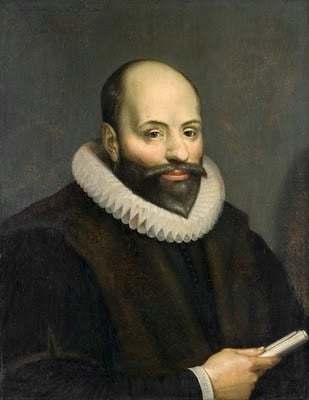
This essay continues a series on why I am an “evangelical Arminian Christian.”
6) My Sixth Principle: Receiving Answers to Life’s Ultimate Questions Involves Faith (But Faith Should Be Supported by Reasons) (By Roger E. Olson)
As I move on in this series of “my principles,” what I say will increasingly assume readers’ knowledge of the previous essays. Unlike many television shows, I will not “summarize” the main points after each “commercial break.” I will simply depend on readers, and especially commenters, to have read through the series so far.
Answers to life’s ultimate questions must be revealed in order to be more than mere hunches or guesses. Revelation of answers to life’s ultimate questions must be received. Such reception may involve a variety of modes: insight, intuition, epiphany, discernment, decision, deduction, etc., but all involve some element of what is commonly called “faith.” So-called “knock down, drag out intersubjective proof” is lacking when it comes to answers to life’s ultimate questions. The reason for this situation, as frustrating as it is especially to modernists, eludes complete explanation. It is simply fact. Most religions and quasi-religions include some account and explanation.
Here “faith” is used as a cipher for any grasp of answers to life’s ultimate questions. However, faith in some very broad sense is probably involved in all knowing beyond the analytic realm (definitions).
The world is full of truth claims about the answers to life’s ultimate questions. Some are explicitly religious in a traditional sense and some are quasi-religious (to borrow a term from Paul Tillich). Some claim to be based on evidence and rational deduction alone; none of those have gained intersubjective “traction.” They, too, seem to involve some kind of faith in the broadest sense of the word (e.g., perspective).
I believe there is no escape from faith, broadly defined, insofar as one wants to have answers to life’s ultimate questions and insofar as one claims to have found them. Receiving answers to life’s ultimate questions involves faith.
Having said that, however, faith is not necessarily irrational. What is believed “by faith” can be irrational and often is, but believing something “by faith” does not necessarily involve one in irrationality.
Insofar as someone wants me to believe truth claims about ultimate reality, insofar as he or she appeals to me to believe his or her answers to life’s ultimate questions, I have the right and perhaps the duty to ask “Why?” and expect some intersubjective reasons. By that I do not mean “proof.” I do not think intersubjective proof about ultimate reality, the answers to life’s ultimate questions, is possible. However, intersubjective reasons for being open to a claimed revelation about the answers to life’s ultimate questions should be offered by those who ask others to be so open.
This principle turns back on me, of course, as a religious believer—insofar as I appeal to others who do not share my beliefs about ultimate reality. If I am only believing, even together with fellow believers, no such intersubjective reasons are absolutely necessary. However, I think mature belief seeks them out—to support subjective faith.
What is called “apologetics” is primarily for believers; it asks and answers the question about intersubjective supportive reasons for continuing to believe. But it is not about “knock down, drag out proofs.” It is about justifying what is believed by faith rationally—with logic and evidence. However, apologetics can also be helpful, and should be available, when a believer is appealing to non-believers to consider what is believed reasonable, not irrational. This is true whatever the belief about ultimate reality may be—including sheer skepticism and nihilism.
Of course, as we all know, a person (or group) can simply say “I don’t believe anything about ultimate reality; there are no answers to life’s ultimate questions.” Examination of his or her words and actions, however, reveals (to me) that he or she does, in fact, have some implicit (if not explicit but hidden) belief about ultimate reality, the answers to life’s ultimate questions. For example, all notions of justice depend on some belief about the nature of reality beyond the merely observable. And what can be observed is a question about ultimate reality; what counts as “evidence” depends on some vision of ultimacy beyond the universally observable.
So what is the intersubjective reason—beyond “faith”—for a set of answers to life’s ultimate questions? There can only really be one (with two “sides”) and it falls far short of intersubjective “proof.” That one intersubjective reason for being open to or continuing to believe in a vision of ultimate reality is “This belief system, worldview, philosophy of life, theology, best answers life’s ultimate questions.” The two sides are 1) coherence, and 2) experience.
A worldview, a set of answers to life’s ultimate questions, received by faith, must pass these two tests insofar as it claims universal truth (truth for everyone) and insofar as it claims to be reasonable (not irrational). This is especially true insofar as it appeals to unbelievers to be open to it.
Here I am not rejecting so-called “evangelism;” I am only arguing that sheer witness, testimony based on faith alone, appeals to unbelievers to believe, ought to be supplemented by intersubjective reasons insofar as “inquiring minds” want to know why they should be open to the belief system, set of answers to life’s ultimate questions, implied in the appeal.
I cannot offer here a full blown account of religious or quasi-religious rationality, intersubjective supporting reasons for faith reception of a revelation. I can only say that, for me, such must include 1) an explanation of its coherence, and 2) an account of its ability to illumine human experience.
One way to go about that apologetic task is simply to consider all the major alternative sets of answers to life’s ultimate questions and ask which one stands out as 1) most coherent, and 2) most able to illumine life experience. I believe many will simply fall before the test of coherence; the same and others will simply fall before the test of adequacy to experience. Perhaps none will remain standing. In that case we are in real trouble. But of those that remain standing, that faith is most justified reasonably that stands out as being most coherent (internally and with what else is believed to be the case) and best able to shed light on, account for, explain human experience.
Most believers will not be able to do this convincingly, but every vision of ultimate reality, explicitly religious or quasi-religious, every set of answers to life’s ultimate questions, must have someone who carries out this task for others. It must be done; else the vision will eventually lose credibility—except to those who have faith. Eventually, even for many of them, insofar as they have inquiring minds, reasons will become a felt need to support faith. The only alternative is folk religion—the reduction of a belief system, set of answers to life’s ultimate questions, to clichés, slogans, anecdotes, etc., without any intersubjective, intellectually rigorous reflection.
*Note to commenters: This blog is not a discussion board; please respond with a question or comment solely to me (or the guest writer). If you do not share my evangelical Christian perspective, feel free to ask a question for clarification, but know that this is not a space for debating incommensurate perspectives/worldviews. In any case, know that there is no guarantee that your question or comment will be posted by the moderator or answered by the writer. If you hope for your question or comment to appear here and be answered or responded to, make sure it is civil, respectful, and “on topic.” Do not comment if you have not read the entire post and do not misrepresent what it says. Keep any comment (including questions) to minimal length (no more than 100 words); do not post essays, sermons or testimonies here. Do not post links to internet sites or pictures here. This is a space for expressions of the blogger’s (or guest writers’) opinions and constructive dialogue among especially evangelical Christians.
Previous Post

October 26, 2025
Jesus, the Strong and the Weak
Next Post

October 31, 2025 How to Start and Grow a Church
Recent Comments
"No doubt Lewis was inspired by earlier thinkers. Ironically (or perhaps serendipitously) I am now ..."
The Abolition of Man: Chapter 3: ..."
"I am sure Lewis would agree. After all, as a Christian he believed in original ..."
The Abolition of Man: Chapter 3: ..."
"If I’m not mistaken, the quote from Lewis is his interpretation of the “Conditioners’” own ..."
The Abolition of Man: Chapter 3: ..."
"Thank you! It's been a great re-read of a thought provoking, but somewhat dense, little ..."
The Abolition of Man: Chapter 3: ..."
Browse Our Archives
Select a Category Against Liberal Theology Uncategorized
Select a Month October 2026 September 2026 August 2026 July 2026 June 2026 May 2026 April 2026 March 2026 February 2026 January 2026 December 2025 November 2025 October 2025 September 2025 August 2025 July 2025 June 2025 May 2025 April 2025 March 2025 February 2025 January 2025 December 2024 November 2024 October 2024 September 2024 August 2024 July 2024 June 2024 May 2024 April 2024 March 2024 February 2024 January 2024 December 2023 November 2023 October 2023 September 2023 August 2023 July 2023 June 2023 May 2023 April 2023 March 2023 February 2023 January 2023 December 2022 November 2022 October 2022 September 2022 August 2022 July 2022 June 2022 May 2022 April 2022 March 2022 February 2022 January 2022 December 2021 November 2021 October 2021 September 2021 August 2021 July 2021 June 2021 May 2021 April 2021 March 2021 February 2021 January 2021 December 2020 November 2020 October 2020 September 2020 August 2020 July 2020 June 2020 May 2020 April 2020 March 2020 February 2020 January 2020 December 2019 November 2019 October 2019 September 2019 August 2019 July 2019 June 2019 May 2019 April 2019 March 2019 February 2019 January 2019 December 2018 November 2018 October 2018 September 2018 August 2018 July 2018 June 2018 May 2018 April 2018 March 2018 February 2018 January 2018 December 2017 November 2017 October 2017 September 2017 August 2017 July 2017 June 2017 May 2017 April 2017 March 2017 February 2017 January 2017 December 2016 November 2016 October 2016 September 2016 August 2016 July 2016 June 2016 May 2016 April 2016 March 2016 February 2016 January 2016 December 2015 November 2015 October 2015 September 2015 August 2015 July 2015 June 2015 May 2015 April 2015 March 2015 February 2015 January 2015 December 2014 November 2014 October 2014 September 2014 August 2014 July 2014 June 2014 May 2014 April 2014 March 2014 February 2014 January 2014 December 2013 November 2013 October 2013 September 2013 August 2013 July 2013 June 2013 May 2013 April 2013 March 2013 February 2013 January 2013 December 2012 November 2012 October 2012 September 2012 August 2012 July 2012 June 2012 May 2012 April 2012 March 2012 February 2012 January 2012 December 2011 November 2011 October 2011 September 2011 August 2011 July 2011 June 2011 May 2011 April 2011 March 2011 February 2011 January 2011 December 2010 November 2010 October 2010 September 2010 August 2010 July 2010
TAKE THE
Religious Wisdom Quiz
In Revelation, what is the correct sequence of events in the End Times?
Select your answer to see how you score.
Dragon cast to earth, beast rises from sea, false prophet rises from earth, mark of the beast given False prophet rises, dragon cast to earth, beast rises from sea, mark of the beast given Mark of the beast given, dragon cast to earth, beast rises, false prophet rises Beast rises from sea, dragon cast to earth, mark of the beast given, false prophet rises
Related posts from Roger E. Olson

The Abolition of Man: Chapter 3: The Abolition...

She Survived Her Execution. Should the State Try...
The Abolition of Man Part 2: Chapter 2:...

Ambiguity without Ambivalence in Faith
TRENDING AT PATHEOS Evangelical

I was strolling through the top floor of the brand new Parthenon...

What Does Gêvâh Mean For Kimberley Guifoyle &...
This week, a lot of the news is focused on Kimberly Guilfoyle....

INNER CIRCLE: Profound Mystery (Of Christ In All...
Ephesians 5:31-32 “For this reason, a man will leave his father and...

Do Not Rejoice When Your Enemy Falls: The...
Turning an execution into a public spectacle is a disturbing expression of...

'The Chosen' S6 Trailer: The Passion Gets Very...
Not many watching 'The Chosen' worry about spoilers, but just because they...

The purpose-driven labor priest
A labor activist reads Rick Warren and it gets me wondering about...
view all Evangelical blogs
What Are Your Thoughts?leave a comment
Ad-Free & Subscriber Log-In Subscription Support
- About Us
- 2026 Calendar
- Videos
- Podcasts
- Library of World Religions
- Faith In Media Tracker
- Advertise With Us
- Write for Us
- Privacy Policy
- Terms of Service
- Do Not Sell My Data
- Contact Us
- Radiant Digital
- Manage Newsletter Subscriptions
- Unsubscribe From Notifications
- Sitemap
Copyright 2008-2026, Patheos. All rights reserved.
Subscription Support Ad-Free & Subscriber Log-In
Follow Patheos