
BuddhistCatholicContemplativeEvangelicalGeneral ChristianHinduJewishLatter-day SaintMuslimNew VisionsProgressive Christian
Beliefs
- Buddhist
- Catholic
- Contemplative
- Evangelical
- General Christian
- Hindu
- Jewish
- Latter-day Saint
- More Voices
- Muslim
- New Visions
- Pagan
- Progressive Christian
Topics
- Religion News
- Food and Religion
- Sports and Religion
- Religious Art
- Religious Music and Entertainment
- Religious Events
- History and Religion
- Style and Religion
- Politics and Religion
- Women in Religion
- Recreation Outdoors and Religion
- Business Finance and Religion
- Careers Workplace and Religion
- Education and Religion
- Family Parenting and Religion
- Health Fitness and Religion
- Home and Religion
- Relationships and Religion
- Technology and Religion
- Travel and Religion
Columnists
- Buddhist Columnists
- Business Finance and Religion Columnists
- Careers Workplace and Religion Columnists
- Catholic Columnists
- Contemplative Columnists
- Education and Religion Columnists
- Evangelists Columnists
- Family Parenting and Religion Columnists
- General Christian Columnists
- Health Fitness and Religion Columnists
- Hindu Columnists
- History and Religion Columnists
- Home and Religion Columnists
- Jewish Columnists
- More Voices Columnists
- Latter Day Columnists
- Muslim Columnists
- New Visions Columnists
- Nonreligious Columnists
- Pagan Columnists
- Politics and Religion Columnists
- Progressive Columnists
- Recreation Outdoors and Religion Columnists
- Relationships and Religion Columnists
- Religion News Columnists
- Religious Art Columnists
- Religious Events Columnists
- Religious Music and Entertainment Columnists
- Sports and Religion Columnists
- Style and Religion Columnists
- Technology and Religion Columnists
- Travel and Religion Columnists
- Women in Religion Columnists
Resource Library
- 2026 Calendar
- Library of World Religions
- The 100 Most Holy Places on Earth
- Patheos Answers
- Podcasts
- Videos
- Faith Leaders Database
- Anglican Episcopalian
- Bahai
- Baptist
- Buddhism
- Christianity
- Confucianism
- Eastern Orthodoxy
- Hinduism
- Holiness and Pentecostal
- ISKCON
- Islam
- Judaism
- Lutheran
- Methodist
- The Church of Jesus Christ of Latter-day Saints
- New Age
- Paganism
- Presbytarian and Reformed
- Protestantism
- Religion Behind the Scenes
- Roman Catholic
- Scientology
- Shia Islam
- Sikhism
- Sufism
- Sunni Islam
- Taoism
- Zen
- See all religions
Research Tools
 Ad-Free & Subscriber Log-In Subscription Support
Ad-Free & Subscriber Log-In Subscription Support
Follow Patheos 

- Trending:
- Forgiveness
- |
- Marriage
- |
- Consciousness
- |
- Death Penalty
- |
- Election
- |
- Halloween

- Home
- Evangelical
- Why I Am an Evangelical Arminian Part 2
Why I Am an Evangelical Arminian Part 2
Last updated on: September 19, 2025 at 10:36 am by Roger E. Olson
Why I Am an Evangelical Arminian Part 2 2025-09-19T10:36:45-05:00 Roger E. Olson
Patheos Explore the world's faith through different perspectives on religion and spirituality! Patheos has the views of the prevalent religions and spiritualities of the world.
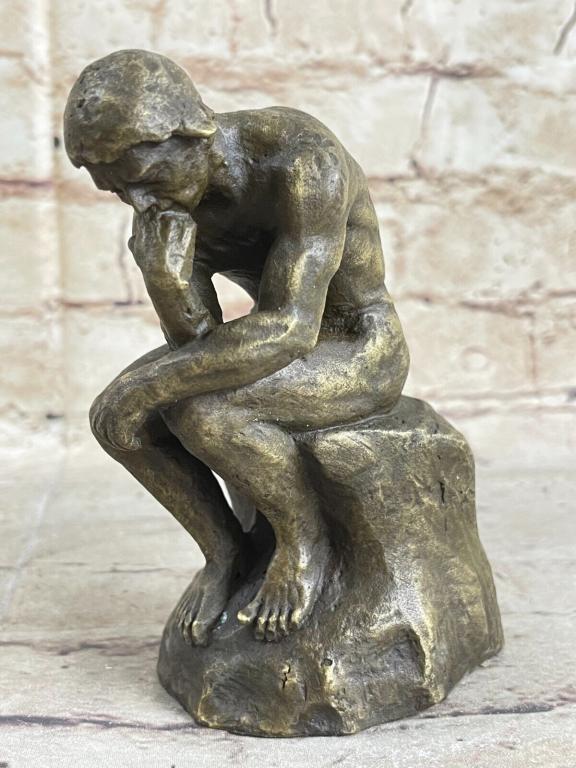
*First read “My First Principle…” which was a preceding blog post. This essay is the second in a series about why I am an “evangelical Arminian Christian.”
2) My Second Principle: Only I Can Decide What Is True (for Me) (by Roger E. Olson)
I do not agree with philosopher Immanuel Kant (1724-1804) about everything, but I agree with his imperative “Dare to think for yourself” (“Sapere aude!”). In fact, I would go further and say that, whether they want to or not, everyone does think for himself or herself. Even the decision to allow someone else to think for you is an act of thinking for yourself. And, ultimately, only you can decide what you think is true.
I am no Enlightenment foundationalist, nor am I a strict individualist. But more of that later. All I am saying here, and people should not read more into it, is that it is the responsibility of mature persons to decide for themselves what is true and in fact, whether they know it or not, people do always decide for themselves what is true.
When I lived and studied in Germany I learned a wonderful little German saying about “old style” German (and other) teaching style: “Eat up, little birdies, or die.” In other words, too often, especially in the past, students were expected to listen, read and learn and never question what authorities told them is true. “Truth” was what the right authorities said it was.
I began to think for myself and even question authority before I ever read Kant or any other philosopher. I do not remember when or how I came to the recognition that “authorities” could be wrong, but it was very early in my life. I guess that it came as a result of reading. Reading is dangerous; it can have the effect of causing one to think critically. Even reading the Bible, which I did a lot as a child, can lead a person to think critically. I well remember learning from the Bible that a prophet could be right and a king wrong.
But, ultimately, I think experience itself led me to believe I had to and actually did think about truth for myself. Very early I discovered that some people whose “word” I was supposed to believe without question were wrong about some things. I discovered that I literally could not make myself believe what was, my mind, false.
Always, throughout my life, I have lived and worked in somewhat hierarchical organizations—from my birth family, through my schools and churches, and in businesses and corporations. I have often experienced the expectation that I believe something merely on another’s “word,” and repress what I believed to be true. And by “repress” here I do not mean “keep it to myself” but deny it. (I do not believe truth ought always to be expressed, but I do believe it is wrong to expect a person to believe a falsehood.)
Of course, throughout my life, even to today, I have had to accept some things as true simply on others’ authority, but that is always because I believe they have reason to know things I cannot know on my own. Their combined experience, competence in a field, and their character often convinces me that their truth claims are what I ought to believe. But never, since childhood, have I believed something merely on another human person’s “status authority.” This has gotten me into a lot of trouble.
Again, I will go further and say that I do not believe anyone believes something is really true—as opposed to fancy or fantasy—for no reason.
Let me illustrate. Some years ago a student came to me in anguish, confessing that he intended to convert from his Protestantism to Roman Catholicism. He was in anguish because, of course, this would cause some consternation, if not disruption, within his family and among his friends. I asked him why he planned to convert and he said “Because I need someone else to tell me what is true.” He clearly meant (and said) he wanted the pope to decide truth for him. First, with tongue in cheek, I offered to be his desired arbiter, decider, of truth. He declined my offer. Second, I pointed out to him that by deciding to convert he was deciding for himself what to believe about truth*.* He had not thought of that.
When a mature (or maturing) person decides to submit to another person’s authority for determining truth there is always a reason. My student had come to believe that the pope has the truth because he stands in continuity with Jesus and the apostles by apostolic succession. He told me that and that is why he declined my offer to be his decider of truth. That is thinking for himself whether he knows it or not.
As I grew into early maturity, early in my development process, I realized that the “voices” clamoring for my submission to their versions of truth contradicted each other. And I realized that some of them contradicted themselves. And, of course, some of them did not have the competence to require my submission to their truth claims. Well before I read Kant’s essay I had already decided to think about truth for myself. And part of that process was the realization that I already did think for myself about truth—and so does everyone.
Two caveats are in order here—to avoid misunderstanding. I am not advocating unhealthy, chronic skepticism. I believe many things are true because I have reasons for it. They may not be considered good reasons by others, but they are my reasons and have nothing to do with mindless, uncritical submission of my thoughts to others’ based solely on their status within some hierarchy. Also, I am not advocating rebellion against authority; I often submit my behavior to someone’s expectations in order to maintain peace and progress within an organization of some kind.
However, when it comes to deciding about truth, I am the ultimate “decider” for myself. And if I expect others to believe what I believe about truth, I have to give reasons above and beyond “Because I say so.” And I have always strongly resented it when hierarchical authorities expect me to believe them mindlessly and uncritically, without adequate reasons, and/or expect me to live against what I believe is true. This resentment is right, but it creates tremendous cognitive dissonance in my life as it should in everyone’s.
Finally, and returning to a promise made near this essay’s beginning, I happen to believe it is true that I, on my own, am not capable of deciding what is true without others’ input. I am not taking back anything I said above. I believe, based on my own experience, that “my truth,” my belief about truth, like everyone’s, is conditioned by my felt needs and vested interests (to say nothing of my finitude and fallenness!). Therefore, I need to include in my decision making about truth communities of people with different felt needs and vested interests.
Ultimately, however, at the “end of the day,” when I need to decide what I think is true, that will be (and always is) my task, my responsibility, my decision, my risk and it will always be based on some reasons—whether others agree with them or not.
*Note to commenters: This blog is not a discussion board; please respond with a question or comment solely to me (or the guest writer). If you do not share my evangelical Christian perspective, feel free to ask a question for clarification, but know that this is not a space for debating incommensurate perspectives/worldviews. In any case, know that there is no guarantee that your question or comment will be posted by the moderator or answered by the writer. If you hope for your question or comment to appear here and be answered or responded to, make sure it is civil, respectful, and “on topic.” Do not comment if you have not read the entire post and do not misrepresent what it says. Keep any comment (including questions) to minimal length (no more than 100 words); do not post essays, sermons or testimonies here. Do not post pictures or links to internet sites here. This is a space for expressions of the blogger’s (or guest writers’) opinions and constructive dialogue among especially evangelical Christians. No guarantee is offered that a comment will be posted here in the discussion section.
Previous Post

September 17, 2025
The Main Issue: Democracy
Next Post
September 22, 2025 What Is Truth? N. T. Wright on Truth
Recent Comments
"No doubt Lewis was inspired by earlier thinkers. Ironically (or perhaps serendipitously) I am now ..."
The Abolition of Man: Chapter 3: ..."
"I am sure Lewis would agree. After all, as a Christian he believed in original ..."
The Abolition of Man: Chapter 3: ..."
"If I’m not mistaken, the quote from Lewis is his interpretation of the “Conditioners’” own ..."
The Abolition of Man: Chapter 3: ..."
"Thank you! It's been a great re-read of a thought provoking, but somewhat dense, little ..."
The Abolition of Man: Chapter 3: ..."
Browse Our Archives
Select a Category Against Liberal Theology Uncategorized
Select a Month October 2026 September 2026 August 2026 July 2026 June 2026 May 2026 April 2026 March 2026 February 2026 January 2026 December 2025 November 2025 October 2025 September 2025 August 2025 July 2025 June 2025 May 2025 April 2025 March 2025 February 2025 January 2025 December 2024 November 2024 October 2024 September 2024 August 2024 July 2024 June 2024 May 2024 April 2024 March 2024 February 2024 January 2024 December 2023 November 2023 October 2023 September 2023 August 2023 July 2023 June 2023 May 2023 April 2023 March 2023 February 2023 January 2023 December 2022 November 2022 October 2022 September 2022 August 2022 July 2022 June 2022 May 2022 April 2022 March 2022 February 2022 January 2022 December 2021 November 2021 October 2021 September 2021 August 2021 July 2021 June 2021 May 2021 April 2021 March 2021 February 2021 January 2021 December 2020 November 2020 October 2020 September 2020 August 2020 July 2020 June 2020 May 2020 April 2020 March 2020 February 2020 January 2020 December 2019 November 2019 October 2019 September 2019 August 2019 July 2019 June 2019 May 2019 April 2019 March 2019 February 2019 January 2019 December 2018 November 2018 October 2018 September 2018 August 2018 July 2018 June 2018 May 2018 April 2018 March 2018 February 2018 January 2018 December 2017 November 2017 October 2017 September 2017 August 2017 July 2017 June 2017 May 2017 April 2017 March 2017 February 2017 January 2017 December 2016 November 2016 October 2016 September 2016 August 2016 July 2016 June 2016 May 2016 April 2016 March 2016 February 2016 January 2016 December 2015 November 2015 October 2015 September 2015 August 2015 July 2015 June 2015 May 2015 April 2015 March 2015 February 2015 January 2015 December 2014 November 2014 October 2014 September 2014 August 2014 July 2014 June 2014 May 2014 April 2014 March 2014 February 2014 January 2014 December 2013 November 2013 October 2013 September 2013 August 2013 July 2013 June 2013 May 2013 April 2013 March 2013 February 2013 January 2013 December 2012 November 2012 October 2012 September 2012 August 2012 July 2012 June 2012 May 2012 April 2012 March 2012 February 2012 January 2012 December 2011 November 2011 October 2011 September 2011 August 2011 July 2011 June 2011 May 2011 April 2011 March 2011 February 2011 January 2011 December 2010 November 2010 October 2010 September 2010 August 2010 July 2010
TAKE THE
Religious Wisdom Quiz
In Revelation, what is the correct sequence of events in the End Times?
Select your answer to see how you score.
Dragon cast to earth, beast rises from sea, false prophet rises from earth, mark of the beast given False prophet rises, dragon cast to earth, beast rises from sea, mark of the beast given Mark of the beast given, dragon cast to earth, beast rises, false prophet rises Beast rises from sea, dragon cast to earth, mark of the beast given, false prophet rises
Related posts from Roger E. Olson

The Abolition of Man: Chapter 3: The Abolition...

She Survived Her Execution. Should the State Try...
The Abolition of Man Part 2: Chapter 2:...

Ambiguity without Ambivalence in Faith
TRENDING AT PATHEOS Evangelical

I was strolling through the top floor of the brand new Parthenon...

What Does Gêvâh Mean For Kimberley Guifoyle &...
This week, a lot of the news is focused on Kimberly Guilfoyle....

INNER CIRCLE: Profound Mystery (Of Christ In All...
Ephesians 5:31-32 “For this reason, a man will leave his father and...

Do Not Rejoice When Your Enemy Falls: The...
Turning an execution into a public spectacle is a disturbing expression of...

'The Chosen' S6 Trailer: The Passion Gets Very...
Not many watching 'The Chosen' worry about spoilers, but just because they...

The purpose-driven labor priest
A labor activist reads Rick Warren and it gets me wondering about...
view all Evangelical blogs
What Are Your Thoughts?leave a comment
Ad-Free & Subscriber Log-In Subscription Support
- About Us
- 2026 Calendar
- Videos
- Podcasts
- Library of World Religions
- Faith In Media Tracker
- Advertise With Us
- Write for Us
- Privacy Policy
- Terms of Service
- Do Not Sell My Data
- Contact Us
- Radiant Digital
- Manage Newsletter Subscriptions
- Unsubscribe From Notifications
- Sitemap
Copyright 2008-2026, Patheos. All rights reserved.
Subscription Support Ad-Free & Subscriber Log-In
Follow Patheos