
BuddhistCatholicContemplativeEvangelicalGeneral ChristianHinduJewishLatter-day SaintMuslimNew VisionsProgressive Christian
Beliefs
- Buddhist
- Catholic
- Contemplative
- Evangelical
- General Christian
- Hindu
- Jewish
- Latter-day Saint
- More Voices
- Muslim
- New Visions
- Pagan
- Progressive Christian
Topics
- Religion News
- Food and Religion
- Sports and Religion
- Religious Art
- Religious Music and Entertainment
- Religious Events
- History and Religion
- Style and Religion
- Politics and Religion
- Women in Religion
- Recreation Outdoors and Religion
- Business Finance and Religion
- Careers Workplace and Religion
- Education and Religion
- Family Parenting and Religion
- Health Fitness and Religion
- Home and Religion
- Relationships and Religion
- Technology and Religion
- Travel and Religion
Columnists
- Buddhist Columnists
- Business Finance and Religion Columnists
- Careers Workplace and Religion Columnists
- Catholic Columnists
- Contemplative Columnists
- Education and Religion Columnists
- Evangelists Columnists
- Family Parenting and Religion Columnists
- General Christian Columnists
- Health Fitness and Religion Columnists
- Hindu Columnists
- History and Religion Columnists
- Home and Religion Columnists
- Jewish Columnists
- More Voices Columnists
- Latter Day Columnists
- Muslim Columnists
- New Visions Columnists
- Nonreligious Columnists
- Pagan Columnists
- Politics and Religion Columnists
- Progressive Columnists
- Recreation Outdoors and Religion Columnists
- Relationships and Religion Columnists
- Religion News Columnists
- Religious Art Columnists
- Religious Events Columnists
- Religious Music and Entertainment Columnists
- Sports and Religion Columnists
- Style and Religion Columnists
- Technology and Religion Columnists
- Travel and Religion Columnists
- Women in Religion Columnists
Resource Library
- 2026 Calendar
- Library of World Religions
- The 100 Most Holy Places on Earth
- Patheos Answers
- Podcasts
- Videos
- Faith Leaders Database
- Anglican Episcopalian
- Bahai
- Baptist
- Buddhism
- Christianity
- Confucianism
- Eastern Orthodoxy
- Hinduism
- Holiness and Pentecostal
- ISKCON
- Islam
- Judaism
- Lutheran
- Methodist
- The Church of Jesus Christ of Latter-day Saints
- New Age
- Paganism
- Presbytarian and Reformed
- Protestantism
- Religion Behind the Scenes
- Roman Catholic
- Scientology
- Shia Islam
- Sikhism
- Sufism
- Sunni Islam
- Taoism
- Zen
- See all religions
Research Tools
 Ad-Free & Subscriber Log-In Subscription Support
Ad-Free & Subscriber Log-In Subscription Support
Follow Patheos 

- Trending:
- Forgiveness
- |
- Marriage
- |
- Consciousness
- |
- Death Penalty
- |
- Election
- |
- Halloween

- Home
- Evangelical
- Was Arminius A Molinist?
Was Arminius A Molinist?
Last updated on: September 2, 2025 at 3:09 pm by Roger E. Olson
Was Arminius A Molinist? 2025-09-02T15:09:30-05:00 Roger E. Olson
Patheos Explore the world's faith through different perspectives on religion and spirituality! Patheos has the views of the prevalent religions and spiritualities of the world.
Are Arminian Theology and Middle Knowledge Compatible?
One of the most basic impulses of Arminianism is that God is not the author of sin and evil—even indirectly. On this virtually everyone knowledgeable about Arminian theology agrees. Divine determinism, the belief that God directly or indirectly determines all that happens according to a predetermined plan, was rejected by Arminius and has been rejected by all Arminians since him. I have demonstrated that in Arminian Theology: Myths and Realities and Against Calvinism. Arminian theology and divine determinism are like oil and water; they cannot mix. And the reason they cannot mix is because of the Arminian Grundmotif which is God’s goodness. If divine determinism is true, the fall and all its consequences, including eternal hell, are part of God’s plan and made necessary by God even if only indirectly.
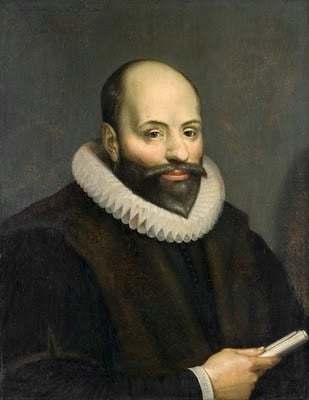
In a now famous and much discussed article in Sixteenth Century Journal (XXVII:2 [1996]: 337-352) Dutch theologian Eef Dekker asked “Was Arminius a Molinist?” and answered in the affirmative. (Molinism is, of course, synonymous with belief in middle knowledge.) Several leading Arminius scholars have agreed. Reformed theologian Richard Muller agreed in God, Creation, and Providence in the Thought of Jacob Arminius (Baker, 1991). (He came to the same conclusion as Dekker before him.) Dutch theologian William den Boer agrees in God’s Twofold Love: The Theology of Jacob Arminius (1559-1609) (Vandenhoek & Ruprecht, 2010). Now, in two recent studies of Arminius’s theology three American theologians agree. (I will be responding to their two books at a professional conference in November, so I’m going to decline to name them or address their arguments directly for now.)
So it would seem a consensus is developing that Arminius himself was a “Protestant Molinist” and may have actually introduced Molinism, middle knowledge, into Protestant theology. (Molina was himself a Catholic contemporary of Arminius.) However, other Arminius scholars are not so sure. One of the most scholarly and exhaustive studies of Arminius’s theology is William G. Witt’s Notre Dame doctoral dissertation which I used extensively in Arminian Theology: Myths and Realities. Witt argued that Arminius mentioned but did not use middle knowledge. Another Arminius scholar who agrees with Witt is F. Stuart Clarke, author of The Ground of Election: Jacob Arminius’ Doctrine of the Work and Person of Christ (Paternoster, 2006).
Without doubt one can find references to middle knowledge in Arminius’s writings. The question is whether he relied on middle knowledge to reconcile God’s foreknowledge with free will (and there is no doubt he believed in libertarian free will) and whether he used middle knowledge to explain God’s sovereignty in providentially governing the whole universe including creatures’ free decisions and actions.
Dekker argues that, in using middle knowledge, Arminius unwittingly fell into determinism. Den Boer admits that even if Arminius’s use of middle knowledge did not imply determinism, it raised some serious questions for Arminius’s consistency—especially in the practical realm. That is, even if middle knowledge does not imply determinism, it does convey the impression, at least to the untutored, that their lives are predetermined.
I have argued here before that believing in God’s middle knowledge, that knowledge whereby God knows not only what will happen but would happen, not only what free creatures will do but what they would do freely in any possible situation, set of circumstances, is not in and of itself inconsistent with Arminianism’s basic impulses which have to do with God’s goodness (his “twofold love”). However, I have argued, and continue to maintain, once one believes that God uses middle knowledge to render certain that every creature does what they do by creating them and placing them in circumstances where he knows they will “freely” do something, then determinism is at the door if not in the living room and that is inconsistent with Arminianism’s basic impulses. It makes God the author of sin and evil even if only inadvertently.
In order to test this we must go back to the first disobedience—Adam’s and Eve’s fall. The question is not whether God knew they would disobey but whether God rendered their act of disobedience certain.
Advocates of middle knowledge usually rely on a distinction between “certain” or “infallible” and “necessary,” with only the latter making God the author of sin and evil. The argument is that God’s use of middle knowledge to render the fall certain, even infallibly (it could not have not happened given God’s foreknowledge of what Adam and Eve would do and his creation of them and placing them in that situation) does not render the fall necessary.
I tend to think that’s a distinction without a difference.
That use of middle knowledge, providentially to render the fall certain, necessarily implies a plan in the mind of God that makes the fall not only part of God’s consequent will but also part of his antecedent will. And, as everyone knows and agrees, the distinction between God’s consequent will and God’s antecedent will is crucial to Arminianism’s argument that God is not the author of sin and evil.
Why else would God use his middle knowledge providentially? And why would he use it at all if not for the purpose of meticulous providence?
Many Calvinists have used Molinism, middle knowledge, to “explain” predestination and reprobation in order to get God “off the hook,” so to speak, as not the author of sin and evil. I think, for example, of Millard Erickson and Bruce Ware—two evangelical Calvinists who use middle knowledge as the “key” to reconciling God’s sovereignty and human free will. However, they at least admit that their view of free will is compatibilism—that free will is compatible with determinism. In other words, if my argument is correct, they “get it”—middle knowledge used by God for providential advantage requires a compatibilist view of free will.
To the best of my knowledge no Arminian claims to believe in compatibilist; all embrace libertarian free will.
But, to me, at least, libertarian free will means “ability to do otherwise than one does.”
Now, admittedly, Arminian believers in middle knowledge, including those who believe God uses middle knowledge to render creatures’ decisions and actions certain according to a plan, claim to believe that creatures who sin do so with libertarian freedom. In other words, they could do otherwise. Well, at least Adam and Eve could have done otherwise than disobey God. (The picture gets more complicated for their posterity under the effects of the fall.) But could they have?
If middle knowledge is true and God uses it for providential advantage, as Richard Muller says, offering inducements to creatures that God knows they will follow given their dispositions and inclinations, then God is not only “in control” but “actually controlling” everything including Adam’s and Eve’s disobedience. They could not have done otherwise even if they did it “freely.” That is the very essence of compatibilism!
Let’s use an illustration. Suppose I know one of my students so well that I know (beyond any possibility of being wrong) that if I suggest he read a certain book he will misunderstand the subject of our course and go on to fail it. Without the book, he would pass the course. I suggest he read the book. Why? Well, perhaps because I need someone to fail the course. I don’t grade on a curve and the dean is worried that I am not upholding academic standards. All my students pass with flying colors. My career is in jeopardy as is the academic credibility of the school. So I use my middle knowledge of the student’s dispositions and inclinations to bring it about infallibly that he fails the course. Nothing I did took away his free will. He read the book voluntarily (no external coercion was used, only inducement). (Note: None of that would happen; it’s purely hypothetical.)
Now, who is really responsible for, the “author of,” the student failing the course?
And can it fairly be said that by rendering his failure certain, using my middle knowledge, I did not make it necessary?
Now, there’s no point in appealing to God’s freedom to do whatever he wants to do. This is a debate among Arminians and Arminians, following Arminius, are not nominalists. We all agree that God is essentially good by nature and cannot simply do anything capable of being put into words. No informed Arminian would say “Whatever God does is automatically good, just because God does it, period.” So that objection to my scenario isn’t relevant to this context—a debate among Arminians.
I tend to agree with Eef Dekker, against several leading Arminius scholars, that if Arminius used middle knowledge to explain God’s sovereignty, then he unwittingly contradicted himself. He contradicted his own most basic principle which is that God is by no means the author of sin and evil. He unwittingly fell into determinism at that point and should not have relied on middle knowledge. Why he did, if he did, is a separate question. I think reasonable answers can be imagined (having to do with his desire to build bridges between himself and his critics).
So what does this mean for Arminians? I’m certainly not going to say that one cannot be an Arminian and a Molinist. What I will say is that, in my opinion, Molinism is a foreign body in Arminianism even if Arminius himself used it! If he did, it was a foreign body in his own theology in the sense that it conflicted with his own basic belief commitments about God’s goodness, God not being in any sense the author of sin and evil, and creatures’ free wills (especially in disobedience).
No one should be surprised if a theologian falls into contradiction with himself at times—especially if he (or she) writes much over a very long period of time. I’m a historical theologian and have studied the theologies of virtually every major Christian theologian from Irenaeus to Pannenberg (and beyond). In every case I find some tension, some element of conflict within the theologian’s own system.
Besides, being Arminian does not require absolute agreement with Arminius. If that were the case, he would have been the only Arminian (and maybe not even he would be!).
*Note: If you choose to comment, make sure your comment is relatively brief (no more than 100 words), on topic, addressed to me, civil and respectful (not hostile or argumentative), and devoid of pictures or links.*
Previous Post

August 24, 2025
Fascism: Experts and Elements
Next Post

August 29, 2025 Can Education Cure Evil?
Recent Comments
"No doubt Lewis was inspired by earlier thinkers. Ironically (or perhaps serendipitously) I am now ..."
The Abolition of Man: Chapter 3: ..."
"I am sure Lewis would agree. After all, as a Christian he believed in original ..."
The Abolition of Man: Chapter 3: ..."
"If I’m not mistaken, the quote from Lewis is his interpretation of the “Conditioners’” own ..."
The Abolition of Man: Chapter 3: ..."
"Thank you! It's been a great re-read of a thought provoking, but somewhat dense, little ..."
The Abolition of Man: Chapter 3: ..."
Browse Our Archives
Select a Category Against Liberal Theology Uncategorized
Select a Month October 2026 September 2026 August 2026 July 2026 June 2026 May 2026 April 2026 March 2026 February 2026 January 2026 December 2025 November 2025 October 2025 September 2025 August 2025 July 2025 June 2025 May 2025 April 2025 March 2025 February 2025 January 2025 December 2024 November 2024 October 2024 September 2024 August 2024 July 2024 June 2024 May 2024 April 2024 March 2024 February 2024 January 2024 December 2023 November 2023 October 2023 September 2023 August 2023 July 2023 June 2023 May 2023 April 2023 March 2023 February 2023 January 2023 December 2022 November 2022 October 2022 September 2022 August 2022 July 2022 June 2022 May 2022 April 2022 March 2022 February 2022 January 2022 December 2021 November 2021 October 2021 September 2021 August 2021 July 2021 June 2021 May 2021 April 2021 March 2021 February 2021 January 2021 December 2020 November 2020 October 2020 September 2020 August 2020 July 2020 June 2020 May 2020 April 2020 March 2020 February 2020 January 2020 December 2019 November 2019 October 2019 September 2019 August 2019 July 2019 June 2019 May 2019 April 2019 March 2019 February 2019 January 2019 December 2018 November 2018 October 2018 September 2018 August 2018 July 2018 June 2018 May 2018 April 2018 March 2018 February 2018 January 2018 December 2017 November 2017 October 2017 September 2017 August 2017 July 2017 June 2017 May 2017 April 2017 March 2017 February 2017 January 2017 December 2016 November 2016 October 2016 September 2016 August 2016 July 2016 June 2016 May 2016 April 2016 March 2016 February 2016 January 2016 December 2015 November 2015 October 2015 September 2015 August 2015 July 2015 June 2015 May 2015 April 2015 March 2015 February 2015 January 2015 December 2014 November 2014 October 2014 September 2014 August 2014 July 2014 June 2014 May 2014 April 2014 March 2014 February 2014 January 2014 December 2013 November 2013 October 2013 September 2013 August 2013 July 2013 June 2013 May 2013 April 2013 March 2013 February 2013 January 2013 December 2012 November 2012 October 2012 September 2012 August 2012 July 2012 June 2012 May 2012 April 2012 March 2012 February 2012 January 2012 December 2011 November 2011 October 2011 September 2011 August 2011 July 2011 June 2011 May 2011 April 2011 March 2011 February 2011 January 2011 December 2010 November 2010 October 2010 September 2010 August 2010 July 2010
TAKE THE
Religious Wisdom Quiz
Four beasts rose from the sea—one like a lion with eagle's wings, one like a bear, one like a leopard, and a fourth terrifying beast. What did these represent?
Select your answer to see how you score.
Four kingdoms Four kings Four judgments Four ages
Related posts from Roger E. Olson

The Abolition of Man: Chapter 3: The Abolition...

She Survived Her Execution. Should the State Try...
The Abolition of Man Part 2: Chapter 2:...

Ambiguity without Ambivalence in Faith
TRENDING AT PATHEOS Evangelical

I was strolling through the top floor of the brand new Parthenon...

What Does Gêvâh Mean For Kimberley Guifoyle &...
This week, a lot of the news is focused on Kimberly Guilfoyle....

INNER CIRCLE: Profound Mystery (Of Christ In All...
Ephesians 5:31-32 “For this reason, a man will leave his father and...

Do Not Rejoice When Your Enemy Falls: The...
Turning an execution into a public spectacle is a disturbing expression of...

'The Chosen' S6 Trailer: The Passion Gets Very...
Not many watching 'The Chosen' worry about spoilers, but just because they...

The purpose-driven labor priest
A labor activist reads Rick Warren and it gets me wondering about...
view all Evangelical blogs
What Are Your Thoughts?leave a comment
Ad-Free & Subscriber Log-In Subscription Support
- About Us
- 2026 Calendar
- Videos
- Podcasts
- Library of World Religions
- Faith In Media Tracker
- Advertise With Us
- Write for Us
- Privacy Policy
- Terms of Service
- Do Not Sell My Data
- Contact Us
- Radiant Digital
- Manage Newsletter Subscriptions
- Unsubscribe From Notifications
- Sitemap
Copyright 2008-2026, Patheos. All rights reserved.
Subscription Support Ad-Free & Subscriber Log-In
Follow Patheos